
What if the most reliable way to handle the unpredictable nature of hair loss wasn’t another bottle of fibers or a restrictive hairpiece, but a sophisticated, permanent simulation? For those living with the shifting patches of various conditions, the daily routine of concealment can feel like an exhausting, losing battle. This is why alopecia scalp micropigmentation has emerged as a transformative anchor for so many. It offers a refined, medical-grade solution that replicates the look of natural hair follicles with artistic precision and clinical expertise.
We understand that you’re likely tired of the emotional roller coaster that comes with unpredictable hair loss and the anxiety that any pigment work might look unnatural over time. You deserve a solution that doesn’t wash off or shift throughout the day. In this 2026 guide, you’ll discover how a meticulously applied restorative simulation provides a maintenance-free buzz-cut look that stays consistent even if your underlying patches move. We’ll walk through the technical craftsmanship behind the process, the psychological benefits of a restored hairline, and how this specialized approach ensures a seamless result that returns your focus to your life rather than your scalp.
Key Takeaways
- Learn how non-surgical follicle simulation provides a permanent, realistic alternative to temporary fibers or high-maintenance hairpieces.
- Understand the technical precision required for alopecia scalp micropigmentation, focusing on the critical depth of pigment placement within the dermal layer to ensure natural results.
- Discover how specialized layering techniques can adapt to shifting hair loss patterns, offering a seamless blend for those with Alopecia Areata or Totalis.
- Explore the structured restorative journey, from the initial mapping of your unique hairline to the foundational sessions that build realistic density.
- See why choosing a paramedical specialist in aesthetic restoration is essential for achieving the subtle, sophisticated craftsmanship needed for sensitive scalp conditions.
Understanding Alopecia Scalp Micropigmentation
Alopecia scalp micropigmentation is a highly specialized, non-surgical procedure. It uses medical-grade pigments to replicate the appearance of natural hair follicles with incredible accuracy. Traditional decorative tattooing is fundamentally different. It reaches much deeper into the skin and uses inks that can blur or turn blue over time. SMP focuses on the upper dermal layer instead. We use carbon-based pigments that remain crisp and clear. This ensures the simulation looks like real stubble rather than a flat tattoo. This level of precision is vital for those with alopecia. The contrast between bare skin and remaining hair must be managed with extreme subtlety to look natural.
In 2026, the technology behind these pigments has reached a point of extreme refinement. We can now match the exact shade and tone of your existing hair with perfect accuracy. This allows for a seamless integration that is virtually undetectable to the naked eye. Many people now view this as a reliable anchor in their hair loss management journey. SMP provides an instant aesthetic result that doesn’t rely on the success of topical medications or the availability of donor hair for surgery. It represents a profound psychological shift. You move away from the daily exhaustion of hiding patches with powders and toward restoring a permanent, intentional image.
Is SMP a Cure for Alopecia?
SMP is an aesthetic concealment. It isn’t a biological cure. It doesn’t stop the underlying autoimmune response or stimulate new hair growth. However, it offers something equally valuable: peace of mind. While you pursue other medical treatments or regenerative therapies, follicle simulation creates a stable, consistent look. It removes the stress of checking for new patches every morning. The simulation stays in place regardless of what the natural hair does. It’s a permanent aesthetic anchor that works even if your condition changes. If you’re still weighing your options, understanding whether scalp micropigmentation is worth it with an honest look at real-world results and common myths can help you make a fully informed decision.
The Emotional Impact of Aesthetic Restoration
Living with alopecia often brings a specific kind of mirror anxiety. You might feel like your face has lost its natural frame. By reconstructing the hairline and adding density to thinning areas, we restore that balance. This contributes to a long-term hair loss confidence solution. A defined hairline makes you look more youthful and healthy. It isn’t just about pigment. It’s about reclaiming your self-assurance in social and professional settings. We focus on the profound personal impact of this craft, helping you feel like yourself again.
The Art of Follicle Simulation: How SMP Works
Mastery of this craft begins with an intimate understanding of the skin’s anatomy. The secret to a successful transformation lies in the meticulous control of depth. Unlike traditional tattoos that penetrate the deeper layers of the skin, alopecia scalp micropigmentation focuses exclusively on the upper dermal layer. This clinical precision prevents the pigment from spreading or “migrating,” which is what causes the unnatural, blurry look often seen in less specialized work. By placing each deposit at a consistent, shallow depth, we create a crisp, clear representation of a hair follicle. It’s a delicate balance of science and aesthetic artistry.
We use a technique known as pointillism to build a three-dimensional appearance that looks real even under close inspection. Instead of a single pass, we layer thousands of micro-deposits over several sessions to create depth and shadow. This mimics the natural variation of real hair growth. Custom pigment blending is another critical component of the process. We don’t just pick a generic color. We analyze your skin’s undertones and your remaining hair’s specific shade to create a bespoke formula. This ensures that the simulation integrates flawlessly with your natural features, even as your skin changes over time.
The equipment matters just as much as the hand behind it. We utilize specialized SMP devices designed for the delicate skin of the scalp, rather than standard tattoo machines that can be too aggressive. These tools allow for the extreme precision required to handle the unique challenges discussed in clinical reviews of Scalp Micropigmentation for Hair and Scalp Deformities. If you’re curious about how this technology can be tailored to your specific hair loss pattern, exploring our specialized SMP services can provide more clarity on the possibilities for your transformation.
Creating a Realistic Hairline
A perfectly straight, “stencil” hairline is a common giveaway of artificial work. We favor a “soft” or “jagged” approach that replicates the natural, slightly irregular transitions of a biological hairline. By varying the density and placement of the deposits, we create a transition zone that looks organic rather than manufactured. This “refined restorer” philosophy ensures that the frame of your face looks intentional and healthy. We match the density of the simulation to your remaining natural follicles to ensure the transition is completely seamless.
Pigment Longevity and Safety
Safety is our highest priority, which is why we use medical-grade pigments specifically formulated for the scalp. These pigments don’t contain the heavy metals found in some decorative inks, so they won’t turn blue or green as they age. Your body’s natural immune response will slowly break down the pigment over several years. Typically, a quick refinement session every three to five years is all that’s needed to maintain the crispness and vibrancy of your look. This ensures your results remain as sophisticated as the day they were first applied.
Adapting SMP for Different Types of Alopecia
Alopecia manifests in many forms, and a one-size-fits-all approach simply doesn’t work in the world of aesthetic restoration. Each variation presents unique topographical challenges for the scalp. Traction alopecia, for example, often requires meticulous work around the temples and edges where styling tension has permanently damaged the follicles. Scarring alopecia involves working with skin that may have altered texture due to past inflammation. In these cases, we use specialized techniques to camouflage the affected areas. This ensures the pigment settles evenly despite the underlying tissue changes, creating a smooth and consistent appearance across the entire head.
The versatility of alopecia scalp micropigmentation allows us to create a permanent aesthetic foundation that adapts to these diverse needs. It isn’t just about filling in gaps; it’s about understanding the progression of each specific condition. Whether we are rebuilding a hairline lost to years of tension or masking the smooth patches of an autoimmune response, the goal remains the same. We aim for a result that looks intentional, refined, and entirely natural. This specialized approach turns a changing condition into a stable, confident image.
SMP for Alopecia Areata Patches
Alopecia Areata is uniquely frustrating because patches can shift, grow, or disappear without warning. We use a sophisticated camouflage technique to hide these smooth areas within your existing hair. However, we often recommend treating the entire scalp with a light density layer. This strategic approach acts as a safety net. If a new patch develops in a different location, the pigment is already there to provide immediate coverage. This works exceptionally well when combined with hair regrowth without surgery. By pairing follicle simulation with regenerative treatments, we address the aesthetic concern while supporting your biological hair health simultaneously.
Full Scalp Restoration for Alopecia Totalis
For those living with totalis or universalis, we have the rewarding task of designing a complete “buzz-cut” look from scratch. This requires a deep understanding of facial symmetry and bone structure to create a frame that looks authentic. We build this look over three to four sessions, layering different shades to create a realistic, three-dimensional texture. There are also special considerations for scalp micropigmentation for women who are dealing with total loss. We focus on creating a softer, more diffused hairline that restores the face’s natural frame without looking overly aggressive. This multi-session journey ensures the final result has the depth and nuance of a natural, closely shaven head of hair.
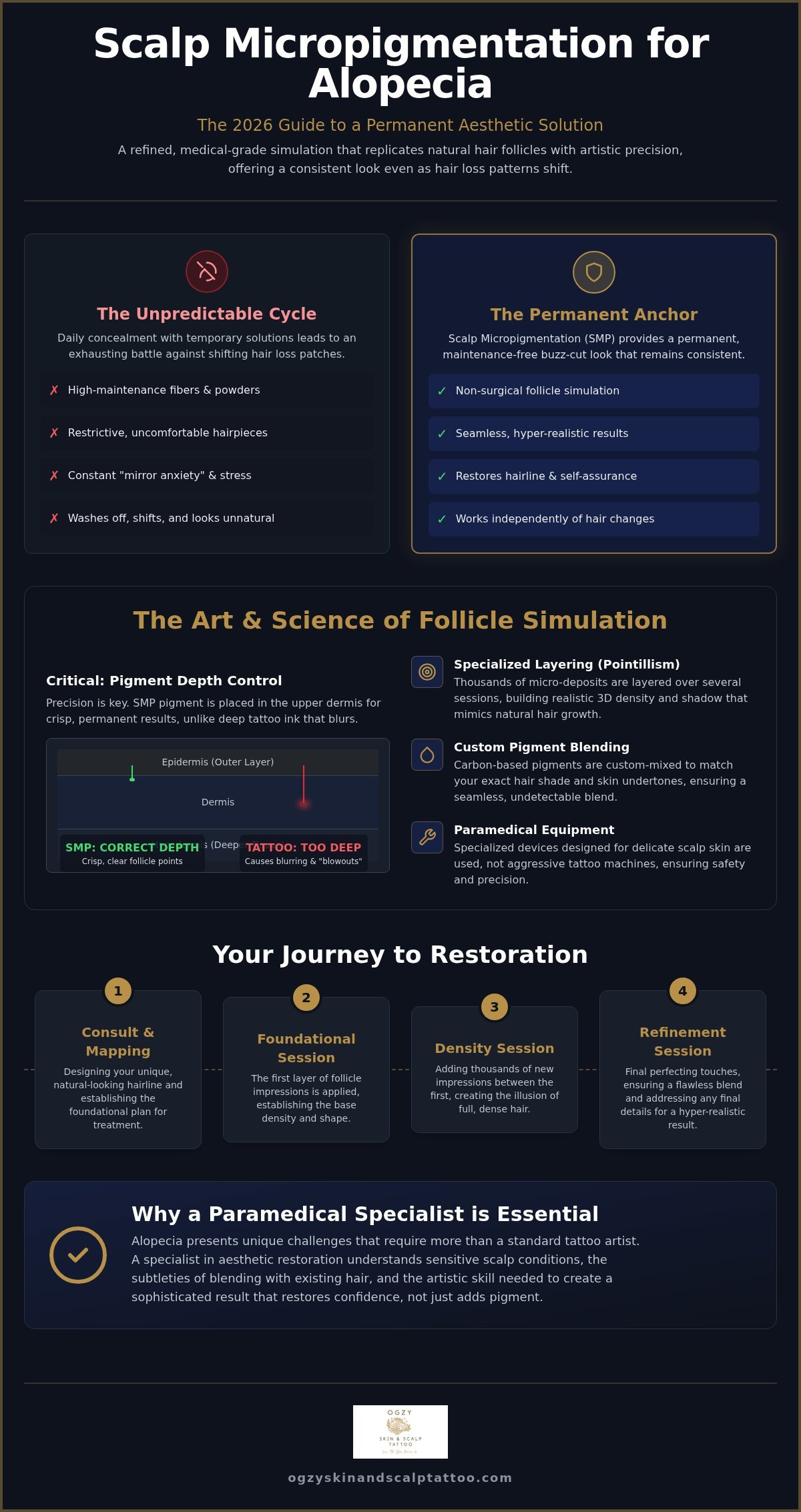
Your Journey to Restoration: What to Expect
Embracing the path to renewal is a collaborative process that unfolds over several carefully timed appointments. We don’t rush this journey because your skin needs time to heal and settle between each layer of artistry. For those seeking alopecia scalp micropigmentation, this structured approach ensures we can adapt to any changes in your scalp’s condition while building a look that is indistinguishable from natural hair. Each visit builds upon the last, moving you closer to a finished image that feels authentic and permanent.
- The Personal Consultation: This is where we map your unique hair loss pattern and discuss your aesthetic goals. We analyze your bone structure and remaining hair to design a custom restoration plan.
- The Foundation Session: During this first visit, we set the hairline and apply the initial base layer of density. It’s the blueprint for your new look.
- The Density Session: We return to add depth and refine the blend. This session creates the three-dimensional realism that mimics actual hair follicles.
- The Perfection Session: We perform final touches to ensure a seamless, natural transition across the entire scalp, making sure every detail is refined.
The Treatment Experience
Many clients feel anxious about discomfort, but it’s important to understand that SMP is not like a traditional tattoo. Most people describe the sensation as a light, repetitive tapping or a mild scratch. Because we are only working in the upper dermal layer, the experience is far more manageable than a deep-tissue decorative tattoo. Quality follicle simulation takes time. Expect to spend between two and four hours in the chair per session. Immediately after your visit, your scalp will likely look slightly red and the pigment may appear darker than the final result. This is a normal part of the healing process and will soften over the following few days as the skin heals.
Aftercare in the Central Texas Climate
Living in the Greater Austin area means our scalps face intense UV exposure and heat. Protecting your investment from the Cedar Park sun is non-negotiable. We recommend wearing a clean, loose-fitting hat when outdoors for the first week. You must also adhere to the “no-sweat” rule for four to five days. Intense exercise can cause the pigment to migrate or fade prematurely, so please skip the gym during this initial window. When you begin cleansing, use only the gentle, fragrance-free products we recommend during your visit. If you are ready to begin this process, you can schedule your restorative consultation with our Cedar Park specialists today.
Why Choose a Specialist for Alopecia SMP in Cedar Park
Choosing the right practitioner for alopecia scalp micropigmentation is the most critical decision in your restorative journey. It isn’t just about a needle and ink. It’s about a deep, technical understanding of how skin tissue reacts to different pigment loads over time. A general tattoo artist might be skilled at decorative work, but they often lack the paramedical training required to handle the sensitive scalp conditions associated with various forms of hair loss. This is why alopecia scalp micropigmentation requires a specialist who understands the nuances of the upper dermal layer and the specific aesthetic needs of those living with changing hair patterns. Before committing, many of our clients find it helpful to review an honest, myth-debunking breakdown of whether scalp micropigmentation is worth it so they can approach their consultation with full confidence.
At Ogzy Skin & Scalp Tattoo, we operate under a “Refined Restorer” philosophy. This means we approach every session with meticulous detail and a mission-driven passion for your success. We understand the emotional weight you carry when you walk through our doors. By focusing on artistic integrity and technical mastery, we ensure that your results look like a choice, not a concealment. We are proud to support our local community by providing these world-class services to residents in Cedar Park, Round Rock, and Georgetown, helping our neighbors reclaim their self-assurance right here at home.
The Ogzy Difference: Beyond the Needle
We’ve created a clinical yet warm environment designed for your privacy and comfort. Our expertise in scalp micropigmentation Cedar Park TX allows us to offer more than just a standard procedure. We provide a tailored experience that respects the unique challenges of your condition. For those looking for a comprehensive approach, we offer integrative options that combine follicle simulation with regenerative treatments using medical-grade stem cells and growth factors. This dual-action strategy addresses the aesthetic concern while proactively supporting your scalp’s biological health.
Correcting Poor SMP Work
If you’ve had a negative experience elsewhere and are dealing with “blown-out” dots or unnatural blue tones, don’t lose hope. We specialize in restorative corrections. We often recommend cosmetic tattoo removal to fade old, poorly applied work before we begin a new, refined simulation. Specialized pigment removal is safer than cover-ups because it clears the skin’s canvas rather than adding more ink to an already saturated or damaged area. Using high-tech laser technology, we can gently lift old pigments and prepare your scalp for the sophisticated, natural look you originally wanted. Your journey to a renewed image begins with a personal consultation where we can map out your path to a truly realistic restoration.
Reclaim Your Image and Your Confidence
Your journey toward a restored image doesn’t have to be a solo struggle against the unpredictability of hair loss. We’ve explored how alopecia scalp micropigmentation serves as a permanent, sophisticated anchor that adapts as your needs change. By choosing a specialized paramedical artist, you ensure that every micro-deposit is placed with the clinical precision and aesthetic refinement required for a truly natural look. Whether you’re in Austin, Round Rock, or Georgetown, local expertise is available to guide you through this transformative process.
As a realistic follicle simulation expert, Opal is dedicated to helping you move past the anxiety of concealment and toward the freedom of a maintenance-free look. You deserve a solution that reflects your true self and stands the test of time. It’s time to take the first step toward reclaiming your self-assurance and the face you recognize in the mirror. Book Your Restorative SMP Consultation in Cedar Park Today. We look forward to being your partner in this restorative journey toward a more confident future.
Frequently Asked Questions
Is scalp micropigmentation safe for someone with active Alopecia Areata?
Yes, the procedure is safe and doesn’t affect the immune system’s activity or the health of your existing follicles. Because we only deposit pigment in the upper dermal layer, it doesn’t interfere with any biological regrowth that might occur later. It provides a reliable aesthetic anchor that stays consistent even as your natural hair patches shift or change. This offers peace of mind while you navigate the unpredictable nature of your condition.
How long does alopecia scalp micropigmentation last before needing a touch-up?
You can typically expect your results to remain vibrant for three to five years before a refinement session is needed. We use specialized medical-grade pigments that are designed to fade gracefully without changing color or turning blue. Factors like sun exposure and your body’s unique immune response will determine exactly when you’ll want to refresh the crispness of your alopecia scalp micropigmentation. Regular care helps maintain the sophisticated, natural look.
Can I still use topical hair loss treatments like Minoxidil after getting SMP?
You can continue using topical treatments, but you must wait at least 30 days after your final session to resume application. This waiting period allows the scalp to heal completely and ensures the alcohol in many topicals doesn’t interfere with the pigment’s settling process. Once healed, these treatments won’t damage the simulation or cause it to fade prematurely. It’s a great way to support biological growth while enjoying your new aesthetic foundation.
Does SMP for alopecia look natural in direct sunlight?
The simulation looks remarkably natural in sunlight because we use matte pigments that don’t produce an artificial shine. By matching the density and shade of your natural follicles, the light reflects off the scalp just as it would on a closely shaven head. This attention to detail ensures your results remain subtle and sophisticated in any lighting environment. You won’t have to worry about the telltale glare often associated with powders or hairpieces.
What happens to the SMP if my hair starts to grow back in the patches?
If your hair begins to grow back, the simulation simply remains underneath as a permanent density booster. The procedure doesn’t damage the follicles or prevent hair from emerging. The simulation will blend seamlessly with your natural hair, making it look thicker and more uniform while providing a safety net if the hair falls out again in the future. It’s a win-win scenario that works with your body’s natural changes rather than against them.
How much does scalp micropigmentation for alopecia cost in the Austin area?
Pricing for this restorative service varies based on the extent of the hair loss and the specific density required for your desired look. A client needing full scalp restoration for Alopecia Totalis will require more time and sessions than someone treating small, localized patches. We recommend a personal consultation to receive a tailored plan that reflects your unique aesthetic goals and provides a clear path toward your personal transformation in the Austin area.
Is the procedure painful for people with a sensitive scalp due to alopecia?
Most clients find the sensation quite manageable and describe it as a light tapping or mild scratching rather than intense pain. We use specialized equipment designed for the delicate skin of the scalp, which is much less invasive than standard tattoo tools. We prioritize your comfort throughout the session and can adjust our technique to accommodate your specific sensitivity levels. Many people find the process relaxing once they realize how gentle the specialized needles actually are.
Can SMP hide the scarring caused by certain types of alopecia?
Alopecia scalp micropigmentation is an excellent solution for camouflaging the visible scar tissue often left behind by scarring alopecia. We use specialized techniques to blend the smooth, discolored areas with the surrounding hair simulation. This breaks up the look of the scar and restores a uniform appearance to the scalp, providing a much-needed sense of renewal for affected areas. It’s a delicate process that requires the sophisticated craftsmanship of a dedicated restoration specialist.