
Unwanted scalp micropigmentation can sometimes be faded with laser treatment, but the right approach depends on the pigment and the change you want. If you’re wondering, “Can laser remove bad SMP?” the answer depends on what was implanted and how it responds to treatment.
A hairline or pigment pattern that no longer feels right can be hard to live with. Understanding your options can help you decide what kind of change you want, without assuming complete removal is the only goal.
This article explains how laser treatment works, what influences treatment planning, and why the process allows time for healing. It also describes how correction differs from removal, helping you consider your options with greater clarity.
Key Takeaways
- Laser treatment may soften unwanted SMP without removing every trace; the goal can be a lighter pigment, a refined hairline, or a shape correction.
- Pigment depth, density, and composition affect how the ink responds, and some pigments may shift in color as they fade.
- Shampoos, scrubs, and topical products can’t reliably dissolve pigment implanted beneath the skin.
- Treatment planning considers your desired outcome alongside the pigment and scalp, helping shape an approach around your specific SMP.
- Healing time between treatments matters, so the process is planned in stages rather than as a single correction.
Can Old or Bad SMP Be Fixed or Removed?
Unwanted scalp micropigmentation (SMP) can sometimes be faded with laser treatment or refined through correction. The right approach depends on the implanted pigment, its placement, and the change you want.
How Laser Targets Implanted Pigment
SMP places pigment in the upper dermis, the skin layer beneath the surface. Laser treatment may affect implanted pigment, but the response varies. Shampoos, scrubs, and topical products can’t reliably dissolve implanted tattoo pigment.
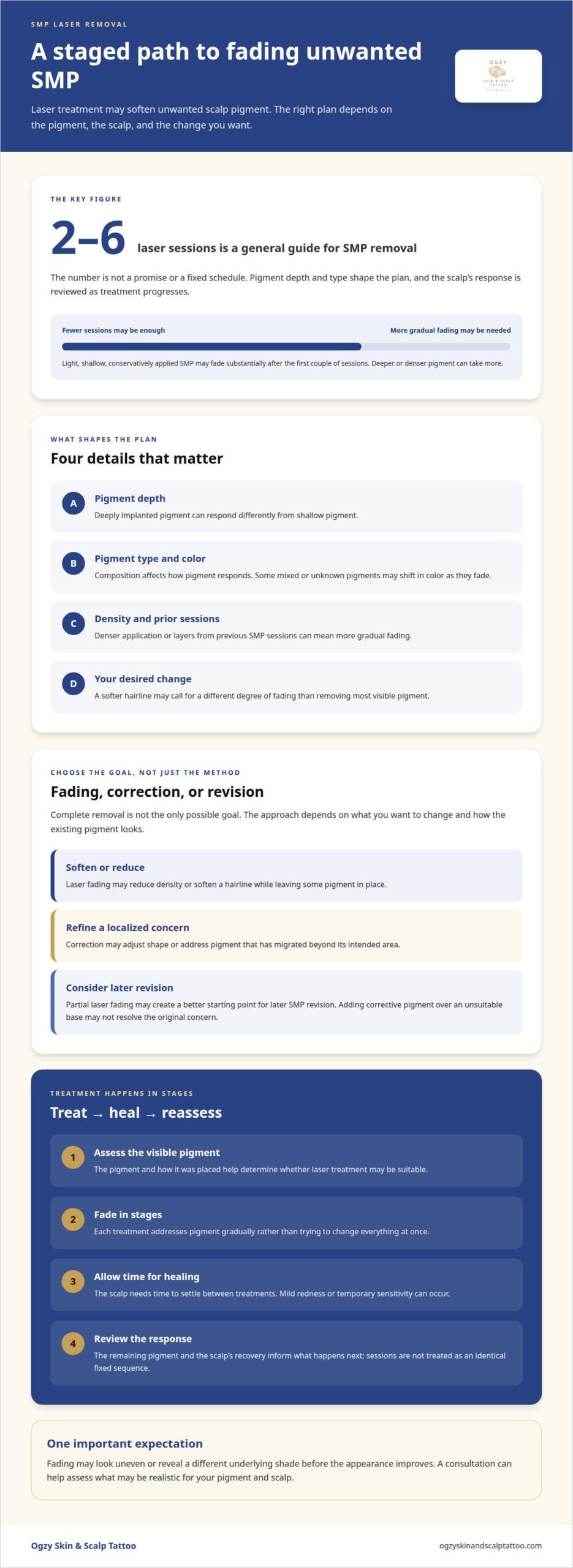
Laser treatment may be considered for unwanted pigment, but its suitability and effects on the surrounding scalp depend on the individual case. The type of laser and treatment plan are determined after assessing the visible pigment and how it was placed. Laser removal of SMP often requires 2-6 sessions, with the number shaped by pigment depth and type.
Pigments That May Respond Differently to Laser
Some pigments may not respond predictably to laser treatment. Whether a particular pigment can be treated, and how its appearance may change, depends on the individual case. A consultation can help assess what may be realistic.
Different pigment compositions may respond differently as they fade. A dark-looking area, for example, might lighten unevenly or reveal a different underlying shade. Pigment composition and color matter alongside depth, so treatment planning must account for the possibility that fading may change the appearance before it improves.
Corrective Pigment and SMP Revision
Correction can change SMP without aiming to remove every trace of pigment. Depending on the concern, the goal may be to soften a hairline, reduce density, adjust the shape, or clean up pigment that has migrated beyond its intended area. This approach can make sense when the issue is localized and the remaining SMP still contributes to the look you want.
Partial laser fading may also create a better starting point for later revision. After sufficient fading, you may leave the scalp natural or have SMP redone by a specialist. The sequence matters: adding corrective pigment over an unsuitable base may not resolve concerns about the original shape, density, or color. A clear goal helps determine whether softening, removal, or revision makes more sense.
Color Changes During Pigment Fading
SMP pigment can change in appearance as it fades, and mixed-compound pigments may shift color during laser treatment. The first visible change may not be an even return to the scalp’s natural appearance. A fading area can look different from the original pigment, especially when its composition is mixed or unknown.
Different pigments may respond differently to laser treatment, and the outcome depends on the individual case. Their depth and density also influence the process. Treatment planning accounts for these differences rather than assuming every dot will lighten in the same way. The goal may be controlled reduction or a cleaner shape, not complete removal.
Multiple sessions and healing intervals
SMP removal usually takes 2-6 laser sessions, depending on pigment depth and type. Sessions are spaced over time so the scalp can heal between treatments, making the process gradual rather than a single appointment.
Planning Multiple Laser Sessions
Multiple sessions allow pigment to fade in stages rather than trying to address all implanted pigment at once. After each treatment, the remaining pigment and the scalp’s response help shape the next step. A light, shallow, conservatively applied SMP design may fade substantially after the first couple of sessions, while deeper or denser pigment can take more.
The 2-6 session range is a general guide, not a promise for an individual result. The number depends on how much pigment remains and how it responds over time. Staged treatment also lets the professional assess whether the goal is sufficient fading, a softer hairline, or more extensive removal.
Recovery Between Sessions
Healing intervals give the scalp time to settle after laser treatment before another session is planned. Mild redness or temporary sensitivity can occur after treatment. Because the scalp’s response matters, the next appointment is not simply set by counting days from the previous one.
Spacing treatments over time allows the professional to assess how the pigment fades and how the treated area recovers. A visible change after one session, for example, may affect whether the next treatment focuses on the same area or adjusts the plan. This pause is part of treatment planning, not a sign that the process has stopped.
Factors Affecting Session Count
Pigment depth and type are key factors in how many sessions removal may take. Deeply implanted pigment can respond differently from shallow pigment, while dense application may require more gradual fading. Color composition also matters because pigments can respond differently during treatment.
Previous SMP sessions can add layers of pigment, changing the amount and distribution the laser must address. Your desired endpoint also affects the plan. Someone seeking a softer hairline may need a different degree of fading from someone aiming to remove most visible pigment. These details help explain why similar-looking scalps may follow different schedules.
As treatment progresses, the professional can reassess the pigment and healing before planning another session. This staged review responds to what the scalp shows, rather than treating every session as identical. The plan is shaped by pigment response and recovery, not a fixed sequence applied to everyone.
Common causes of unwanted SMP results
Unwanted SMP can involve a mismatch in shape, placement, density, or pigment behavior. A hairline may feel too defined, for example, or scalp dots may look heavier than intended. Describing the visible concern helps distinguish a design issue from pigment that needs fading or correction.
Hairline Shape and Placement
A hairline may feel unsuitable when its outline doesn’t fit the look you want. A straight, sharply defined edge can seem more noticeable than a softer design. SMP correction can focus on softening the hairline or changing its shape rather than removing every dot.
Placement matters, too. Pigment that migrates beyond its intended area can create an unwanted edge or blur. Cleaning up migrated pigment may be a more focused goal than treating the entire scalp. The desired change depends on where the concern appears.
Pigment Depth and Dot Size
Pigment implanted too deeply can remain visible for years. Depth can affect how defined individual marks look and how they respond during fading. A dot that appears larger than the surrounding marks can disrupt the fine, follicle-like pattern SMP is intended to create.
When marks look uneven, the concern may involve their size, spacing, or placement. A cluster of prominent dots, for example, can draw attention even when the wider design seems balanced. Looking at the pattern across the scalp helps clarify whether the issue is localized or affects the whole design.
Density and Pigment Formulation
Overly saturated pigment can make the scalp appear darker or denser than intended. A heavily filled area may contrast with a lighter hairline, making the transition feel abrupt. Correction may aim to reduce density or partially lighten the design before a later revision.
Unsuitable pigment formulations can also affect how SMP looks over time. Composition influences how pigment appears as it fades, so the original shade may not remain visually consistent. This can complicate correction if the current color differs from the initial result.
Fading and Changing Appearance
SMP typically fades over 4-8 years, but fading may not look even across the scalp. Differences in depth, density, or pigment composition can leave some areas more visible than others. For example, a lighter surrounding area can make a darker cluster seem more prominent.
Mixed-compound pigment can shift color as it fades, changing the overall impression of the design. The shift may make the original hairline or density feel less cohesive. The practical goal could be selective lightening, shape correction, or cleanup rather than complete removal.
Consultation and treatment planning
Choose a provider with laser tattoo removal certification and experience assessing scalp micropigmentation. A qualified provider should examine the pigment, its placement, your scalp, and the change you want before outlining treatment.
A consultation starts by defining your goal. You might want a softer hairline, less visible density, cleanup where pigment has migrated, or more complete fading. These are different treatment aims. A focused plan connects the visible concern with the areas and pigment that need attention.
Bring clear information about your SMP history, including previous sessions and any changes you have noticed. If you know which pigment was used, that detail can inform the discussion. Previous work may have added pigment over an earlier design, for example, affecting density and distribution.
The assessment considers pigment depth, ink density, color composition, skin tone, previous sessions, and hairline design. These details influence laser treatment planning. A deep, dense area may need a different approach from a lighter, shallower design. Mixed-compound pigment also warrants attention because its color can shift as it fades.
White or flesh-toned pigment requires particular care in planning. Laser cannot remove these shades, and white pigment may darken with treatment. A useful consultation addresses this limitation before treatment and considers whether the desired change is realistic for the pigment present.
The provider should explain the intended endpoint, not just the procedure. If your concern is a harsh hairline, the focus may be softening its outline. If pigment has spread beyond its intended area, the plan may concentrate on cleanup. Complete removal isn’t always necessary for correction.
Ask how progress will be assessed between sessions and what factors could change the plan. Pigment response and scalp healing help inform future treatment decisions. A staged plan can account for visible fading rather than assuming every session will produce the same change.
Clear planning also includes discussing limitations. Laser can fade unwanted pigment, but different colors and formulations respond differently. If your goal is later SMP revision, the consultation can consider whether partial fading may create a more suitable starting point. The right plan connects your priorities with the pigment’s characteristics and the scalp’s response.
Factors that affect laser treatment planning
Laser planning for SMP depends on the pigment, your scalp, and the change you want. These factors work together: a plan to soften a hairline may differ from one addressing dense pigment across a larger area.
Pigment depth: Deeply implanted pigment can remain visible longer and respond differently from shallow pigment. Depth helps shape the treatment approach because the laser must target pigment beneath the skin’s surface. A shallow, lightly applied design and a deeply implanted design involve different considerations.
Ink density: Closely packed pigment creates a different treatment challenge from sparse dots. A concentrated area near the hairline, for example, may need attention distinct from scattered marks elsewhere. Density helps determine whether the goal is localized lightening or broader fading.
Color composition: Pigment color and formulation influence how it changes during treatment. Black carbon-based pigment may respond more predictably, while mixed-compound pigment can shift color as it fades. Laser cannot remove white or flesh-toned pigment, and white pigment may darken when treated.
Skin tone: Skin tone is part of treatment planning because the laser targets pigment within the scalp. It should be considered alongside pigment color and depth, not in isolation. This helps shape an approach around your scalp and SMP rather than a generic template.
Previous sessions: Earlier SMP work affects the amount and distribution of pigment. Each session may add another layer or alter an existing design. The treatment plan accounts for the full history, including areas where pigment looks denser or has changed appearance.
Hairline design and goal: Your intended outcome guides where treatment focuses. Softening a sharp outline, reducing density, correcting shape, and fading pigment before revision are distinct goals. Complete removal isn’t always necessary; a targeted change may better match what you want from the correction.
These factors are assessed together. For instance, dense pigment near a defined hairline may call for a different plan than shallow, scattered marks when the goal is partial lightening. The takeaway is simple: laser treatment planning should reflect your pigment’s characteristics and the specific change you’re seeking, not just the appearance of SMP at a glance.
Ogzy Skin & Scalp Tattoo: Laser tattoo removal
Ogzy Skin & Scalp Tattoo offers certified laser tattoo removal using Nd:YAG technology for unwanted SMP. If pigment, color, or placement no longer feels right, a consultation can help clarify whether your goal is softening, partial fading, or a different correction. I’ll consider the pigment and your desired outcome when discussing a treatment plan, including any limits that may affect laser response. Results vary with the pigment and how it responds during treatment, so I won’t promise a particular result or timeline.
If you’re considering laser removal, book a consultation with Ogzy Skin & Scalp Tattoo. The studio is at 13130 Pond Springs Rd #1105, Austin, TX 78729. You can also find the studio online at ogzyskinandscalptattoo.com.
Choose the Next Step That Feels Right
Deciding whether laser can remove bad SMP is only part of the choice. It also helps to name what you want to change and what a comfortable outcome would look like. You may be seeking a softer outline, less visible pigment, or simply a clearer understanding of your options.
You don’t need to arrive with a complete treatment plan. A thoughtful consultation gives you space to discuss your concerns, understand the factors that shape an approach, and consider a next step that fits your goals. Ogzy Skin & Scalp Tattoo can help you explore the possibilities with care and clarity, without pressure to choose more than feels right.
If you’re ready to talk through your SMP concerns, arrange a consultation with Ogzy Skin & Scalp Tattoo. A calm, informed conversation can be a meaningful first step toward feeling more at ease with your appearance.
Frequently Asked Questions
Why Does SMP Sometimes Look Bad Over Time?
Sometimes the original design no longer feels right, even if its appearance hasn’t changed. To clarify what bothers you, describe the concern specifically: outline, placement, density, or color. “The front edge looks too defined,” for example, gives a clearer starting point than “I don’t like it.” That distinction can help frame a useful discussion about possible correction.
Can laser remove bad scalp micropigmentation (SMP)?
Laser can fade or remove unwanted SMP in some cases. Whether it’s appropriate depends on the pigment and your intended outcome, so a consultation is the best way to discuss what may be realistic for you. You might want a subtle adjustment rather than a fully natural scalp. Naming the outcome you’re seeking keeps the discussion centered on what you’d like to change.
Which laser types are used to remove SMP, and how do they work?
Q-switched and picosecond lasers are used to target pigment, and Ogzy Skin & Scalp Tattoo uses Nd:YAG technology for laser tattoo removal. These laser types direct energy toward pigment beneath the skin. The device alone doesn’t determine the treatment plan: the professional also considers your scalp and the specific pigment. Ask which approach is being considered for your SMP and why it fits your case.
What affects the success of laser removal on different SMP pigment colors and skin tones?
Pigment shade and formulation affect how it responds, while skin tone is one part of treatment planning. Black carbon-based pigment may respond more predictably; mixed-compound pigment can shift as it fades. Laser cannot remove white or flesh-toned pigment, and white pigment may darken. Share any details you know about the original pigment so the assessment can account for its characteristics.
What are the risks of laser SMP removal?
Individual risks and healing can vary. Discuss your concerns with the practitioner during a consultation, including concerns about scarring, discoloration, or hair changes. A general description can’t predict what will happen to your scalp. Ask for guidance specific to your SMP, the area being considered, and your intended outcome.
How long should you wait between SMP removal sessions, and how long does healing take?
There isn’t a single interval or healing duration that applies to everyone. The next session is planned around the scalp’s recovery and its visible response to the previous treatment. Discuss your individual healing and readiness for another session with the practitioner. An assessment between treatments can help inform the next step without imposing a fixed timetable.
Can laser removal cause scarring, discoloration, or hair loss?
A general FAQ can’t determine whether scarring, discoloration, or hair changes will occur in an individual case. Discuss these concerns directly before treatment, including what is known about your scalp and the SMP area. Ask the professional to address each concern separately and explain how the plan accounts for it. Another person’s experience does not predict your own.
What alternatives are there to laser removal for correcting bad SMP?
Correction may involve revising the SMP design rather than removing all pigment. Possible goals include adjusting the shape, reducing density, or cleaning up pigment outside the intended area. After sufficient fading, some people leave the scalp natural, while others choose to have SMP redone by a specialist. The right direction depends on the change you want and the pigment that remains.

Article by
Opal Z
Opal is the owner and practitioner behind OGZY Skin & Scalp Tattoo in Austin, Texas. With more than three years in business and a longtime background in the aesthetics industry, she specializes in corrective and restorative treatments designed to address concerns that traditional aesthetics often overlook.
Her work focuses on scar and stretch mark revision, scar camouflage, scalp micropigmentation (SMP), hair regrowth treatments, and laser tattoo and permanent makeup removal. Opal works with a wide range of skin tones and takes an individualized approach to every client, considering skin color, texture, scar characteristics, treatment history, and realistic long-term outcomes.
Through OGZY Skin & Scalp Tattoo, her goal is to combine artistry, aesthetics, and technical treatment knowledge to help clients feel more comfortable and confident in their skin.
Love the skin you’re in.