
Scarring is possible after laser tattoo removal, but it isn’t inevitable. If you’re asking, does laser tattoo removal cause scarring, the answer depends in part on your skin’s response, how treatment is planned, and how the area heals.
It’s understandable to worry about replacing an unwanted tattoo with a lasting skin change. Laser treatment breaks tattoo pigment into smaller particles that the body clears over time. Temporary redness, swelling, blistering, or changes in skin color can occur during healing, but these changes don’t necessarily mean a scar has formed.
This guide explains how laser tattoo removal works, which temporary skin changes and scarring risks to understand, and how your tattoo, skin, and healing history can shape treatment. It offers general information to help you consider your next step.
Key Takeaways
- Laser treatment breaks tattoo pigment into smaller particles that the body clears over time, so fading happens gradually.
- Professional tattoos can be harder to remove, sometimes requiring 6-10 or up to 20 treatment sessions, according to the National Library of Medicine.
- Temporary redness, swelling, blistering, or pigment changes can happen during healing and don’t necessarily mean a scar has formed.
- Healing and scarring risks can be influenced by treatment approach, skin history, and how the treated area is cared for.
- Keeping the area clean, avoiding picking or scratching, and protecting healing skin from the sun can support aftercare and help reduce infection risk.
What is Tattoo Removal?
Laser tattoo removal uses focused light to break tattoo ink into smaller particles. Your immune system gradually clears those particles, so the tattoo fades over multiple sessions rather than disappearing at once. The laser targets pigment, and appointments are spaced apart to allow time between treatments.
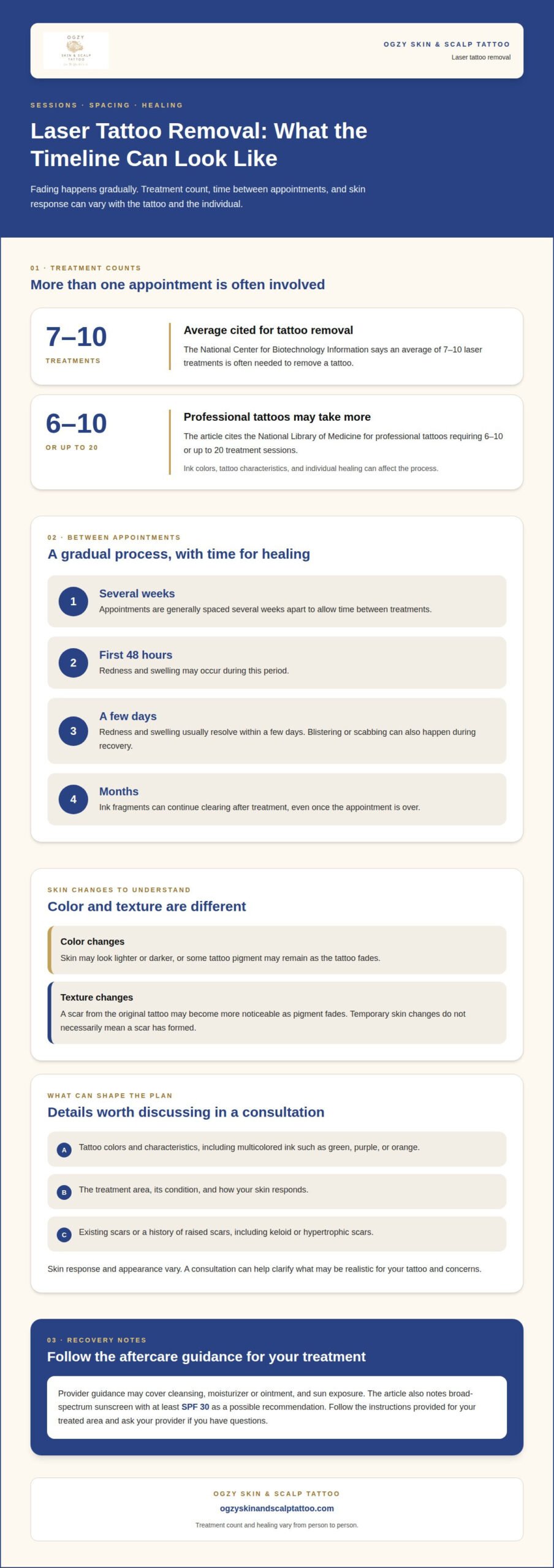
How many sessions are usually needed? The National Center for Biotechnology Information (NCBI) says an average of 7-10 laser treatments is often needed to remove a tattoo. Professional tattoos are harder to remove, requiring 6-10 or up to 20 treatment sessions, according to the National Library of Medicine. Ink colors, tattoo characteristics, and individual healing can affect the process.
Spacing sessions gives the process time to progress between appointments. Healing typically takes several weeks between sessions, while ink fragments can continue clearing for months after treatment. Your treatment schedule can take these factors into account. A gradual approach allows time between appointments rather than rushing into another treatment.
Temporary changes can appear during recovery. Redness and swelling may occur during the first 48 hours and usually resolve within a few days. Blistering or scabbing can also happen during recovery, particularly during the first few sessions. Your provider can discuss what to expect as the area heals.
Aftercare guidance may include instructions about caring for the treated area, such as cleansing and whether to use a moisturizer or ointment. Follow the guidance provided for your treatment, and ask your provider if you have questions about caring for the area as it heals.
Aftercare guidance may also address sun exposure and broad-spectrum sunscreen with at least SPF 30. Your provider can explain any recommendations for the treated area during recovery and after your final session.
Recovery is part of the process, and appointments are generally spaced several weeks apart. Redness and swelling commonly settle within a few days, while healing takes longer than the appointment itself. Your provider can discuss what to expect between sessions and help you understand the treatment schedule.
Risk of scarring after laser tattoo removal
Changes in skin appearance after laser tattoo removal can vary. Your tattoo, the area being treated, and your skin’s response are among the details I can discuss with you during a consultation to help clarify what may be realistic for your situation.
Factors That Affect Scarring Risk
Every tattoo and treatment area is different. During a consultation, I can review the tattoo and the area’s condition with you, and discuss what to consider before deciding whether laser tattoo removal is appropriate for your goals. The appearance of the area after treatment can vary from person to person.
The tattoo itself matters, too. A scar from the original tattoo may become more noticeable as its pigment fades, so a texture change after removal may have been present before laser treatment. Multicolored tattoos, including those with green, purple, or orange ink, may need a different treatment plan. A consultation is an opportunity to discuss the tattoo’s colors and what may be realistic.
The area’s condition, pigment colors, and your skin’s response are all details to consider when discussing treatment. During a consultation, I can review these factors with you and talk through a plan that reflects your tattoo and goals. Session timing and the area’s response are also topics we can discuss as part of setting realistic expectations.
Keloid and Hypertrophic Scarring
Keloid and hypertrophic scars are terms for raised scar patterns. A keloid can extend beyond the original injury, while a hypertrophic scar remains raised around it. If you have a history of either type, share that during your consultation so we can discuss what may be realistic for you before considering laser tattoo removal.
Scars beneath tattoo ink may remain visible as the pigment fades. The appearance of the area can vary, and a consultation gives us a chance to discuss your tattoo, any existing scars, and your expectations. Changes in color and texture are different aspects of appearance that may be worth discussing.
Hyperpigmentation means darker skin pigment. It is a change in color, distinct from a raised or textured scar. The appearance of the skin after laser tattoo removal can vary, including changes in color or remaining tattoo pigment. A consultation can help you understand what may be realistic for your particular tattoo and skin.
A change in color is different from a change in texture. Skin may look lighter or darker, or retain some pigment, while a scar affects texture. Tattoo features, skin type, prior scarring, treatment approach, and your skin’s response are details to discuss during a consultation. Outcomes vary from person to person.
The appearance of the area after laser tattoo removal can vary, including changes related to the original tattoo or existing scars. If you have a history of raised scars or concerns about changes in skin color or texture, bring them up during a consultation. I can review your concerns and discuss what may be realistic before you decide whether to proceed.
A consultation is a chance to discuss your tattoo, any existing scars, and your expectations for laser tattoo removal. If you have a history of keloid scars or concerns about hyperpigmentation, share those details with me so we can talk about what may be realistic for your situation.
What About Temporary Skin Changes?
Laser treatment can be followed by visible changes in skin color as tattoo pigment fades. Skin type and tattoo color both influence how the treated area may look. Multicolored tattoos, especially those with green, purple, or orange ink, may respond differently during treatment.
Skin Type and Pigmentation Changes
Pigmentation changes are differences in the amount of color visible in the skin after treatment. They matter because fading tattoo ink doesn’t always leave an even-looking area. Skin type affects how the treated area may look, and individual responses vary. An individualized assessment can help consider how your skin and tattoo colors may affect the appearance of the area.
Possible changes include lighter skin where the tattoo was, residual tattoo pigment, or darker pigmentation. Residual pigment means some ink remains visible as the body gradually clears the particles. These outcomes are not the same as a scar: pigment changes affect color, while scarring changes skin texture. A consultation can consider your skin type, tattoo colors, and history of pigment changes together.
Factors That Shape Laser Treatment
Tattoo size, age, color, and skin type can all affect the treatment outcome. These details help shape a treatment plan for the specific tattoo and area. Individual responses vary, so treatment planning may differ from one tattoo to another.
The laser device and how it is used matter, too. The laser targets tattoo pigment, and its application is planned around the tattoo and treated area. Settings can be selected based on skin type and tattoo features, rather than treating every tattoo alike. A consultation provides an opportunity to assess these details and consider what may be realistic for your tattoo.
The appearance of the treated area can change as tattoo pigment fades. Skin color and residual tattoo pigment may look different from one area to another. If you have questions about a change in appearance, a consultation can help assess the area and discuss what it may mean for your treatment plan.
Tattoo color also shapes the treatment experience: green, purple, and orange pigments can respond differently and may require more treatments. Skin type and pigment response add context. The key distinction is the type of change: color shifts may leave lighter or darker skin, while scarring changes skin texture. Understanding this difference can help you describe what you see clearly.
Aftercare and infection prevention
Aftercare refers to the information provided about caring for skin after laser tattoo removal. Instructions can vary by treatment plan, so details such as keeping the treated area clean and dry are best discussed with your provider. Temporary redness or swelling may be mentioned in aftercare materials in relation to the first 48 hours or the following few days; individual experiences vary.
Aftercare materials may describe cleansing the treated area, but they can differ in the methods and frequency they discuss, including washing twice daily. They may also address how to handle the area after cleansing. Your provider can explain which information applies to your treatment plan.
Some aftercare materials discuss moisture and dressings, including whether a bandage is used and how often it is changed. Product references, such as ointments or creams, and instructions like applying something three times a day may also appear in some materials. These details are not universal recommendations; follow-up questions about them can be discussed with your provider.
Blisters and scabs may be mentioned in information about the skin after treatment, including during the first few sessions. Aftercare materials may also discuss touching or scratching the area. Your provider can explain what changes to expect and how to handle questions about the treated skin.
Sun exposure may be addressed in treatment-specific information. Some materials mention broad-spectrum sunscreen with at least SPF 30 or refer to several weeks after the final session. These timeframes and details can vary, so discuss questions about sun exposure with your provider.
Information about activities may also vary by treatment plan. For example, some materials mention swimming for 48 hours or taking it easy for a few days. These are examples of details that may appear in aftercare information, not instructions that apply to everyone. Your provider can clarify the information associated with your session.
Skin type and health history may be topics to discuss during a laser tattoo removal consultation. You can share relevant background, including diabetes, autoimmune disorders, a history of hyperpigmentation, or raised scars, so your provider can consider your questions in the context of your treatment plan. Hydration may also come up in general discussions, but it does not replace guidance specific to your session.
Redness, swelling, changes in texture, and other skin changes may be discussed after laser tattoo removal. Their appearance and course can vary, and this information alone cannot determine what a skin change means. If you have questions or concerns about the treated area, contact your provider for guidance.
Whether laser tattoo removal causes scars
Laser tattoo removal can leave subtle scarring, but a scar isn’t inevitable. The laser targets tattoo pigment, breaking it into particles that the body clears over time. Your skin’s response, the treatment approach, and healing all influence how the area looks afterward.
Does laser tattoo removal leave scars compared with surgical or dermabrasion removal? Laser treatment may leave subtle scars, but a direct ranking against surgical or dermabrasion methods doesn’t account for individual treatment details. The practical takeaway is to understand the method being considered and the factors that shape your skin’s outcome.
Several factors can influence whether a scar becomes visible. The original tattoo may have caused scarring before removal began, and fading ink can make that texture easier to see. A history of keloid or hypertrophic scars can also raise concern. Infection, picking at healing skin, or overly aggressive treatment may further disrupt the area.
Temporary redness, swelling, blisters, or scabs don’t automatically mean permanent scarring. Redness and swelling may occur during the first 48 hours and usually settle within a few days. Blisters and scabbing can occur during healing. Avoid picking or scratching, since trauma can interfere with recovery and increase scarring risk.
Laser tattoo removal typically doesn’t cause scarring when appropriately performed, because the laser targets pigment rather than skin cells. Still, heat can damage skin if the laser isn’t applied correctly, potentially causing a burn or scar. Appropriate planning considers tattoo features and skin type to help protect surrounding tissue.
Pigment changes are another possible outcome, and they differ from scars. The skin may look lighter where the tattoo was, or some tattoo pigment may remain. These changes affect color, while a scar changes skin texture. Considering both helps you describe what you see accurately, without assuming every visible difference is scar tissue.
Risk assessment should consider tattoo colors, existing texture, skin type, and healing history. Green, purple, and orange pigments may require more treatments and carry a higher scarring risk. A history of keloids or hyperpigmentation is also relevant to discuss before treatment, particularly if you’ve noticed raised scars or darker pigment after earlier skin injuries.
The key takeaway is that laser tattoo removal can leave scars, but scarring is not inevitable. Treatment planning, careful session spacing, and aftercare all matter. Give your skin time to heal between sessions, keep it clean, protect it from the sun, and leave blisters or scabs undisturbed.
Ogzy Skin & Scalp Tattoo: Scar and Stretch Mark Revision
Ogzy Skin & Scalp Tattoo offers laser tattoo removal and Scar and Stretch Mark Revision for different concerns: fading unwanted tattoo pigment and improving the appearance of scars or stretch marks. If a scar remains noticeable after tattoo removal, revision may be a relevant next step to explore.
Not every scar needs pigment. Skin can first be treated with regenerative serum, with pigment camouflage considered as its condition allows. A consultation is the best way to discuss what may be realistic for your skin and scar.
If you’re considering tattoo removal or scar revision in Austin, Texas, contact Ogzy Skin & Scalp Tattoo to discuss your goals and next steps.
Choose a Thoughtful Next Step
Deciding how to move forward is personal. If you’re still asking, “Does laser tattoo removal cause scarring?” use what you’ve learned to guide a conversation about your skin, tattoo, and healing history. A consultation can clarify what’s realistic for your circumstances and whether scar revision may be relevant after tattoo removal.
You don’t need to have every question answered before reaching out. Sharing what concerns you most, whether it’s a visible tattoo, a change in skin texture, or uncertainty about healing, gives the conversation a clear starting point. From there, you can consider your options at a pace that feels comfortable.
If you’re ready to discuss your next step, contact Ogzy Skin & Scalp Tattoo. The studio is located at 13130 Pond Springs Rd #1105, Austin, TX 78729. A thoughtful conversation can help you move forward with greater clarity and care.
Frequently Asked Questions
Does laser tattoo removal leave scars, and is scarring common?
Whether scarring may be a concern depends on your individual situation. Existing texture or marks can also affect how the area looks as tattoo ink fades. A consultation is the best way to discuss what may be realistic for your tattoo and skin.
What can affect the outcome of laser tattoo removal?
Your tattoo and skin are individual, so a general description cannot determine what to expect in your case. A consultation gives you the opportunity to discuss your tattoo, your concerns, and questions about the treatment process with me. I can help you understand what may be realistic for your situation.
What if I already have scarring from my tattoo?
Existing texture or scarring may remain visible as tattoo ink fades, and the area may look different as removal progresses. A consultation can help you discuss what you are noticing and whether laser tattoo removal is appropriate for your goals. The appearance of each tattoo and the surrounding skin is individual.
What should I know about treatment and recovery?
Questions about the first 48 hours, session spacing, or what to expect during recovery are best discussed in a consultation. Your individual situation and treatment plan matter, so I can address your questions without relying on general aftercare guidance. If you have concerns about changes in the area, a consultation can help you understand what next steps may be appropriate.
What if I’m concerned about changes to my skin?
If you notice changes that concern you, a consultation is the best way to discuss them in the context of your tattoo removal. I can talk through what you are seeing and what may be realistic for your situation. For individualized questions about your skin, seek guidance from an appropriate healthcare professional.

Article by
Opal Z
Opal is the owner and practitioner behind OGZY Skin & Scalp Tattoo in Austin, Texas. With more than three years in business and a longtime background in the aesthetics industry, she specializes in corrective and restorative treatments designed to address concerns that traditional aesthetics often overlook.
Her work focuses on scar and stretch mark revision, scar camouflage, scalp micropigmentation (SMP), hair regrowth treatments, and laser tattoo and permanent makeup removal. Opal works with a wide range of skin tones and takes an individualized approach to every client, considering skin color, texture, scar characteristics, treatment history, and realistic long-term outcomes.
Through OGZY Skin & Scalp Tattoo, her goal is to combine artistry, aesthetics, and technical treatment knowledge to help clients feel more comfortable and confident in their skin.
Love the skin you’re in.