
In Austin, scalp micropigmentation offers an alternative to temporary hair fibers by creating a pigment-based appearance of density. The right choice depends on the look and routine you want.
This guide explains how a consultation can help you consider SMP and decide whether it fits your goals.
Key Takeaways
- Scalp micropigmentation creates the look of hair density with carefully placed pigment; it does not grow hair.
- Unlike temporary fibers, SMP is a pigment-based approach designed to create a consistent visual effect.
- Your hair-loss pattern, preferred look, and reasons for switching can help shape a consultation.
- A consultation can clarify the process and whether SMP aligns with your goals, without promising a particular result.
- Learn what to discuss with Opal at Ogzy before deciding on your next step.
Scalp Micropigmentation as an Alternative to Hair Fibers
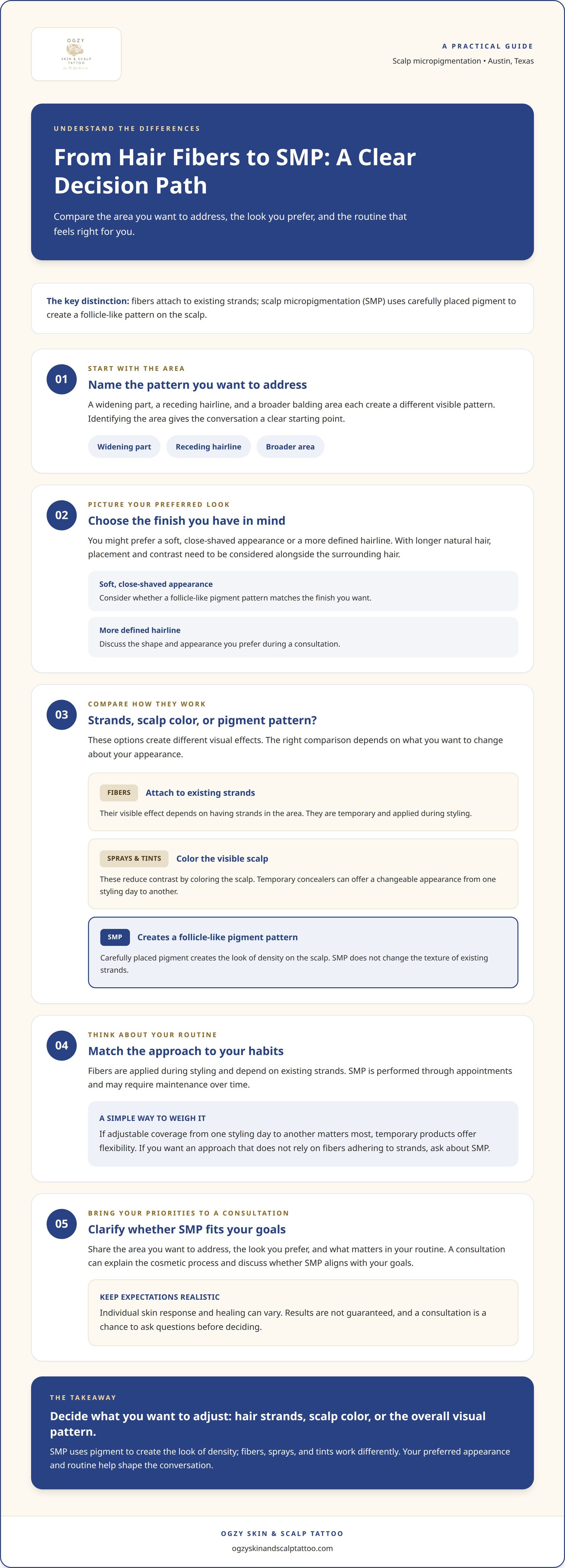
Scalp micropigmentation (SMP) uses carefully placed pigment to create the look of hair density, not to grow new hair. Unlike temporary fibers, it creates a follicle-like pattern on the scalp. The better fit depends on what you want to change about your appearance and routine.
Alternatives for Thinning Hair
For thinning hair, alternatives include scalp tints, spray concealers, hair toppers, and SMP. Sprays and tints color the scalp to reduce contrast, while a topper adds hair coverage. SMP uses precision pigment deposits to simulate the appearance of follicles.
Hair fibers work differently: they cling to existing strands, so their effect depends on having hair to hold them. A scalp tint darkens visible skin instead. For example, someone who wants to reduce contrast along a part may prefer a tint’s color effect to the added texture of fibers.
The material may matter if you’re switching because of how a fiber product feels or what it contains. Keratin fibers are made from an animal-derived protein, while cotton fibers are plant-based. These are different fiber materials, not SMP: pigment creates a visual pattern on the scalp rather than attaching to hair strands.
Fiber products also differ in how they respond to moisture. Some mineral-pigment formulations are described as resisting sweat-related running and fading, and cotton fibers colored with mineral pigments are described as less likely to run green when someone sweats. These properties relate to fiber formulations, not how SMP works.
Start by identifying why you want to switch. If you want a temporary way to disguise visible scalp between styling appointments, fibers or a spray concealer may suit you. If you want to reduce scalp contrast without adding strands or texture, personalized SMP treatments may be worth discussing.
Consider the area you want to address, the look you prefer, and how much daily product use suits you. A widening part, a receding hairline, and broader balding areas can call for different visual plans. You might prefer a soft, close-shaved appearance or a more defined hairline.
No single alternative suits every reason for changing products. If you want a method that doesn’t rely on fibers adhering to natural hair, SMP works differently from the outset. If adjustable coverage from one styling day to another matters more, temporary concealers offer a changeable appearance.
Comparing Fibers, Scalp Micropigmentation, Toppers, and Transplants
Fibers temporarily attach to existing strands, while SMP places pigment to simulate follicles. Toppers add hair coverage, and hair transplants are surgical procedures. Hair replacement systems require ongoing monthly maintenance; SMP results can last up to five years with proper maintenance.
These approaches address different needs. Fibers are applied over hair, so their visible effect depends on the strands in the treated area. SMP uses a pattern of small pigment impressions to create the appearance of density across the scalp. It does not grow hair or change the texture of existing strands.
A topper provides a separate piece of hair coverage rather than a pigment pattern. Its appearance and feel differ from scalp camouflage, and it may suit someone who wants coverage over a selected area. A hair replacement system is another non-surgical option, but it requires ongoing monthly maintenance rather than creating SMP’s pigment-based visual effect.
A hair transplant is a surgical option, unlike a cosmetic pigment procedure. That distinction isn’t a personal recommendation; it shows that suitability can depend on more than the look you want.
With SMP, the key comparison is visual: pigment can make the scalp appear more densely covered, while fibers build on existing hair strands. For a close-shaved style, the follicle-simulation effect may be the goal. With longer natural hair, placement and contrast need careful consideration so the pigment pattern works with the surrounding hair.
At a consultation, a specialist can discuss the pattern you want to address and the appearance you hope to achieve. This is useful whether you’re concerned about a receding hairline, thinning at the crown, or a larger balding area. Each creates a different visible pattern, so personalized treatments should reflect your features and preferences.
Some people switch because fibers feel inconvenient; others want a different finish or fewer styling steps. Stylists can help with hair shape and texture, while SMP addresses scalp contrast through pigment. The distinction helps you match the method to the part of your appearance you want to refine.
Consider how each method fits your habits. Fibers are temporary and applied during styling, while SMP is performed through appointments and may require maintenance over time. A topper or hair replacement system has its own upkeep. Comparing these practical differences can clarify whether you value flexibility, scalp coverage, or a follicle-like appearance most.
If you’re exploring alternatives to hair fibers in Austin, the central choice is whether you want to adjust hair strands, scalp color, or overall coverage. SMP creates the look of density through pigment, while fibers, sprays, toppers, and transplants work differently. Discussing your preferred appearance and reason for switching can help you decide which approach to consider.
A Scalp Micropigmentation Consultation at Ogzy
Ogzy Skin & Scalp Tattoo offers personalized Scalp Micropigmentation (SMP) in Austin. In a consultation, we discuss your goals, the look you prefer, and what matters to you, then talk through next steps. It’s a chance to make an informed decision without committing before you’re ready.
What should you know about SMP in Austin? Look for a clear explanation of the service, its scope, and how the provider approaches your individual goals. At Ogzy Skin & Scalp Tattoo, we explain SMP in straightforward terms, answer questions about the cosmetic process, and keep expectations realistic.
SMP creates the look of density on the scalp; it does not regrow hair. During a consultation, we can discuss your goals and explain how the cosmetic service may align with them. Individual skin response and healing can vary, and results are not guaranteed.
What should you ask about SMP? Individual skin response and healing can vary, so raise personal concerns during a consultation. We can explain the cosmetic process and discuss questions about SMP, but we can’t diagnose a medical condition or offer medical advice.
What the Consultation Helps Clarify
We begin by listening to what brought you to the appointment. You may want to understand a cosmetic option for your scalp. Your reason helps guide the conversation toward the questions that matter to you, rather than a standard script.
We can discuss your preferences in practical terms. You may favor a subtle appearance or feel more comfortable with a clearly defined style. Reference photographs can help communicate your taste, but they’re examples for discussion, not promises of an identical result.
Your current hairstyle and how you wear it are useful context. You may keep a consistent cut or change your style for work and personal occasions. We consider those preferences alongside the area you want assessed and the appearance you hope SMP can create.
The consultation gives you time to ask about the appointment itself. We can explain the general process, discuss how a personalized plan is developed, and address your questions before you decide whether to proceed. If a term or step is unfamiliar, we’ll explain it in plain language.
Raise any concerns that may affect your comfort with the choice. You may want to discuss a past scalp procedure, a previous cosmetic service, or a sensitivity that concerns you. Sharing this context keeps the conversation relevant; you don’t need a technical explanation or diagnosis.
Matching SMP to Your Goals
A consultation is useful when you’re weighing whether the service aligns with your priorities. If your main concern is your grooming routine, we can discuss what you hope to change and what you’re comfortable maintaining. If a particular visual style matters most, we can focus on that.
You don’t need to arrive with a final decision. Tell us what you’ve considered, what appeals to you, and what gives you pause. You may have questions about how the appearance can change over time, how your preferred hairstyle fits the plan, or how the appointment works. The goal is clarity before you choose.
Separate your own preference from outside opinions. A friend or stylist may have a different sense of what looks right; your comfort and desired appearance should guide the conversation. If you’re unsure how to describe your preference, everyday language is enough. Point to a style, describe its outline, or explain what you want to avoid.
People considering SMP in Austin may have different reasons, so we don’t assume one motivation applies to everyone. You may want a cosmetic approach that better suits your preferences. Naming your reason helps us discuss whether SMP addresses the concern you actually have.
A consultation is also an opportunity to discuss reasonable expectations. We can explain the scope of the service and the factors considered when planning SMP, without promising a particular appearance. If a question falls outside the cosmetic discussion, we’ll make that distinction clear rather than offering a medical conclusion.
Questions to Ask at Your Consultation
Use the consultation to discuss your goals, the SMP service, and the questions you need answered. We don’t use a treatment decision to determine whether SMP is right for you. The appointment is a chance to consider the service before deciding whether to proceed.
Ask about the details that matter to you, including your preferred look and the treatment itself. We keep practical details separate from discussing your goals. That helps you consider the service without feeling that a decision should determine your choice.
Keeping the Consultation Focused on SMP
An SMP consultation focuses on your scalp-related goals, style preferences, and the cosmetic service being considered. Knowing the appointment’s purpose helps you frame your questions around the decision at hand.
If you’re considering SMP, keep the appointment’s purpose clear. At Ogzy Skin & Scalp Tattoo, we provide personalized SMP treatments. This distinction helps set clear expectations for the appointment.
During an SMP consultation at Ogzy Skin & Scalp Tattoo, we focus on whether the service fits your goals. Describe the options you’re weighing, then ask questions directly related to SMP.
Preparing for an SMP Appointment
Before the consultation, consider what you want us to understand about your goals. Note the styles you wear most, the change you’re considering, and the questions you want answered. A short list on your phone can help you remember details, especially if you’re considering SMP.
Reference images can also help communicate your preferences. Choose examples for details such as the outline or overall feel you like, rather than expecting a photograph to serve as a guaranteed template. If you bring several, tell us what stands out in each. That gives us a clearer way to discuss your taste.
During the appointment, speak up if anything is unclear. Ask us to explain a step again, describe what you hope to avoid, or pause to consider a decision. A consultation should leave you with a clearer understanding, not pressure to say yes immediately.
Ogzy Skin & Scalp Tattoo provides personalized SMP treatments in Austin for people from Cedar Park, Leander, Round Rock, and Georgetown. A consultation can help you discuss your priorities, ask informed questions, and decide whether the service suits your goals. Individual skin response and healing can vary, so we don’t promise a particular outcome.
If you’d like to discuss SMP, contact Ogzy Skin & Scalp Tattoo to arrange a consultation at 13130 Pond Springs Rd #1105, Austin, TX 78729.
Frequently Asked Questions
Where can I get scalp micropigmentation in Austin, Texas?
You can get scalp micropigmentation at Ogzy Skin & Scalp Tattoo in Austin, Texas. Personalized SMP treatments use precision pigment deposits to simulate hair follicles and create the look of density. A consultation is a practical first step to discuss your hairline or thinning area, preferred appearance, and whether this non-surgical approach fits your goals.
What should I know about the cosmetic process of SMP?
Individual skin response and healing can vary. Discuss personal concerns about SMP during a consultation.

Article by
Opal Z
Opal is the owner and practitioner behind OGZY Skin & Scalp Tattoo in Austin, Texas. With more than three years in business and a longtime background in the aesthetics industry, she specializes in corrective and restorative treatments designed to address concerns that traditional aesthetics often overlook.
Her work focuses on scar and stretch mark revision, scar camouflage, scalp micropigmentation (SMP), hair regrowth treatments, and laser tattoo and permanent makeup removal. Opal works with a wide range of skin tones and takes an individualized approach to every client, considering skin color, texture, scar characteristics, treatment history, and realistic long-term outcomes.
Through OGZY Skin & Scalp Tattoo, her goal is to combine artistry, aesthetics, and technical treatment knowledge to help clients feel more comfortable and confident in their skin.
Love the skin you’re in.