
What if an alternative to transplant surgery could change the look of your scalp without trying to grow new hair? If you’re considering a hair transplant alternative in Leander, Scalp Micropigmentation (SMP) may be worth exploring. This non-surgical treatment uses precision pigment deposits to replicate natural-looking hair follicles and create the appearance of density; it does not regrow hair.
It’s understandable to want a clear picture of your options, especially when weighing a visible change against recovery. The right fit depends on your goal: SMP can refine the appearance of thinning areas, baldness, or a receding hairline, but it works differently from transplant surgery and does not restore hair growth.
This article explains how SMP compares with transplant surgery as a cosmetic option and what to consider when choosing a treatment. Recovery experiences can vary, so discuss the process and your expectations as part of a personalized treatment plan.
Key Takeaways
- Understand how scalp micropigmentation creates the appearance of greater density without restoring hair growth.
- Learn what to expect from the SMP process and why healing experiences can differ.
- Understand the cosmetic role of SMP in changing the appearance of the scalp.
- Consider whether the look SMP can create aligns with your goals for thinning areas, baldness, or a receding hairline.
- Explore how a consultation with Ogzy can help you understand the approach for your scalp.
Scalp Micropigmentation as a Non-Surgical Hair Transplant Alternative
Scalp Micropigmentation (SMP) offers a non-surgical way to change the appearance of thinning areas, baldness, or a receding hairline. It uses precision pigment deposits to replicate natural hair follicles, while transplant surgery moves hair follicles.
Available Hair Restoration Services
Hair restoration can refer to treatments with different purposes. SMP is a cosmetic option that changes how the scalp appears; transplant surgery moves follicles. When comparing options, identify whether your goal is a change in appearance or the movement of hair. These approaches are distinct, not interchangeable versions of the same procedure.
The area you want to address can help clarify your choice. Someone concerned about the outline of a hairline, for example, may prioritize its visual shape, while someone focused on moving follicles is considering surgery. A consultation can help you explain your goal and understand what SMP is designed to create. It cannot turn a cosmetic pigment pattern into a surgical result.
Non-Surgical Hair Restoration
“Non-surgical” describes SMP’s method, not hair regrowth. Precision pigment deposits replicate the look of follicles and create an appearance of density. SMP does not add follicles, move hair, or change the amount of hair on your scalp. That distinction is useful when comparing a cosmetic treatment with an operation and considering what each can visibly do.
For instance, someone with a receding hairline might want the appearance of a more defined outline. SMP’s design takes the existing hairline and selected treatment area into account. Someone seeking a change that depends on moving follicles has a different objective. Defining your desired outcome first helps distinguish a visual effect from a surgical one.
Treatment Effectiveness and Alternatives
Effectiveness depends on the result you mean. SMP can create a follicle-like appearance in treated areas, but it does not restore hair. Transplant surgery moves follicles, so it differs in both method and intended result. Neither option should be judged by the other’s purpose: a pigment design is not a transplant, and a transplant is not SMP.
Use practical questions to compare the approaches: Are you seeking a change in how your scalp looks, or considering surgery that moves follicles? Which areas matter most, such as the hairline or a thinning region? What visual style do you want? These questions make a consultation more specific and help clarify whether SMP’s cosmetic purpose fits your priorities.
A close-cropped look and a design intended to blend with existing hair can call for different visual planning. The selected area, hairline shape, and desired appearance all inform the SMP design. Discussing these details keeps the focus on appearance, rather than assuming a non-surgical option and transplant surgery produce the same outcome.
What to Expect From Scalp Micropigmentation
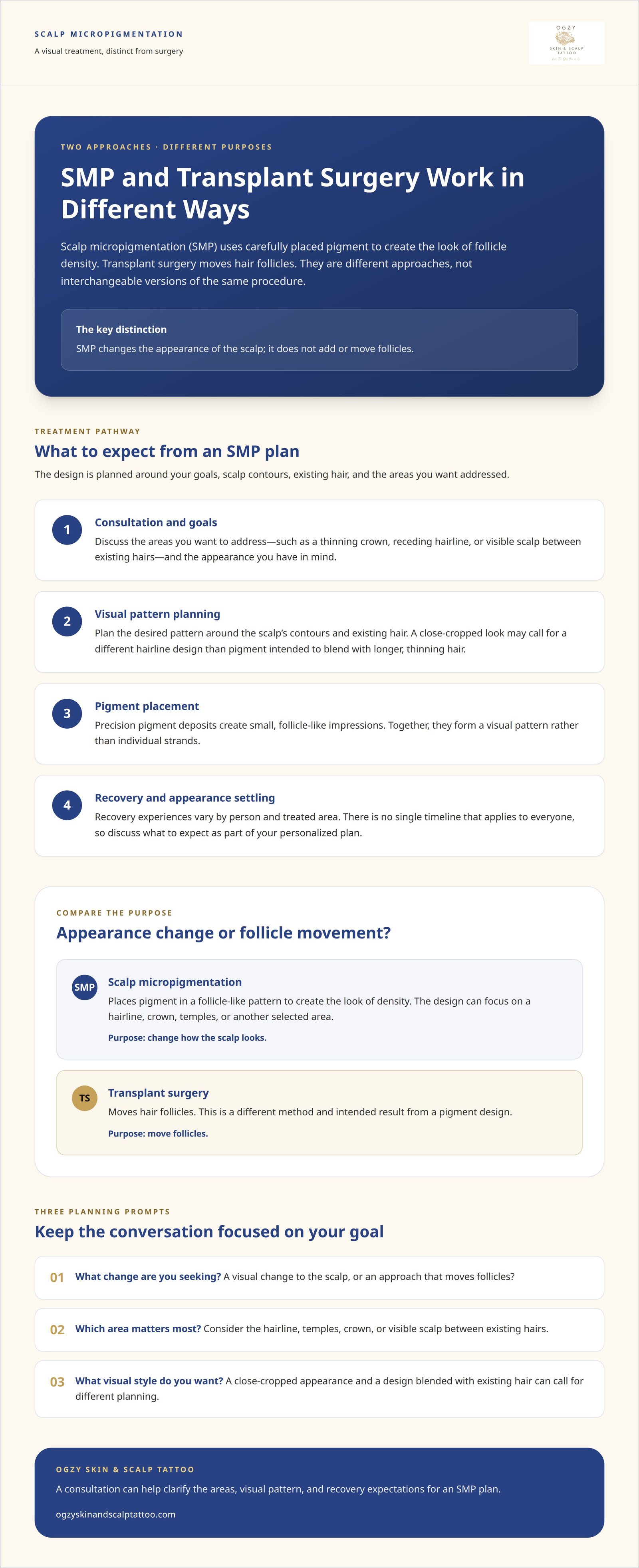
Scalp micropigmentation (SMP) involves placing pigment in a follicle-like pattern across selected scalp areas. The process focuses on the appearance you want, such as a defined hairline or visually balanced coverage. Results and recovery experiences vary, so there isn’t one timeline that applies to every person.
The first step is a consultation to discuss your goals and the areas you want addressed. You might be concerned about thinning at the crown, a receding hairline, or visible scalp between existing hairs. These details help shape a personalized treatment plan. SMP changes the look of density; it does not add hair or alter hair growth.
Next, the desired visual pattern is planned around your scalp’s contours and existing hair. A hairline designed for closely cropped hair may differ from one intended to blend with longer, thinning hair. Placement should suit the area being treated rather than apply the same pattern everywhere. The aim is a coherent appearance across the selected region.
During treatment, precision pigment deposits create small, follicle-like impressions. These build a visual pattern rather than individual strands. The selected coverage and design influence how the scalp looks as a whole. For instance, addressing the temples calls for attention to the hairline’s shape, while work at the crown focuses on visible contrast in that area.
Recovery describes how the scalp responds after pigment placement and how the treated appearance settles. There is no single timeline that applies to everyone. Your individual response and the area treated affect the experience, so discuss what to expect as part of your personalized treatment plan. The same design will not look identical on every scalp.
Keep the distinction between treatment and outcome clear. SMP creates the appearance of density through pigment; it does not restore follicles or regrow hair. Someone seeking a close-cropped look may have a different visual goal from someone wanting pigment to blend with existing hair. Your goal informs the design and areas addressed.
American patients may see different terms used for SMP, but the key process remains pigment placement that simulates follicles. Ask what the proposed design is intended to change visually, which scalp areas it covers, and how recovery will be discussed for your treatment. These questions focus the conversation on realistic expectations and the visual effect SMP is designed to create.
After the procedure, assess the result in context: hairline shape, coverage, and how the treated area relates to surrounding hair. Recovery experiences differ, and the appearance you’re working toward depends on your starting pattern and chosen design. A careful consultation connects those details before treatment begins, so you understand the process and its cosmetic purpose.
What Can Scalp Micropigmentation Do Cosmetically?
Scalp micropigmentation (SMP) uses carefully placed pigment to create the look of follicle density. It changes the scalp’s appearance; it does not move follicles or create new hair. The right design depends on the cosmetic look you want and the areas you would like to address.
If your priority is a more defined-looking hairline or less visible contrast across a thinning area, SMP may address that visual concern. It can create a follicle-like pattern on the scalp, but it does not reproduce hair growth or the function of hair follicles.
Your hair pattern also shapes the conversation. Someone concerned about the temples may have a different cosmetic goal from someone focused on the crown. With SMP, the chosen area and desired look guide the pigment pattern. Naming the specific area helps keep expectations aligned with what SMP can do cosmetically.
Consider what SMP changes:
- SMP: changes the scalp’s appearance with a follicle-like pigment pattern.
- What SMP cannot do: create new hair or move hair follicles.
SMP may suit a cosmetic goal, such as creating the look of density or a more defined-looking outline. It does not create fuller or regrown hair, so it’s important to focus on the appearance you want rather than expecting hair restoration.
During a consultation, you can discuss the look you want, the scalp areas that concern you, and whether a pigment-based design fits your goal. For example, you might want a more defined-looking outline or a pattern that relates to existing hair. These are appearance goals, not promises of hair growth.
Be precise about what you want SMP to do. If your goal is to change how your scalp looks, SMP may be relevant. If you expect new hair or moved follicles, SMP does not meet that aim. Keeping the distinction clear helps you assess this personalized treatment on its own terms.
Ultimately, SMP is a cosmetic choice that creates the look of density through a pigment pattern. The design, coverage, and intended appearance are central to deciding whether it matches your priorities. Understanding these differences supports a more informed conversation about the option you’re considering.
Ogzy Skin & Scalp Tattoo: Scalp Micropigmentation in Austin
Ogzy Skin & Scalp Tattoo offers personalized Scalp Micropigmentation (SMP) treatments for people seeking the appearance of greater scalp density. Precision pigment deposits replicate natural-looking hair follicles; they do not regrow hair. If you’re in Leander and considering a cosmetic change in how your scalp looks, SMP may be worth discussing.
The design begins with your desired appearance and the areas you want addressed. Thinning at the crown, a receding hairline, and baldness each present different considerations. During a consultation, we can discuss the pattern you’d like to refine and how a personalized SMP treatment may create a more consistent visual effect across that area.
A considered design takes your existing hair and hairline into account. Someone who wears their hair closely cropped may want a defined, follicle-like look, while someone with thinning hair may seek visual blending. The purpose is to create an intentional appearance suited to your goals, not to promise new growth or change the amount of hair present.
SMP may be worth discussing if you want the look of density. It will not produce hair growth. That distinction matters: SMP changes the appearance of your scalp by creating a pigment-based impression of density.
At Ogzy Skin & Scalp Tattoo, a consultation is a chance to discuss your expectations before settling on a design. We can consider the coverage you have in mind, your hairline shape, and how the pigment pattern would relate to surrounding hair. These details make the discussion specific to your scalp, rather than relying on a generic idea of density.
People also want to understand what recovery may involve. The way pigment settles can vary, so one timeline cannot describe everyone’s experience. Your personalized treatment plan and the areas addressed inform that discussion. We’ll explain what to expect for your individual process and keep the focus on realistic cosmetic outcomes, without guaranteeing a particular result.
Choosing SMP is a personal decision, and you do not need to frame hair loss as something to hide. Bring your questions about the look you want, the areas that concern you, and whether pigment-based density aligns with your priorities. A clear conversation helps you understand how SMP can create the appearance of scalp density before you choose a next step.
To discuss scalp micropigmentation in Austin, you’re welcome to book a consultation with Ogzy Skin & Scalp Tattoo. The studio is located at 13130 Pond Springs Rd #1105, Austin, TX 78729.
Frequently Asked Questions
What are alternatives to hair transplantation for hair loss?
Scalp Micropigmentation (SMP) is a non-surgical option for changing the appearance of the scalp. It may suit someone seeking a follicle-like look around a receding hairline or thinning area. It does not move follicles or regrow hair. If you’re considering a hair transplant alternative in Leander, first decide whether your goal is cosmetic density or the follicle movement involved in surgery.
Are scalp micropigmentation and hair systems alternatives to hair transplantation?
SMP is a non-surgical cosmetic alternative, but it does not produce the same result as transplant surgery. Precision pigment deposits create the appearance of follicle density, while surgery moves follicles. Someone who wants a more defined-looking hairline may consider SMP for its visual effect. Someone expecting follicles to be moved would need a different procedure, not an SMP result.
How do non-surgical hair loss treatments compare with hair transplant surgery?
They differ in both method and purpose. SMP uses precision pigment deposits to create a cosmetic appearance; transplant surgery moves follicles. Neither should be judged as though it performs the other’s role. For people seeking a hair transplant alternative in Leander, the practical question is whether a personalized, pigment-based visual change matches their goal, or whether they are specifically considering follicle movement through surgery.
If you’d like to discuss whether SMP fits your goals, book a consultation with Ogzy Skin & Scalp Tattoo. Visit ogzyskinandscalptattoo.com or find the studio at 13130 Pond Springs Rd #1105, Austin, TX 78729.

Article by
Opal Z
Opal is the owner and practitioner behind OGZY Skin & Scalp Tattoo in Austin, Texas. With more than three years in business and a longtime background in the aesthetics industry, she specializes in corrective and restorative treatments designed to address concerns that traditional aesthetics often overlook.
Her work focuses on scar and stretch mark revision, scar camouflage, scalp micropigmentation (SMP), hair regrowth treatments, and laser tattoo and permanent makeup removal. Opal works with a wide range of skin tones and takes an individualized approach to every client, considering skin color, texture, scar characteristics, treatment history, and realistic long-term outcomes.
Through OGZY Skin & Scalp Tattoo, her goal is to combine artistry, aesthetics, and technical treatment knowledge to help clients feel more comfortable and confident in their skin.
Love the skin you’re in.