
A cover-up doesn’t always require complete removal of the old tattoo. If you’re considering how to fade a tattoo for a cover-up in Leander, laser lightening may soften the existing ink and give a new design more room to work. Dark, dense tattoos can call for a larger or darker cover-up, while the original ink’s color and placement also affect the design options.
It’s understandable to wonder whether any color can be covered. A tattoo’s color doesn’t automatically rule out a cover-up, but the best approach depends on how the old ink interacts with the new design. Gradual laser fading can lighten the existing tattoo, and reviewing progress helps guide the next step.
This article explains how cover-up design, ink color, laser lightening, and treatment factors influence preparation. You’ll learn why fading differs from full removal and what can affect the sessions and time involved.
Key Takeaways
- Laser lightening can soften existing ink for a cover-up without aiming to remove the tattoo completely.
- The original tattoo’s color, density, and placement can influence the new design and how much fading may help.
- Session needs vary with the tattoo and how your skin heals, so progress matters more than a fixed session count.
- Allowing time between treatments supports a gradual plan and helps guide when the tattoo is ready for a cover-up.
- A consultation can help you understand whether laser or saline removal fits your tattoo and cover-up goals.
When Laser Lightening Can Help Prepare a Tattoo for a Cover-Up
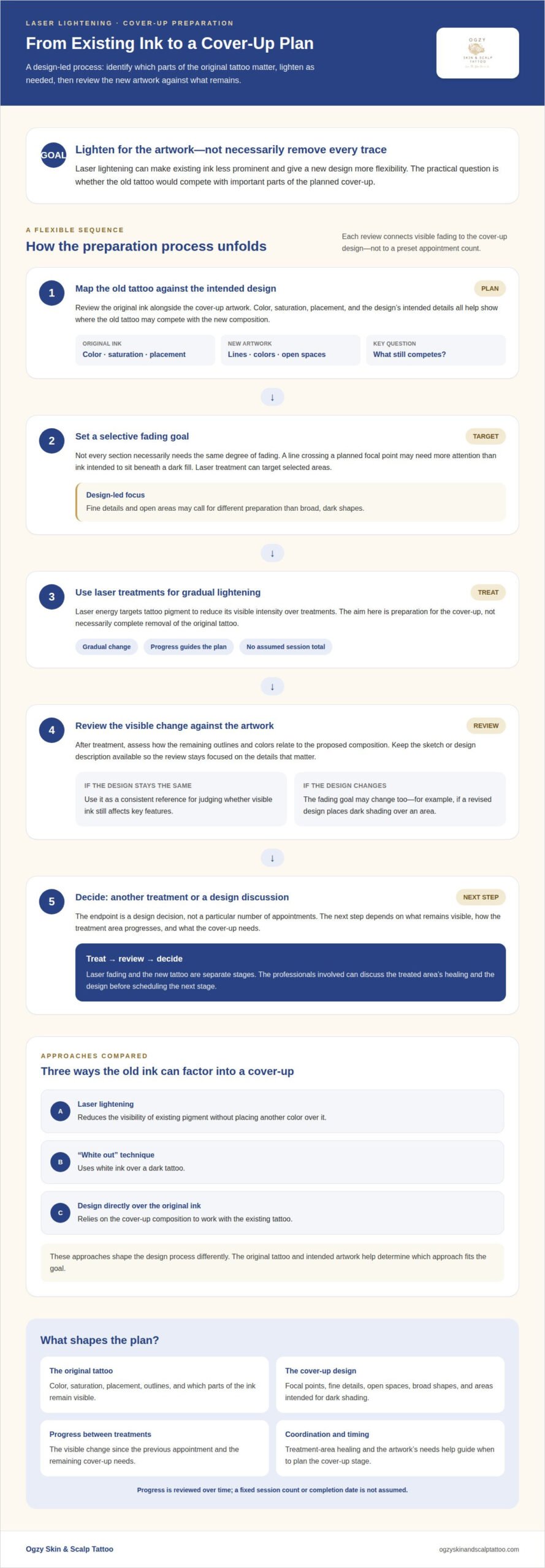
Laser lightening can make existing ink less prominent before a cover-up, giving the new design more flexibility. The goal is to prepare the tattoo for the artwork, not necessarily to remove every trace of the original ink.
What Affects Laser Session Count
How much fading is needed depends on how the old tattoo relates to the planned design. A bold outline crossing a future focal point may need a different approach from ink that will sit beneath a dark section. Color, saturation, placement, and the cover-up artist’s intended details all inform the plan. The practical question is how much the existing tattoo would compete with the new artwork.
Coordinating Fading and Cover-Up Plans
Planning the cover-up and laser lightening together means using the artist’s design goals to identify which parts of the old tattoo need attention. A design with open spaces or fine details may need different preparation from one with broad, dark shapes. Laser treatment can target selected areas, so the entire tattoo doesn’t always need the same degree of fading. Reviewing the design alongside the existing ink helps keep the plan intentional.
How Laser Fading Works
Laser energy targets tattoo pigment to reduce its visible intensity over treatments. As the ink becomes less prominent, the cover-up artist can assess how its remaining outlines and colors relate to the new composition. For example, a noticeable line near the edge of a planned shape may matter more than ink positioned beneath a dark fill. This design-led assessment helps define the purpose of lightening.
Comparing Tattoo-Fading Methods
Laser lightening reduces the visibility of existing pigment without placing another color over it. The “white out technique” uses white ink over a dark tattoo, while designing directly over the original ink relies on the cover-up composition. These approaches change the design process in different ways. If you’re exploring how to fade a tattoo for a cover-up in Leander, the original tattoo and intended artwork help determine which approach fits your goal.
A useful plan also considers when the cover-up artist should review the tattoo. Discuss treatment progress alongside the proposed design, rather than judging fading in isolation. That conversation can clarify whether the remaining ink still affects a key feature, such as a fine outline or an open area. The next design decision can then reflect what is actually visible.
Timing the new tattoo is part of coordinating the process. The laser professional and cover-up artist can discuss the treated area’s healing and the design’s needs before scheduling the next stage. There isn’t one calendar date that suits every plan. Connecting those decisions helps you understand how the existing ink and new artwork can work together.
Treatment Sessions for Tattoo Removal
Laser tattoo removal for a cover-up is planned as a sequence of treatments and progress reviews. Each appointment contributes to gradual change, rather than completing the preparation in one visit.
Planning Treatment Sessions
A session plan connects each treatment to the cover-up you want, rather than treating removal as an isolated goal. At the start, the tattoo and proposed artwork give the professional a reference for what progress should achieve. After each appointment, the visible change can be reviewed against that goal. This makes it possible to adjust the plan as the old design becomes less prominent.
Tracking progress can help when different parts of a tattoo affect the new artwork in different ways. For example, an outline crossing a small lettering detail may matter more than a broad area intended to sit beneath dark shading. The artist’s design gives context to those distinctions. It keeps the conversation focused on which visible elements still influence the cover-up, rather than treating the whole tattoo as one uniform block.
The endpoint is a design decision, not simply a particular number of appointments. Some cover-up plans benefit from stopping once the original ink no longer competes with important details. Another design may need more lightening before its intended shapes can be considered. Keeping the goal specific makes each review meaningful and avoids defining the process by an assumed session total.
Waiting Between Laser Sessions
The interval between treatments creates time to review the change since the previous appointment before planning another. Rather than setting every visit in advance as a fixed sequence, the next appointment can follow the treatment area’s progress and the remaining cover-up needs. That review helps distinguish a temporary appearance immediately after treatment from the change that should guide design decisions.
During planning, keep the tattoo artist’s design available for progress discussions. A clear sketch or description can show which lines, colors, or open spaces matter most. If the design changes, the fading goal may change too. For instance, a revised composition that covers an area with dark shading may need a different preparation plan from one that leaves that area visible.
Laser fading and the new tattoo are separate stages, so plan the cover-up around the results of the fading process. After each treatment, the professionals involved can consider whether the existing ink still affects the composition and what to do next. The schedule should reflect that review, rather than promise a specific outcome or completion date.
In this way, sessions form a flexible preparation plan: treat, review, then decide whether the cover-up goal calls for another treatment or a design discussion.
Factors That Affect Tattoo Removal Time
The overall timeline includes more than laser appointments. It also depends on how clearly the cover-up goal is defined and whether that goal changes during preparation. A fixed design gives each progress review a consistent reference. If you replace a small, detailed concept with a broader design, the amount of fading you’re aiming for may change too.
Design decisions can affect when you’re ready to move from fading to cover-up planning. For example, you might begin with lettering in mind, then choose a larger image that uses darker areas. That change can alter how the tattoo artist evaluates the remaining ink. Keeping the design direction clear helps make each review relevant to the artwork you’re considering.
The scope of the fading goal matters too. Preparing one section for a specific design is different from lightening the whole tattoo. If only an old outline interrupts the new composition, the plan can focus on that area. If several portions remain visible in important parts of the design, preparation may involve more than one section.
Other practical factors can shape the calendar:
- Design readiness: A settled concept gives the artist a clearer reference during progress reviews.
- Changes in direction: A revised cover-up can change which parts of the old tattoo matter.
- Scope: Focusing on a particular section differs from preparing the full tattoo.
- Decision points: Reviewing the tattoo before moving to the next stage adds time to the overall process.
Consider a tattoo with a small symbol beside a larger dark shape. If your planned cover-up uses the dark shape as part of its composition, the symbol may be the detail that drives preparation decisions. If you later choose a design that leaves the symbol visible, that same detail becomes more important. The planned artwork changes the question at each review.
Clarity about your preferred cover-up can prevent unnecessary changes in direction, but you don’t need a finished drawing to start discussing your goal. A description of the area you want changed, along with a general design idea, can frame the preparation conversation. The tattoo artist can then explain how the existing tattoo relates to that concept.
Finally, moving from fading to new tattooing is its own planning stage. Once the desired fading has been reached, the cover-up artist still needs to work the existing tattoo into the composition. Allowing time for that design decision keeps the focus on the artwork, rather than treating the final laser appointment as an automatic start date for the cover-up.
How Long Should You Wait Between Laser Tattoo Removal Sessions?
There isn’t one fixed interval for every tattoo. The next laser session is planned around how the treated area has healed and how the fading looks, so the schedule can vary from person to person.
Healing matters because the laser appointment is only one part of the process. After treatment, the area needs time before its response can be assessed and another session considered. The professional reviews the skin and remaining ink, then determines whether another treatment fits the plan. Scheduling by a preset date alone can overlook what the treatment area is showing.
For cover-up preparation, the review also considers the new design. Imagine a dark outline crossing the center of a planned cover-up. The artist may need that section lightened more than nearby ink. At the next assessment, both the remaining outline and the area’s healing help determine whether to continue or shift toward planning the new tattoo.
Spacing affects the overall timeline in two ways. Each interval adds time between appointments, and the fading goal may require more than one treatment. Cover-up preparation aims for enough lightening to support the intended design, not necessarily complete removal. A tattoo that needs limited fading may follow a different schedule from one with dense ink across several design elements.
At each review, these details help guide the next step:
- Healing: The treated area’s condition is considered before another session is scheduled.
- Visible fading: The remaining ink is compared with the cover-up design’s needs.
- Design placement: Areas that overlap key details may need a different lightening plan.
- Next appointment: The treatment professional uses the assessment to decide whether to proceed or allow more time.
A practical plan leaves room for these reviews instead of scheduling a cover-up immediately after a laser visit. If you have questions about timing or how the skin has healed, discuss them with a qualified professional. If the tattoo has faded enough for the artist’s design, discuss when to place the new tattoo based on the treated area’s condition.
Keep the laser and cover-up schedules connected. The removal professional assesses treatment progress, while the tattoo artist evaluates how the remaining ink could affect the artwork. Their shared goal is a design that suits the faded tattoo and healed skin. A realistic timeline accounts for session spacing, healing, reassessment, and the cover-up itself, rather than counting appointments alone.
Results and timelines vary with the tattoo and individual healing. Building reassessment into the schedule helps you make the next decision based on actual progress, not an assumed date.
Ogzy Skin & Scalp Tattoo
Ogzy Skin & Scalp Tattoo can help you consider laser tattoo removal as part of preparing an existing tattoo for a cover-up. Opal provides certified Nd:YAG laser tattoo removal and saline tattoo removal, with the approach shaped around the tattoo and your goals. A consultation is a useful next step when you want to understand what fading may involve before planning new artwork.
The aim of laser lightening for a cover-up differs from pursuing complete removal. The focus is on reducing the existing ink enough to support the design you have in mind. During a consultation, the tattoo’s color, density, placement, and desired degree of fading can guide the discussion. You can also explain which parts of the old tattoo concern you most.
Planning is collaborative. If you already have a cover-up concept, details about its placement and palette can clarify what preparation may be useful. If your design is still taking shape, you can discuss the existing tattoo and the change you hope to make. The purpose is to connect removal planning with your cover-up goal, rather than treat fading as an isolated decision.
Ogzy Skin & Scalp Tattoo also offers No-Ink Scar & Stretch Mark Revision using medical-grade serums, and Scar Camouflage with custom-blended pigments. These personalized, non-invasive services address concerns different from tattoo fading, but reflect the studio’s focus on expert, medical-grade revision. Scalp Micropigmentation (SMP) uses precision pigment deposits to create the look of hair density through realistic follicle simulation. It doesn’t regrow hair.
For tattoo removal, the choice between laser and saline methods depends on the tattoo and the desired next step. The suitable removal approach depends on the tattoo and your goals, so discuss it during a consultation. A consultation helps establish what is realistic for your specific tattoo and clarify how treatment progress relates to a future cover-up. Results and timing can vary with the tattoo and how your skin heals, so a fixed session count or completion date shouldn’t be assumed.
I want you to feel informed about the process and comfortable discussing your goals without pressure. Bring your cover-up ideas, questions about the existing ink, or simply a clear description of what you’d like to change. We can talk through how laser tattoo removal or saline tattoo removal may fit into the preparation, and what factors could shape the plan.
Ogzy Skin & Scalp Tattoo is located at 13130 Pond Springs Rd #1105, Austin, TX 78729. You can find the studio website at ogzyskinandscalptattoo.com.
Book a consultation with Ogzy Skin & Scalp Tattoo to discuss your tattoo and cover-up preparation.
Frequently Asked Questions
Can Any Color Be Covered?
Most tattoo colors can be incorporated into a cover-up, but the original shade influences the artist’s design choices. Dark, saturated ink may call for a larger or darker composition, while fading can create more flexibility. For example, a design with delicate details may need a different approach from bold artwork. If you’re planning how to fade a tattoo for a cover-up in Leander, consider the old tattoo’s placement alongside the new design’s palette.
How Many Tattoo Removal Sessions Will You Need for a Tattoo Cover-Up?
There isn’t one session count for every cover-up. Session needs vary with the tattoo’s saturation and the new design’s needs, so an individual consultation is the best way to discuss a plan. A cover-up artist can assess whether the remaining ink works with the proposed artwork.
How Soon After Fading Can You Start on Your New Tattoo Cover-Up?
Readiness and timing for a cover-up depend on the treated area and the intended design. A calendar date alone doesn’t show whether the skin is ready for new tattooing. Discuss the area’s condition and timing with a qualified professional, such as the laser professional and cover-up artist, who can coordinate around the intended design.
What Factors Influence How Long It Will Take to Remove a Tattoo?
Tattoo size, ink density, color, placement, and the fading goal all influence the process. A small, faded outline may need less preparation than a large design with dense dark sections. Healing also affects when progress can be reviewed. For example, ink beneath a focal detail may need more lightening than pigment beneath a dark fill in the cover-up design.
Why Fade Before a Cover-Up?
Fading can give a tattoo artist more options for the new design. Without enough contrast, old ink may compete with lighter colors, fine details, or open spaces. The original tattoo doesn’t always need to disappear completely; the useful amount of fading depends on how the planned artwork will sit over it. For Leander cover-up planning, this can make the design conversation more flexible.
How Can a Professional Lighten a Tattoo for a Cover-Up?
A professional can use laser tattoo removal to gradually lighten existing pigment. If you’re considering how to fade a tattoo for a cover-up in Leander, treatment is planned around the old ink and the artwork you want. Progress is assessed between treatments, and selected areas may be targeted when only part of the tattoo needs lightening. The goal is to prepare for the design, not necessarily remove every trace.
How Many Laser Tattoo Removal Sessions Are Usually Needed to Fade a Tattoo for a Cover-Up?
Session needs vary with the tattoo and the planned cover-up design. Dense pigment beneath the main feature of a new design may need a different amount of fading from ink beneath a broad, dark element. An individual consultation can help clarify how much lightening may be useful.
What Tattoo Colors and Ink Depths Are Hardest to Fade?
Color and pigment placement can affect how a tattoo responds, but no single color ranking applies to every design. Dense, dark, heavily saturated areas can require more lightening before a cover-up. A professional considers the tattoo’s color, density, and placement together. For example, an assessment may focus on a saturated outline if it crosses a key detail in the planned artwork.

Article by
Opal Z
Opal is the owner and practitioner behind OGZY Skin & Scalp Tattoo in Austin, Texas. With more than three years in business and a longtime background in the aesthetics industry, she specializes in corrective and restorative treatments designed to address concerns that traditional aesthetics often overlook.
Her work focuses on scar and stretch mark revision, scar camouflage, scalp micropigmentation (SMP), hair regrowth treatments, and laser tattoo and permanent makeup removal. Opal works with a wide range of skin tones and takes an individualized approach to every client, considering skin color, texture, scar characteristics, treatment history, and realistic long-term outcomes.
Through OGZY Skin & Scalp Tattoo, her goal is to combine artistry, aesthetics, and technical treatment knowledge to help clients feel more comfortable and confident in their skin.
Love the skin you’re in.