
The most natural-looking way to soften a bald spot isn’t always the most elaborate. If you’re wondering how to hide bald spot without surgery, it’s understandable to worry that a new hairstyle or concealer might draw more attention instead of less. The right fit depends on where the spot sits, how much coverage you want, and how much upkeep feels comfortable.
You have options, from adjusting your part or haircut to using temporary hair fibers, wearing a hairpiece, or considering scalp micropigmentation (SMP). This guide compares how each approach works, what it can camouflage, and what day-to-day maintenance may involve. SMP uses realistic follicle simulation to create the appearance of fuller-looking hair, but it doesn’t treat the cause of hair loss. If a spot has appeared suddenly or is changing, seek medical guidance to understand why before choosing a cosmetic approach.
Key Takeaways
- The best way to hide a bald spot without surgery depends on its size and location, your preferred level of coverage, and the routine you’re comfortable maintaining.
- Compare styling, temporary concealers, and hairpieces to see which option fits your desired look and how much hands-on upkeep you prefer.
- Separate cosmetic camouflage from hair-loss treatment: these approaches change appearance but don’t address the underlying cause.
- Use a simple decision process: describe the spot, decide how much coverage you want, consider maintenance, then compare suitable options.
- Scalp micropigmentation uses realistic follicle simulation for cosmetic camouflage, while sudden or changing hair loss may call for medical assessment.
How to Hide a Bald Spot Without Surgery: Start With the Look You Want
Noticing a bald spot can feel surprisingly personal. You may find yourself checking it in different mirrors or wondering whether a new hairstyle will make it stand out. There are practical ways to soften its appearance, and you don’t have to choose an elaborate fix. Start by deciding what kind of coverage you want and what will feel comfortable in your everyday routine.
Concealment changes how the area looks; it doesn’t treat the reason hair loss is happening. Hair loss can have different causes and patterns, as outlined in this Hair loss overview on Wikipedia. A cosmetic approach may help you feel more at ease, but it isn’t a diagnosis or a substitute for medical care. The right option depends on the spot’s size, the hair around it, how visible the scalp is, and how much upkeep you’re willing to take on.
Temporary styling reshapes the hair you have, removable coverage adds or disguises coverage for a while, and longer-lasting cosmetic camouflage creates the appearance of follicles on the scalp. Keeping these approaches distinct makes it easier to compare them without expecting one method to meet every need.
What kind of bald spot are you trying to soften?
Location and contrast matter. A small patch near the crown may be partially obscured by surrounding hair, while a spot along a part or hairline can be harder to blend. If the area is broad and smooth, simply shifting nearby strands may not provide the coverage you want. A shorter haircut, a different part, or a concealer might suit one pattern better than another, but results vary with hair density and scalp visibility.
Before choosing, note whether the spot seems stable, is gradually changing, or appeared recently. That observation can help you describe what you’re seeing and decide whether to seek medical guidance. Sudden or changing hair loss deserves attention beyond cosmetic cover-up.
Temporary cover or a longer-lasting cosmetic option?
Styling products, hair fibers, hats, and hairpieces offer removable ways to adjust coverage. They give you flexibility to change your look, though products and accessories may involve regular application, adjustment, or care. Consider what feels natural to wear, how often you want to manage it, and whether you prefer a solution you can remove at the end of the day.
SMP, or scalp micropigmentation, uses cosmetic follicle simulation to create the appearance of fuller-looking hair. It isn’t surgery and doesn’t regrow hair or address the underlying cause of hair loss. The choice is personal: weigh the appearance you prefer, your comfort with a cosmetic procedure, and the routine you’re willing to maintain.
To clarify what you’re looking for, jot down a few details: where the spot is, how much scalp shows, what coverage would feel sufficient, and whether daily application or removable accessories fit your routine. Those preferences give you a grounded starting point for comparing options in the next sections.
Non-Surgical Ways to Cover a Bald Spot, From Styling to SMP
There isn’t one cover-up that works equally well for every hair pattern. A stylist may use your existing length, part, and shape to soften a patch, while products or accessories offer different levels of removable coverage. For someone wondering how to hide bald spot without surgery, the useful first distinction is how each option works and what routine comes with it. Scalp micropigmentation (SMP) creates the appearance of follicles on the scalp, but it isn’t a hair-growth treatment.
Think of the choices by how they work:
- Styling: A change in part, length, or shape can use nearby hair to reduce contrast around a spot.
- Temporary products: Hair fibers and scalp concealers are applied to hair or scalp according to the manufacturer’s directions. Coverage and resistance to transfer vary by product and individual use.
- Removable coverage: Toppers and wigs add hair over an area, while hats and scarves conceal it as accessories.
- Cosmetic follicle simulation: SMP creates the visual impression of closely cropped follicles on the scalp.
Hair styling, fibers, and scalp concealers
A stylist can assess how your hair naturally falls and whether shifting the part or adjusting the shape could make a patch less prominent. Working with your growth pattern may feel easier than repeatedly repositioning strands. Fibers and concealers offer temporary coverage, but follow product directions and try your usual application routine before relying on one for an occasion. Check the result in the lighting where you expect to be, since coverage can look different under bright or direct light. Results vary with the product, hair pattern, and application.
Hairpieces, headwear, and scalp micropigmentation
A topper covers a particular area, while a wig provides broader hair coverage. Hats and scarves are removable accessories that may suit days when you want a simple alternative, though they won’t fit every setting or personal style. Each option has its own fit and care routine, so consider how it feels to wear as well as the coverage it provides.
SMP simulates the appearance of hair follicles on the scalp; it doesn’t restore hair growth. It’s a cosmetic procedure, not surgery, and doesn’t treat the cause of hair loss. Ogzy’s personalized SMP approach uses realistic follicle simulation to create the appearance of fuller-looking hair. For more detail about this cosmetic option, explore the Scalp Micropigmentation Cedar Park guide.
Products and cosmetic camouflage change appearance, while medical care may assess or address hair loss itself. The Mayo Clinic’s overview of hair loss treatment describes medical approaches. If you’re asking how to hide bald spot without surgery, remember that camouflage and medical treatment serve different purposes. A sudden or changing spot deserves medical guidance rather than cover-up alone.
If you’re comparing options in Austin, Cedar Park, Leander, Round Rock, or Georgetown, SMP is one cosmetic approach to consider alongside temporary coverage. The best next step is the one that feels comfortable for your appearance goals and everyday routine. Learn more about scalp micropigmentation.
Hair Fibers, Hairpieces, or SMP: Compare Coverage and Upkeep
Coverage needs and daily habits often matter more than choosing the most elaborate option. A small patch with surrounding hair may respond to styling or fibers, while a wider area may lead you to consider a hairpiece, headwear, or scalp micropigmentation (SMP). None is universally best, and no method can guarantee that every spot will be completely concealed. Use this comparison to narrow the choices to options that suit your hair pattern and comfort level.
| Method | Removable? | Typical routine | May suit |
|---|---|---|---|
| Hair fibers or scalp concealer | Yes | Applied as part of styling, following product directions | Spots where surrounding hair can help blend coverage |
| Hairpiece or topper | Yes | Put on, adjusted, and cared for as an accessory | People seeking added hair coverage over a particular area |
| Hat or scarf | Yes | Worn when it fits the occasion and personal style | Flexible coverage without applying a product to the scalp |
| SMP | Not removable like an accessory | Longer-lasting cosmetic camouflage, with possible future touch-ups | Those considering the appearance of simulated follicles |
Which options suit a small patch versus a larger area?
For a small patch, remaining hair may give a stylist room to adjust the part or shape, or help fibers blend into surrounding strands. Product coverage depends on the amount and pattern of existing hair, so it may be less suitable if the scalp is broadly exposed. A larger or smooth area calls for a different coverage preference: some people favor a hairpiece or headwear, while others prefer to explore SMP’s follicle-simulation effect. Think about the appearance you want rather than assuming one method will cover every pattern equally well.
How much daily maintenance feels right for you?
Consider the routine, not just the first impression. Fibers and concealers are temporary and may become part of your regular styling process. Hairpieces, hats, and scarves can be removed, but they require you to choose when and how you wear them. SMP offers longer-lasting cosmetic camouflage without daily product application, though it isn’t a treatment for hair loss itself and may need touch-ups over time.
That distinction matters: these methods change appearance, while medical care aims to assess or address hair loss. If the spot is changing, seek medical guidance rather than relying on camouflage alone. For broader perspective on the emotional side of choosing coverage, the hair loss confidence guide explores how personal comfort can shape that decision.
As you decide how to hide bald spot without surgery, ask yourself whether you’d rather apply a product, put on removable coverage, or consider a cosmetic option that doesn’t need daily styling. Your preferred routine is a useful guide to the next step.
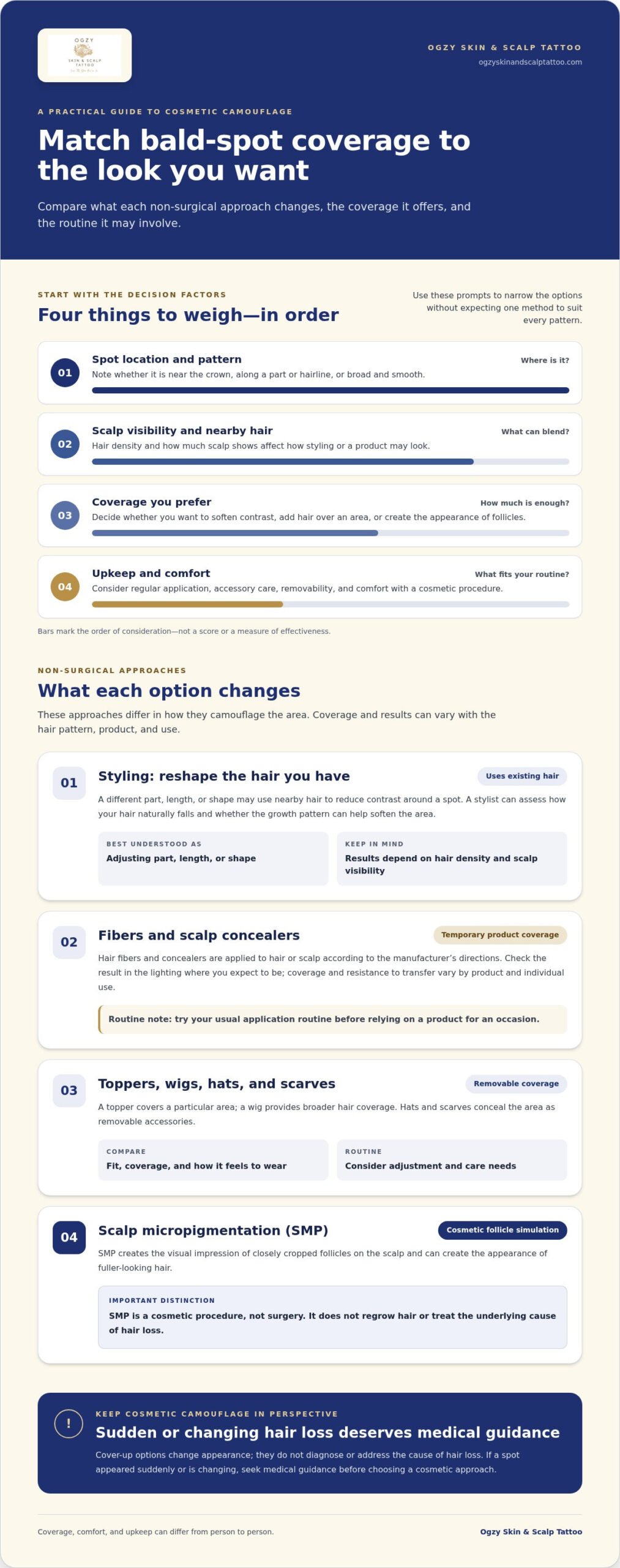
Choose a Bald-Spot Cover-Up That Fits Your Routine and Comfort
A cover-up should fit into your life, not make you feel more self-conscious or add a routine you’ll resent. To decide how to hide a bald spot without surgery, consider the spot itself, the amount of coverage you want, and how you feel about daily products, removable accessories, or cosmetic treatment. There’s no universal best choice; the goal is to find an approach that suits your hair pattern and feels manageable.
A simple checklist before choosing
Use this four-step process to turn a broad set of options into a practical shortlist:
- Describe the spot. Note its location, approximate area, and shape. Pay attention to how much hair remains around it and whether your scalp is visible through nearby hair.
- Choose your coverage level. Decide whether you want to soften the contrast, add hair coverage, or create the appearance of follicles on the scalp. Your preferred look can help rule options in or out.
- Consider your routine. Think about how often you’re comfortable applying and blending a product, styling your hair, or wearing and caring for an accessory.
- Match the option to the occasion. A solution for an occasional event may differ from one you’d want for regular everyday wear. Compare approaches with that real-life use in mind.
Be honest about comfort, too. Daily application can suit someone who likes a hands-on styling routine; someone who prefers quick changes may lean toward removable headwear or a hairpiece. SMP is a cosmetic treatment rather than a daily cover-up product, so consider your comfort with that kind of option before exploring it further. You can take time to compare. There’s no need to settle on an approach just because it works for someone else.
When concealment is not the only next step
Concealers, hairpieces, styling, and scalp micropigmentation change appearance, but they don’t identify the cause of hair loss. If you’ve noticed a sudden patch, the area is changing, or you’re concerned about unexplained shedding, speak with a healthcare professional. Understanding what may be behind the change can help you make informed decisions about both your health and any cosmetic camouflage.
If you’re interested in a separate path focused on non-surgical restoration, the hair regrowth without surgery guide covers that topic. Hair regrowth approaches have a different purpose from cosmetic camouflage, so consider which outcome you’re seeking before comparing them.
For readers considering SMP, Ogzy’s personalized approach uses realistic follicle simulation to create the appearance of fuller-looking hair. It doesn’t promise regrowth, and it isn’t a substitute for medical assessment. If this cosmetic option feels aligned with your preferences, explore scalp micropigmentation with Ogzy as you weigh your next step.
Explore Scalp Micropigmentation for Bald-Spot Camouflage in Austin
If you’re deciding how to hide a bald spot without surgery and prefer a cosmetic option that doesn’t require daily concealer or a hairpiece, scalp micropigmentation (SMP) may be worth exploring. Ogzy uses realistic follicle simulation to create the appearance of fuller-looking hair. It’s camouflage, not hair regrowth: SMP doesn’t restore follicles or identify why hair loss is happening.
This approach may be considered for baldness, thinning, receding hairlines, and scalp scars. The goal is to create a visual effect that complements your existing hair pattern, not to promise a particular result. If hair loss is new, changing, or unexplained, medical guidance remains important; cosmetic camouflage doesn’t replace an assessment of its cause.
What to expect from a personalized SMP approach
Follicle simulation uses carefully considered visual detail to give the scalp the appearance of closely cropped hair or added density, depending on the person’s pattern and goals. The effect is cosmetic, and the design depends on factors such as the area being addressed and the look you want. A personalized approach keeps the aim focused on a natural-looking fit rather than a one-size-fits-all template.
At Ogzy, SMP is tailored to the individual. Discussing your aesthetic goals and hair pattern can help clarify whether this kind of camouflage feels aligned with your preferences. It isn’t surgery or a hair-loss treatment. Its purpose is to soften the visual contrast of a bald or thinning area.
Consider SMP with a specialist serving the Austin area
Ogzy Skin & Scalp Tattoo serves people in Austin, Cedar Park, Leander, Round Rock, and Georgetown. The clinic is owned and operated by Opal, a specialist in paramedical tattooing and skin rejuvenation. Her SMP work focuses on realistic follicle simulation, with an approach tailored to the person rather than a preset look.
A conversation about SMP gives you space to describe the area you’d like to camouflage, share the appearance you’re hoping for, and explore how the cosmetic approach fits your comfort level. You can also consider how its longer-lasting nature compares with removable, everyday cover-ups. Taking time to understand the purpose and limits of an option can help you make a choice that feels right for you.
If you’d like to explore this cosmetic approach, Explore scalp micropigmentation with Ogzy.
Choose a Next Step That Feels Right for You
You don’t have to settle on a cover-up simply because it works for someone else. If you’re still considering how to hide a bald spot without surgery, let your next step be guided by the look you feel comfortable with and the routine you can realistically maintain. The right choice should support your confidence, not become another source of worry.
Give yourself time to reflect on what you’d like to change and what you’d prefer to leave natural. If a cosmetic approach feels worth exploring, bring those preferences into the conversation. A clear idea of your goals can help you decide whether SMP belongs in your personal plan, without pressure to move forward before you’re ready.
When you’re ready to explore SMP for bald-spot camouflage, Explore scalp micropigmentation with Ogzy. Ogzy serves Austin, Cedar Park, Leander, Round Rock, and Georgetown. You can take the next step at your own pace.
Frequently Asked Questions
Does a bald spot always mean permanent hair loss?
No. A bald spot doesn’t always mean permanent hair loss; causes and patterns vary, and some changes may be temporary. Consider when you first noticed the area and whether its size or appearance has changed. A healthcare professional can assess your history and scalp and advise whether further evaluation is appropriate. Camouflaging the spot may change its appearance, but it can’t tell you whether the cause is temporary or ongoing.
Can hair fibers cover a completely smooth bald spot?
Hair fibers generally rely on existing strands to cling to, so they may provide little coverage on a completely smooth area with no surrounding hair. A scalp concealer designed to tint visible skin may be a different temporary option, but the appearance depends on the product and how it’s applied. Check product directions and test the effect in ordinary lighting before relying on it for an important occasion.
Will hair fibers come off in rain or sweat?
It depends on the product, how you apply it, and the conditions you’re in. Don’t assume fibers are waterproof or sweatproof unless the product information says so. Read the label, follow application directions, and try your normal routine before an event involving exercise or wet weather. If you’re concerned about transfer, carry the product with you and check coverage after exposure rather than counting on it to stay unchanged.
Is scalp micropigmentation a type of hair transplant?
No. Scalp micropigmentation (SMP) is a cosmetic procedure that simulates the appearance of hair follicles on the scalp. It doesn’t move hair follicles from one area to another, and it doesn’t regrow hair. A hair transplant is a separate medical procedure. If you’re deciding between cosmetic camouflage and treatment intended to address hair loss, first clarify which outcome you’re seeking and discuss medical concerns with a healthcare professional.
Can scalp micropigmentation help camouflage a bald spot?
Yes. SMP can create the appearance of follicles in a bald area, helping soften the visual contrast between scalp and hair. It’s cosmetic camouflage, not a way to restore hair growth, and the design should take your hair pattern and preferred look into account. People in Austin, Cedar Park, Leander, Round Rock, and Georgetown can explore whether this approach aligns with their coverage goals and comfort level.
Should I get a sudden bald spot checked before covering it?
Yes. A newly noticed or rapidly changing bald spot is a reason to seek guidance from a healthcare professional before focusing only on concealment. They can review when it appeared, ask about other changes, and assess whether the pattern needs further evaluation. This doesn’t mean the cause is necessarily serious, but camouflage can hide visible changes without explaining them. Make a note of when you first noticed the patch.
Can I use hair fibers after scalp micropigmentation?
Possibly, but wait until the treated skin has fully healed and follow the aftercare guidance provided for your SMP. Applying fibers or other products too soon could irritate healing skin. Once healed, suitability may depend on your scalp and the product’s ingredients and directions. If you’re unsure when to resume use, ask your SMP practitioner for guidance specific to your treatment and skin.

Article by
Opal Z
Opal is the owner and practitioner behind OGZY Skin & Scalp Tattoo in Austin, Texas. With more than three years in business and a longtime background in the aesthetics industry, she specializes in corrective and restorative treatments designed to address concerns that traditional aesthetics often overlook.
Her work focuses on scar and stretch mark revision, scar camouflage, scalp micropigmentation (SMP), hair regrowth treatments, and laser tattoo and permanent makeup removal. Opal works with a wide range of skin tones and takes an individualized approach to every client, considering skin color, texture, scar characteristics, treatment history, and realistic long-term outcomes.
Through OGZY Skin & Scalp Tattoo, her goal is to combine artistry, aesthetics, and technical treatment knowledge to help clients feel more comfortable and confident in their skin.
Love the skin you’re in.