
A convincing hairline isn’t simply the lowest or sharpest one. The pros and cons of scalp micropigmentation are easier to weigh when you understand its purpose: tiny pigment impressions create the look of closely cropped hair or added density, but they don’t grow hair.
That distinction matters if you want to soften a receding hairline or make thinning areas less noticeable. SMP can create a carefully tailored visual effect, but the pigment may fade over time, and the result depends on thoughtful hairline design and realistic expectations.
This guide explains how SMP works, what sessions involve, and why several appointments may be needed to build the look. It also covers fading, aftercare, and the advantages and limitations to weigh before choosing this approach. You’ll come away with a clearer sense of whether simulated density suits the appearance you want.
Key Takeaways
- Understand how SMP creates the appearance of closely cropped hair or added density without growing hair.
- Learn what to expect from the treatment process, including why more than one session may be involved.
- See how pigment color, gradual fading, and aftercare can influence the appearance over time.
- Discover why a carefully designed hairline should suit your features and the look you want.
- Explore whether SMP at Ogzy in Austin may be a fit for your hairline or scalp concerns.
What is scalp micropigmentation?
Scalp micropigmentation, or SMP, uses precision pigment deposits to suggest the appearance of hair follicles. It creates a visual effect, not new hair growth.
In thinning areas, pigment placed between existing strands can create the appearance of greater density. On a bald spot, the design can blend with nearby areas. SMP may also soften the contrast of scalp scars, but it does not change the scar itself.
Placement and scale matter. Impressions smaller than 1 mm can resemble individual follicles more closely than broad marks. The pattern needs to suit the area being treated and the hair that remains.
SMP often looks most cohesive with a shaved or closely cropped hairstyle. With longer hair, pigment may create a subtle density effect beneath existing strands, but it cannot conceal every visible area of scalp.
The main advantage is a tailored, follicle-like appearance without creating real strands. The trade-off is that pigment can fade and does not adapt to changes in your hairstyle or hair growth. Consider the look you want to maintain before choosing this cosmetic treatment.
Can scalp micropigmentation be removed or corrected if you’re unhappy with the result? Correction or removal may be possible, though it can be challenging because SMP is a form of tattooing. Laser tattoo removal can fade or remove unwanted scalp micropigmentation. The right approach depends on the existing work.
This distinction is important when setting expectations. Scalp micropigmentation does not grow hair, change natural hair growth, or treat hair loss. Its effect comes from pigment, so it is not a way to restore hair or alter the course of hair loss. SMP can create the appearance of a buzz cut, but it does not implant hair. Naturally growing hair may need to be shaved to maintain that look. Consider whether the appearance suits your style and whether you’re comfortable maintaining it. If you prefer to keep your natural hair longer, think about how the pigment effect would look alongside it rather than expecting new strands. The choice is about appearance, not a change in hair growth.
The procedure also differs from approaches that involve operating on the scalp. Scalp micropigmentation does not require surgery or anesthesia. Scalp micropigmentation is a non-surgical procedure that does not involve incisions or graft harvesting. These points describe how the procedure is carried out; they do not change its cosmetic purpose or mean that it treats hair loss. When weighing it, keep the expected appearance separate from medical outcomes: pigment can create a chosen visual impression, but it cannot supply hair or change the hair that grows naturally. Be clear about whether a buzz-cut appearance or a density effect beneath existing hair is the result you are seeking, and whether that result matches the style you intend to keep. That expectation can help you judge the procedure on what it is designed to do, rather than on changes it cannot make.
Treatment session length and number of sessions
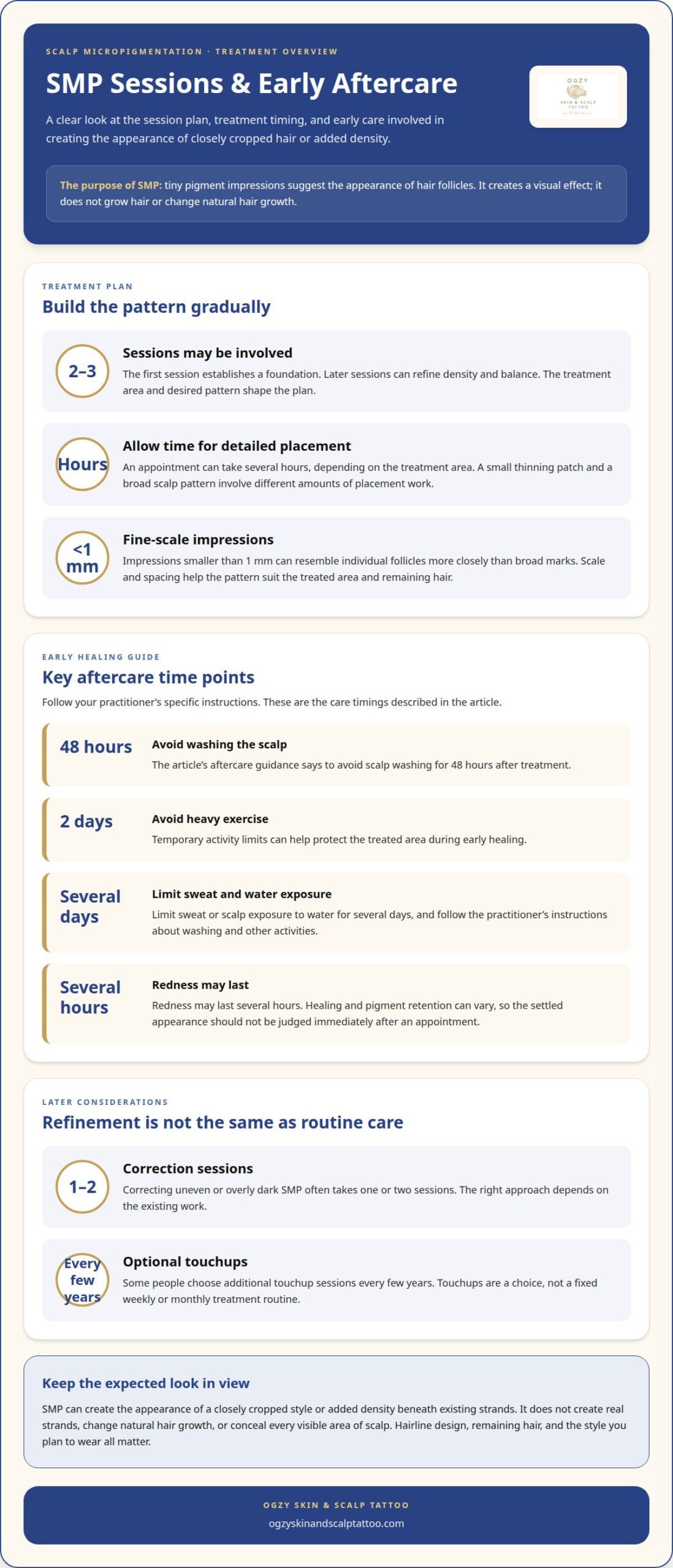
An SMP appointment can take several hours, depending on the treatment area. A small thinning patch and a broad scalp pattern call for different amounts of detailed placement. The practitioner builds the follicle pattern gradually rather than treating every area the same way.
Treatment plans often involve multiple sessions. The first establishes a foundation, while later sessions can refine density and balance across the scalp. A design for a small bald spot differs from one extending across thinning areas. The pattern, existing hair, and size of the area all affect the work involved.
Technique matters at every appointment. SMP requires precise placement, scale, and spacing to suggest follicles rather than obvious tattoo marks. General tattoo experience does not necessarily include the specific skills this treatment requires. SMP expertise and careful attention to the pattern support a more cohesive appearance, whether you want a close-cropped look or the appearance of greater density.
How many scalp micropigmentation sessions are needed, and what is the healing process? SMP may require two or three sessions, with the treatment area and desired pattern shaping the plan. Redness may last several hours; aftercare includes avoiding scalp washing for 48 hours and limiting sweat or scalp exposure to water for several days.
Temporary activity limits can help protect the treated area during early healing. For example, avoid heavy exercise for two days and follow the practitioner’s instructions about washing and other activities. If itching occurs, follow the aftercare directions rather than rubbing the scalp or applying products. Healing and pigment retention can vary, so don’t judge the settled appearance immediately after an appointment.
Alopecia, diffuse thinning, and isolated bald spots each call for a distinct placement approach. The pattern needs to account for the hair that remains and the style you plan to wear. SMP creates the appearance of density; it does not make existing hair thicker or change hair growth. A considered session plan allows the look to be built in stages.
Scalp micropigmentation does not require a daily, weekly, or monthly treatment regimen. The initial treatment plan is separate from recurring treatments: several sessions may be needed to build the desired appearance, but appointments do not have to continue on a fixed weekly or monthly schedule. Keeping these points separate helps clarify the visits involved in completing the plan.
Correction is a separate consideration from completing the planned treatment. Correcting uneven or overly dark scalp micropigmentation often takes one or two sessions. People who choose scalp micropigmentation touchups may have additional sessions every few years. These possibilities are not a required routine for everyone: touchups are a choice, while the correction estimate concerns uneven or overly dark results. Discussing whether the goal is to complete an initial plan, address unevenness or darkness, or choose touchups can help clarify which session estimate is relevant. The appropriate plan depends on the purpose of the appointments, so these estimates should be understood as applying to different situations rather than combined into a single schedule.
Pigment color, fading, and aftercare
Pigment shade and placement affect how closely SMP resembles natural follicles. A practitioner should consider your scalp tone, remaining hair, and hairstyle when selecting a suitable color. Black pigment may develop a blue-grey tint over time, so shade selection involves more than matching a fresh buzz cut. Smaller, carefully placed impressions create a softer follicle effect than broad, dark marks.
Color can also change during healing. SMP pigment may fade by 20-30% as the scalp heals, so the fresh appearance isn’t the final one. Healed results are better assessed after 2-4 weeks. This gradual shift is one reason treatment develops across sessions rather than relying on a single application to create the whole pattern.
How long does scalp micropigmentation last, and how often does it need touch-ups? Pigment naturally fades within 3-5 years, though SMP can last up to five years with proper aftercare. Touch-ups may be considered over time as the color softens and the contrast with natural hair changes.
Sun exposure can affect pigment appearance, and some pigments change color in response to UV light. Protecting the scalp outdoors with SPF 50 sunscreen or a hat helps limit exposure. Follow the aftercare directions for the treated area, including guidance about sun protection and activities during the first few days. These steps support careful healing without treating pigment as unchanging.
Aftercare also means letting the scalp settle before judging the color. A tattoo can look different as redness fades and the pigment heals. Assess its appearance at the recommended review point, not immediately after pigment is deposited. If the result seems uneven or too dark during healing, don’t assume it needs correction before the pigment has settled.
Natural hair may continue to change independently of SMP. If your hair becomes thinner or your preferred style changes, the relationship between pigment and surrounding strands may look different. Consider this before choosing a look designed around closely cropped hair. SMP creates a visual effect with pigment, and maintaining that effect means considering both aftercare and possible changes in appearance over time.
How scalp micropigmentation works
Scalp micropigmentation uses a fine needle to place small amounts of pigment in the scalp. Each precision pigment deposit is designed to resemble a follicle, creating a visual pattern rather than real strands. This cosmetic treatment can soften the contrast of thinning areas or baldness. It creates the appearance of density, not hair restoration or new growth.
Placement is precise. Technique guidance recommends inserting the needle at a 90-degree angle to the scalp surface. The impressions should remain smaller than 1 mm in diameter, helping them read as individual follicles instead of larger marks. Consistent spacing and depth help the practitioner build a pattern that suits the scalp and the surrounding hair.
Needle choice can vary by treatment area. A single-pronged needle is suggested for finer regions, such as the hairline, where small impressions help create a refined edge. Across other scalp areas, practitioners may use needles with up to six prongs when following appropriate technique guidance. The goal is to adapt the impression pattern, not apply one uniform design everywhere.
During an appointment, the practitioner places pigment in planned areas to complement your hairline and existing hair. The visual effect is built across the treatment area in stages. Results may be visible after the first session, while further sessions can refine the pattern. The scalp’s shape, thinning pattern, and intended hairstyle guide the placement of each impression.
Because SMP is a form of medical tattooing, its design requires both technical control and aesthetic judgment. A straight, sharply defined edge may look less natural than a hairline shaped to suit your features and hairstyle. A close-cropped look calls for a coherent pattern across the visible scalp, while thinning beneath longer hair calls for placement that complements existing strands.
SMP does not implant follicles or change how hair grows. Instead, pigment creates a carefully arranged visual cue that can make selected areas appear more even. This distinction matters when setting expectations: SMP may support the look you want, but it cannot restore hair. The result depends on precise placement, thoughtful design, and a pattern suited to your scalp.
Hairline design and realistic expectations
A hairline frames your face, so even a small design change can affect your overall appearance. With SMP, precision pigment deposits suggest a natural-looking edge, not real hair. A low, sharply defined line may feel unlike your usual style, while a softer shape may better suit a close-cropped look.
The design should account for your facial proportions, existing hair, and preferred haircut. Someone who usually wears a very short style may want a visible, even edge. Someone with longer hair may prefer a subtler effect that supports the appearance of density beneath real hair. The design should look cohesive from more than one angle.
Hair loss can continue to change the balance between pigment and natural hair. If thinning progresses behind a defined hairline, the contrast may become more noticeable. SMP creates a cosmetic effect; it does not stop hair loss or make existing strands thicker. Thinking about how your appearance may change over time helps set realistic expectations.
Your hairstyle preferences matter, too. A sharply drawn hairline may offer less flexibility if you often change your cut or color. Pigment does not change with those choices, so a design that suits your current style may not suit every future one. Consider how you want your hairline to look with a buzz cut, a shaved scalp, or your usual hairstyle.
SMP can create the appearance of follicle density, but it cannot reproduce the movement, texture, or growth pattern of real hair. That difference is central to deciding whether it suits you. The goal is a visual effect that feels cohesive with your features, not a promise of hair restoration. Clear expectations help you decide whether the result aligns with your priorities.
Before pigment is placed, discuss the shape and softness you prefer. A considered hairline should complement your face rather than stand out as a separate feature. Review the proposed outline in relation to your current haircut and scalp pattern. Choose a design you feel comfortable wearing, not simply the lowest or most dramatic line.
Ogzy Skin & Scalp Tattoo: Scalp Micropigmentation (SMP)
Ogzy Skin & Scalp Tattoo offers personalized, expert Scalp Micropigmentation (SMP) using precision pigment deposits to create a natural-looking follicle simulation for thinning hair, baldness, and receding hairlines. SMP creates the look of density; it does not grow hair or change natural hair growth. It may suit you if you want a close-cropped appearance or a softer visual transition across thinning areas.
Hairline work calls for a balance of precision and restraint. The design should suit your features, existing hair, and preferred style. A sharply defined line may not feel right if you want a softer look. At a consultation, we can discuss your goals and what personalized, medical-grade SMP can realistically create for your scalp.
Your starting point helps shape the plan. A receding hairline, broad thinning, and a small bald area each call for a different visual pattern. Existing hair matters, too: pigment should complement surrounding follicles rather than look disconnected. The aim is a cohesive cosmetic effect, not a promise of new or fuller-growing hair.
The pigment’s appearance may change as the scalp heals. Aftercare is part of the process, and fading may make touch-ups worth considering over time. Your preferences matter as well: a design for closely cropped hair may not suit every future hairstyle. We’ll discuss these trade-offs so you can make an informed choice.
A consultation is a useful next step if you’re considering SMP for your hairline, thinning areas, or baldness. We can discuss your goals, review the area you want addressed, and consider whether a personalized, natural-looking follicle effect matches your expectations. SMP is not designed to produce actual hair growth; it creates the appearance of density only.
Ogzy Skin & Scalp Tattoo is located at 13130 Pond Springs Rd #1105, Austin, TX 78729. To discuss your goals and whether this approach may suit you, book a consultation with Ogzy Skin & Scalp Tattoo.
Frequently Asked Questions
What information should you share before an SMP appointment?
Share any allergies and mention previous pigment on your scalp before planning treatment. Existing scalp work can affect the approach to a new design, so describing its location and appearance makes the discussion more specific. You can also explain your usual hairstyle and the visual change you hope to see. These details help tailor the conversation to your starting point.
What should you discuss when planning an SMP hairline?
Be specific about the outline and overall impression you prefer. Explain whether you usually wear a close-cropped style or keep some length around the temples. Discussing everyday preferences makes the design conversation more practical than choosing a hairline from a picture alone. You can also describe which areas draw your attention and what you want the visual pattern to address.
How can you evaluate an artist’s SMP work?
Review examples of the practitioner’s SMP work, paying attention to hairline shape, dot placement, and how pigment relates to surrounding hair. Look for examples that resemble your intended style and treatment area, such as a receding hairline or broad thinning. At your consultation, discuss what you notice and how the proposed design can be tailored to your scalp and preferences.
What visual effect does scalp micropigmentation create?
Scalp micropigmentation creates the look of density by placing pigment on the scalp. It does not grow or implant hair. At your consultation, discuss the visual effect you hope to see and how a design can be tailored to your scalp and preferences.
How can you choose a qualified scalp micropigmentation provider?
Choose an artist with specific SMP training and review their work. At your consultation, discuss examples and ask how the proposed design can be tailored to your scalp and preferences.

Article by
Opal Z
Opal is the owner and practitioner behind OGZY Skin & Scalp Tattoo in Austin, Texas. With more than three years in business and a longtime background in the aesthetics industry, she specializes in corrective and restorative treatments designed to address concerns that traditional aesthetics often overlook.
Her work focuses on scar and stretch mark revision, scar camouflage, scalp micropigmentation (SMP), hair regrowth treatments, and laser tattoo and permanent makeup removal. Opal works with a wide range of skin tones and takes an individualized approach to every client, considering skin color, texture, scar characteristics, treatment history, and realistic long-term outcomes.
Through OGZY Skin & Scalp Tattoo, her goal is to combine artistry, aesthetics, and technical treatment knowledge to help clients feel more comfortable and confident in their skin.
Love the skin you’re in.