
A blue or green cast after healing is a reason to assess the pigment, not to cover it immediately with darker pigment. Understanding what happens if SMP pigment changes color starts with distinguishing ordinary fading from a visible color shift.
It’s understandable to want clarity and a realistic path forward. The first few days after treatment aren’t a reliable time to judge the final color, so note how the appearance develops as healing continues.
This article explains why SMP pigment can change color, how to reduce avoidable risks, and what staged correction may achieve. You’ll learn what shapes an assessment and why correction is approached carefully, with the aim of a more balanced appearance rather than a promise of perfection.
Key Takeaways
- Early healing can affect how pigment looks, so distinguish temporary changes from a lasting blue or green shift.
- Pigment depth, selection, skin tone, and sun exposure can all influence the healed appearance.
- Sun protection can help limit fading over time, while gradual softening is different from spreading or blurred impressions.
- Correction is usually planned in stages; the approach depends on the pigment’s depth, spread, and color.
- A consultation can help clarify whether laser tattoo removal, corrective SMP, or a combination may be appropriate for your scalp.
How do I reduce the risk of a blue or green result?
Blue or green tones can develop when pigment choice, placement, skin tone, or sun exposure affects the healed appearance. Careful assessment and consistent aftercare can help reduce avoidable risks.
Blue or Green Pigment Shifts
A blue or green shift is a change in how healed pigment appears, sometimes linked to its depth, formula, or ultraviolet exposure. Scalp micropigmentation sits closer to the skin’s surface than conventional tattoo pigment, which is placed deeper. Older formulas or pigment placed too deeply may look grey, blue, or green over time. The Cleveland Clinic notes that SMP pigments differ from tattoo inks and are designed to resist fading or color change.
Traditional scalp tattoos may also fade toward blue or green as their appearance changes over time. SMP pigment selection needs to account for skin tone; dark pigment that doesn’t suit the skin may heal grey and later look bluer or greener. Sun exposure may contribute to fading or color change, so aftercare and long-term scalp protection matter.
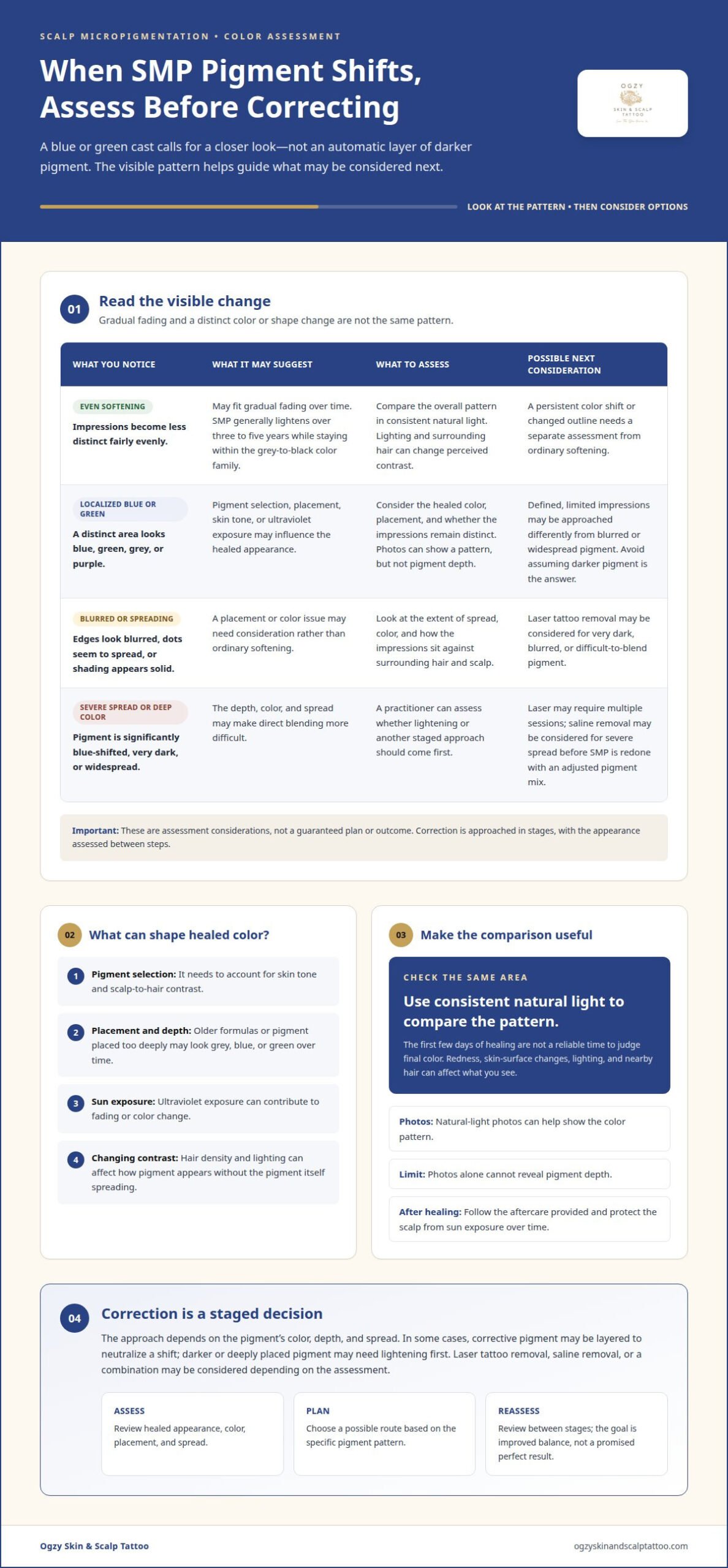
At a consultation, the assessment should consider the healed appearance, pigment placement, and whether dots remain distinct. A blue or green cast, spreading dots, or shading that looks solid may indicate a color or placement issue rather than ordinary softening. Natural-light photos can help show the color pattern, though photographs alone can’t reveal pigment depth.
To reduce risk, pigment selection should reflect your skin tone and the contrast between scalp and hair. Follow the aftercare provided for your treatment, and protect the scalp from sun exposure over time. Long-term protection with SPF 30 to 50 can help limit fading and color change. Avoid adding darker pigment to blue or grey areas without assessment, since added darkness can make the appearance heavier and complicate later removal.
Correcting Discolored SMP
Correcting blue, green, grey, or purple SMP means choosing an approach for the specific color, depth, and spread rather than simply adding darker pigment. Defined, limited impressions may call for a different approach than blurred or widespread pigment. In some cases, corrective pigment can be layered to neutralize a shift; darker or deeply placed pigment may need lightening first.
Correction is best considered in stages, assessing the appearance between steps. Laser tattoo removal may be considered for very dark, blurred, or difficult-to-blend pigment, and significantly blue-shifted SMP may need multiple laser sessions before correction. For severe spread, saline removal may be considered before SMP is redone with an adjusted pigment mix. The goal is improved balance, not a guaranteed perfectly natural result.
Can sun exposure make SMP look bluer?
Yes, ultraviolet exposure can contribute to pigment fading or color change over time. The National Library of Medicine notes this potential effect, though sunlight isn’t the only factor shaping healed appearance.
Sunlight and Optical Effects
Sunlight can affect pigment over time, while lighting and surrounding hair influence how scalp micropigmentation is perceived. A grey-black result may look different outdoors than indoors, so compare it in consistent natural light before assuming the pigment has spread.
Hair color and density can also change how SMP looks against the scalp. For example, thinning around existing impressions may make the contrast more noticeable without the pigment itself spreading. During healing, redness and changes to the skin’s surface can complicate color judgments, so the first few days aren’t a reliable guide to the final result.
UV-Related Pigment Fading
Ultraviolet exposure may contribute to pigment degradation, causing it to soften or change appearance over time. Gradual fading differs from a clear blue cast, green tone, blurred edges, or dots that appear to spread. The distinction matters because fading and color correction may call for different assessments.
Scalp micropigmentation generally lightens over three to five years while remaining within the grey-to-black color family. If the appearance shifts beyond that family, sunlight may be one factor to consider, alongside pigment placement and selection. Comparing the scalp in natural light can help show whether the change is uniform fading or localized discoloration.
Aftercare can help limit avoidable fading. Once healing is complete, follow sun-protection guidance for your scalp, including during extended outdoor exposure. If hair loss changes the contrast between pigment and surrounding hair, assess the appearance in daylight before considering correction. A persistent blue or green area deserves a closer look, especially if its edges appear blurred or its pattern no longer follows the surrounding density.
Judge a blue-looking appearance alongside the overall pattern of change, rather than treating it as proof that sun exposure altered the pigment’s color. Gradual softening and fading are expected over time after scalp micropigmentation. If impressions become less distinct fairly evenly, that may fit ordinary fading; a localized blue cast or a changed outline merits separate attention. Checking the same area in consistent natural light makes comparisons more useful and reduces the influence of changing illumination or contrast with surrounding hair.
Sun protection is a practical way to help limit avoidable effects from intense exposure. Once healing is complete, sunscreen of SPF 40 or higher is recommended to help protect SMP pigment from intense sun exposure. Protection does not mean pigment will remain unchanged indefinitely: gradual softening and fading are expected over time. If a blue or green area remains noticeable, document how it looks in natural light and seek an assessment before deciding whether correction is appropriate. This keeps the focus on the visible pattern and its persistence, rather than assuming that every change in appearance has the same cause.
What causes SMP colour change?
Pigment formulation, skin tone, placement, and sun exposure can all influence how scalp micropigmentation looks after healing. A color shift alone doesn’t identify the cause.
Blue, green, or red pigment doesn’t automatically prove incorrect application. Placement that is too deep can contribute to spreading and a changed appearance, while formulation, skin tone, and fading can also affect perceived color.
Pigment Selection and Placement Depth
SMP pigment is selected to complement your current hair follicle color, skin tone, and the contrast between hair and scalp. Dark pigment that doesn’t suit those features may heal grey, then look blue or green. That shift can alter how the hairline and density look, even if the original design seemed balanced.
Placement matters, too. SMP pigment belongs in the epidermal and upper dermal layers, closer to the surface than conventional tattoo pigment. If it is placed too deep in the dermis, it can spread sideways over time. The dots may blur, look oversized, or lose the crisp spacing that creates a natural-looking density pattern.
Migration means pigment spreads beyond its original impression. For example, dots that blur together near the hairline can make the edge look heavier than intended. Photos may show a change in appearance, but can’t reliably reveal placement depth. An in-person assessment considers the clarity, spread, and location of the impressions.
Factors Linked to Color Change
Sun exposure can contribute to fading or color change, while the skin’s undertone affects how pigment appears through its surface. Because the pigment is viewed through living skin, the same grey-black shade may look different across skin tones. Hair color and density also influence contrast; a change in surrounding hair can make existing SMP appear more prominent.
Gradual fading generally softens the result within its grey-to-black color family. A distinct blue or green cast, blurred dots, or a pattern that no longer follows the hairline suggests a different visual change. Comparing the scalp in natural light can help distinguish overall fading from localized color shift or spread.
Application and Color Shifts
A blue or green result may be associated with older pigment formulas, unsuitable pigment selection, excessive depth, or ultraviolet exposure. Color alone can’t establish that the application was incorrect. Redness also shouldn’t be used by itself to judge placement, since appearance depends on context and healing.
Look at the pattern as well as the color. Distinct impressions that retain their spacing differ from blurred or spreading dots, while a solid-looking area may indicate a placement or density concern. These details help guide assessment and any later correction, rather than assuming every color change has the same cause.
Staged correction and realistic outcomes
Correction depends on pigment depth, spread, color, and scalp condition. A staged plan allows each change to be assessed before another is made.
A consultation can help assess a healed blue, green, grey, or purple cast, or dots that look blurred or spread, and clarify realistic options for addressing the pigment.
Correction Over Existing Pigment
Correction over existing pigment means adjusting color or density in measured stages, rather than adding more pigment everywhere at once. In some cases, a corrective pigment layer can help neutralize a color shift. This approach depends on the impressions remaining defined and not being too deep or widespread.
For example, limited discoloration with clear dots may call for a different plan than a solid-looking, blurred area. The artist evaluates the existing pattern and underlying skin before deciding what to address. Staged assessment matters because added pigment can make an area look heavier, and some shifts can improve without reaching a perfectly natural appearance.
Correction and Removal Options
Corrective SMP and pigment removal are different tools, and the choice depends on color and placement. A practitioner may layer corrective pigment over a localized shift, while very dark, blurred, deeply placed, or difficult-to-blend pigment may be considered for laser removal.
Significantly blue-shifted SMP may need multiple laser sessions to lighten the existing pigment before corrective SMP begins. For severe color shifts or substantial spread, saline removal may be considered before the area is redone with an adjusted pigment mix. The sequence is tailored to the pigment, not assumed from color alone.
When to Seek Professional Advice
Consider an SMP practitioner’s assessment if a healed color change persists, spreads, or alters the hairline or density pattern. Bring clear photos taken in natural light if available; they can help show the visible change, though they can’t establish pigment depth.
An SMP practitioner can evaluate pigment appearance and correction options. Key details include whether the dots remain defined, how widely the pigment has spread, and whether removal should come before corrective pigment. These factors shape the plan and the realistic degree of blending.
How skin undertones affect healed pigment color
SMP pigment is viewed through a thin layer of living skin, so skin tone influences its perceived color. The pigment itself may be grey-black, yet look different across undertones or against different hair colors. This distinction matters: a change in appearance doesn’t always mean the pigment has physically shifted or spread.
Pigment selection should account for your current hair follicle color, skin tone, and the contrast between your hair and scalp. For example, a shade that looks balanced beside dark follicles may seem too stark against lighter hair or a different scalp tone. The original match also needs to work with your current hairline and density, not just a reference photo.
Skin characteristics influence how a healed result looks, while technique and placement affect how defined each impression appears. Because the pigment sits beneath living skin, its visible tone combines with the skin’s undertone. A grey-black impression viewed through one undertone may look cooler or warmer than the same pigment viewed through another. That’s why color assessment focuses on the healed appearance, not the pigment in isolation.
Skin type and individual healing response can also affect how pigment settles and fades. SMP generally lightens over three to five years while remaining in the grey-to-black color family. That gradual change may also alter contrast as hair color or density changes. For instance, a thinning area can make existing impressions stand out more, even if their pigment color remains similar.
The visible appearance of pigment may change over time, and sun exposure may also contribute to fading. These changes don’t make every color shift predictable. A blue, green, or unusually warm cast needs to be considered alongside placement, exposure, and the skin tone through which the pigment is seen.
During a color assessment, compare healed SMP with your current hair and scalp in natural light. Note whether the change appears across the whole treatment or only in a specific area, such as the frontal hairline. This can help distinguish overall fading from localized discoloration. Clear expectations come from assessing pigment, skin tone, and contrast together before adjusting existing work.
If you notice a change in your SMP’s appearance, an assessment can help determine what may be contributing to it and what options are appropriate.
Color correction methods depend on the specific problem, extent of discoloration, and condition of the underlying skin. Ask SMP artists to show healed results from three and five years after treatment.
Ogzy Skin & Scalp Tattoo
Ogzy Skin & Scalp Tattoo can help you understand the visible change and consider whether staged correction or pigment removal may suit your scalp. A blue, green, grey, or purple cast can have different causes, so the first step is assessing the existing impressions, their color, and whether their edges remain defined.
During a consultation, I can assess how the pigment appears in natural light and how it relates to your current hairline and density. Clear photos can show the color pattern, but they can’t reliably show how deeply the pigment sits. The distinction matters: defined, limited impressions may present different options from blurred, dark, or widespread pigment.
Ogzy Skin & Scalp Tattoo offers scalp micropigmentation (SMP) and laser tattoo removal. Depending on the assessment, corrective SMP may suit a color shift that can be blended, while laser removal may be considered for pigment that is very dark, blurred, deeply placed, or difficult to blend. These approaches aren’t interchangeable, and adding pigment without understanding the existing pattern can make an area look heavier.
Correction is often planned in stages, with the appearance evaluated between steps. Significantly blue-shifted or widely spread pigment may need lightening before new SMP is considered. The appropriate approach depends on pigment depth, color, spread, and scalp condition. The aim is to improve balance and soften the appearance where possible, not to promise a perfectly natural result.
I’ll also consider your expectations and how the existing SMP relates to your current hair. For instance, a shift near the frontal hairline may affect the overall outline differently from a small, isolated area. Results vary with the pigment and individual healing, so a consultation is the best way to understand what may be realistic in your case.
If you’d like to discuss a color change or possible correction, book a consultation with Ogzy Skin & Scalp Tattoo. The studio is at 13130 Pond Springs Rd #1105, Austin, TX 78729. The website is ogzyskinandscalptattoo.com.
Frequently Asked Questions
Why is scalp tattoo turning blue?
A blue cast can have several possible explanations, so its appearance alone doesn’t identify the cause. If you’re asking what happens if SMP pigment changes color, note where the change appears and whether it’s consistent across the treated area. That description can make an assessment more focused. A practitioner can consider the pattern alongside the original design and your current scalp appearance.
Does black SMP always turn blue as it fades?
No. A black or grey-black result doesn’t inevitably turn blue. Fading may simply soften the design, and your perception can change as your hair or preferred hairstyle changes. Before deciding that a refresh is needed, consider whether you want the same level of visible contrast as before. A top-up is a choice about your current appearance, not an automatic repeat of the original treatment.
How long does SMP pigment last before it needs a top-up?
SMP may soften over time, but there isn’t one top-up date that suits everyone. Consider whether the follicle effect still works with your current haircut and the look you want. For instance, you may prefer a softer appearance rather than restoring the original contrast. A consultation can help clarify the scope of a refresh by assessing the existing result and your current goals.
Can grey or white hair affect SMP colour?
Yes. Grey or white hair can change how the overall result looks, even if the pigment itself hasn’t changed. If your hair has become lighter since treatment, consider whether you want the SMP to remain as noticeable as before. That preference helps shape expectations for any future adjustment. The aim is to consider the complete scalp appearance, rather than judging pigment color separately from surrounding hair.

Article by
Opal Z
Opal is the owner and practitioner behind OGZY Skin & Scalp Tattoo in Austin, Texas. With more than three years in business and a longtime background in the aesthetics industry, she specializes in corrective and restorative treatments designed to address concerns that traditional aesthetics often overlook.
Her work focuses on scar and stretch mark revision, scar camouflage, scalp micropigmentation (SMP), hair regrowth treatments, and laser tattoo and permanent makeup removal. Opal works with a wide range of skin tones and takes an individualized approach to every client, considering skin color, texture, scar characteristics, treatment history, and realistic long-term outcomes.
Through OGZY Skin & Scalp Tattoo, her goal is to combine artistry, aesthetics, and technical treatment knowledge to help clients feel more comfortable and confident in their skin.
Love the skin you’re in.