
The scalp can look darker and more defined immediately after SMP than it will once it has healed. If you’re wondering what to expect after an SMP session, that early contrast may be surprising, especially if you’re unsure about your decision.
It’s understandable to have doubts when a visible change is still settling. In the first 24 to 48 hours, the pigment dots often look sharp and dark; over the following days, they can soften and appear lighter. That shift is part of why the immediate reflection doesn’t tell the whole story.
This guide explains how your scalp may look and feel in the days after treatment, how healing can affect the appearance of the pigment, and what to consider if regret crosses your mind. You’ll also learn why patience matters as the result settles, and how a thoughtful SMP plan can help you feel more prepared at each stage.
Key Takeaways
- Expect freshly treated pigment dots to look darker and more defined at first; their appearance can soften as your scalp heals.
- Follow-up sessions can build density gradually and refine how the pigment integrates with your look.
- Redness, mild sensitivity, and light flaking may occur during healing, so understanding the stages can help you feel more prepared.
- Keep aftercare in mind as you assess your results, rather than judging the final appearance from the first days alone.
- A personalized SMP plan can help set expectations around the look of density and the refinement process.
What will my scalp look like immediately after an SMP session?
Immediately after scalp micropigmentation, the treated area may look darker and more defined than expected. During the first 24 to 48 hours, redness can show around the pigment dots. That initial contrast reflects a fresh treatment, not its settled appearance. Bright bathroom lighting may make the dots seem especially sharp.
Redness is expected to fade within 24 to 48 hours, while mild sensitivity may occur on days two through four. These changes can overlap, so your scalp may look calmer while still feeling tender. Around a week to ten days after treatment, the dots often look lighter and softer.
Keep your scalp dry for the first four days. During this period, avoid moisture, sweating, and direct sunlight. From day five, follow aftercare guidance for a gentle lukewarm rinse with a mild, fragrance-free cleanser. Pat the area dry instead of rubbing, and don’t scratch or pick at it.
A few practical steps can make the first days easier:
- Use a fresh pillowcase to keep your resting surface clean.
- Choose loose hats only, and avoid pressure against the treated scalp.
- Wait five to seven days after each session before shaving your head.
- Avoid saunas, steam rooms, and chlorinated pools for 30 days after each session.
- Avoid intense exercise for 30 days post-session to limit sweating.
Follow aftercare instructions after every appointment, not just the first. After the third session, the instructions call for avoiding sweating, direct sunlight, and moisture for two weeks, with aftercare rules continuing for ten days. Each appointment starts a new healing period, so timing matters.
Between appointments, let the scalp settle rather than judging the final density immediately. The second session is typically scheduled 10 to 14 days after the first. Your artist can explain how to care for your scalp during that interval and what to expect before returning to the clinic. Consistent care helps you assess each stage with a clearer view of the changing pigment.
Treat the immediate appearance as a temporary stage, not a verdict on the settled result. Let your scalp heal between appointments before judging density or the overall pigment. If you have questions about what you see, discuss them with your artist rather than trying to alter or conceal the treated area in a way that conflicts with aftercare.
Keep the practical steps easy to follow: use fresh pillowcases, wear loose hats only, and do not scratch the treated area. These instructions help you avoid unnecessary contact while the scalp is healing. Wait five to seven days after a session before shaving your head, so shaving does not come before the recommended interval. After the third scalp micropigmentation session, clients should follow aftercare rules for ten days. Treat that period as part of the appointment’s care routine, rather than assuming the scalp needs attention only when its appearance is changing. Following the guidance consistently gives you a steadier basis for noticing how the treated area looks as it settles.
Will I Regret Scalp Micropigmentation?
Regret can feel more likely when you judge an unfinished result too soon. SMP builds density over follow-up sessions, with each appointment contributing to a gradual design process.
Visible Changes After the First Session
After the first session, you may see the initial pigment pattern and the beginning of a denser appearance. These changes show how the planned hairline and scalp coverage are taking shape, but they don’t necessarily represent the finished result.
Some changes may be visible after the first session, but most clients need two to three sessions to reach their desired result. The first appointment lays the foundation: pigment placement and spacing create an early impression of stubble. When assessing this stage, look at the overall balance rather than expecting every area to appear finished.
Follow-up work refines the pattern. During the second session, density may increase by roughly 50 percent, helping the pigment blend more closely with the intended look. The artist can also assess how the first layer settled before building further. A planned hairline, for example, can be reviewed for its shape and visual balance as density develops. This staged approach gives you time to consider the evolving finish instead of treating the first appointment as the final result.
Final Results and Touch-Ups
The final result is the settled appearance after the planned sessions; touch-ups can refresh it later. Understanding these stages helps distinguish initial treatment from longer-term maintenance.
You may see results after the first session, while the overall appearance continues to settle after the third. Final SMP results are usually visible within two weeks of the last session. This is a more useful time to assess the finish than immediately after treatment. Pigment retention and your desired look guide how the artist refines the work across appointments.
A touch-up is recommended two or three months after the procedure, and many people need a light touch-up every 5 to 8 years. These intervals describe different stages: an earlier appointment can refine the result, while later maintenance can refresh its appearance. They aren’t a promise that everyone follows the same schedule. A personal SMP consultation can help you discuss your intended hairline, density, and finish before treatment begins.
How Long Will SMP Remain Dark After Healing?
SMP pigment can look different as your scalp heals, then settle into a softer appearance. These changes occur across healing stages, including the time between appointments.
Healing and Pigment Stabilisation
Healing and pigment stabilization describe how the treated scalp and pigment gradually settle. An early appearance may not show the finished tone. The healing process across all sessions typically spans four to six weeks. Each session requires around seven to ten days of initial healing before the next can be scheduled.
After that initial healing period, the pigment generally settles to its final tone over about a week or so. Think of your progress as a sequence, not a single snapshot. For example, your scalp may look different shortly after an appointment than it does after the initial healing stage. Letting each stage unfold gives you a clearer view of how the pigment is settling.
Temporary Fading During Healing
Temporary fading is the softer, lighter appearance pigment can take as the scalp heals. It matters because a change in contrast between appointments doesn’t, by itself, show the final result. Pigment softens by about 30 percent over the first month as scabs fall away. This can make freshly treated dots seem less prominent than they did immediately after the appointment.
Scabbing and surface changes are part of the visible healing process after SMP. As they fall away, the pigment may look less dark, a change that can be mistaken for lost progress. Consider the appearance at each stage in relation to the timing of your last session. A changing scalp is still healing, and the final tone becomes clearer as that process progresses.
Fading After Healing
Fading after healing refers to pigment softening after the initial settling period. Knowing the difference helps you distinguish early healing changes from longer-term shifts in appearance. During healing, the scalp goes through temporary changes; afterward, you can focus on how the established pigment looks over time.
Long-term appearance depends on pigment retention and the density you want to maintain. You can discuss a future touch-up if the result looks softer than you prefer. Instead of judging it in one day’s lighting, compare the overall appearance at different stages after healing. The goal is a balanced, natural-looking impression, not a fixed level of darkness that overlooks changes in your scalp or preferences.
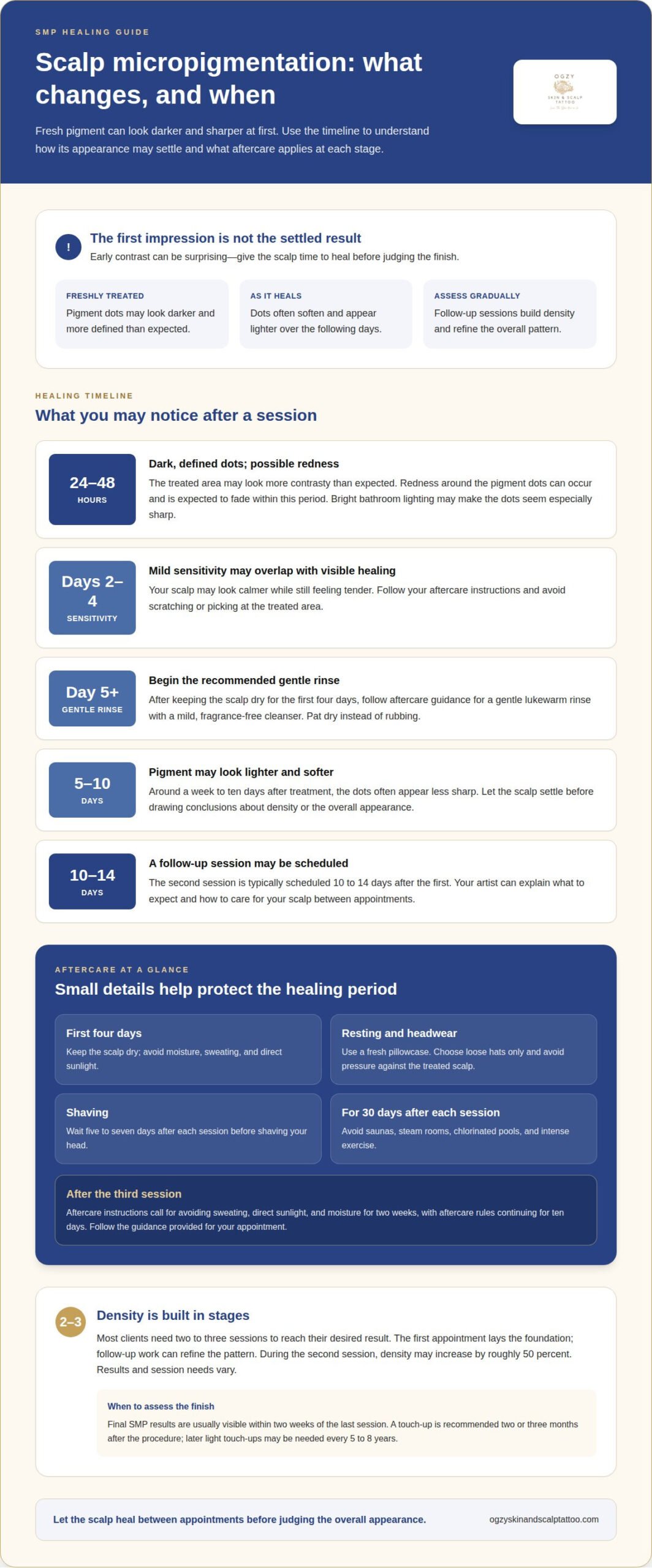
Scalp appearance in the first days after SMP
Your scalp’s appearance can change quickly after treatment, so the first look is only one stage. The timing of redness, pigment changes, and washing can help you understand what you’re seeing.
Healing and Pigmentation Settling
Healing is the period when the treated scalp changes as its pigmentation settles. Following those changes matters because the first look doesn’t show the final tone. During the first 24 to 48 hours, dots can appear dark and sharply defined. Redness is expected to fade within 24 to 48 hours, although mild sensitivity can occur on days two through four.
The appearance continues to shift. SMP dots often look lighter and softer about a week to ten days after treatment, while pigment reaches peak darkness at about two weeks. These stages can make your scalp look different from one day to the next. Use your appointment date as context rather than treating one glance as the finished result.
A natural-looking finish depends on how the dots look together, not just at their darkest. For example, close-up bathroom lighting can emphasize individual dots, while softer, indirect light shows more of the overall pattern. Let the treated area move through its healing stages before drawing conclusions about its appearance.
Washing the Treated Scalp
Washing your treated scalp means keeping it dry at first, then cleansing gently once the recommended wait has passed. This staged approach matters because moisture restrictions apply during the first days after treatment.
Keep your scalp dry for the first four days after a session. From day five, gently rinse it with lukewarm water and a mild, fragrance-free cleanser. Use your fingertips lightly; don’t scrub or scratch the pigment dots. A gentle rinse isn’t the same as soaking, so continue to avoid moisture exposure beyond cleansing.
After washing, handle the area gently instead of rubbing it with a towel. Fresh pillowcases can help keep your resting surface clean, while loose hats reduce pressure on your scalp. These small steps support a gentle routine as your appearance changes. Follow your artist’s aftercare instructions after every appointment, since each session starts a new healing period.
Redness, sensitivity, scabbing, and flaking
After an SMP appointment, mild redness and sensitivity may accompany the early healing period. Redness is expected to fade within 24 to 48 hours, while mild sensitivity can occur on days two through four. These changes may overlap, so noting when they begin can help you describe the pattern accurately during a consultation.
Light scabbing or subtle flaking may develop between days four and seven. As the surface changes, pigment may look less even than it did immediately after treatment. Don’t pick at or scratch flakes; let them shed naturally. Recording what you notice, such as flaking that begins on day five, gives you a clear reference when discussing your progress.
Timing provides useful context. Redness, sensitivity, and flaking may appear at different points rather than all at once. A simple dated note can help you tell whether a change is settling, staying steady, or becoming more noticeable. Describe what you see and feel without trying to diagnose the cause yourself.
What are the warning signs of infection or an allergic reaction after SMP? Appearance alone can’t determine whether a change is an infection or allergic reaction. If something concerns you or feels different from the expected healing changes, describe what you’ve noticed and when it began during a consultation.
Aftercare helps keep your routine gentle. Keep the treated scalp dry for the first four days. From day five, aftercare guidance allows a gentle lukewarm rinse with a mild, fragrance-free cleanser. Avoid scrubbing or scratching, and use a light touch. Follow any specific instructions given for your appointment.
Remember that every appointment begins a new healing period. Scabbing and flaking can temporarily affect how the pigment looks, so don’t use a single day’s appearance as your only measure of the finish. If you’re tracking changes, note the date and whether they seem to be easing, staying steady, or becoming more noticeable.
If you’d like to discuss a change you’ve noticed, you can book a consultation.
Redness and mild sensitivity can occur on the scalp on days two through four after an SMP session. Note whether both are present and how they change over time.
Scalp Micropigmentation at Ogzy Skin & Scalp Tattoo
Ogzy Skin & Scalp Tattoo provides scalp micropigmentation to create realistic follicle simulation for thinning hair, baldness, and receding hairlines. The pigment creates the look of density; it doesn’t grow hair. If you’re weighing changes in appearance after treatment, a consultation can help you understand the process and decide whether SMP fits your goals.
I start by learning what you want the result to look like and discussing your scalp and hairline. A natural-looking design depends on how the pigment pattern relates to your existing hair, skin, and preferred style. For example, someone with a receding hairline may want a different outline from someone seeking a close-shaved look across a bald area. SMP is tailored to the appearance you’re aiming for.
It can take time to feel comfortable with a visible change, particularly while the pigment is settling. Follow-up sessions build and refine the appearance in stages, so the first appointment isn’t the finished result. This gradual process lets you see how the pattern looks as it heals and discuss adjustments to the planned density or hairline before more pigment is added.
At Ogzy, I explain aftercare and the appearance changes you may notice between appointments, giving you context for each healing stage. We can also discuss how to assess the overall pattern instead of focusing on one dot or one day’s appearance. The aim is a realistic follicle effect that complements your features, not a promise of fuller or regrown hair.
If you’re unsure about the look, follow-up timing, or how SMP may suit your hairline, bring your questions to a consultation. I’ll explain the process and the factors that shape a realistic plan. You deserve space to make an informed decision without feeling rushed.
To discuss your SMP questions, consider contacting the clinic for a consultation.
Make Your Next SMP Decision With Clarity
Understanding what to expect after an SMP session can help you make decisions with greater confidence. Your next step doesn’t have to be committing to treatment. It can simply be a conversation about the look you want, your questions, and whether the process feels right for you.
I know that choosing a visible change can feel personal. You deserve room to discuss your priorities without pressure, whether you’re considering SMP for the first time or thinking carefully about what to do next. A consultation is the best way to talk about what may be realistic for your scalp and goals.
If you’d like to explore your options, book a consultation with Ogzy Skin & Scalp Tattoo. The studio is at 13130 Pond Springs Rd #1105, Austin, TX 78729. You can take the next step at your own pace, with a clearer sense of what matters to you.
Frequently Asked Questions
Can I Wash My Hair 3 Days After SMP?
No. Day three is still within the initial period when your treated scalp should stay dry. If you’re unsure whether an activity counts as washing, distinguish a deliberate rinse or shampoo from simply keeping your usual hair routine unchanged. Resume gentle cleansing only at the advised stage, and use a light touch rather than scrubbing. Follow any specific directions your artist gave you.
Can I shave my head during SMP aftercare?
Wait five to seven days after each SMP session before shaving your head. If you usually shave before work or an event, plan that routine for after the recommended waiting period. The guidance applies after every appointment, so a follow-up session resets the timing. If you’re unsure how it applies to your usual shaving method, discuss it during your consultation.
How soon will I see results?
A visible change may appear after the first session, but that doesn’t mean the result is finished. The overall appearance develops through follow-up work, and final results are usually visible within two weeks of the last session. When deciding how you feel about the design, consider your intended hairline and overall look rather than focusing on one small area or a single close-up.

Article by
Opal Z
Opal is the owner and practitioner behind OGZY Skin & Scalp Tattoo in Austin, Texas. With more than three years in business and a longtime background in the aesthetics industry, she specializes in corrective and restorative treatments designed to address concerns that traditional aesthetics often overlook.
Her work focuses on scar and stretch mark revision, scar camouflage, scalp micropigmentation (SMP), hair regrowth treatments, and laser tattoo and permanent makeup removal. Opal works with a wide range of skin tones and takes an individualized approach to every client, considering skin color, texture, scar characteristics, treatment history, and realistic long-term outcomes.
Through OGZY Skin & Scalp Tattoo, her goal is to combine artistry, aesthetics, and technical treatment knowledge to help clients feel more comfortable and confident in their skin.
Love the skin you’re in.