
The most common short-term side effect after facial microneedling is redness similar to a mild sunburn, which typically lasts 24 to 48 hours. Most people return to regular daily activities within two to three days after treatment. For acne scar treatment in Georgetown, TX, recovery and results depend on the approach used and how your skin responds.
It’s understandable to weigh possible side effects against the hope of smoother-looking skin. This guide explains what microneedling may address, what recovery can involve, and how to track changes over time, including why sun protection matters in Georgetown’s sunny climate. You’ll also learn how to compare treatment approaches and when scar revision may fit a personalized plan.
Key Takeaways
- Learn which texture and tone concerns microneedling may address, and why different types of marks can call for different approaches.
- Understand the main steps of an appointment, including how topical numbing can fit into treatment preparation.
- See what to expect as skin heals and why sun protection matters while it recovers.
- Find out why facial treatment plans often involve three to six sessions and what can shape the pace of visible changes.
- Explore how scar and stretch mark revision may be relevant when acne-related scarring is your main concern.
What Concerns Can Microneedling Address?
Acne scar treatment in Georgetown, TX, may involve options such as microneedling or chemical peels. The right approach depends on the concern, including whether marks are indented, raised, discolored, or affecting skin texture.
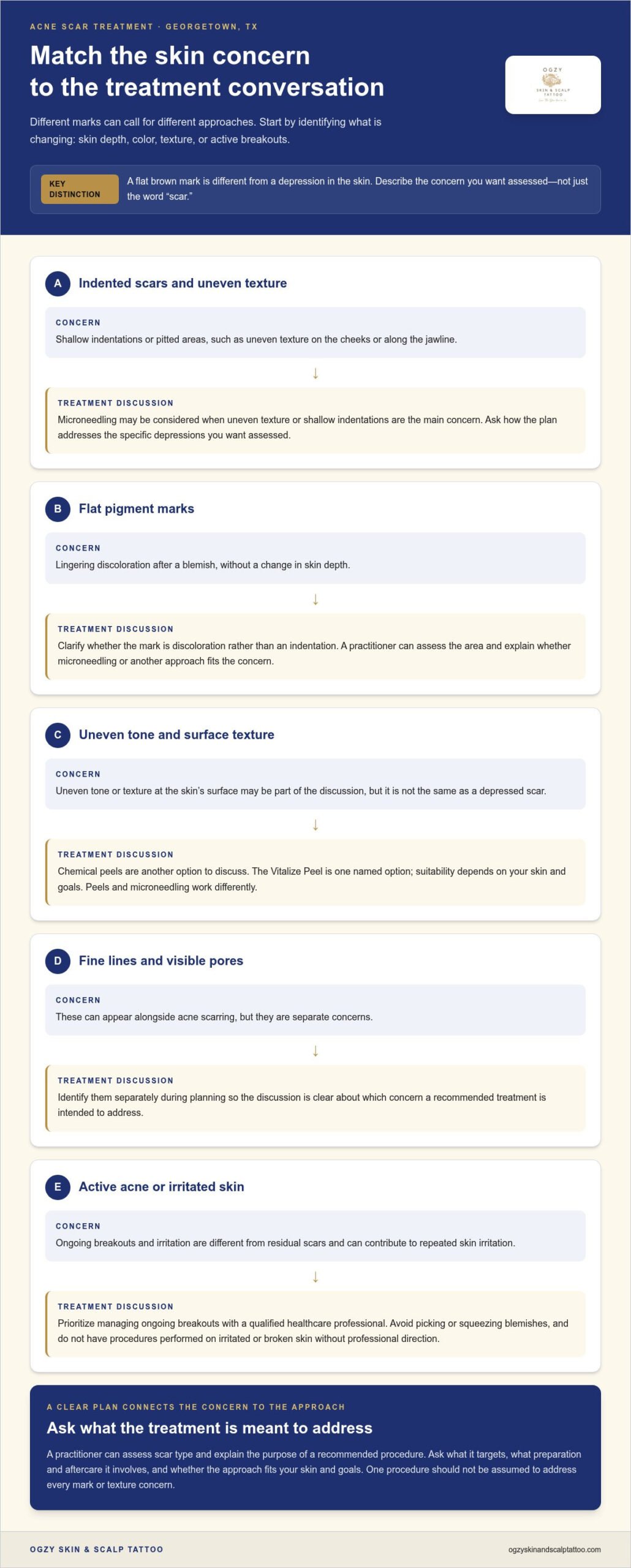
Microneedling uses fine, sterile needles to create controlled micro-injuries in the skin. It may be considered when uneven texture or shallow indentations are the main concern. A treatment discussion should distinguish these marks from active breakouts, dark spots, and raised scars, since each is a different concern. Describe what bothers you most, such as pitted cheeks or uneven texture along the jawline.
Fine lines, visible pores, and pigment changes may also come up during treatment planning. These concerns can appear alongside acne scarring, but they are not the same. For example, a flat brown mark after a blemish differs from a depression in the skin. A practitioner can assess the area and explain whether microneedling or another approach fits the concern.
Chemical peels are another option to discuss for uneven tone and surface texture. The Vitalize Peel is one named option, and its suitability depends on your skin and goals. A peel and microneedling work differently, so ask what each treatment targets and what preparation and aftercare it involves. Don’t assume one procedure addresses every mark or texture concern.
Preventing new acne-related marks starts with addressing active acne and reducing skin irritation. Picking or squeezing blemishes can injure surrounding skin, so avoid touching them. If breakouts continue, discuss acne management with a qualified healthcare professional before focusing on residual scars. Don’t have procedures performed on irritated or broken skin without professional direction.
- Indented scars: Ask how the treatment plan addresses depressions and uneven texture.
- Flat pigment marks: Discuss whether the concern is discoloration rather than a change in skin depth.
- Fine lines or visible pores: Identify these separately so expectations match the treatment’s intended target.
- Active acne: Prioritize managing ongoing breakouts to limit repeated irritation and picking.
For Georgetown patients comparing treatment providers, look for dermatology practices or medical spas that describe acne-scar procedures such as microneedling and chemical peels. Ask how they distinguish scar types and explain the purpose of each recommended procedure. A clear plan should connect the treatment to a specific concern, such as shallow indentations or lingering pigment, rather than promising one approach will resolve every mark.
Georgetown dermatology practices and medical spas that offer microneedling or chemical peels may treat acne scars. Ask providers how they assess scar type and whether their recommended treatment fits your skin and goals.
Appointment steps and topical numbing
A focused appointment begins with a clear account of your skin concerns and treatment goals. Describe examples such as shallow cheek indentations, lingering brown marks, or sensitivity to topical products. These details help shape the discussion before a procedure begins. Mention previous treatments, current irritation, and products that have caused discomfort.
Next, the practitioner examines the treatment area, assessing its texture, the location of scars, and whether active breakouts or irritation are present. This helps clarify the target and whether microneedling fits the plan. Ask what changes the treatment aims to address and what it is not intended to target.
Before treatment, the skin is prepared according to the planned procedure. For microneedling, topical numbing cream may be used to improve comfort during the session. The product and application process depend on the treatment plan, so follow the practitioner’s directions rather than applying numbing cream yourself. Share allergies, sensitivities, and previous reactions before anything is applied.
Comfort varies by treatment area and individual sensitivity. During microneedling, you may feel pressure, prickling, or warmth; topical numbing can lessen sensation. Tell the practitioner if your discomfort changes. Agree on a signal, such as raising your hand, so the procedure can pause while you discuss comfort.
- Discuss your concerns: Identify the specific scars, marks, or texture changes you want addressed.
- Review the plan: Clarify the procedure, treatment area, and role of topical numbing.
- Prepare the skin: Follow the practitioner’s instructions for arriving with clean skin and avoiding products they identify.
- Communicate during treatment: Report discomfort or unexpected sensations promptly.
- Review aftercare: Make sure you understand what to apply and what to avoid afterward.
Microneedling and laser treatments are different procedures, not interchangeable appointment options. Each uses a distinct method, so ask why a particular approach suits your concern. A Vitalize Peel also has its own preparation and aftercare steps. Don’t assume topical numbing is used for every procedure; ask how comfort is managed for your selected treatment.
Before leaving, confirm the aftercare instructions in practical terms. Ask which skincare products to pause, how to cleanse the area, and what changes should prompt a call to the practice. If you’re preparing for a procedure, review appointment planning and bring your comfort questions to the treatment discussion.
Recovery, sun protection, and results timeline
After facial microneedling, most patients experience redness similar to a mild sunburn for 24 to 48 hours. That visible response is temporary, but it can affect when you feel comfortable returning to plans involving close-up photos or makeup. Most people return to regular daily activities within two to three days after treatment. These timeframes offer a general picture, not a reason to rush skin through recovery.
Georgetown receives more than 220 sunny days per year, so sun protection deserves a place in aftercare planning. Follow the practitioner’s instructions for protecting treated skin outdoors, including how sunscreen should be applied. A hat and shade can also help limit direct exposure during outdoor errands. For example, plan a shaded route if you’ll be outside while redness remains visible.
Keep recovery simple: follow the aftercare steps provided for your procedure and use only products those instructions allow. Avoid rubbing or picking at treated areas, and don’t add a new skincare product while your skin is settling without guidance. If you’re unsure whether a product is suitable, clarify the instructions before using it. The treatment method and your skin condition shape the appropriate routine.
Results develop on a different timeline from surface redness. Redness may fade within the first 24 to 48 hours, while changes in texture take longer to assess. Wrinkles, shallow acne marks, and deeper scars can respond differently because they involve different visible features. Compare the same areas under similar lighting, rather than judging results from one mirror check immediately after treatment.
- First 24 to 48 hours: Expect possible redness resembling a mild sunburn after facial microneedling.
- Within two to three days: Most people return to regular daily activities.
- During outdoor time: Use the sun-protection steps provided for your treated skin, especially in Georgetown’s sunny climate.
- As recovery continues: Follow product instructions and assess texture changes separately from temporary redness.
Recovery can affect when you resume particular activities, not just your usual routine. If an event involves prolonged sun exposure, close-up photography, or applying products to your face, consider its timing when planning treatment. Georgetown’s sunny conditions make outdoor plans especially relevant. Follow your aftercare instructions for skincare, sun exposure, and activities that could irritate the treated area.
Track progress through consistent observations. Note changes in redness, texture, or pigment, and compare them over time rather than reacting to each day’s appearance. The scarring and skin condition being treated influence what changes you may notice. If recovery differs from the instructions you received, contact the treating practice for guidance instead of adding products or changing aftercare on your own.
Expected results and duration
Facial microneedling plans commonly involve three to six sessions. This range is a starting point for discussion, not a fixed schedule for everyone. The number of sessions depends on the concern, the treatment plan, and how your skin changes between visits. For acne scar treatment in Georgetown, TX, track the specific features you want to assess, such as shallow marks or uneven texture.
Progress is easier to assess when you compare the same areas under similar lighting. Take a clear photograph before treatment, then compare it with later images from the same angle. This helps distinguish lasting texture changes from temporary redness or differences caused by lighting. Focus on specific observations, such as whether an indentation looks less pronounced or the skin appears smoother.
Microneedling is not surgery, and treatment planning should clearly describe its intended scope. Collagen is often mentioned in discussions of skin procedures, but a useful appointment focuses on what the treatment aims to address for your skin. Ask how progress will be assessed, which features matter most, and when the plan will be reviewed. Clear criteria make follow-up discussions more practical than relying on a general impression.
Results and duration are separate questions. A treatment plan sets out sessions and review points; your observations show how your skin’s appearance changes over time. Keep a simple record of treatment dates, skin response, and photographs. Avoid comparing your progress with someone else’s images, because their scar pattern, skin condition, and treatment plan may differ. A record also helps you describe changes clearly at follow-up.
- Choose a visible target: Track one concern, such as cheek texture or fine lines.
- Use consistent photographs: Match the angle, lighting, and distance for each comparison.
- Follow the planned sequence: Keep session dates and review points together in one record.
- Discuss the result: Bring specific observations to the next appointment, rather than relying on memory.
Three to six facial sessions can help structure planning, while spacing and review timing depend on the treatment plan. Don’t treat that range as a promise of a particular result or permanent duration. Skin changes, scar depth and pattern, and the approach used all shape what can be observed. A plan for acne scar treatment in Georgetown, TX, should tie review points to your own goals.
At each review, compare the original concern with its current appearance. Note whether texture, fine lines, or pigment remains the main priority, then discuss whether the plan still matches that goal. Documenting changes helps you make informed decisions about continuing, adjusting, or concluding treatment. Consistent assessment turns “smoother” from a vague hope into a specific observation about the area being treated.
Acne scar treatment
Start by identifying the scar type, whether acne is active, and your main goal. These details shape the treatment discussion and expectations.
Available Acne Scar Treatments
Options to discuss for acne scars include microneedling, chemical peels, laser procedures, and subcision. In Georgetown, the central question is which approach matches the scar’s features, such as uneven texture, discoloration, or tethered depressions. A physician can distinguish residual scars from active inflammatory acne, which may need attention first. Ask what concern a proposed procedure targets and what recovery involves.
Comparing Treatment Approaches
Microneedling uses fine, sterile needles to create controlled micro-injuries in the skin; chemical peels use a topical solution to exfoliate its surface. Laser treatments use focused light, while subcision releases fibrous bands beneath certain depressed scars. These methods differ in technique, suitability, and recovery. A facial treatment plan should match the method to the scar pattern, rather than treating redness, pigment, and depressions as the same issue.
Choosing a Qualified Provider
For an appointment in Georgetown, look for a practitioner who explains the procedure, expected recovery, and the specific scars being addressed. Ask how they assess skin condition, active breakouts, and inflammation before treatment. A useful consultation includes a clear plan, aftercare instructions, and time for questions. Notice whether the practitioner explains alternatives and limitations in understandable terms, without promising identical results for everyone.
Health insurance coverage in Texas depends on your plan and how treatment is classified. Review whether your benefits address scar procedures, exclusions, prior authorization, and documentation requirements. Cosmetic classification can affect coverage.
Before choosing a treatment, describe the concern precisely: for example, a brown mark, persistent redness, or a shallow cheek depression. These details help distinguish pigment changes from texture changes and guide the discussion. Ask what improvement would look like for that specific feature, how progress will be assessed, and what happens if the plan needs adjustment. If active acne is present, discuss it before focusing solely on older scars.
Bring a list of current skincare products and previous procedures to your consultation. Mention any peel or laser treatment you’ve had, along with reactions that followed. A clear record helps the practitioner consider your skin’s history when discussing options. Focus the conversation on your scar pattern, treatment approach, and recovery expectations.
Ogzy Skin & Scalp Tattoo: Scar and Stretch Mark Revision
Ogzy Skin & Scalp Tattoo offers Scar & Stretch Mark Revision, including no-ink scar revision using medical-grade serums. The serums support collagen and elastin production, without adding pigment. For acne scar treatment in Georgetown, TX, this offers a different approach from Scar Camouflage, which uses custom-blended pigments to blend scars into your natural skin tone. Microneedling Skin Rejuvenation is also available as a separate service.
If acne scarring remains a concern, a conversation about scar revision can help clarify whether the service fits your goals. Share what you’d like to improve and discuss an approach suited to your scar’s appearance.
Contact Ogzy Skin & Scalp Tattoo to discuss scar and stretch mark revision.
Choose a Next Step That Fits Your Goals
Your next step can be a focused conversation about what you want to change and which approach addresses that concern. For acne scar treatment in Georgetown, TX, describe the appearance that matters most to you and ask how scar revision or microneedling may fit your goals. A clear discussion can help you move forward with greater understanding and realistic expectations.
Ogzy Skin & Scalp Tattoo offers Scar & Stretch Mark Revision and Microneedling Skin Rejuvenation. The practice also offers Scalp Micropigmentation (SMP), a separate service for scalp appearance concerns. These services address different needs, so keep the conversation centered on the concern you want to address.
If you’re ready to discuss scar revision or microneedling, contact Ogzy Skin & Scalp Tattoo to take the next step. You deserve a thoughtful plan that respects your priorities and helps you feel more comfortable moving ahead.
Frequently Asked Questions
Are there any side effects?
Facial microneedling commonly causes temporary redness resembling a mild sunburn, lasting 24 to 48 hours. That visible response can influence plans involving close-up photos or social events. Consider scheduling with recovery time in mind, and follow the aftercare directions provided for your procedure. Chemical peels, lasers, and other approaches use different methods, so their possible effects and recovery instructions aren’t interchangeable.
How many microneedling sessions will I need?
Facial microneedling plans commonly involve three to six sessions. Use that range as a planning reference, then track your treatment dates and the changes you notice between visits. Record whether your main concern is cheek texture, shallow marks, or another feature. Bring those observations to each review so the discussion stays focused on your goals and progress.
How many sessions are typically needed for acne scar treatment?
Facial microneedling plans commonly include three to six sessions, with sessions spaced four to six weeks apart. The treatment approach and scar features being addressed shape the plan. Keep a calendar of appointments and note any changes between them. This makes it easier to compare progress over the full course rather than judging the outcome immediately after one session.
What results can patients expect, and how long do they take?
Look for gradual changes in the specific concern being treated, such as uneven texture or shallow acne marks. Surface redness and lasting texture changes follow different timelines, so don’t use early redness to judge the final appearance. Compare photographs taken consistently and note visible differences over time. The treatment plan identifies review points for discussing whether your target areas are changing.
What are the risks and side effects of acne scar treatments?
Side effects depend on the procedure. After facial microneedling, redness similar to a mild sunburn can last 24 to 48 hours. Chemical peels, lasers, and subcision use distinct methods, so their recovery considerations differ. Before treatment, make sure you understand the expected skin response and aftercare for the specific procedure selected. Keep those instructions handy rather than applying advice meant for another treatment.
How should you prepare for acne scar treatment and care for skin afterward?
Prepare by writing down your current skincare products, previous procedures, and any reactions you’ve experienced. Share that information during your appointment, then follow the preparation and aftercare directions for your selected treatment. Keep the instructions accessible at home and refer to them before applying a product to treated skin. Planning outdoor commitments around recovery can also make aftercare easier to follow.
Which Georgetown TX dermatologists and med spas treat acne scars?
Georgetown dermatology practices and medical spas that offer microneedling or chemical peels may treat acne scars. Ask how they assess scar type and whether their recommended treatment fits your skin and goals.

Article by
Opal Z
Opal is the owner and practitioner behind OGZY Skin & Scalp Tattoo in Austin, Texas. With more than three years in business and a longtime background in the aesthetics industry, she specializes in corrective and restorative treatments designed to address concerns that traditional aesthetics often overlook.
Her work focuses on scar and stretch mark revision, scar camouflage, scalp micropigmentation (SMP), hair regrowth treatments, and laser tattoo and permanent makeup removal. Opal works with a wide range of skin tones and takes an individualized approach to every client, considering skin color, texture, scar characteristics, treatment history, and realistic long-term outcomes.
Through OGZY Skin & Scalp Tattoo, her goal is to combine artistry, aesthetics, and technical treatment knowledge to help clients feel more comfortable and confident in their skin.
Love the skin you’re in.