
What if the very sunlight that makes a Texas morning feel so restorative is actually the greatest threat to your newfound confidence? You’ve likely spent months researching and finally underwent the transformation of scalp micropigmentation to reclaim your self-assurance. It’s natural to feel protective of those crisp, realistic results, especially when you’re faced with conflicting advice about when it’s safe to step back into the heat. One of the most urgent questions we hear at our Cedar Park studio is, “can I go in the sun after smp,” and the answer depends entirely on where you are in your healing journey.
We understand the fear of seeing your sophisticated craftsmanship fade or shift in tone due to UV exposure. This guide will clarify the biological stages of your scalp’s recovery, ensuring you know exactly how to shield your investment without feeling trapped indoors. We’ll walk through a precise safety timeline, reveal the specific matte-finish products that protect your skin without clogging pores, and provide the expertise you need to keep your SMP looking natural for years to come. Whether you’re navigating the Austin sun or planning a getaway, you’ll gain the confidence to enjoy the outdoors while keeping your results flawless.
Key Takeaways
- Uncover the biological reasons why fresh pigment is vulnerable. Get the definitive answer to “can I go in the sun after smp” to safeguard your new look during the critical first month.
- Discover why UVA rays act like a slow-motion laser on your scalp. Learn which specific mineral ingredients provide the most effective shield against blurring and discoloration.
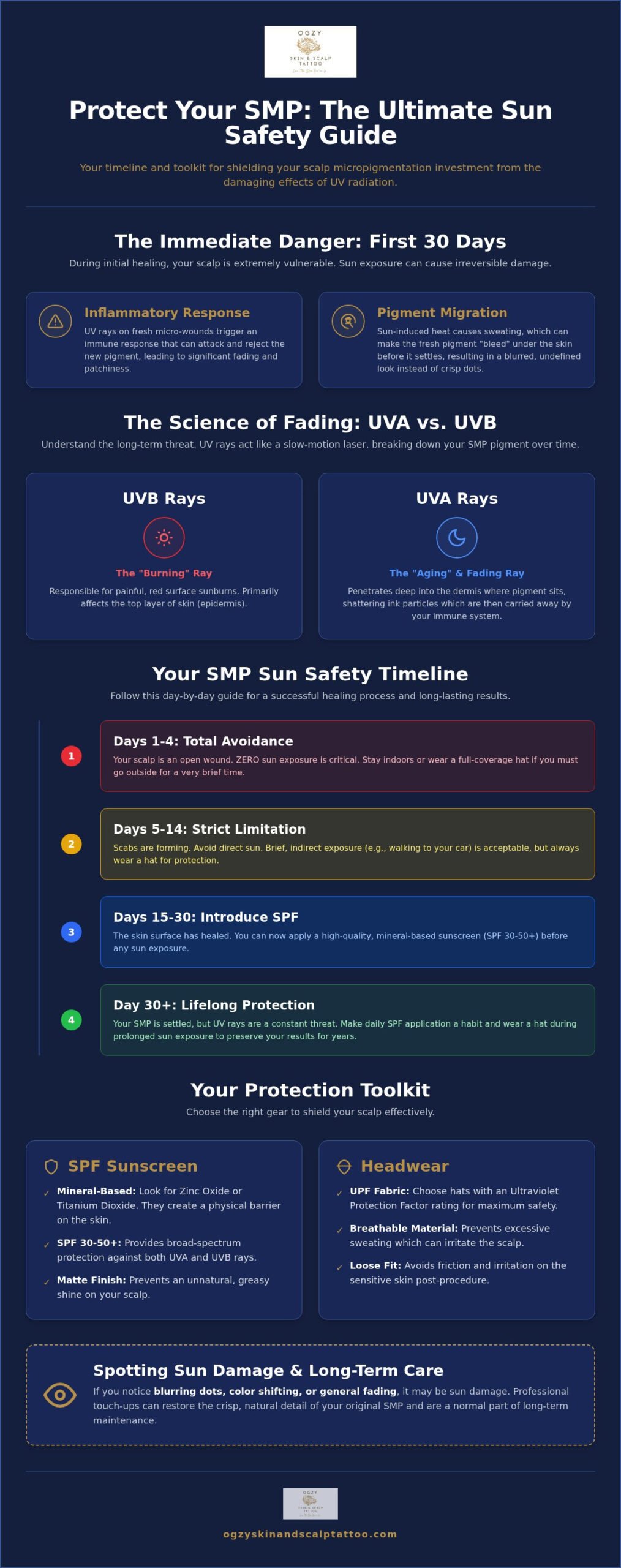
- Follow a structured day-by-day safety timeline. This guide takes you from total avoidance to confident, protected sun exposure without compromising your comfort.
- Learn to spot the subtle warning signs of sun damage. We explain how professional refinement can restore the crisp, natural detail of your original results if fading occurs.
The Immediate Danger: Why Sun and Fresh SMP Do Not Mix
You have just completed a journey toward a more youthful, confident version of yourself. Your scalp micropigmentation represents a sophisticated blend of clinical precision and aesthetic artistry, but it’s important to remember that for the first few days, your scalp is in a state of delicate renewal. Many clients ask, “can I go in the sun after smp,” hoping for a quick return to their outdoor routines. However, the immediate post-procedure phase requires a protective approach to ensure your results remain crisp and natural.
Each session involves thousands of tiny micro-perforations in the skin. While these points create the illusion of thick, healthy follicles, they are effectively microscopic open wounds during the initial healing period. When UV rays hit these vulnerable areas, they trigger an acute inflammatory response. This reaction is more than just a surface burn; it signals your immune system to treat the newly deposited pigment as a foreign threat. If the body becomes overly inflamed during the scabbing phase, it may reject the pigment entirely, leading to a loss of the meticulous detail your practitioner worked so hard to achieve.
Sunburn on a fresh scalp tattoo is particularly destructive because it forces the skin to peel prematurely. This disrupts the natural settling of the ink, often resulting in patchy follicle simulation that looks unnatural and uneven. Additionally, direct sunlight significantly raises the temperature of the scalp. This heat leads to excessive sweating, which can cause pigment migration. When the ink “bleeds” or spreads beneath the skin before it has fully stabilized, the result is a blurred, muddy appearance rather than the sharp, distinct dots of a refined restoration.
The Risk of Post-Inflammatory Hyperpigmentation
UV exposure doesn’t just fade the pigment; it can also cause the skin surrounding each dot to darken unnaturally. This condition, known as post-inflammatory hyperpigmentation, creates a shadowy, bruised look that compromises the realism of your SMP. Sun-induced inflammation causes the immune system to aggressively attack pigment particles, breaking them down before they can properly integrate into the dermis. This biological interference often leads to a “blurred” effect where the skin cannot maintain the integrity of the crisp follicle dots.
Texas Sun Intensity: A Warning for Austin Residents
Living in the Cedar Park and Round Rock areas means dealing with a notoriously high UV index, especially during the long summer months. In the Texas heat, even “brief” exposure that might feel harmless in a milder climate can cause significant damage to a healing scalp. You must also be wary of reflected UV rays. Sunlight bouncing off car windows or the surface of a pool can reach your scalp even if you think you’re in the shade. Protecting your investment requires a commitment to staying indoors or under total cover until the skin has successfully closed its primary defensive barriers.
The Science of Fading: How UV Rays Break Down Pigment
Understanding the biological mechanisms behind fading helps you appreciate the need for lifelong protection. While your initial recovery is about wound healing, the following years are about pigment stability. UV energy is a constant force that works against the integrity of your treatment. When clients ask “can I go in the sun after smp,” they are often thinking about the immediate pain of a burn, but the long-term impact on the ink’s chemical structure is just as critical for a natural look.
UVA vs. UVB: The Twin Enemies of Your Scalp
UVB rays are responsible for the painful, red surface burns we all recognize. UVA rays, however, are the silent architects of fading. These rays penetrate deep into the dermis, reaching the exact layer where your SMP pigment resides. Even on a cloudy afternoon in Leander or Georgetown, UVA rays remain at nearly full strength. Small moments of incidental exposure, like the sunlight hitting your scalp while driving or walking to the mailbox, create a cumulative effect that slowly degrades your results over time.
Think of UV energy as a form of slow-motion laser removal. The energy from the sun causes the pigment particles to vibrate and eventually shatter into microscopic fragments. Once these particles are small enough, your body’s immune system identifies them as waste. Through a process called phagocytosis, the lymphatic system carries these tiny pieces away. This is why sun-damaged SMP doesn’t just fade; it loses its defined shape. The FDA continues to monitor reactions to tattoo inks and how they behave under light exposure, highlighting the importance of using high-quality materials and consistent protection.
Pigment Depth and Stability
Scalp micropigmentation is a specialized craft that places pigment much more superficially than a traditional decorative tattoo. This shallower depth is what allows for such realistic follicle simulation, but it also means there is less skin between the ink and the sun. While we use medical-grade pigments designed to resist color shifts, extreme UV exposure can still force a chemical transition. Over time, unprotected skin may see its crisp charcoal tones shift toward a less natural hue. Maintaining this refined restoration requires consistent care, and if you ever notice a change in clarity, scheduling a touch-up with a restorative SMP specialist can bring that lost detail back to life.
The Recovery Timeline: From Total Avoidance to Safe Exposure
Following a structured timeline is the most effective way to protect your scalp’s renewal process. While the question of “can I go in the sun after smp” is common, the answer changes as your skin moves through different biological stages of healing. We view the first 30 days as a critical investment period where your patience directly correlates to the longevity and crispness of your results. By respecting these phases, you ensure the medical-grade pigments settle perfectly into the dermis without interference from external stressors.
Phase 1: Protecting the Open Micro-Channels
During the first seven days, your scalp is in the “Zero Sunlight” phase. This is when the micro-perforations are most vulnerable to environmental factors. It’s vital to avoid direct exposure entirely. If you must go outside, even for a moment, stay in the shade. Accidental exposure for a minute or two while walking to your car won’t ruin your treatment, but it should be avoided whenever possible. The primary concern here is the link between heat, sweat, and pigment retention. High temperatures can cause your pores to dilate, which may lead to the pigment “weeping” or migrating before the skin has a chance to close.
You should also avoid wearing hats during this first week unless they are exceptionally loose and clean. Tight headwear can trap heat and bacteria against the fresh micro-channels, increasing the risk of irritation. If you’ve just had your session in the Texas heat, staying in a climate-controlled environment is the best way to support your body’s natural restorative process.
Phase 2: Introducing Sunscreen Safely
From day 8 to 14, you enter the “Covered” phase. You can begin light outdoor activities, but only if you wear a clean, loose-fitting hat. Between days 15 and 28, you can finally start introducing high-quality SPF 30-50. However, choosing the right product is essential for maintaining the clarity of your follicle simulation. Your first post-SMP sunscreen should be:
- Non-comedogenic: This ensures the formula won’t clog your pores or cause breakouts on your healing scalp.
- Fragrance-free: Fragrances are common irritants that can cause a reaction on sensitive, newly healed skin.
- Mineral-based: Look for zinc oxide or titanium dioxide, which sit on top of the skin to reflect UV rays.
Before applying sunscreen to your entire head, perform a “patch test” on a small, inconspicuous area of the scalp to ensure you don’t have a sensitivity to the ingredients. Even though your skin feels stronger, continue to avoid swimming pools and salt water during this phase. Chemicals like chlorine can be harsh on the pigment while it’s still stabilizing. After day 30, you’ve reached the “New Normal,” where long-term shielding becomes a simple, daily habit to keep your SMP looking sharp and realistic for years to come.
Protecting Your Investment: A Guide to SPF and Scalp Gear
Your journey toward a restored hairline doesn’t end when you leave the studio. It continues with the daily choices you make to preserve the sophisticated craftsmanship of your treatment. While the question of “can I go in the sun after smp” is often answered with a timeline, the quality of your protection is what truly dictates the longevity of your results. Transitioning into long-term maintenance requires a shift from simple avoidance to strategic shielding. By selecting the right products and gear, you ensure your simulated follicles remain crisp, dark, and indistinguishable from natural hair.
The Best Sunscreen Ingredients for Scalp Tattoo Longevity
When selecting a sunscreen, you must choose between physical (mineral) and chemical formulas. For scalp micropigmentation, physical sunscreens containing zinc oxide or titanium dioxide are the gold standard. Unlike chemical filters that absorb UV rays and convert them into heat within the skin, mineral blockers sit on the surface to reflect light away. This is particularly important for SMP because it prevents the deep-tissue heating that can lead to pigment migration or fading over time. You should also look for formulas that are free from denatured alcohols and harsh preservatives, as these can dry out the scalp and cause the skin to look flaky or dull.
The aesthetic outcome is just as important as the protection itself. Matte-finish products are essential for a realistic shaved-head look because they eliminate the oily shine that can make simulated follicles look artificial under bright light. When applying your SPF, use a gentle dabbing motion rather than aggressive rubbing. This ensures an even layer of protection without irritating the delicate skin of the scalp or disrupting the visual depth of the pigment.
Choosing the Right Headwear for the Austin Heat
In the intense UV environment of Cedar Park and Austin, sunscreen alone isn’t always enough for extended outdoor sessions. High-quality headwear provides a secondary line of defense that is often more reliable during peak sun hours. Look for hats specifically rated with a UPF (Ultraviolet Protection Factor) of 50+, which blocks approximately 98 percent of the sun’s rays. While a standard baseball cap offers decent protection for the forehead, a wide-brimmed hat is often a superior choice for total scalp and neck coverage.
The fabric choice is vital for comfort in the Texas heat. Breathable materials like linen or moisture-wicking tech-wear allow heat to escape, preventing the excessive sweating that can irritate a healing scalp. It’s also important to maintain a regular cleaning schedule for your hats. Bacterial buildup and sweat residue can lead to folliculitis or other skin irritations that compromise the clarity of your SMP. If you’re unsure which products or gear will best suit your lifestyle, you can schedule a restorative consultation to discuss a personalized aftercare plan that keeps your results looking sharp for years.
Correcting Sun Damage and Long-Term SMP Care
Even with the most dedicated care, life happens. Perhaps you spent an unexpected afternoon on Lake Travis without a hat, or maybe years of incidental exposure have softened the once-sharp edges of your treatment. While you may initially ask “can I go in the sun after smp” during the first month of healing, the reality is that UV protection is a lifelong commitment for anyone seeking to maintain a realistic appearance. Recognizing the early signs of sun damage allows us to intervene early and restore the sophisticated craftsmanship of your original session.
Sun damage typically manifests in three ways: premature fading, blurring of the follicle dots, or an unnatural shift in color. When UV rays shatter pigment particles, the once-crisp “follicles” can begin to look like a solid shadow rather than distinct points of hair. If you notice your scalp has lost its three-dimensional depth or the tone no longer matches your natural hair color, it’s likely time for a professional assessment. We view these corrections as a renewal process, aiming to bring back the precision that defines our work.
When to Book a Touch-Up Session
There is a distinct difference between the natural fading that occurs over three to five years and the accelerated wear caused by sun exposure. Natural fading is gradual and uniform, whereas sun damage often appears patchy or localized to the areas most exposed to light. During a restorative touch-up, we meticulously add density and “crispness” back to the weathered areas. We layer new medical-grade pigment to rebuild the lost detail, ensuring the transition between existing work and new impressions is seamless. For a deeper look at maintaining your results, consult our Scalp Micropigmentation Cedar Park TX: The Definitive Reference Guide (2026).
Corrective Solutions for Old or Faded SMP
In cases where sun damage has caused significant “blow-outs” or muddy discoloration, a simple touch-up may not be enough to achieve a natural look. This is where our expertise in laser tattoo removal becomes an essential part of the journey. We utilize advanced laser technology to gently fade unwanted or damaged pigment without harming the surrounding tissue. This creates a clean canvas, allowing us to prepare the skin for a fresh, realistic application. By removing the blurred remnants of the past, we can start over with the same precision and artistry used in a first-time procedure. You can learn more about this restorative path in our Laser Tattoo Removal Aftercare in Cedar Park: The 2026 Guide to Skin Restoration. Establishing a lifetime sun-smart routine is the final step in ensuring your renewed confidence lasts for a decade or more.
Preserving Your Refined Results for the Long Term
Your new hairline is more than just pigment; it’s a testament to your journey toward self-assurance. Protecting this investment means understanding that while you’ll eventually return to your favorite outdoor activities, the question can I go in the sun after smp requires a thoughtful, phased approach. By respecting the initial healing window and committing to high-quality mineral protection, you ensure your results remain as crisp and realistic as the day they were created.
Remember that consistency is the key to longevity. Using non-comedogenic, matte sunscreens and UPF-rated headwear will shield your scalp from the intense Texas UV rays that cause premature fading. If you ever notice changes in clarity, professional restoration is always an option to refine and refresh your look. Maintaining your results is a shared responsibility, and we’re dedicated to providing the guidance you need for a lifetime of confidence.
At Ogzy Skin & Scalp Tattoo, we specialize in realistic follicle simulation and restorative paramedical tattooing for clients across Austin, Round Rock, and Georgetown. We are here to partner with you through every stage of your personal transformation. Book Your Scalp Micropigmentation Consultation in Cedar Park today and let’s ensure your results stay flawless for years to come. Your journey to a renewed self-image deserves nothing less than perfection.
Frequently Asked Questions
What happens if I accidentally get 5 minutes of sun on my new SMP?
Brief, incidental exposure for a few minutes usually isn’t catastrophic for your results, but it should be avoided whenever possible. The primary risk during the first week is localized inflammation that could trigger your immune system to reject the new pigment. If you notice sudden redness or itching after being outside, stay in a cool environment and let the skin rest. Repeated accidents will eventually compromise the clarity of the simulated follicles.
Can I wear a hat immediately after my scalp micropigmentation session?
Wait at least 24 hours before placing anything on your scalp to allow the micro-channels to begin closing naturally. When you do choose a hat, ensure it’s exceptionally loose and made of breathable material like linen or soft cotton. A tight baseball cap can trap heat and sweat against the fresh pigment, which may lead to irritation or poor retention. Cleanliness is vital; only wear freshly laundered headwear during the first week.
Will the sun turn my scalp micropigmentation blue or green?
Modern medical-grade pigments are specifically formulated to avoid shifting into the blue or green hues common in traditional tattooing. However, excessive UV exposure acts like a slow-motion laser that shatters pigment particles over time. This energy can cause the ink to blur or change tone if the skin isn’t properly shielded. Consistent use of mineral sunblock is the most effective way to keep your charcoal tones looking sharp and sophisticated for years.
When can I start using sunscreen on my scalp after the procedure?
You can safely begin applying sunscreen once your scalp has reached the 14th day of the healing process. Before this point, the skin is still restoring its natural barrier, and the chemicals or minerals in SPF could cause unnecessary irritation. Many people asking “can I go in the sun after smp” are eager to resume their active lifestyles, but waiting those extra few days ensures the pigment integrates perfectly into the dermis.
Do I need to wear sun protection on my scalp even in the winter?
Sun protection is a year-round necessity because UVA rays remain powerful even during the overcast winter months in Texas. These rays penetrate deep into the tissue, where they can slowly degrade the stability of your treatment. While you might not feel the heat of a surface burn, the cumulative effect of incidental exposure during a walk or drive can lead to premature fading. Shielding your scalp daily preserves the long-term integrity of your look.
What is the best type of sunscreen for someone with a shaved-head SMP look?
The most effective choice for a shaved-head look is a mineral-based sunscreen with a mattifying finish. Ingredients like zinc oxide provide a physical shield that reflects UV rays without creating an oily shine on the scalp. Avoiding a greasy appearance is critical for keeping your follicle simulation looking realistic and subtle. Non-comedogenic formulas are also preferred, as they protect your skin without clogging the pores or causing localized breakouts on the scalp.
Can I go to the beach or pool if I wear a hat the whole time?
We recommend staying away from beaches and pools for at least 30 days after your final session. Even with a hat, the intense UV rays reflected off the water and sand can reach your scalp from multiple angles. Additionally, salt air and humidity can cause excessive sweating, which may interfere with how the pigment settles. After the first month, you can return to these environments confidently by using a water-resistant SPF and a UPF-rated hat.
How often do I need touch-ups if I spend a lot of time outdoors?
If you lead an active outdoor lifestyle, you might find that you need a professional touch-up every 3 to 4 years. While standard results can last longer, frequent UV exposure speeds up the natural process where the body identifies shattered pigment as waste. When clients ask “can I go in the sun after smp,” we always emphasize that while you can enjoy the outdoors, a rigorous shielding routine is the only way to prevent premature fading.