
What if the ink that was meant to simplify your morning routine has instead become a daily source of anxiety? It’s a heavy burden to carry when a procedure intended to enhance your beauty leaves you feeling like you need to hide. You might worry that the cosmetic tattoo removal process will damage your delicate facial skin or, worse, cause your natural eyebrow or scalp hair to fall out. It’s completely normal to feel hesitant when you see pigments shift into unexpected hues of orange or blue, wondering if your skin will ever return to its natural state.
We understand that this journey isn’t just about removing ink; it’s about reclaiming your sense of self. This guide explores the specialized steps of fading permanent makeup and scalp micropigmentation with the precision and care your skin deserves. You’ll learn how modern technology targets unwanted pigment while keeping your hair follicles safe and your skin healthy. From understanding why colors change to what you can expect during your recovery, we’ll walk through the path toward clear, ink-free skin and the restored confidence you’ve been seeking.
Key Takeaways
- Discover why permanent makeup and scalp micropigmentation require a highly specialized approach to ensure the safety of your delicate facial features and hair follicles.
- Learn how the cosmetic tattoo removal process utilizes clinical precision to target deep pigments while prioritizing your skin’s long-term restorative health.
- Understand the vital role of a test spot in predicting how your unique pigment chemistry will respond to laser energy before full treatment begins.
- Identify the key factors, such as ink saturation and pigment type, that influence your personal timeline for achieving a clear and natural result.
- Gain clarity on the essential aftercare protocols that protect your skin from irritation and support a seamless transition back to your natural appearance.
Understanding the Cosmetic Tattoo Removal Process
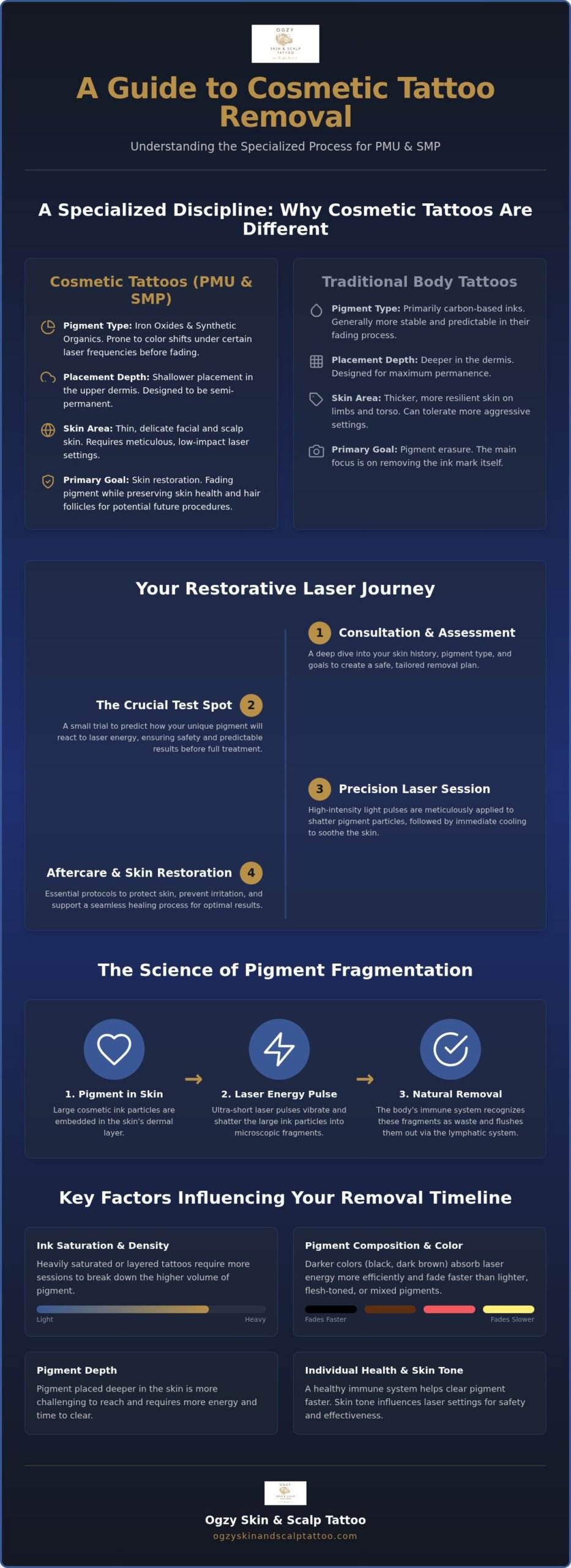
The cosmetic tattoo removal process is a specialized discipline that bridges the gap between clinical science and aesthetic artistry. Unlike removing a large piece of body art from a limb, addressing permanent makeup (PMU) or scalp micropigmentation (SMP) requires a nuanced understanding of facial anatomy and pigment chemistry. We treat this as a restorative journey, focusing on the delicate balance of shattering unwanted ink while preserving the vitality of your skin and natural hair follicles. It’s about more than just erasing a mistake; it’s about healing the skin underneath.
Various Tattoo removal methods exist, but advanced laser technology remains the gold standard for its ability to target specific wavelengths with extreme precision. For cosmetic applications, the goal is often more complex than simply “erasing” a mark. It involves managing how pigments like iron oxides react to light energy, ensuring that your path toward a clean slate is both safe and effective. Whether you want a total removal or just enough fading for a fresh start, the approach must be tailored to your unique skin health.
Cosmetic vs. Traditional Tattoo Ink
Traditional body tattoos typically utilize carbon-based inks placed deep within the dermis to ensure they last a lifetime. In contrast, cosmetic pigments are often composed of iron oxides or synthetic organics designed to be semi-permanent and shallower in the skin. This distinction is critical for your results. Iron oxide pigments can undergo a chemical reduction when exposed to certain laser frequencies, occasionally causing the color to darken or shift before it begins to fade.
Because facial skin is significantly thinner and more vascular than the skin on your arms or legs, the laser settings must be meticulously calibrated. We prioritize high-precision pulses to avoid thermal damage. This approach protects the integrity of your brow area or scalp, ensuring that the cosmetic tattoo removal process doesn’t lead to scarring or permanent hair loss. We don’t just blast the pigment; we coax it out while respecting the skin’s natural boundaries.
The Goal of Restoration
We view every session as an act of skin rejuvenation rather than just a mechanical extraction. Whether you’re seeking to completely remove an old eyebrow shape or simply fade heavy-handed SMP, the objective is to restore your skin to a healthy, receptive state. This “clean slate” is essential if you plan to undergo future paramedical work or scar revision. By focusing on regenerative health, we ensure that your skin remains supple and resilient throughout the journey. Our commitment is to guide you through this transformation with a supportive, results-oriented approach that values your long-term appearance.
The Step-by-Step Laser Journey for Permanent Makeup
Your journey toward a clean slate begins with a deep dive into your skin’s history. During your initial consultation, we look beyond the surface to assess your pigment type, skin tone, and medical background. This isn’t just a formality; it’s a critical safety step to ensure the cosmetic tattoo removal process is perfectly tailored to your unique physiology. We then perform a “test spot,” which is a small trial to see how your specific ink reacts to the laser. This allows us to witness any immediate changes in pigment chemistry and adjust our settings before we proceed with the full treatment.
Once we’ve verified your skin’s response, the treatment session itself is a study in precision. Whether we’re working on the brows, lips, or scalp, we apply high-intensity light pulses with meticulous care. You’ll feel a sensation often described as a quick snap, followed by immediate post-treatment cooling to soothe the delicate facial skin. Adhering to FDA tattoo removal safety guidelines helps us manage your expectations and minimize risks such as temporary swelling or redness. The session follows a methodical rhythm:
- Protective eyewear is provided to ensure your safety throughout the laser application.
- The laser handpiece is guided across the treatment area with clinical precision.
- Immediate cooling or a soothing gel is applied to manage localized heat and provide comfort.
The Science of Pigment Fragmentation
The laser works by delivering energy in trillionths of a second, causing the ink particles to vibrate and shatter into microscopic fragments. Your body’s immune system then takes over, gradually flushing these fragments through the lymphatic system over several weeks. It’s interesting that darker colors, like black or deep brown, typically respond faster because they absorb the light energy more efficiently than lighter, flesh-toned hues. This internal “cleaning” process is why we schedule sessions several weeks apart, giving your body the time it needs to clear the shattered pigment naturally.
Managing Color Shifts
One of the most complex aspects of the cosmetic tattoo removal process is the potential for color shifts. Many eyebrow inks contain iron oxides that may temporarily turn orange, red, or even grey when first exposed to the laser. This isn’t a sign of failure but a predictable stage of the chemical transition. We utilize specialized wavelengths to neutralize these stubborn hues, ensuring the pigment continues to fade toward your natural skin tone. If you’re ready to begin this transformation, exploring a personalized consultation is the first step toward reclaiming your appearance and your confidence.
Factors Influencing Your Removal Timeline
Understanding the duration of your transformation is a common concern. While we’d all love an instant result, the cosmetic tattoo removal process is a gradual unfolding that respects your body’s natural pace. Several key factors dictate how many sessions you’ll need. For instance, ink saturation plays a massive role. A heavy-handed, solid block of pigment in a brow will naturally take longer to break down than a soft, “powder” shading technique. Your skin’s health and its position on the Fitzpatrick scale also matter. We adjust our approach based on your skin’s melanin levels to ensure we protect your natural complexion while targeting the ink.
The chemical composition of your pigment is another critical variable in the cosmetic tattoo removal process. Older, inorganic pigments like iron oxides often respond differently than modern organic inks. While older tattoos that have already begun to fade naturally might seem like an easy win, the depth at which the original artist placed the ink can still present challenges. We meticulously evaluate these factors during your consultation to provide a realistic, empathetic outlook on your restorative journey.
Scalp Micropigmentation (SMP) Specifics
Removing or refining scalp work requires a specialized touch that prioritizes the health of your hair follicles. Unlike traditional body tattoos, SMP is placed very shallowly, but it often covers a large, visible area. If you’re dealing with “blown out” dots that have merged into an unnatural blue hue or a hairline that feels too aggressive, our follicle-safe laser technology can help. We focus on precision to ensure we only target the unwanted pigment. Often, this work serves as the essential first step before you transition into a more natural, fresh application of scalp micropigmentation.
Lifestyle and Biological Factors
Your internal biology is the silent partner in this process. Once the laser shatters the pigment, your lymphatic system must do the work of carrying those fragments away. This is why staying hydrated and maintaining a healthy lifestyle can actually influence your results. We also align with FDA guidance on tattoo removal by emphasizing the dangers of sun exposure. UV rays can alter your skin’s response to the laser and increase the risk of hyperpigmentation.
Finally, we maintain a non-negotiable rule of spacing sessions 6 to 8 weeks apart. It might feel tempting to rush, but your skin needs this time to regenerate and your immune system needs it to clear the debris. This methodical rhythm ensures that we achieve the clear, healthy skin you desire without compromising its long-term integrity. We’re here to guide you through every week of that wait with support and clarity.
Aftercare and Skin Restoration: Protecting Your Results
The cosmetic tattoo removal process doesn’t end when the laser turns off. It’s a partnership between advanced technology and your skin’s natural healing ability. Because we often work on highly visible areas like the eyebrows, lips, or scalp, managing immediate reactions is paramount for a successful outcome. You can expect mild swelling and redness, which are natural signs that your immune system is responding to the fragmented ink. We prioritize a “hands-off” approach during this initial phase. Picking or scratching at the treated area can lead to unnecessary scarring or infection, which undermines the precision work we’ve performed to protect your skin’s integrity.
Sun protection is your most powerful tool in preventing post-inflammatory hyperpigmentation. Treated skin is incredibly sensitive to UV rays, which can cause the area to darken permanently if left unprotected. We recommend a high-quality, physical sunblock to shield your skin as it rebuilds its natural defenses. By following these guidelines, you ensure that the fading process remains clean and the underlying skin stays healthy. If you’re ready to begin your skin’s restoration, schedule your initial assessment today.
Restorative Healing Protocols
Recovery on the face requires more than just standard first aid. We advocate for medical-grade products specifically formulated for post-laser care to support the skin barrier without introducing harsh chemicals. Hydration also plays a vital role; keeping your body well-hydrated helps your lymphatic system clear the shattered pigment more efficiently. You’ll know your healing is on track if the initial redness subsides within a few days. Any prolonged heat or unusual discharge should prompt an immediate follow-up to ensure your recovery stays on the right path.
Regenerative Support
Once the ink has faded, the journey toward total skin restoration often involves improving the texture and resilience of the area. We frequently recommend microneedling for scars to stimulate collagen production and smooth out any irregularities left behind by the original tattooing process. This approach uses growth factors to restore a natural, supple feel to the skin. This restorative work can also prepare your skin for future aesthetic goals, such as a stretch mark revision treatment, if you’re looking for comprehensive paramedical care. Our goal is to ensure your skin doesn’t just look clear, but feels healthy and rejuvenated.
Why Professional Expertise Matters in Austin and Cedar Park
Choosing the right partner for the cosmetic tattoo removal process is a decision that carries significant emotional and physical weight. While general dermatology clinics handle a high volume of removals, they often lack the paramedical artistry required for delicate facial features. At Ogzy Skin & Scalp Tattoo, we approach every case with the eye of a refined restorer, understanding that the goal isn’t just to destroy ink, but to protect the living canvas of your skin. This specialized perspective is what sets our practice apart in the Austin area, where we prioritize skin integrity and long-term health over quick, aggressive results.
In Texas, safety standards for laser procedures are rigorous to protect the public. Current regulations require that a physician delegates laser tattoo removal to qualified practitioners, ensuring that a supervising physician is on-site and immediately available during the procedure. We embrace these high standards, combining clinical authority with a warm, reassuring bedside manner. By working with a specialist who understands the nuances of pigment depth and facial anatomy, you’re not just getting a treatment; you’re gaining a dedicated guide who is personally invested in your successful transformation.
A Compassionate Approach to Revision
Opal’s philosophy is rooted in the belief that every client deserves a path back to their natural self. We understand that “tattoo regret” isn’t just about a change in style; it’s often an emotional burden that affects your daily confidence. Local clients in Cedar Park, Round Rock, and the greater Austin area trust us because we lead with empathy and clinical precision. We don’t see an unwanted tattoo as a mistake, but as a starting point for a restorative journey. This compassionate approach allows us to walk beside you as you move from a place of anxiety to a renewed, clear-skinned self-image.
Your Next Steps
The first step toward restoration is a professional consultation where we can map out your unique journey. Every skin type and pigment chemistry is different, which is why we never use a one-size-fits-all approach. During your assessment, we’ll discuss your aesthetic goals, evaluate your skin’s health, and provide a clear, methodical plan for your removal sessions. This transparency provides the clarity you need to move forward with hope and certainty. If you’re ready to reclaim your appearance and your confidence, we invite you to Schedule your laser tattoo removal consultation and begin your journey toward a clean slate today.
Reclaiming Your Natural Canvas
The journey to clear skin is a path of restoration and renewal. You’ve seen how the cosmetic tattoo removal process requires a sophisticated blend of clinical precision and artistic understanding to protect your unique features. By prioritizing follicle-safe technology and meticulous aftercare, you can move past the weight of tattoo regret with absolute confidence. We focus on ensuring your skin doesn’t just look clear, but feels healthy and resilient.
Our practice is dedicated to providing restorative care for clients across Austin, Cedar Park, and the surrounding areas. We are specialized in paramedical skin revision, using advanced laser technology for delicate areas to ensure the highest standards of safety. This commitment allows us to act as your dedicated partner, guiding you from your initial assessment through to your final result. If you’re ready to embrace a fresh start, we invite you to Begin Your Skin Restoration Journey with a Professional Consultation. Your path toward a renewed self-image is closer than you think, and we’re honored to help you reach it.
Frequently Asked Questions
Does cosmetic tattoo removal hurt more than the original tattoo?
Most clients find the sensation of the cosmetic tattoo removal process to be manageable and comparable to the original application. While it’s often described as a series of quick, hot snaps similar to a rubber band against the skin, the duration is much shorter than the initial tattooing. We prioritize your comfort by using cooling techniques to soothe the area. Your experience in our Cedar Park clinic is designed to be as calm and restorative as possible.
Will laser tattoo removal cause my eyebrow hair to fall out?
No, your natural eyebrow hair is safe when the procedure is handled by a specialist who understands hair follicle anatomy. Our advanced laser technology specifically targets the ink particles without damaging the surrounding tissue or hair roots. We actually specialize in hair regrowth treatments, so protecting your natural hair is a core part of our mission. You don’t have to choose between removing unwanted ink and keeping your natural brows.
How many sessions will I need to remove my permanent makeup?
Most clients require between 6 and 15 sessions for complete removal, though many see significant fading much sooner. Because permanent makeup is usually placed shallower than traditional body art, the cosmetic tattoo removal process often moves more efficiently. Your specific timeline depends on factors like ink density and your body’s immune response. During your consultation in Austin, we’ll create a personalized schedule that respects your skin’s unique healing pace.
Can all colors of cosmetic ink be removed?
Most cosmetic colors, particularly darker blacks and browns, respond exceptionally well to laser treatment. Lighter colors like yellow or certain flesh tones can be more complex because they reflect light differently. However, our specialized wavelengths are designed to address a broad spectrum of pigments. We meticulously evaluate your ink’s chemical composition during your initial assessment to ensure we can achieve the clear, ink-free result you’re looking for in Georgetown.
Is it safe to get laser tattoo removal on the lips?
Yes, laser removal on the lips is safe when performed with the high level of precision we provide. The skin on the lips is thin and highly vascular, which requires a gentle, expert touch and specific laser settings. We focus on maintaining the integrity of this delicate area while effectively shattering the unwanted pigment. It’s a common request for those looking to correct migrated lip liner or outdated shades in the Round Rock area.
What happens if my cosmetic tattoo changes color during the process?
If your ink shifts to an orange or grey hue, it’s actually a predictable part of the pigment’s chemical transition. This often happens with iron oxide based inks as they oxidize under the laser’s energy. We don’t see this as a setback; we simply adjust our laser wavelengths to neutralize the new color in subsequent sessions. It’s a normal stage in your restorative journey toward clear, healthy skin as you move away from tattoo regret.
Can I get a new cosmetic tattoo immediately after removal?
You should wait at least 8 to 12 weeks after your final removal session before getting a new cosmetic tattoo. This period allows your skin to fully regenerate and ensures the underlying tissue is healthy enough to hold new pigment. Rushing this process can lead to poor ink retention or scarring. We believe in providing a clean slate that supports the artistry of any future paramedical work or scalp micropigmentation you choose.
How do I know if I am a good candidate for laser removal?
You’re likely a great candidate if you have healthy skin and realistic expectations about the fading process. We evaluate your skin type on the Fitzpatrick scale and review your medical history to ensure the laser is a safe choice for you. Whether you’re in Leander or Austin, our goal is to partner with you to determine if this is the right time for your personal transformation and renewed self-image.

Article by
Opal Z
Opal is the owner and practitioner behind OGZY Skin & Scalp Tattoo in Austin, Texas. With more than three years in business and a longtime background in the aesthetics industry, she specializes in corrective and restorative treatments designed to address concerns that traditional aesthetics often overlook.
Her work focuses on scar and stretch mark revision, scar camouflage, scalp micropigmentation (SMP), hair regrowth treatments, and laser tattoo and permanent makeup removal. Opal works with a wide range of skin tones and takes an individualized approach to every client, considering skin color, texture, scar characteristics, treatment history, and realistic long-term outcomes.
Through OGZY Skin & Scalp Tattoo, her goal is to combine artistry, aesthetics, and technical treatment knowledge to help clients feel more comfortable and confident in their skin.
Love the skin you’re in.