
If you’re wondering, “does microneedling for hair hurt,” it’s reasonable to want a clear answer before considering a scalp treatment involving fine needles. The sensation can range from prickling to pressure or discomfort, and it varies with individual sensitivity and the area being treated. No one can promise that treatment will feel painless, but knowing what may affect comfort can help you decide what questions to ask.
This guide explains what scalp microneedling may feel like during treatment and afterward, what can affect discomfort, and how to prepare for a conversation about your comfort. It also compares professional treatment with at-home needling so you can weigh the differences in oversight and personalization. Ogzy Skin & Scalp Tattoo offers professional microneedling and regenerative hair treatments in Austin, Cedar Park, Leander, Round Rock, and Georgetown.
Key Takeaways
- Wondering “does microneedling for hair hurt”? There is no single sensation or comfort level that applies to everyone.
- Personal sensitivity and your scalp’s condition can shape how treatment feels.
- Professional microneedling offers individualized discussion and in-person oversight, unlike using an at-home device on your own.
- Share relevant scalp, skin, health, and medication information before treatment, and raise comfort concerns early.
- Ogzy Skin & Scalp Tattoo provides professional microneedling and regenerative hair treatments in Austin, Cedar Park, Leander, Round Rock, and Georgetown.
Does microneedling for hair hurt? A realistic answer about scalp discomfort
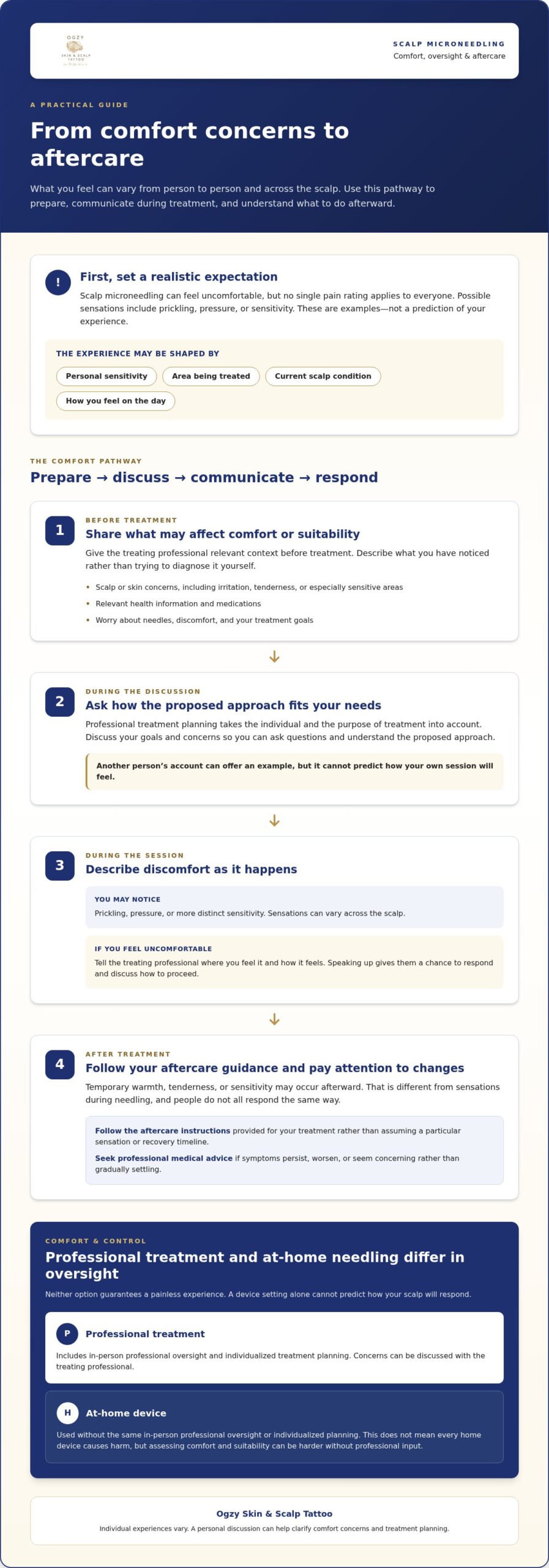
Scalp microneedling can feel uncomfortable, but the sensation varies from person to person. People may describe prickling, pressure, or brief sensitivity as the device moves over the treated area. These are examples, not a prediction of what you will feel. Your sensitivity, the part of the scalp being treated, and your response during the session can all affect the experience.
There is no single pain rating that fits everyone. Microneedling uses fine needles to make controlled contact with the skin. For general background on microneedles and their uses, see Microneedle. That overview explains the technology, but it cannot predict your comfort or replace a discussion about your scalp and treatment plan.
What might scalp microneedling feel like during treatment?
During a session, you may notice mild prickling, pressure, or more distinct sensitivity. The sensation can vary across the scalp. For example, an area that is already sensitive to touch may feel different from another area. That variation is one reason a general description cannot guarantee what your session will feel like.
Tell the treating professional if you feel nervous about needles or become uncomfortable during treatment. Describe where you feel discomfort and how it feels. You do not need to stay silent or compare your experience with someone else’s. Speaking up gives the professional a chance to respond and discuss how to proceed.
Is discomfort afterward different from discomfort during treatment?
It can be. Prickling or pressure during treatment differs from temporary warmth, tenderness, or sensitivity afterward. Your scalp may feel more noticeable to the touch once the session is over, but people do not all respond in the same way. Follow the aftercare instructions provided for your treatment rather than assuming a particular sensation or recovery timeline.
In brief: treatment discomfort is what you feel during needling; post-treatment sensitivity is how your scalp may feel afterward. If symptoms persist, worsen, or seem concerning rather than gradually settling, seek professional medical advice. If you are unsure whether a symptom is part of expected recovery, describe what you are experiencing to a professional and ask what steps to take.
Why scalp microneedling discomfort varies from person to person
There is no universal pain rating for scalp microneedling. Two people may experience a similar treatment differently, and one person’s sensation may vary across different areas of the scalp. A friend’s account can give you an example, but it cannot tell you exactly how your own session will feel.
Personal reports describe one person’s response, not a forecast for someone else. Sensitivity, how you feel on the day, your scalp’s current condition, and the way treatment is planned can all contribute to the experience. Considering these factors is more useful than relying on a single label such as “painful” or “painless.”
Which personal and scalp factors can affect the sensation?
People differ in how they experience touch and pressure. Stress or worry about needles can also make you more alert to sensations, while expectations shaped by another person’s story may affect how you interpret them. These factors do not determine exactly what you will feel, but they are worth discussing.
Your scalp’s condition is another consideration. Tell the treating professional about irritation, tenderness, or another current scalp concern before treatment. Describe what you have noticed instead of trying to diagnose it yourself. That information can help inform a discussion about suitability and next steps.
- Share relevant scalp or skin concerns, including areas that feel especially sensitive.
- Discuss health information and medications that may be relevant to treatment.
- Explain any concerns about needles or discomfort during your consultation.
Why treatment approach matters
Scalp microneedling is not a one-size-fits-all procedure. A professional treatment plan takes the individual and the purpose of treatment into account. Discussing your goals and concerns before treatment gives you an opportunity to ask questions and understand the proposed approach.
At-home devices are used without the same in-person professional oversight or individualized planning. That does not mean every home device causes harm, but it can be harder to assess comfort and suitability without professional input. Do not assume that a device or technique that felt manageable for someone else will be right for you, or adjust your approach based on another person’s account.
Ogzy Skin & Scalp Tattoo provides professional microneedling and regenerative hair treatments in the Austin area. If you are considering treatment, learn about professional microneedling and bring your questions about comfort and your scalp to a consultation.
Professional scalp microneedling vs. at-home needling: comparing comfort and control
Choosing between professional scalp microneedling and an at-home device is not simply a choice between more or less discomfort. Neither option guarantees a painless experience, and a device setting alone cannot predict how your scalp will respond. The practical differences include professional oversight, individualized treatment planning, hygiene, and how concerns during treatment are addressed.
Use the comparison below to consider those differences. It does not assume that every home device causes harm or that professional treatment will feel or work the same way for everyone.
| Consideration | Professional treatment | At-home device |
|---|---|---|
| Oversight | A professional can assess your scalp and discuss treatment considerations with you. | Use takes place without the same in-person oversight. |
| Personalization | The approach can be planned around the individual and treatment purpose. | A device may not account for your personal scalp concerns or treatment goals. |
| Hygiene | Hygiene can be considered as part of professional treatment. | Cleaning and handling depend on the user following device instructions. |
| Response to discomfort | You can communicate sensations during treatment for professional guidance. | You may need to decide how to respond without in-person guidance. |
What does professional microneedling offer that a home device cannot?
Professional care gives you an opportunity to discuss your scalp, concerns, and treatment goals before a plan is made. Hygiene and technique matter because microneedling involves contact with the skin. Careful attention to them supports a considered treatment experience, but does not guarantee zero risk or discomfort. You can also describe an unexpected sensation during treatment and discuss how to proceed.
A consultation can help you understand the proposed approach and decide what questions you want answered before proceeding. If you are weighing scalp treatment alongside other options, hair regrowth without surgery offers broader context for considering non-surgical approaches.
Does a home microneedling device necessarily hurt less?
No. Using a home device does not automatically mean less discomfort, and its settings alone cannot predict how your scalp will respond. Individual sensitivity, the area involved, and how the device is used all matter. A lower-intensity experience for one person does not predict another person’s response. Professional oversight also cannot promise identical sensations or results for everyone.
If irritation or an unexpected symptom occurs during home use, you may not have immediate professional guidance to help interpret it. This does not mean every at-home device causes harm. It means comfort, technique, and response can be harder to personalize and monitor without in-person support. If you are weighing the options, discuss how each approach relates to your scalp and goals rather than treating online accounts as a prediction.
How to prepare for scalp microneedling and manage comfort concerns
Preparation can make the experience feel more manageable, especially if needles make you uneasy. The most useful instructions are those tailored to your treatment, not a checklist copied from the internet. Before your appointment, discuss your health, scalp, and comfort concerns. If you are still asking, “does microneedling for hair hurt,” bring that question up before treatment.
What should you discuss before treatment?
Share information that can help the treating professional understand your situation and explain what to expect. You do not need to diagnose a scalp issue yourself. Describe what you have noticed and ask how it may affect treatment planning.
- Comfort concerns: Mention needle anxiety, areas that feel sensitive, or previous reactions to skin treatments.
- Scalp and skin: Describe any irritation or existing scalp concerns, and share relevant skin or health history.
- Medications: Provide an up-to-date list, including prescribed treatments. Do not stop or change medication unless the clinician responsible for it advises you to.
- Preparation and support: Ask what to do before treatment and whom to contact if a concern comes up afterward.
If you are considering a comfort measure such as medication or a topical numbing product, discuss it with the treating professional first. Do not apply a product or take medication based on general online advice, since recommendations may not fit your circumstances.
What should you monitor after treatment?
Temporary warmth, tenderness, or sensitivity may occur after scalp microneedling. The scalp may feel somewhat like a mild sunburn, but experiences differ, and this is not a promise about how you will feel or how long symptoms will last. Follow the aftercare instructions for your treatment, including guidance about keeping the scalp clean and avoiding harsh hair products, sun exposure, and excessive sweating for the recommended period.
Pay attention to whether symptoms are settling or instead feel severe, worsen, or seem unexpected. Do not try to identify the cause on your own. Contact the treating professional for advice, and seek appropriate medical guidance if you are concerned about your reaction. If symptoms feel urgent, use local urgent or emergency medical services.
Before leaving, make sure you understand your aftercare directions and know whom to contact with questions. Clear instructions can help you feel prepared without relying on assumptions about what recovery should feel like.
To discuss comfort as part of a personalized treatment conversation, explore Ogzy’s hair regrowth treatments.
Considering hair microneedling in Cedar Park or Austin? What a consultation can clarify
A consultation is a chance to talk through more than the procedure. Explain what you hope to address, share concerns about scalp sensitivity or needles, and ask whether professional microneedling may suit your circumstances. Asking “does microneedling for hair hurt” is a reasonable part of that conversation, not a question you need to save until treatment begins.
Ogzy Skin & Scalp Tattoo provides professional microneedling and regenerative hair treatments in Cedar Park, Austin, Leander, Round Rock, and Georgetown. A personalized discussion can connect your goals with relevant treatment considerations while keeping expectations realistic: comfort varies, and no treatment should be presented as pain-free or as guaranteeing hair regrowth.
What can a personalized consultation help you understand?
A useful discussion makes room for your goals and questions. Talk about what you have noticed, how it affects your confidence, and what kind of change you hope to see. The conversation can address whether treatment is appropriate to consider, what the experience may involve, and what expectations are realistic for your situation.
It can also help distinguish an appearance goal from a guaranteed biological outcome. Wanting to feel more comfortable with your appearance is valid, but a consultation should not promise a particular amount of growth or a specific result. Ogzy’s regenerative hair treatments feature medical-grade stem cells and growth factors. Discuss how treatment relates to your individual needs and what outcomes are realistic to expect.
If you are exploring ways to feel more at ease with hair loss, the guide to hair loss confidence solutions provides broader context. It can help you consider personal goals alongside treatment questions without assuming one approach fits everyone.
How to take a low-pressure next step
You do not need to arrive with every decision made. Bring information that can make the conversation more useful, and give yourself permission to ask about discomfort directly. Understanding the options is progress, even if you need more time before choosing a treatment.
- Your health history: Share relevant information and current medications.
- Your scalp concerns: Describe any irritation, sensitivity, or changes you have noticed.
- Your comfort questions: Mention needle anxiety, past reactions, or what would help you feel informed.
- Your expectations: Explain what you hope to achieve and ask what outcomes are realistic.
A consultation can help you understand the experience and decide whether professional microneedling or a regenerative hair treatment is suitable to explore. You do not need to minimize concerns about pain. Clear answers can help you make an informed choice.
To discuss your goals and comfort concerns, explore hair regrowth treatment options.
Take the next step at your own pace
Deciding whether to explore scalp microneedling does not require you to set aside comfort concerns. Asking “does microneedling for hair hurt” is a sensible starting point. A conversation can help clarify what matters to you, from treatment expectations to how your concerns will be addressed. Take the time you need to consider the information before deciding.
Think of the next step as gathering clarity, not making a commitment. Bring your questions and explain what would help you feel informed. A considered choice should leave room for your goals, your comfort, and realistic expectations.
Ogzy Skin & Scalp Tattoo offers professional microneedling and regenerative hair treatments in Austin, Cedar Park, Leander, Round Rock, and Georgetown. Explore Ogzy’s hair regrowth treatments to learn more and take a clear, informed next step.
Frequently Asked Questions
Does microneedling for hair hurt?
It can feel uncomfortable, but the sensation varies. Some people describe prickling or pressure, while others find the experience more uncomfortable. Treat these descriptions as examples, not a prediction. Before treatment, ask the professional to explain what will happen, how you can communicate discomfort, and how they will respond if you need to pause or discuss what you are feeling.
Is scalp microneedling more painful than microneedling on the face?
There is no reliable rule that scalp treatment feels more or less uncomfortable than facial microneedling. The areas being treated, your sensitivity, and the treatment approach can all affect how it feels. If you have had facial microneedling, share what felt manageable or uncomfortable, but do not assume the scalp will feel the same. Ask how your past experience may inform the discussion of scalp treatment.
How long does scalp sensitivity last after microneedling?
Some people notice sensitivity after treatment, but its intensity and duration vary. Follow the aftercare instructions for your treatment rather than using someone else’s recovery as a benchmark. If discomfort becomes severe, worsens, persists, or comes with symptoms that concern you, seek appropriate medical advice. Describe what you are experiencing rather than trying to identify the cause yourself.
Can I use numbing cream before hair microneedling?
Use a numbing product only if the professional responsible for your treatment specifically advises it. Products differ in ingredients and directions, and whether one is suitable depends on your circumstances and procedure. Before applying anything, tell the practitioner what you are considering and mention allergies, medications, or previous reactions to topical products. Do not assume a product used by someone else is appropriate for you.
Is professional scalp microneedling less painful than using a home roller?
Not necessarily. There is no dependable way to predict that one setting will feel less painful for everyone. Professional treatment allows for individualized discussion and oversight, while home devices may be used without tailored guidance. Neither setting guarantees comfort. When comparing options, ask how each approach fits your scalp and goals, and treat online accounts as individual experiences rather than a forecast.
What should I do if microneedling hurts during treatment?
Tell the treating professional as soon as you feel uncomfortable. Explain what you are feeling and where, so they can assess your response and discuss what is appropriate within the treatment plan. Do not assume intense or unexpected pain is something you must tolerate. If concerning symptoms arise during treatment or afterward, follow professional medical guidance rather than attempting to diagnose or manage the cause on your own.
Is hair microneedling safe for a sensitive or irritated scalp?
Whether treatment is suitable depends on the nature of the sensitivity or irritation, your health history, and the treatment plan. Sensitive skin alone does not determine the answer. Before proceeding, describe what you have noticed, when it began, and whether anything seems to aggravate it. At an Austin-area consultation, sharing those details can help the professional discuss whether treatment is appropriate to consider or should be postponed.

Article by
Opal Z
Opal is the owner and practitioner behind OGZY Skin & Scalp Tattoo in Austin, Texas. With more than three years in business and a longtime background in the aesthetics industry, she specializes in corrective and restorative treatments designed to address concerns that traditional aesthetics often overlook.
Her work focuses on scar and stretch mark revision, scar camouflage, scalp micropigmentation (SMP), hair regrowth treatments, and laser tattoo and permanent makeup removal. Opal works with a wide range of skin tones and takes an individualized approach to every client, considering skin color, texture, scar characteristics, treatment history, and realistic long-term outcomes.
Through OGZY Skin & Scalp Tattoo, her goal is to combine artistry, aesthetics, and technical treatment knowledge to help clients feel more comfortable and confident in their skin.
Love the skin you’re in.