
Changing an unwanted tattoo doesn’t have to mean choosing between living with it and erasing every trace. If the ink no longer reflects who you are, you might want it lighter, less noticeable, or faded to make room for a future cover-up. A plan to fade unwanted tattoo ink can be shaped around that goal, rather than treating fading as incomplete removal.
It’s understandable to wonder whether fading or full removal is a better fit, or whether home remedies might help. DIY methods can injure skin, so professional options are worth discussing. This guide explains what laser treatment may be able to achieve, what it can’t promise, and how a specialist considers factors such as skin type, ink pigment, and your intended result. You’ll also find questions to ask before starting, so you can weigh your options without pressure.
Key Takeaways
- Decide whether you want lighter ink or a less visible tattoo, then explain that goal during an assessment.
- A specialist can review the tattoo’s age, pigment, location, and your skin type before discussing laser treatment.
- Compare professional assessment, unproven home methods, and waiting without treatment, keeping the risk of skin harm in mind.
- Ask how suitability is assessed, what risks may apply, and what follow-up could involve before deciding whether to proceed.
- Ogzy offers laser fading or removal for tattoos, permanent makeup, cosmetic tattoos, and previous SMP in Austin and nearby communities.
What Does It Mean to Fade an Unwanted Tattoo?
Changing a tattoo is a personal choice. You don’t need to justify why it no longer feels right, whether your preferences have shifted or you simply want the design to draw less attention. Fading means reducing a tattoo’s visibility. It describes a goal, not a promise that the ink will disappear completely.
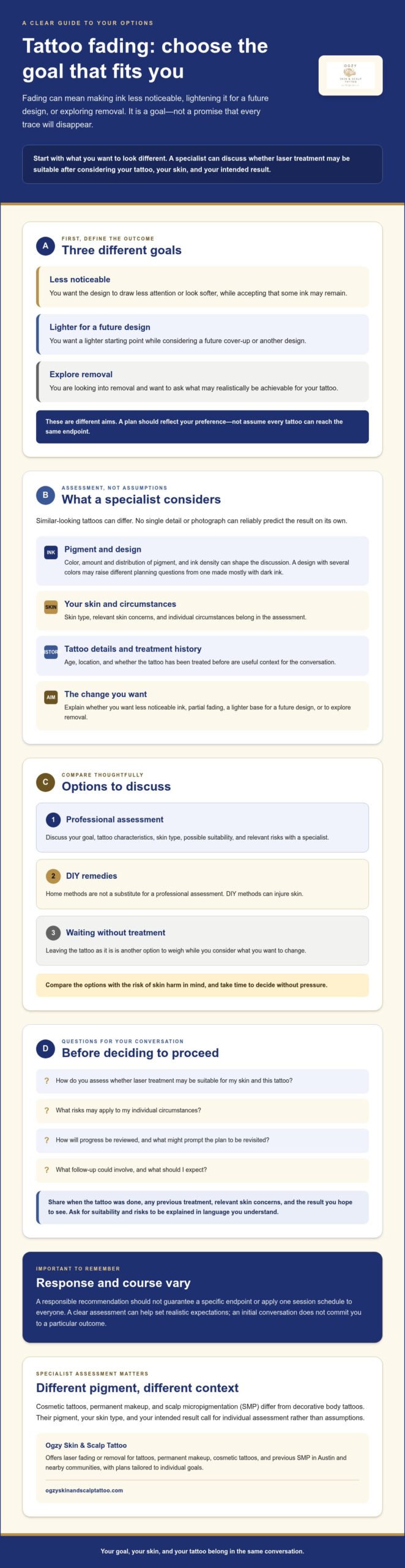
Professional laser treatment can be discussed with different aims in mind: making a tattoo less noticeable, lightening it while planning a future design, or pursuing removal. These are different goals. What may be suitable, and what visible change may be possible, depends on the tattoo and your skin. An overview of Tattoo removal techniques can explain how laser treatment fits among other approaches, but a specialist can assess your specific situation.
Is fading different from complete tattoo removal?
Fading describes a desired change in appearance; it doesn’t automatically mean you want a blank-looking area. You may prefer the tattoo to look softer or less prominent while accepting that some ink could remain. If your goal is removal, say so and ask what may realistically be achievable. A plan should reflect your goal, not assume every tattoo can reach the same endpoint.
When might someone consider fading unwanted ink?
A design that once felt meaningful may no longer reflect your life. You might also feel uncomfortable with how visible it is, or want to explore options for an older tattoo without deciding on complete removal. Before seeking to fade unwanted tattoo ink, describe the result you have in mind: do you want the design to attract less attention, or are you looking for a lighter starting point for a future design?
Cosmetic tattoos and scalp micropigmentation (SMP) differ from decorative body tattoos, so they call for specialist assessment rather than assumptions about how they’ll respond. A provider can consider the pigment, your skin type, and the result you’re seeking when discussing laser fading or removal. Ogzy Skin & Scalp Tattoo offers treatment for tattoos, permanent makeup, cosmetic tattoos, and previous SMP, with plans tailored to individual goals. Bring your questions and explain what you hope will look different. An initial conversation doesn’t commit you to a particular outcome.
How Professional Laser Tattoo Fading Is Tailored to Your Skin and Ink
A professional assessment helps turn a general wish to fade unwanted tattoo ink into a goal that can be discussed in context. The provider reviews the tattoo and your skin before recommending whether laser treatment may be appropriate. Similar-looking tattoos can have different characteristics, so the same approach may not suit everyone.
A tattoo-fading plan should take the ink, your skin, and your intended result into account. Ink color and density, tattoo age, placement, and previous treatment are useful parts of the picture. Skin type and individual circumstances matter, too. No single detail or photograph can reliably predict the result on its own.
What can affect how a tattoo responds?
Ink characteristics help shape the discussion. A design with several colors, for example, may raise different planning questions than one made mostly with dark ink. The amount and distribution of pigment, the tattoo’s location, and its treatment history can also influence what a specialist considers. These are factors to assess, not a shortcut to predicting how much fading you’ll see.
Your skin type and any relevant skin concerns belong in the conversation, too. The U.S. Food and Drug Administration’s guidance on safe and effective tattoo removal discusses possible results and risks, reinforcing why individual assessment matters. Treatment response and course vary. A responsible recommendation should not guarantee a specific endpoint or apply one session schedule to everyone.
What happens during a professional assessment?
Be ready to describe when the tattoo was done, whether it has been treated before, and what you’d like to change. Share relevant skin concerns, and ask how the provider evaluates your skin type and the tattoo’s pigment. Be specific about your preferred result: less noticeable ink, partial fading, or exploring removal. This helps guide a discussion about whether your goal is suitable to consider.
Before treatment begins, ask the provider to explain suitability and relevant risks in language you understand. It’s reasonable to ask how progress will be reviewed, what might prompt the plan to be revisited, and what follow-up to expect. A clear conversation can help you set realistic expectations without committing to a particular outcome.
Ogzy Skin & Scalp Tattoo customizes laser treatment plans around skin type, pigment, and aesthetic goals. If you’re in Austin or a nearby community, you can discuss a personalized tattoo-fading plan as an informed next step.
Laser Fading, DIY Remedies, or Leaving the Tattoo: How to Compare Your Options
There isn’t one right response to an unwanted tattoo. You can ask about professional laser treatment, decide not to treat it, or take time to consider what you want. Home remedies may sound convenient, but they aren’t a reliable substitute for professional assessment and can harm your skin.
| Option | What to consider |
|---|---|
| Professional laser assessment | A provider can review the tattoo, your skin, and your desired result before discussing whether laser treatment may be suitable. Results and treatment plans vary, so there’s no guaranteed fit or endpoint. |
| DIY remedies | Lemon juice, hydrogen peroxide, salt scrubs, and other household approaches aren’t established professional tattoo-fading methods. Scraping, abrading, burning, or chemically irritating the skin can cause injury, infection, or scarring. |
| Waiting without treatment | You can leave the tattoo as it is while you decide what feels right. There’s no need to begin treatment before you’re ready. |
Can home remedies fade a tattoo safely?
Household products might affect the skin’s surface, but they shouldn’t be presented as dependable ways to remove ink held within the skin. Abrasive salt scrubs and scraping can damage the skin; harsh chemicals may irritate or burn it. Don’t try to abrade, burn, or chemically treat a tattoo yourself. For a broader overview of procedures and possible risks, see Mayo Clinic’s What to expect during tattoo removal.
Professional care starts with an individual assessment. Unverified household remedies can injure skin without reliably addressing tattoo ink.
How do I decide whether professional fading fits my goal?
Start with the change you hope to see. If you want the tattoo to be less noticeable, ask whether fading is a reasonable goal to discuss. If you’re comfortable seeking professional guidance and understand that laser treatment may involve a gradual process with variable results, an assessment can help you weigh the option. If you’d rather not treat the tattoo, waiting is valid, too.
If you have skin concerns or are considering laser treatment, discuss them with a qualified provider before proceeding. The goal is to make an informed choice, not to feel rushed. Whether you’re exploring ways to fade unwanted tattoo ink or simply weighing possibilities, a professional conversation can help clarify what may suit your circumstances.
What to Ask Before Starting Tattoo-Fading Treatment
A useful consultation should leave you with a clearer idea of whether treatment may suit your goal, what uncertainties remain, and what to expect next. You don’t need to arrive with every answer. Bring your questions, share your concerns, and take time to decide.
Which questions help set realistic expectations?
Use this checklist to guide the conversation. The answers should relate to your tattoo and circumstances, not a one-size-fits-all promise.
- Clarify your goal. Explain whether you want the ink to look less noticeable, are exploring fading, or have another intended result. Ask what changes may be realistic for this specific tattoo.
- Share relevant history. Describe when the tattoo was done, any previous procedures, skin sensitivities, and health considerations that may be relevant. Mention concerns about the area being assessed.
- Ask how suitability is assessed. Find out how the provider considers your skin type, the tattoo’s pigment and characteristics, and the result you’re hoping for. Ask what risks may apply to your individual plan.
- Discuss progress and follow-up. Ask how changes will be reviewed, when the plan may be reassessed, and what aftercare is recommended. Clarify which signs should prompt you to contact the provider.
Rather than relying on a fixed session count, recovery timeline, or guaranteed outcome, ask how the provider will tailor expectations to your assessment. If the answer isn’t clear, it’s reasonable to ask for more detail before deciding.
How can I prepare for a consultation?
Before your visit, note the tattoo’s history and describe what you’d like to look different. If you have photographs from before or after prior treatment, ask whether they would be useful. Write down skin concerns or questions you don’t want to forget. Being open about your preferences helps the provider discuss whether a plan to fade unwanted tattoo ink aligns with your intended result.
You’re allowed to leave without committing to treatment. The purpose of the discussion is to understand suitability, risks, and possible next steps, not to feel pressured. For more information about preparing for recovery, read laser tattoo removal aftercare in Cedar Park.
If you’d like to discuss whether laser tattoo treatment may fit your goals, talk with Ogzy about your tattoo-fading goals.
Explore Personalized Tattoo Fading in Austin and Nearby Communities
You don’t have to arrive with a finished decision. If you’re considering whether to fade unwanted tattoo ink, a conversation can help you explain what’s changed, what you hope will look different, and what questions remain. The aim is to explore options that fit your circumstances, not to push you toward a particular outcome.
What can I discuss with an Ogzy specialist?
Ogzy Skin & Scalp Tattoo offers laser fading or removal for tattoos, permanent makeup, cosmetic tattoos, and previous scalp micropigmentation (SMP). You can describe the design or pigment you’re concerned about, its history, and whether your priority is reduced visibility or another aesthetic result.
Treatment plans are customized around skin type, pigment, and personal goals. The discussion can focus on your situation rather than assuming one approach suits every tattoo. Share any skin concerns and ask how the provider evaluates suitability and sets expectations for your intended result. You can also ask what aftercare may involve, so you have a clearer picture before deciding whether to proceed.
Ogzy serves Austin and nearby communities, including Cedar Park, Leander, Round Rock, and Georgetown. If you’re in the area, an initial conversation can help you learn more about options relevant to your tattoo and goals.
What is a sensible next step if I am still unsure?
It’s reasonable to have questions before choosing treatment. A consultation can help you understand what may be suitable, what results shouldn’t be assumed, and what care may be needed afterward. Ask about those points, take time to consider the information, and decide later whether a plan feels right. An informed conversation doesn’t obligate you to proceed.
If you’re ready to ask about your goals and possible next steps, discuss your tattoo-fading options.
Take the Next Step Toward a Plan That Fits
Changing a tattoo is a personal decision, and fading can be one possible goal, not a promise of complete disappearance. Before choosing treatment, consider what you’d like to look different and ask how your skin, the tattoo’s pigment, and your intended result shape the plan. Avoid home methods that can injure your skin, and give yourself room to compare options without pressure.
If you’re exploring how to fade unwanted tattoo ink, a professional conversation can help clarify whether laser treatment may suit your goals. Ogzy uses advanced laser technology to fade or remove unwanted tattoos and cosmetic pigment, with treatment planning customized around skin type, pigment, and aesthetic goals. Suitability and results vary, so the discussion should focus on your circumstances and realistic expectations.
Discuss your tattoo-fading options with Ogzy and bring your questions about suitability, expectations, and aftercare. Ogzy serves Austin, Cedar Park, Leander, Round Rock, and Georgetown. Take the next step at your own pace, with a clearer understanding of the options available to you.
Frequently Asked Questions
Can I fade an unwanted tattoo without removing it completely?
Yes, fading can be a treatment goal without aiming for complete removal. You may want a tattoo to look less noticeable or explore lightening it, while accepting that some ink could remain. If you want to fade unwanted tattoo ink, explain the appearance you’re hoping for during an assessment. A specialist can discuss whether that goal may be suitable, but visible changes vary and no particular endpoint should be assumed.
How does laser treatment fade a tattoo?
Laser treatment delivers pulses of light that break tattoo ink into smaller particles, which the body gradually clears. The process takes place over time, and the tattoo’s pigment and other individual factors can affect its response. A specialist evaluates the tattoo and skin before recommending treatment. Ask how the approach applies to your tattoo and what changes may realistically be expected.
How many laser sessions does it take to fade an unwanted tattoo?
There’s no single session count that applies to every tattoo. The number of treatments depends on the tattoo and individual assessment factors, including pigment, age, location, and skin type, as well as your intended result. Ask the provider for an estimate based on your situation and how progress will be reviewed. Treat any estimate as a personalized guide, not a guarantee of timing or outcome.
Does laser tattoo fading hurt or damage the skin?
People may describe laser treatment as feeling like a rubber band snapping against the skin, though the experience varies. Temporary redness, swelling, tenderness, or blistering can occur; scarring or changes in skin pigmentation are less common but possible. Ask the provider which risks and aftercare needs apply to your plan, and what signs should prompt you to contact them. Following individualized instructions matters.
Can permanent makeup or scalp micropigmentation be faded with a laser?
Laser treatment may be considered for permanent makeup, cosmetic tattoos, and previous scalp micropigmentation, but suitability depends on an individual assessment. Pigment and skin characteristics can differ from those of decorative tattoos, so don’t assume the same approach or response. Ogzy Skin & Scalp Tattoo offers laser treatment for these concerns, with plans customized around skin type, pigment, and aesthetic goals.
What should I ask at a tattoo-fading consultation?
Ask what changes may be realistic for your tattoo, how the provider assesses skin type and pigment, and whether your desired result is suitable to discuss. Share the tattoo’s history, previous procedures, skin sensitivities, and relevant health concerns. Also ask about risks, aftercare, how progress is reviewed, and when to follow up. Ogzy serves Austin, Cedar Park, Leander, Round Rock, and Georgetown, where you can discuss your individual options.

Article by
Opal Z
Opal is the owner and practitioner behind OGZY Skin & Scalp Tattoo in Austin, Texas. With more than three years in business and a longtime background in the aesthetics industry, she specializes in corrective and restorative treatments designed to address concerns that traditional aesthetics often overlook.
Her work focuses on scar and stretch mark revision, scar camouflage, scalp micropigmentation (SMP), hair regrowth treatments, and laser tattoo and permanent makeup removal. Opal works with a wide range of skin tones and takes an individualized approach to every client, considering skin color, texture, scar characteristics, treatment history, and realistic long-term outcomes.
Through OGZY Skin & Scalp Tattoo, her goal is to combine artistry, aesthetics, and technical treatment knowledge to help clients feel more comfortable and confident in their skin.
Love the skin you’re in.