
Can you fix bad scalp micropigmentation without making it more noticeable? If the hairline looks too sharp, the pigment too dark, or the dots uneven, it’s understandable to want a quick correction. But adding more pigment isn’t always the right first step. The best way to fix bad scalp micropigmentation depends on what you want to change and what’s already there.
An unnatural appearance may relate to hairline design, pigment shade, dot size or placement, or density. In some cases, a change to the existing work may be considered. In others, laser fading or removal may be worth discussing before any new pigment is added. There’s no single correction that suits every scalp, and a specific result can’t be promised in advance.
This guide explains common SMP concerns, compares possible next steps, and outlines what laser fading or removal may involve. You’ll also learn how to prepare for a focused discussion about your goals. The aim is to help you make an informed decision, not rush into another treatment.
Key Takeaways
- Identify whether your concern is the hairline, pigment shade, dot pattern, or density before deciding what to change.
- To fix bad scalp micropigmentation, compare leaving it as it is, laser fading or removal, and adding pigment based on the result you want.
- Lighting, scalp shine, healing, and personal expectations can affect how SMP appears. Compare it in consistent conditions.
- Bring clear photos, treatment dates, and a specific description of your goals to a discussion in the Austin area.
- Ogzy Skin & Scalp Tattoo uses advanced laser technology and tailors treatment planning to your skin type, pigment, and aesthetic goals.
Can Bad Scalp Micropigmentation Be Fixed? Start by Naming the Concern
An SMP result that feels wrong can affect how comfortable you feel with your appearance. Before deciding what to do, describe what you’re seeing and how you hoped it would look. For example, note whether the hairline feels too defined, the pigment too dark, or one area denser than another. This gives a discussion a practical starting point.
In brief: Correction starts with understanding the visible concern and the treatment history. Options may include leaving the pigment as it is, fading or removing some of it, or discussing another approach. A photo or a single concern cannot determine the right option or predict the result on its own.
So, can you fix bad scalp micropigmentation? There may be ways to address a result that doesn’t feel right, but correction doesn’t always mean adding pigment or removing everything. The next step depends on the current appearance, previous treatment, and what you want to change.
What can make an SMP result feel wrong?
You may notice an uneven or patchy appearance, pigment that seems too dark or dense, or a hairline shape that doesn’t feel right for you. These observations are useful, but they don’t identify the cause by themselves. Lighting and scalp shine can change how strong the contrast looks. Hair length can also affect how the pigment blends with surrounding hair, and the stage of healing may influence what you see.
Compare the appearance in consistent lighting and from a similar distance. Avoid relying on a single close-up or a photo taken under harsh overhead light. Photos can help document your concerns, but they can’t show every detail needed to choose a treatment. A considered review of the visible result and your treatment history is more useful than assuming one cause from a picture.
Why the first step is assessment, not adding more pigment
More pigment changes the existing work. It may be appropriate in some situations, but adding it before clarifying the concern could make the result darker or denser without addressing what bothers you. Pause before arranging another application if you’re unsure whether the issue is the hairline, pattern, shade, or overall coverage.
Gather what you can before discussing your options:
- Approximate dates of your SMP sessions and how many treatments you’ve had.
- Photos taken in consistent lighting, including before and after images if available.
- Any aftercare details you remember, along with a clear description of what you want to change.
A measured review can help you compare leaving the result alone, laser fading or removal, and other possible approaches. The point is to understand the options before changing the pigment further.
Why Scalp Micropigmentation Can Look Uneven, Too Dark, or Unnatural
An SMP result may look patchy in one area, overly dense in another, or darker than you expected. The hairline shape or dot placement may also feel out of balance with your features. These details help describe what you see, but appearance alone doesn’t reveal why it looks that way or whether it can be fully corrected.
The same visible concern can have different causes, so appearance alone can’t determine the right correction. Pigment, skin, application history, and individual response may all be relevant, and their significance varies from person to person. For general background on the procedure and what patients may want to consider, see Cleveland Clinic’s guide to SMP.
Not every apparent inconsistency is a pigment issue. Scalp shine can reflect light and make an area seem more prominent. Lighting, camera angles, and hair length can change how the dots appear against surrounding hair, while healing stage may also affect the result. These factors can complicate a visual comparison, but they don’t explain every concern. Reviewing the specific result and treatment history helps avoid guessing from photographs alone.
How to describe the SMP concern clearly
Start with what differs from the look you wanted. Is the concern the hairline’s shape, overall density, color, dot placement, or unevenness between areas? If you’re documenting it, compare photos taken in similar lighting, from a similar distance, and with a similar hair length. Different mirrors and lighting can make the same result look inconsistent. Avoid trying to diagnose pigment depth, migration, or skin response from pictures alone.
What treatment history can help clarify
Write down approximate treatment dates, the number of sessions, and any previous correction attempts. Note how the appearance has changed over time, as well as any skin sensitivity or healing concerns you experienced. These details add useful context, but they can’t guarantee an outcome or determine which option is right on their own.
If you’re considering how to fix bad scalp micropigmentation, a focused discussion can connect what you’re noticing with your treatment history and goals. For unwanted SMP, explore laser SMP removal planning as one possible path. The plan is tailored to the individual rather than based on appearance alone.
Laser Fading, Removal, or More Pigment: Comparing SMP Correction Paths
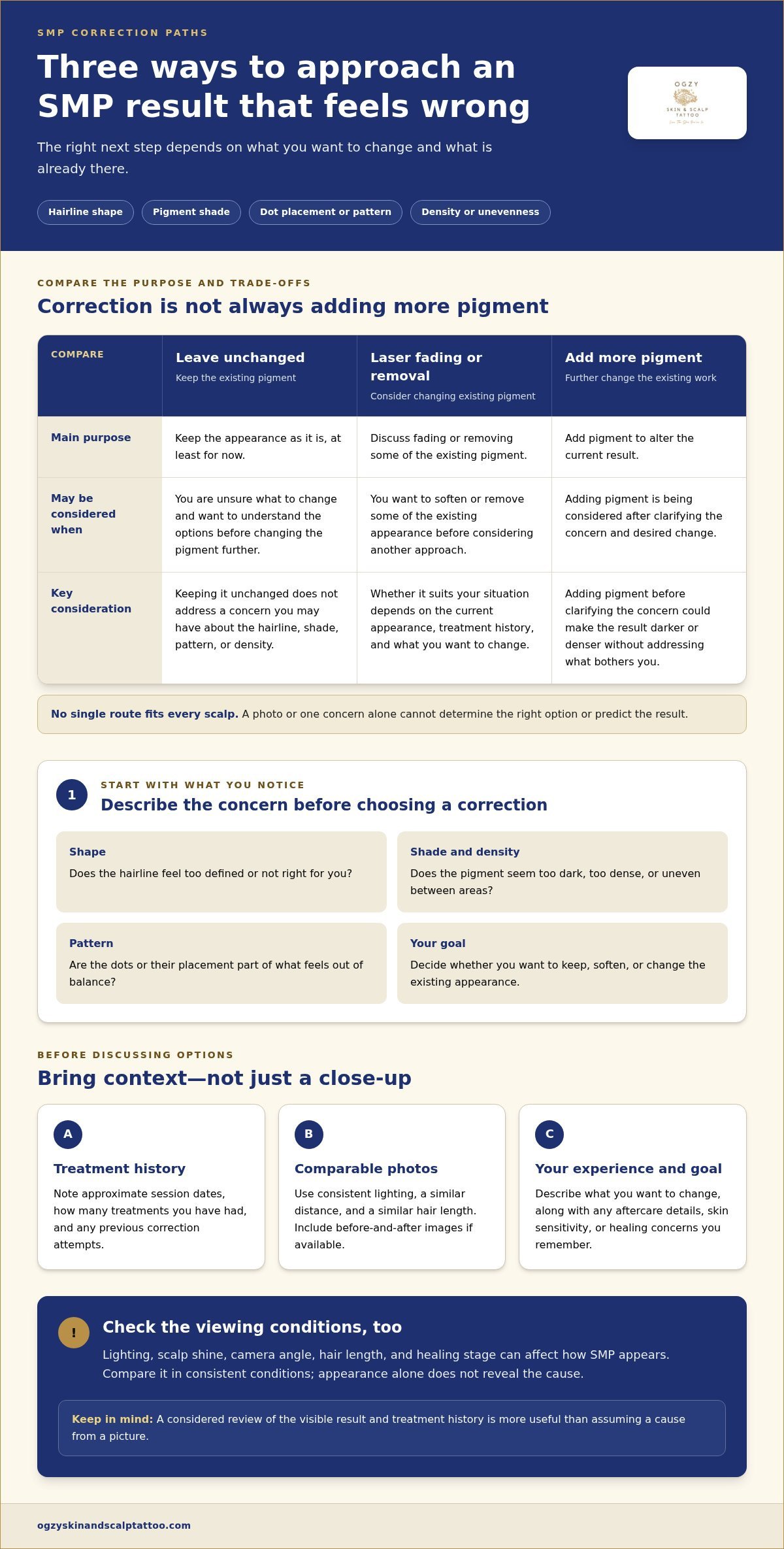
There isn’t one correction route for every unsatisfactory SMP result. The choice depends on what feels wrong, what’s already been done, and whether you want to keep, soften, or change the existing appearance. Comparing the purpose and trade-offs of each option can help you prepare for a more informed discussion.
Leave the result unchanged
Purpose: Keep the existing pigment as it is, at least for now.
Key consideration: This avoids changing the work immediately, but it may not address a concern that continues to affect your comfort with your appearance.
Suitability: This can be a reasonable choice if you’re uncertain or want time to clarify your goals. A review can also help you consider whether lighting or scalp shine affects what you’re seeing.
Laser fading or removal
Purpose: Fade or remove unwanted SMP pigment rather than cover it with more.
Key consideration: Treatment response and the appropriate plan vary. Complete removal or a uniform result can’t be promised.
Suitability: Whether laser may be considered depends on the existing pigment, your skin type, and your aesthetic goals.
Add more pigment
Purpose: Adjust or add to the existing SMP design.
Key consideration: New pigment changes what’s already there and may not resolve the original concern. It can also add density or darkness.
Suitability: Adding pigment isn’t automatically the most suitable response. Its appropriateness depends on the current result and the change you want.
When laser fading or removal may be considered
Ogzy uses advanced laser technology to fade or remove unwanted scalp micropigmentation. Treatment planning is tailored to your skin type, pigment, and aesthetic goals. The right approach and response vary, so an individualized discussion is more useful than assuming a set number of sessions or a particular outcome.
Why covering or refreshing SMP needs careful thought
Adding pigment may seem like a direct way to improve a patchy area or alter a hairline, but it changes the existing design. If the new pigment doesn’t address the concern that matters to you, the result may not feel closer to your goal. Take time to compare the options before making another change.
If you’re weighing how to fix bad scalp micropigmentation, consider what you want to preserve as well as what you want to change. Fading, removal, and additional pigment each serve a different purpose, and none is right for everyone. A tailored discussion can help you compare them without rushing into a decision.
How to Prepare for an SMP Correction Assessment in the Austin Area
An assessment can be easier when you arrive with a few clear notes instead of trying to recall every detail on the spot. You don’t need to know the technical cause of your concern or choose a treatment in advance. Focus on describing what you see, sharing relevant history, and explaining what kind of change you hope to achieve.
What to document before discussing correction
Use this checklist to organize information that can help guide the discussion:
- Take consistent photos. Include front, side, and close-up views in steady lighting. Similar angles and conditions make it easier to compare images without mistaking lighting changes for changes in appearance.
- Write down treatment history. Note approximate SMP dates, the number of sessions, any pigment information you have, and previous correction attempts. Include relevant skin sensitivity or healing concerns.
- Describe your goal. Identify what you most want to change, such as the hairline shape, density, color, or an uneven area. Explain what a more comfortable appearance would mean to you, even if you’re still refining the details.
Bring the information you have. You can still explain your concern with approximate dates and clear observations if records are missing.
Questions that help set realistic expectations
A thoughtful discussion should take your skin type, existing pigment, treatment history, and aesthetic goals into account. It should also cover possible limitations: a photo or treatment history alone can’t guarantee how an approach will work. For foundational context before your discussion, read Cleveland Clinic’s guide to SMP.
Consider asking:
- Which options might address the concern I’ve described, and why?
- How will my skin type, existing pigment, and treatment history shape the plan?
- What changes or uncertainties should I understand before deciding?
- How will progress be reviewed as the plan moves forward?
These questions can help you have a clear conversation without pressure to choose a path immediately. Ogzy serves Austin, Cedar Park, Leander, Round Rock, and Georgetown, with laser planning tailored to your skin type, pigment, and aesthetic goals. If you’re considering laser fading or removal, explore laser SMP removal options and discuss how to fix bad scalp micropigmentation in a way that reflects your goals.
Explore a Personalized Laser SMP Removal Plan with Ogzy
If your existing scalp micropigmentation feels too dark, uneven, or unlike the look you want, laser fading or removal may be an option to consider. Ogzy uses advanced laser technology to fade or remove unwanted SMP. Treatment planning considers the existing work and your goals, so you can discuss whether this approach may suit what you want to change before choosing a next step.
What a tailored plan should take into account
A thoughtful plan starts with the current pigment and the change you hope to see. You might want to soften the overall appearance, address a particular area, or explore removal rather than adding to the existing design. These goals matter because the approach should reflect your priorities, not follow a one-size-fits-all formula.
Ogzy tailors laser planning to skin type, pigment, and aesthetic goals. Those factors help shape the approach, but they don’t make it possible to promise a specific degree of fading, complete removal, or a particular schedule. Treatment response varies, so the possibilities and limitations are important parts of the discussion. Clear information can help you decide whether this path aligns with what you want.
Choose an informed next step
Before moving forward, consider what would feel like progress to you. If your SMP looks too strong, fading may be worth discussing. If you want to reduce unwanted pigment, ask about removal as a possible goal. Neither goal determines which treatment is suitable, and you can take time to understand the plan before deciding.
If you’re in Austin, Cedar Park, Leander, Round Rock, or Georgetown, Ogzy offers laser fading or removal for unwanted SMP. Bring your treatment history and describe what you’d like to change. A personalized discussion can clarify possible options without promising a particular result.
Explore laser tattoo removal options with Ogzy.
Take the Next Step Toward a More Comfortable Look
To fix bad scalp micropigmentation, start by identifying what feels wrong rather than rushing to add more pigment. A concern about the hairline, shade, or pattern can have different contributing factors, so treatment history and an assessment help inform the options. Depending on your goals, you may leave the result unchanged, consider laser fading or removal, or discuss another approach.
For unwanted SMP, Ogzy uses advanced laser technology and tailors treatment planning to your skin type, existing pigment, and aesthetic goals. The plan and response vary, so there are no one-size-fits-all promises. If you’re in Austin, Cedar Park, Leander, Round Rock, or Georgetown, explore personalized laser SMP removal options with Ogzy.
Move forward at a pace that feels right for you. To discuss laser options for unwanted SMP, get in touch with Ogzy.
Frequently Asked Questions
Can bad scalp micropigmentation be fixed?
There may be options for addressing SMP that doesn’t feel right, but a complete correction can’t be guaranteed. Start by identifying the concern, such as the hairline, color, density, or unevenness, and reviewing your treatment history. Depending on your goals, options may include leaving the pigment unchanged, considering laser fading or removal, or discussing whether more pigment is appropriate. Ogzy serves Austin-area clients, including Cedar Park, Leander, Round Rock, and Georgetown.
Can laser remove scalp micropigmentation completely?
Complete removal can’t be promised. Laser treatment may be used to fade or remove unwanted scalp micropigmentation, but the response and appropriate plan vary with factors such as the existing pigment and your skin type. Ogzy uses advanced laser technology and tailors planning to your pigment, skin type, and aesthetic goals. A personalized discussion can clarify possible outcomes and limitations before you decide whether laser treatment fits your aims.
How do I know if my scalp micropigmentation is too dark?
If the pigment looks more prominent than you intended, feels too dense, or appears noticeably different from the surrounding hair, you may feel it’s too dark. Lighting, scalp shine, hair length, and healing stage can also affect how it appears. Compare photos taken in consistent conditions and describe what you notice instead of trying to diagnose the cause from pictures. An assessment can help distinguish your concern from factors that change its appearance.
Can more scalp micropigmentation cover a bad result?
Additional pigment may be considered in some situations, but it isn’t automatically the most suitable way to address an unwanted result. Adding pigment changes the existing design and may not resolve the original concern. It could also increase darkness or density. Before considering more work, clarify what you want to change and review the existing SMP and treatment history. A measured discussion can help determine whether adding pigment is worth considering or whether another path better fits your goals.
Does laser treatment for scalp micropigmentation hurt?
The sensation can vary, so it isn’t possible to predict exactly how laser treatment will feel for you. Skin sensitivity and the area being treated may be relevant to the discussion. Share any sensitivity or healing concerns and ask what to expect for your individual plan. Ogzy tailors laser planning to skin type, pigment, and aesthetic goals, while recognizing that individual treatment experiences and responses differ.
How many laser sessions does it take to fade scalp micropigmentation?
There isn’t one session count that applies to everyone. The plan depends on the existing pigment, your skin type, your goals, and how treatment progresses. A personalized discussion can outline an approach, but the number of sessions and degree of fading can’t be guaranteed in advance. Ogzy serves Austin, Cedar Park, Leander, Round Rock, and Georgetown, and offers laser fading or removal for unwanted SMP.
Can scalp micropigmentation be corrected if the hairline looks unnatural?
It may be possible to address a hairline that feels uncomfortable, but the right approach depends on the existing design and what you hope to change. Adding pigment could alter the shape, while fading or removal may be considered if you want to reduce unwanted pigment. Neither option suits every situation. A personalized discussion can review your treatment history and goals, then explain possible directions without promising a particular result.

Article by
Opal Z
Opal is the owner and practitioner behind OGZY Skin & Scalp Tattoo in Austin, Texas. With more than three years in business and a longtime background in the aesthetics industry, she specializes in corrective and restorative treatments designed to address concerns that traditional aesthetics often overlook.
Her work focuses on scar and stretch mark revision, scar camouflage, scalp micropigmentation (SMP), hair regrowth treatments, and laser tattoo and permanent makeup removal. Opal works with a wide range of skin tones and takes an individualized approach to every client, considering skin color, texture, scar characteristics, treatment history, and realistic long-term outcomes.
Through OGZY Skin & Scalp Tattoo, her goal is to combine artistry, aesthetics, and technical treatment knowledge to help clients feel more comfortable and confident in their skin.
Love the skin you’re in.