
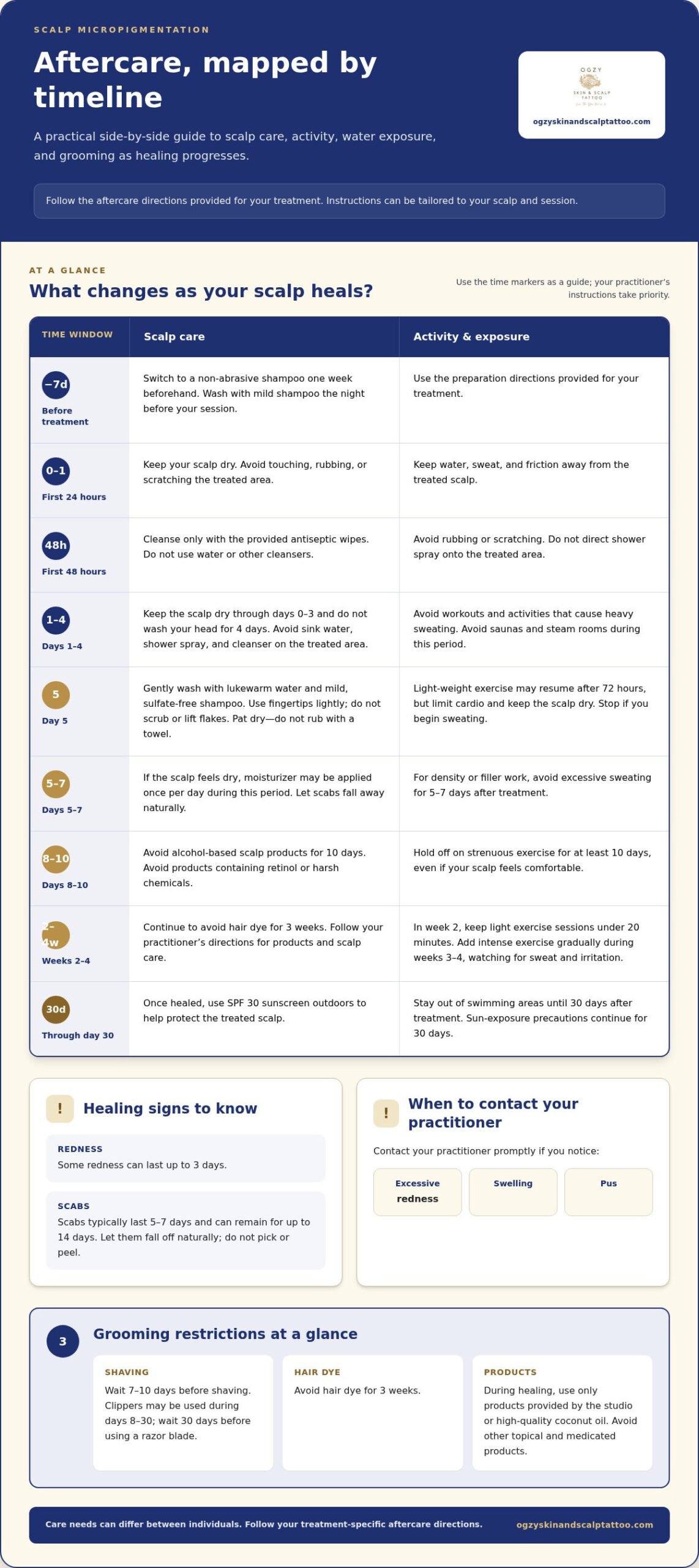
The first few days after scalp micropigmentation call for gentle, consistent care. Follow your SMP aftercare instructions by keeping your scalp dry for 4 days, then washing it gently with lukewarm water and mild, sulfate-free shampoo on day 5. Avoid heavy sweating, workouts, saunas, and steam rooms during days 1-4, and stay out of the sun and swimming areas until 30 days after treatment.
It’s natural to feel protective of your scalp as it heals, especially when redness or flaking appears. Some redness can last up to 3 days, and scabs should fall away on their own, so resist the urge to pick or peel them.
This guide covers practical smp aftercare instructions, including cleansing your scalp, managing sweat and heat, protecting the treated area from sun exposure, and recognizing reactions that may need attention. You’ll also learn how to return to your usual routine gradually while the pigment settles. Follow the aftercare directions provided for your treatment, as they can be tailored to your scalp and session.
Key Takeaways
- Use a gentle, gradual cleansing routine as your scalp heals, and avoid rubbing or picking at flaky areas.
- Ease back into exercise in stages; heat and sweat can irritate the treated scalp during early healing.
- Keep the treated area out of pools, hot tubs, saunas, and steam rooms while it heals.
- After healing, protect your scalp outdoors with broad-spectrum sunscreen rated SPF 30 or higher to help preserve pigment.
- Contact your practitioner promptly if you notice excessive redness, swelling, or pus.
What Should I Do After Scalp Micropigmentation?
Protect the treated scalp from water, friction, and irritating products as it heals. Follow your smp aftercare instructions closely, since care needs change over the first days and weeks.
-
Follow the First-Day Care Guidance
Keep your scalp dry during the first 24 hours after scalp micropigmentation. For the first 48 hours, cleanse only with the provided antiseptic wipes, without water or other cleansers. Avoid touching, rubbing, or scratching the treated area. Before your session, prepare gently: switch to a non-abrasive shampoo one week beforehand, and wash with mild shampoo the night before. Use the specific preparation directions given for your treatment.
-
Cleanse the Scalp During Initial Healing
Use only the provided antiseptic wipes during the first 48 hours, then keep the scalp dry through days 0-3. Avoid sink water, shower spray, and cleanser on the treated area during this early period. Don’t wash your head for 4 days following treatment. On day 5, gently wash with lukewarm water and mild, sulfate-free shampoo. Use fingertips lightly, without scrubbing or lifting flakes. Pat the scalp dry instead of rubbing it with a towel.
-
Keep the Scalp Dry as It Heals
Keep water, sweat, and friction away from the treated area during early healing. Don’t direct full-pressure shower water onto the scalp. Redness may last up to 3 days; scabs typically last 5 to 7 days and can remain for up to 14 days. Let scabs fall off naturally, since picking can disturb healing. If the scalp feels dry, moisturizer may be applied once per day during days 5-7. Once healed, use SPF 30 sunscreen outdoors.
-
Avoid Products and Delay Haircuts
Avoid alcohol-based scalp products for 10 days, and hair products containing retinol or harsh chemicals that may irritate the skin. During healing, use only products provided by the studio or high-quality coconut oil; avoid other topical products, including medicated products. Wait 7 to 10 days before shaving. Clippers may be used during days 8-30, but wait 30 days before using a razor blade. Avoid hair dye for 3 weeks. Keep your smp aftercare instructions handy when planning grooming, and follow your practitioner’s directions for your scalp.
Exercise and sweating restrictions
Plan activity around the early healing period, when sweat, heat, and rubbing may disturb the treated scalp. A gradual return to exercise and other activities helps protect the area as you get moving again.
- Pause strenuous activity during the first 4 days. Avoid workouts and activities that cause heavy sweating during days 1-4 after each procedure. Sweat can irritate the scalp, while towels, headbands, and clothing may create friction or rubbing. Choose quiet indoor activities instead, and keep the treated area untouched. Follow your cleansing schedule rather than washing early to remove sweat. For density or filler work, avoid excessive sweating for 5-7 days after treatment.
-
Avoid Exercise and Excessive Sweating
Hold off on strenuous exercise for at least 10 days, even if your scalp feels comfortable. Running, cycling, vigorous lifting, and heated classes can raise body temperature and trigger sweating. Saunas and steam rooms also add heat, so avoid them during days 1-4. If daily movement is necessary, keep it gentle and brief. Stop if you begin sweating, and avoid rubbing the scalp afterward.
- Restart light movement cautiously. Light-weight exercise can resume 72 hours after the procedure, but limit cardio to reduce sweating. Keep the effort easy enough that your scalp stays dry; postpone intervals or fast cycling. For density or filler SMP, keep avoiding activities that cause excessive sweating for 5-7 days. Don’t wipe sweat across the treated area. Instead, follow the cleansing directions for your current healing day.
-
Resume Exercise While Limiting Sweat
Build activity back gradually during weeks 2-4. In week 2, keep light exercise sessions under 20 minutes. Add intense exercise gradually during weeks 3-4, watching for sweat and scalp irritation. Choose a cool indoor setting rather than an outdoor route, where sunlight may also reach the treated area. Sun exposure precautions continue for 30 days after treatment. Increase duration only when the activity stays comfortable and doesn’t leave the scalp damp.
If you’re planning treatment and want guidance shaped around your goals, explore personalized scalp treatment information.
During the first days, any hat should be clean and should not rub against the treated area. Avoid prolonged sun exposure throughout the treatment process, with especially careful sun protection during the first month. If the scalp feels dry during Days 5-7, moisturizer may be applied once per day. Follow your practitioner’s aftercare instructions, since healing and skin needs can differ between individuals.
Avoiding swimming, saunas, steam rooms, and hot tubs
Keep the treated scalp away from pools and heat while it heals. Use the timeline below to plan water exposure, sauna visits, and outdoor activities.
-
Avoid Swimming and Water Exposure
Skip swimming for 30 days after scalp micropigmentation, including pool sessions and open-water swims. This gives the treated area time to heal without prolonged water exposure or contact with pool water. For density or filler SMP, avoid swimming while the treated scalp is healing. Don’t treat a quick dip as harmless exposure; keep your head above water and choose dry activities instead. Follow the longer 30-day swimming restriction where it applies.
- Plan around pools and chlorine. Stay out of chlorinated pools for the recommended swimming restriction rather than relying on a swim cap to keep your scalp dry. A cap can shift, leak, or rub against the treated area. Poolside activities can also involve splashes, so choose a dry spot away from the water. Once swimming is permitted, return gradually and avoid rubbing your scalp with a wet towel.
-
Avoid Saunas, Steam Rooms, and Hot Tubs
Stay out of saunas and steam rooms during the first 4 days, when heat and sweating can disrupt early healing. For density or filler SMP, avoid saunas and steam rooms for 14 days after treatment. Avoid hot tubs while following the 30-day swimming restriction, since soaking exposes the scalp to water. Choose a cool, dry alternative, such as a quiet indoor break, instead of testing the treated area with heat.
- Separate heat exposure from outdoor plans. A sauna followed by a sunny walk combines heat with direct sunlight, so avoid both during early healing. Avoid sun exposure for 30 days after treatment, even when you aren’t swimming. If friends suggest a pool gathering, attend without entering the water and stay in shade. Redness can occur for up to 3 days after treatment, so don’t use redness alone to decide that swimming or heat is safe.
- Return to water and heat cautiously. Once the relevant restriction has passed, resume one activity at a time rather than combining a swim, sauna, and hot tub in one outing. Keep the first return brief, then notice whether the scalp becomes irritated. If you have density or filler work, retain the specific 14-day restriction for swimming, saunas, and steam rooms. Continue protecting the healing area from direct sunlight throughout the 30-day period.
Sun protection and pigment fading
How should you care for your scalp between SMP sessions? Once the scalp has healed, protect it outdoors with broad-spectrum, water-resistant sunscreen rated SPF 30 or higher. Avoid direct sun exposure during early healing, and continue daily sun protection to help preserve pigment between appointments.
- Keep the treated scalp out of direct sunlight. Avoid direct sun exposure for 14 days after treatment, and avoid direct intense sunlight for 28 days. Take extra care during the first month, when the scalp is still healing. Choose shade for outdoor plans, and don’t use tanning salons or sun tanning during the first 14 days. Prolonged sun exposure throughout the treatment process can contribute to pigment fading.
- Use sunscreen after the scalp has healed. Apply water-resistant, broad-spectrum sunscreen rated SPF 30 or higher daily to help preserve SMP color. Reapply it as directed on the product label during outdoor activities, especially after swimming or sweating. Keep sunscreen off the treated area until it has healed. A clean hat can add shade, but make sure it doesn’t rub against the scalp during healing.
- Expect the pigment to change in appearance as healing progresses. Scabs typically last 5 to 7 days, though they can remain for up to 14 days. As they fall away naturally, the pigment may look less even than it did immediately after treatment. Days 7-10 are the settling phase. Don’t pick flakes or judge the final appearance while the skin is still healing; allow the area to settle before assessing color.
- Keep long-term care gentle between sessions. Once healed, use sunscreen whenever you’re outdoors and avoid excessive tanning. A hat offers another practical layer of protection during bright outdoor plans. Keep the scalp clean, and avoid products that irritate it. During the healing period, don’t apply petroleum-based products for at least 14 days. Don’t add moisturizer or other topical products unless they’re included in your aftercare directions.
- Pay attention to unusual changes. Mild redness can occur for up to 3 days after treatment, but excessive redness, swelling, or pus calls for prompt contact with your practitioner. Avoid covering a concerning reaction with sunscreen or cosmetic products. Protecting the scalp from sunlight matters, but unusual symptoms deserve attention before routine pigment care resumes.
Monitoring for signs of infection or unusual reactions
Check the treated area during daily aftercare, paying attention to changes in redness, swelling, or discharge. Knowing what may occur during healing can help you respond promptly if symptoms seem unusual.
-
Recognize Possible Infection Symptoms
Look for excessive redness, swelling, or pus around the treated area. These signs need prompt attention: contact your practitioner immediately if they occur. Mild redness can last up to 3 days after scalp micropigmentation, but don’t dismiss excessive redness as normal. Notice whether the area is becoming more swollen or producing pus, and describe what you see clearly when contacting your practitioner.
- Keep routine care gentle while monitoring. Follow your washing schedule rather than adding extra shampoo or scrubbing the scalp to inspect it. The first 48 hours call for cleansing only with the provided antiseptic wipes, without water or other cleansers. After washing becomes appropriate, use mild shampoo gently. Don’t pick scabs or scratch the treated area, since disturbing healing skin can make it harder to assess changes.
-
Monitor for Unusual Reactions
Check the scalp in good light once daily, and note whether redness or swelling is improving or worsening. Scabbing commonly lasts 5 to 7 days and can continue for up to 14 days. Let scabs fall away naturally. If you see pus, excessive redness, or swelling at any point, contact your practitioner immediately rather than waiting for the next wash or session.
- Separate expected healing from warning signs. A small amount of redness for up to 3 days and temporary scabbing can occur after treatment. Pus, excessive redness, and swelling are different signs and warrant immediate contact with your practitioner. Don’t try to cover these changes with moisturizer, sunscreen, or hair products. Avoid saunas and other activities that cause sweating while the scalp heals, and follow the aftercare directions for cleansing.
- Share clear details when seeking help. Describe when the reaction began, where it appears, and whether redness, swelling, or pus is present. Mention the date of your SMP session and your recent cleansing routine. These concrete details help your practitioner understand what has changed. For support with your SMP treatment and aftercare, contact the studio about your scalp concerns.
Ogzy Skin & Scalp Tattoo: Scar and Stretch Mark Revision
Ogzy Skin & Scalp Tattoo provides Scalp Micropigmentation (SMP), using precision pigment deposits to replicate natural hair follicles across thinning hair, baldness, and receding hairlines. If you’re considering SMP or planning another session, understanding aftercare is one part of caring for your scalp during healing.
For concerns beyond scalp appearance, Scar & Stretch Mark Revision uses medical-grade serums without pigment to address the appearance of scars and stretch marks. Microneedling Skin Rejuvenation and Hair Regrowth Treatment are also available for those seeking skin texture improvement or fuller-looking hair. The right option depends on your concern and the outcome you’re hoping to achieve.
To discuss your goals or ask about SMP, contact Ogzy Skin & Scalp Tattoo.
Make Scalp Care Part of Your Next Step
Scalp care doesn’t end when the initial healing period passes. Build a simple routine you can maintain, and keep your SMP aftercare instructions handy before outdoor plans, workouts, or future sessions. This habit can help you make thoughtful choices as your needs change.
If you’re still considering scalp micropigmentation, or want to discuss how it fits your personal goals, a focused conversation can help you explore the next step without rushing your decision. You can also raise questions about scar or stretch mark concerns and the options available for your priorities.
Contact Ogzy Skin & Scalp Tattoo to talk through your goals and questions. Take the process at a pace that feels right for you, with clear information guiding each choice.
Frequently Asked Questions
When Can I Wash My Head After SMP?
Wait until day 5 to wash your head with lukewarm water and mild, sulfate-free shampoo. Keep the scalp dry during the first 4 days, and use only provided antiseptic wipes during the first 48 hours. If your practitioner gives you a session-specific cleansing schedule, follow it. For example, avoid adding a rinse after a workout just because the scalp feels warm. Pat the area dry instead of rubbing it.
How do I wash my scalp after SMP, and when can I start?
Start washing on day 5 with lukewarm water and mild, sulfate-free shampoo. Follow your SMP aftercare instructions, using light fingertip pressure instead of nails and avoiding any scrubbing over flakes. During the first 48 hours, use only the provided antiseptic wipes, without water or other cleansers. If you need to wash your face before then, keep runoff away from the treated scalp.
How long should I avoid sweating, exercise, and swimming after SMP?
Avoid activities that cause heavy sweating during the first 4 days, and strenuous activity for at least 10 days. Light-weight exercise can resume 72 hours after the procedure, with cardio limited to reduce sweat. Swimming should wait until 30 days after treatment. For density or filler SMP, avoid excessive sweating for 5-7 days and swimming, saunas, and steam rooms for 14 days.
When can I wear a hat or expose my scalp to sunlight after SMP?
During early healing, wear a hat only if it’s clean and won’t rub the treated area. If wearing one during the first 3 days, remove it every 30 minutes to let the scalp breathe. Avoid direct sun exposure for 14 days and direct intense sunlight for 28 days. After healing, use broad-spectrum, water-resistant SPF 30 sunscreen outdoors.
How long does SMP healing take, and what is normal during recovery?
Redness can last up to 3 days, while scabbing typically lasts 5 to 7 days and may continue for up to 14 days. Days 7-10 are commonly described as the settling phase, when the treated area’s appearance can shift as scabs fall away. Don’t pick flakes to speed healing. Keep track of changes over time instead of judging the final pigment while the scalp is still settling.
What are signs of infection or other complications after SMP?
Excessive redness, swelling, or pus are signs that need prompt attention. Contact your practitioner immediately if you notice any of them. Mild redness for up to 3 days can occur, but worsening or excessive redness is different and shouldn’t be dismissed. When you reach out, describe when the change began and what you can see. Don’t apply extra products or pick at the area.
How long do SMP aftercare restrictions last, and do they vary by treatment session?
Restrictions depend on the activity and treatment type. For example, swimming is restricted for 30 days after SMP, while density or filler sessions have a 14-day swimming restriction. Sweating limits also differ for density or filler work. Treat each session as a new healing period and follow the directions given for it. Keeping your SMP aftercare instructions available can help you distinguish one session’s timeline from another.
What should I do if SMP pigment looks too dark or uneven while healing?
Don’t try to lighten or correct the pigment yourself while the scalp is healing. Scabs can affect the treated area’s appearance, and the settling phase runs through days 7-10. Avoid picking, scrubbing, or adding unapproved products to change the color. Once the area has settled, contact your practitioner if the pigment still concerns you, and describe which areas look darker or less even.

Article by
Opal Z
Opal is the owner and practitioner behind OGZY Skin & Scalp Tattoo in Austin, Texas. With more than three years in business and a longtime background in the aesthetics industry, she specializes in corrective and restorative treatments designed to address concerns that traditional aesthetics often overlook.
Her work focuses on scar and stretch mark revision, scar camouflage, scalp micropigmentation (SMP), hair regrowth treatments, and laser tattoo and permanent makeup removal. Opal works with a wide range of skin tones and takes an individualized approach to every client, considering skin color, texture, scar characteristics, treatment history, and realistic long-term outcomes.
Through OGZY Skin & Scalp Tattoo, her goal is to combine artistry, aesthetics, and technical treatment knowledge to help clients feel more comfortable and confident in their skin.
Love the skin you’re in.