
If you’re wondering how to hide self harm scars on arm, it makes sense to want an option that feels private, comfortable, and right for you. You don’t owe anyone an explanation, and choosing not to cover your scars is just as valid.
This guide covers ways to make healed scars less noticeable, from clothing and temporary makeup to professional appearance-focused services. It also explains what to consider before exploring scar revision or pigment camouflage. These services aren’t suitable for fresh or unhealed wounds, and no option can promise complete concealment.
You’ll also find ideas for responding to questions and guidance on where to seek support. Whether you want temporary coverage, are considering a longer-term option, or are simply gathering information, you can move at your own pace.
Key Takeaways
- Explore clothing, accessories, or makeup for covering healed arm scars, and choose the level of coverage that suits you.
- Use concealment options only on healed skin. Avoid covering open or irritated areas, and seek appropriate medical advice if a wound concerns you.
- Temporary makeup differs from professional pigment camouflage and scar revision, which require an individualized assessment.
- Consider questions to ask before exploring appearance-focused care. Treatment is not necessary or right for everyone.
- If you’re in Austin, Cedar Park, Leander, Round Rock, or Georgetown, Ogzy offers scar revision and custom pigment camouflage as optional services to discuss.
How to Hide Self Harm Scars on Arm Without Feeling Pressured
Wanting privacy or coverage is a valid personal choice. So is leaving your scars visible. This guide focuses on healed scars, not fresh wounds or urgent medical concerns. If an area is new, painful, or worrying you, seek appropriate medical advice rather than trying to conceal it.
You don’t owe anyone an explanation of your scars or personal history. Self-harm can have different contexts and meanings, and a visible scar does not tell someone else your story. Whether you’re exploring how to hide self harm scars on arm or deciding not to cover them, the choice belongs to you.
Do you have to hide scars from other people?
No. You can cover your scars, show them, or talk about them, depending on what feels right in a particular moment. Your decision can change with the setting, season, or your comfort level. You don’t need to justify it or change your scars to feel confident.
If someone asks an intrusive question, a brief response can help you keep the conversation private. You might say, “I’d rather not discuss that,” “That’s personal,” or “Let’s talk about something else.” You can repeat your answer or step away. You don’t need to offer more detail to make your boundary valid.
When the concern is about more than appearance
Sometimes scar concerns come alongside current urges to self-harm or emotional distress. If that feels familiar, you deserve care without judgment. Consider reaching out to someone you trust or a qualified mental-health professional, even if you’re unsure what to say. You could start with, “I’m having a hard time and could use company.”
If you’re in immediate danger, contact local emergency services or seek local crisis support. In the United States, verify the current contact details and availability for 988 and Crisis Text Line through their official sources before relying on them. Ogzy Skin & Scalp Tattoo provides appearance-focused services, not emergency or mental-health care. You can choose practical coverage, seek emotional support, or do both, at your own pace.
Temporary Ways to Cover Healed Arm Scars: Clothing, Accessories, and Makeup
For temporary coverage, start with what feels comfortable on your skin and suits your day. That could be a sleeve or a layer of body makeup. You can adjust your choice to the weather, your plans, and the amount of coverage you want.
What clothing or accessories can cover arm scars discreetly?
A breathable long-sleeved shirt or lightweight layer can cover scars without much preparation. Choose fabric and a fit that feel comfortable for the conditions, and make sure you can move your arm normally. A bracelet or arm sleeve may work for a smaller area, but avoid anything that rubs, feels restrictive, or irritates your skin.
Try an outfit at home before relying on it for an event. Reach, bend, and move as you normally would, then check the coverage in natural light. A sleeve that shifts when you lift your arm or an accessory that catches on clothing may not be practical for a full day. Comfort matters as much as discretion.
Can makeup conceal healed scars on an arm?
Body makeup or concealer may soften a color difference between a healed scar and the surrounding skin. It may not disguise raised or uneven texture. The result can vary with the scar’s color, texture, and location, as well as the product and lighting. Think of makeup as temporary coverage, not a guarantee of invisibility.
Apply cosmetics only to clean, intact skin. If you’re trying a new product, test a small area first and see how your skin responds. Stop using it if irritation develops. Don’t apply makeup over broken, irritated, or unhealed skin.
- For lighter coverage: Start with clothing or a loose layer.
- For a small area: Consider a comfortable accessory that stays in place without rubbing.
- For color contrast: Try body makeup or concealer on healed, intact skin, then check it in the lighting where you’ll be.
If temporary options aren’t meeting your needs, the American Society of Plastic Surgeons offers an overview of scar revision surgery and other professional approaches. If you want to explore appearance-focused care in the Austin area, Ogzy’s scar revision and pigment camouflage services are options to learn about, not a requirement or a promise of a particular result.
Temporary Concealment or Professional Scar Camouflage: What Is the Difference?
Temporary coverage and professional care serve different purposes. Makeup can soften visible color contrast for a time, while pigment camouflage and scar revision are appearance-focused services that require an individualized assessment. Neither is right for everyone, and no approach can promise complete concealment or removal. If you’re comparing options for how to hide self harm scars on arm, this overview explains some differences without presenting professional care as a necessary next step.
| Option | What it may do | What to keep in mind |
|---|---|---|
| Temporary coverage | Clothing or cosmetics can cover the area or temporarily soften color differences. | Coverage varies and may need to be reapplied or adjusted. Makeup may not disguise raised texture. |
| Professional pigment camouflage | Custom pigment is used as an appearance-focused option to blend scar color with surrounding skin. | Suitability and likely appearance depend on the individual scar and require professional assessment. |
| Scar revision | A professional service intended to address the appearance of a scar. | The appropriate approach and realistic expectations should be discussed for the individual case. |
What does professional pigment camouflage involve?
Ogzy offers custom pigment camouflage matched to a client’s natural skin tone. It’s an option to ask about for healed scars, not a guarantee that a scar will become invisible or that pigment will match perfectly. Scar characteristics and individual suitability matter, so an assessment should come before deciding whether to proceed. You can read more about scar and stretch mark revision treatment in Austin for broader service information.
When might scar revision be worth discussing?
If you’re interested in longer-term appearance-focused care, a conversation about scar revision may help you understand what options could be considered for a healed scar. Ogzy’s scar and stretch mark revision service uses medical-grade stem cells and growth factors. An assessment is needed to discuss whether the service may be suitable and what expectations are realistic. This cosmetic discussion is not mental-health support or an evaluation of a wound. For general background, the American Academy of Dermatology explains professional scar treatments. The microneedling for scars guide is related education, not a recommendation for your scar.
How to Cover Arm Scars Safely and Protect Your Privacy
A little planning can make coverage more comfortable and predictable. Before deciding how to hide self harm scars on arm, use this simple check:
- Check the skin: Use coverage only on healed skin. Don’t cover open, irritated, painful, or possibly infected areas. Seek appropriate medical advice if you’re concerned.
- Choose for comfort: Pick clothing, an accessory, or makeup that won’t rub, restrict movement, or feel difficult to wear throughout the day.
- Test first: Follow product directions and try a new cosmetic on a small area before applying it more broadly.
- Reassess: Check how the option feels as you move and whether it still feels right in the setting. You can change your mind or remove it.
Privacy planning can help, too. For work, school, family gatherings, or social plans, consider what feels manageable in that setting. You might wear a layer you can comfortably keep on or prepare a brief response to questions. Making a plan doesn’t mean you have to avoid people or handle difficult feelings alone.
How can you use body makeup more comfortably?
Read the directions for any body makeup or concealer, and test a small area of clean, intact skin before wider application. Skin can respond differently to products, so don’t assume an option will suit everyone. Remove makeup gently, and stop using it if you notice discomfort or irritation. Avoid cosmetics on broken, unhealed, or inflamed skin.
What can you say if someone asks about your scars?
You can keep your answer short and decide how much, if anything, you want to share. For example, “I’d rather not talk about that,” “That’s personal,” or “Can we change the subject?” You can also move the conversation along or step away. If an interaction leaves you unsettled, consider checking in with someone you trust.
Cosmetic coverage can address appearance, but it isn’t support for current self-harm urges. If urges or distress are present, reaching out to a trusted person or qualified mental-health professional may help. If there’s immediate danger, seek local emergency or crisis support.
If you’d like to explore appearance-focused options for healed scars, you can learn about scar and stretch mark revision as an optional next step. An inquiry doesn’t commit you to treatment, and any option should be discussed individually.
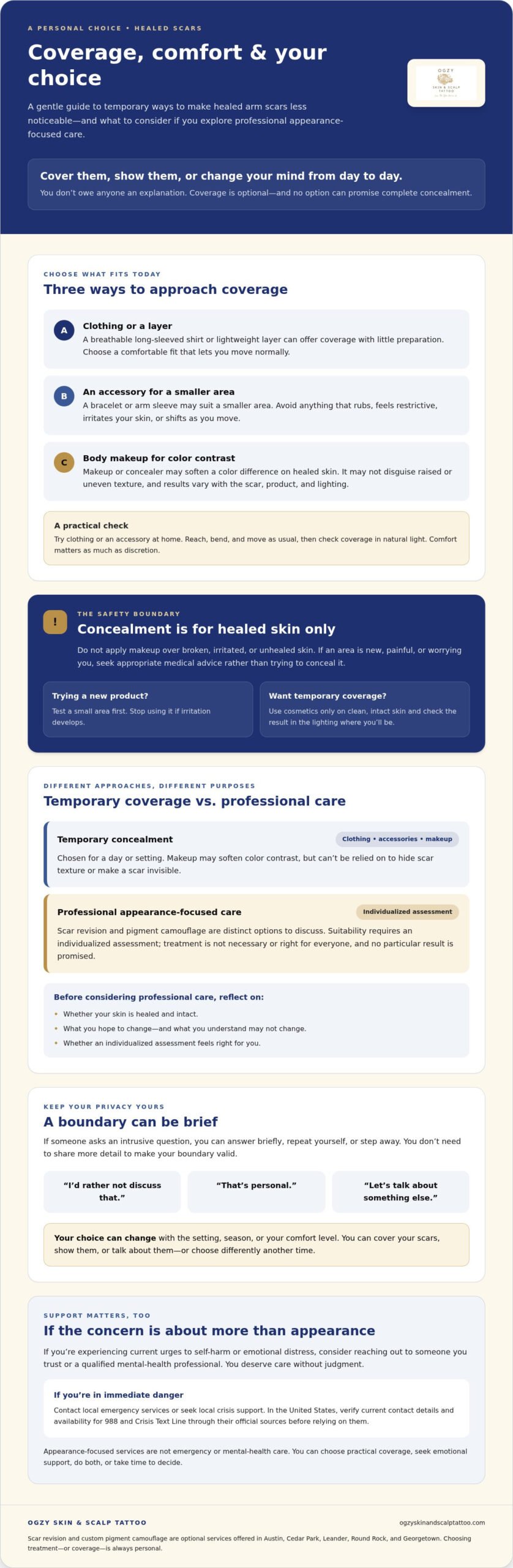
Exploring Scar Camouflage or Revision in the Austin Area, Only If You Want To
Professional treatment is optional. If temporary coverage feels right for you, it can remain your only approach. If you’re curious about longer-term appearance-focused care, Ogzy Skin & Scalp Tattoo offers scar and stretch mark revision and custom pigment camouflage matched to natural skin tone. These are services to ask about, not prescribed solutions or promises of removal or complete concealment. They are intended for discussion about healed scars, not fresh or medically concerning wounds.
Ogzy serves Austin, Cedar Park, Leander, Round Rock, and Georgetown. A conversation about services can help you learn what an assessment involves and whether an option may suit your individual scar. You decide what to share and whether to take any next step.
What should you ask before a scar-focused consultation?
It’s reasonable to ask questions before deciding whether a consultation feels comfortable. You might ask:
- How do you assess healed scars and decide whether a service may be suitable?
- What does the process involve, and what aftercare should I expect?
- What are the limitations, and what results shouldn’t I expect?
- When would you recommend advice from another clinician?
You can also ask how the consultation works before arranging one. Share only what feels relevant and comfortable. You don’t need to explain your personal history to ask about appearance-focused care. If a scar is unhealed or you have a medical concern, seek appropriate medical advice rather than relying on a cosmetic consultation to assess it.
How can you decide whether now is the right time?
Give yourself room to consider what you want, how you feel about the process, and whether this is a good time to explore it. You might prefer to gather information now and decide later, or not pursue treatment at all. There’s no deadline. You don’t need to change your scars to deserve confidence, respect, or support.
If learning more feels useful, you can review Ogzy’s optional consultation and service information and decide at your own pace whether to ask questions. Exploring care is your choice, not a commitment.
Choose the Coverage or Care That Feels Right for You
Deciding how to hide self harm scars on arm is personal. For healed scars, comfortable clothing or makeup can offer temporary coverage. Professional pigment camouflage and scar revision are optional appearance-focused services that call for an individualized assessment. Neither choice defines your confidence, and you don’t owe anyone an explanation.
If you’re considering professional care, Ogzy Skin & Scalp Tattoo offers custom pigment camouflage matched to natural skin tone and scar and stretch mark revision. These options aren’t suitable for every scar, and results can’t be promised. Ogzy serves Austin, Cedar Park, Leander, Round Rock, and Georgetown.
There’s no need to rush or pursue treatment. If you’d like to learn more and ask questions at your own pace, explore Ogzy’s scar revision and camouflage services. Whatever you choose, your comfort and well-being matter.
Frequently Asked Questions
Can makeup hide self-harm scars on an arm?
Makeup may soften color differences on healed scars, but it may not fully conceal raised or indented texture. The result can vary with scar tone, texture, and location, as well as the product and lighting. Use cosmetics only on clean, intact skin, follow the label directions, and patch-test before broader use. If irritation or discomfort develops, remove the product gently and stop using it. Coverage may look different as you move or change lighting.
What is the safest way to cover healed self-harm scars?
There isn’t one safest option for everyone. Comfortable clothing, a lightweight layer, or makeup on intact skin may provide temporary coverage. Choose clothing or accessories that don’t rub or restrict movement, and test a cosmetic on a small area before relying on it. If you’re deciding how to hide self harm scars on arm, consider what feels manageable for the setting. Don’t cover open, painful, irritated, or concerning skin. Seek appropriate medical advice if needed.
Can I get professional scar camouflage for self-harm scars?
Some providers offer pigment camouflage or other appearance-focused scar services, but suitability depends on the individual scar and requires professional assessment. A consultation can help clarify the process, limitations, and aftercare without obligating you to proceed. Ogzy Skin & Scalp Tattoo offers custom pigment camouflage matched to natural skin tone and scar and stretch mark revision in Austin, Cedar Park, Leander, Round Rock, and Georgetown. No particular method or outcome is right for everyone.
How long does makeup stay on scars on the arm?
There’s no fixed wear time. Makeup may last differently depending on the product, your skin, clothing friction, activity, and surrounding conditions. Follow product directions and test it at home before an important event to see how it wears during normal movement. Choose an option you can remove gently. If your skin becomes irritated or uncomfortable, take the makeup off and stop using it.
What should I do if my scars are not fully healed?
Don’t apply makeup or cosmetic camouflage over open or irritated skin. If the area is painful, worsening, or possibly infected, seek advice from a qualified healthcare professional. This guide covers appearance options for healed scars and can’t assess an injury. If you feel at immediate risk of hurting yourself, contact local emergency services or seek crisis support. You deserve care for both your physical safety and emotional well-being.
Do I have to explain my scars if someone asks?
No. You decide whether to share anything about your scars or personal history. A brief response such as “I’d rather not talk about that” can set a boundary without inviting more questions. If you prefer, change the subject or step away. You can also reach out to someone you trust afterward, especially if the interaction left you feeling unsettled. Your privacy matters.
Where can I find support if I am thinking about self-harm?
If you may hurt yourself soon or are in immediate danger, contact local emergency services or go to an emergency department. In the United States, 988 and Crisis Text Line are support options. Verify their current contact details and availability before relying on them. You could also tell someone you trust what’s happening and ask them to stay with you while you seek help. Ogzy provides appearance-focused services, not emergency or mental-health care.

Article by
Opal Z
Opal is the owner and practitioner behind OGZY Skin & Scalp Tattoo in Austin, Texas. With more than three years in business and a longtime background in the aesthetics industry, she specializes in corrective and restorative treatments designed to address concerns that traditional aesthetics often overlook.
Her work focuses on scar and stretch mark revision, scar camouflage, scalp micropigmentation (SMP), hair regrowth treatments, and laser tattoo and permanent makeup removal. Opal works with a wide range of skin tones and takes an individualized approach to every client, considering skin color, texture, scar characteristics, treatment history, and realistic long-term outcomes.
Through OGZY Skin & Scalp Tattoo, her goal is to combine artistry, aesthetics, and technical treatment knowledge to help clients feel more comfortable and confident in their skin.
Love the skin you’re in.