
The best way to approach tattoo removal is to follow a treatment plan discussed with a qualified practitioner. If you’re wondering how to speed up tattoo removal, ask your practitioner what to expect and how session spacing may apply to you.
Discuss aftercare and any questions about your skin with your practitioner. Session timing cannot make ink disappear immediately. Understanding these factors can help you make informed decisions about your next steps.
Key Takeaways
- Give your skin time between laser sessions; they’re generally spaced 6 to 8 weeks apart.
- Bring questions about the process and your treatment plan to your consultation.
- Ask your practitioner what to expect between sessions and discuss any questions about the treatment area.
- Experiences with laser tattoo removal can vary from person to person.
- A consultation can help determine an approach and session plan for your tattoo and skin.
1. The best way to speed up laser tattoo removal?
How to speed up tattoo removal without rushing the process
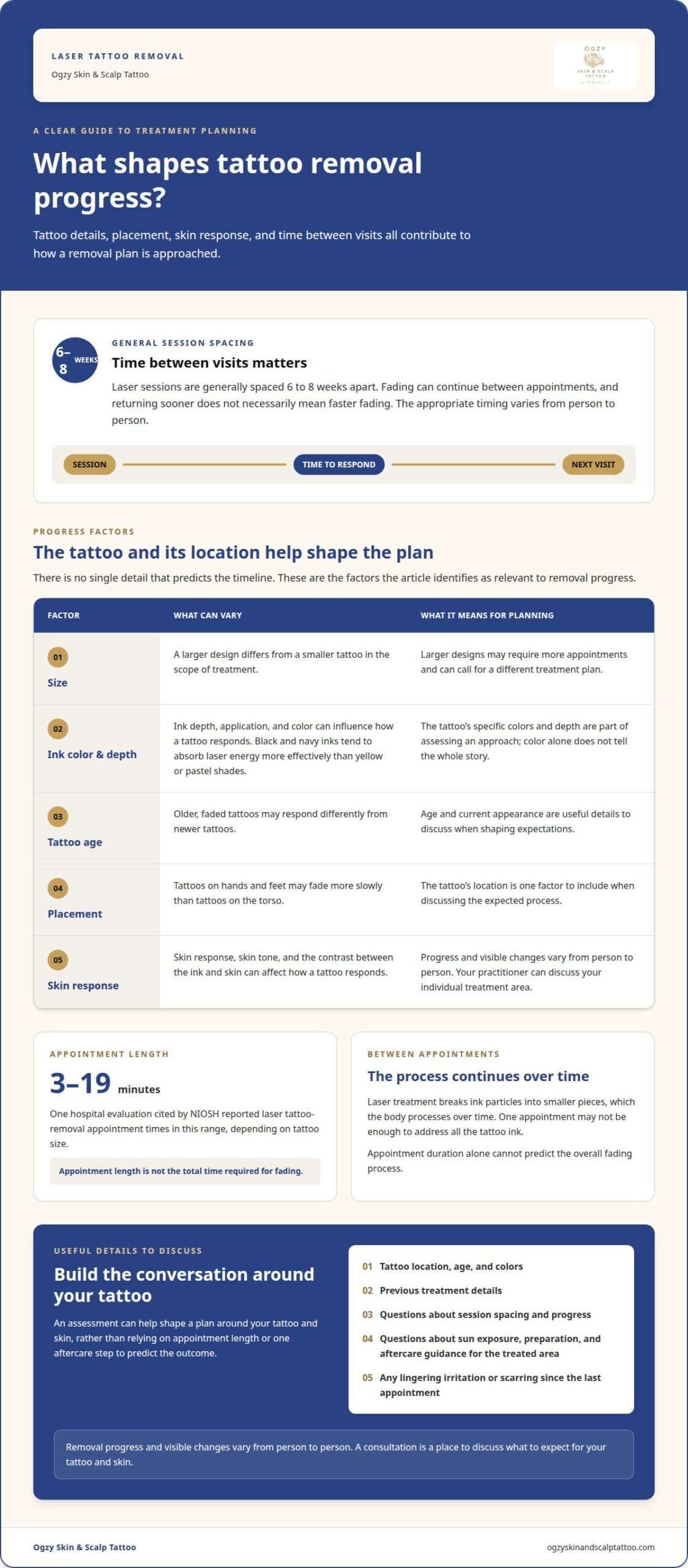
Removal progress varies with tattoo size, ink color and depth, placement, age, and your skin’s response. A larger design may need a different treatment plan from a smaller one. Older, faded tattoos can respond differently from newer tattoos, while black and navy inks tend to absorb laser energy more effectively than yellow or pastel shades. These factors help explain why results and timelines differ.
Laser treatment breaks ink particles into smaller pieces, which the body processes over time. One hospital evaluation found tattoo removal took 3 to 19 minutes depending on tattoo size, according to the National Institute for Occupational Safety and Health (NIOSH). That describes the treatment appointment, not the total time required for fading. The removal process continues between visits.
Aftercare guidance can vary, and schedules such as 5-7 days or another week should not be treated as instructions for every person. The right guidance depends on your treatment and the area being treated. A consultation is the best way to discuss what guidance is appropriate for your situation.
General aftercare information may describe cleaning, dressings, or ways to manage discomfort, but it is not a substitute for personalized guidance. Specific recommendations can differ, so discuss your questions with your provider rather than relying on a general routine.
Activity limits, massage timing such as 7-14 days, and products such as Vitamin E oil may appear in general aftercare information. These details are not a universal schedule or recommendation. Ask for guidance tailored to your treatment and the treated area.
Hands and feet may fade more slowly than tattoos on the torso, and larger designs may require more appointments. Skin tone and the contrast between ink and skin can also affect how a tattoo responds. These factors help shape the treatment approach and expectations for progress.
For a clearer picture of your removal process, share the tattoo’s location, age, colors, and any previous treatment details during an assessment. This information helps shape a plan around your tattoo and skin, rather than relying on appointment length or one aftercare step to predict the outcome.
Rather than relying on general claims about hydration or healing, discuss aftercare directly during a consultation. Guidance can be specific to your treatment and the area being treated. A consultation is also a chance to ask questions about what to expect after laser tattoo removal and how to approach care without assuming that one routine applies to everyone.
General information about cleaning, comfort measures, or hydration should not be taken as personalized aftercare instructions. Your provider can discuss guidance for your treatment and answer questions about the treated area. A consultation is the best place to get information that is relevant to your situation, rather than substituting a general routine for individual guidance.
2. Time between laser tattoo removal sessions
Laser sessions are generally spaced 6 to 8 weeks apart. The interval allows time between appointments, but the right timing varies from person to person. Returning sooner doesn’t necessarily mean faster fading. Your practitioner can discuss when to schedule the next session based on your skin’s response, rather than a rushed calendar.
Laser treatment breaks tattoo ink into smaller particles. Fading can continue between appointments, and one appointment may not be enough to address all the tattoo ink. How the tattoo responds and the timing of visible changes vary from person to person.
Factors affecting removal progress include ink depth, application, color, tattoo age, and placement. Older, faded tattoos may respond differently from newer ones, and tattoos on hands or feet may fade more slowly than those on the torso. Tattoo size matters too: a larger design can require more sessions. These differences inform the overall plan, even when appointments are similarly spaced.
Per-session pricing varies between clinics and according to the tattoo and treatment plan. The tattoo’s size and complexity can affect the scope of treatment, so there isn’t one price that applies across the United States.
Picosecond and nanosecond lasers refer to different pulse-duration categories. The name alone does not show how quickly a particular tattoo will fade. Ask how the approach relates to your ink and skin, how progress will be assessed, and how recovery affects session spacing. Fractional ablative laser treatment is another term you may encounter; clarify its intended role and how it affects the plan. A device label or added technique does not mean it is appropriate to shorten the interval.
Before a session, discuss sun exposure and skin preparation with your practitioner, including any questions about the two weeks before treatment. Be ready to discuss changes since your last appointment, including lingering irritation or scarring. This information can help inform a discussion about timing.
After treatment, ask your practitioner what to expect as the area heals and when to schedule another visit. You can also discuss sun exposure during the two weeks after treatment. If the skin has not recovered as expected, share that before proceeding rather than trying to make up time with an earlier appointment. Session spacing and timing can be discussed as part of your treatment plan.
3. Does Drinking Water Help with Tattoo Removal?
Drinking water supports hydration, but it won’t make ink disappear overnight. The body processes tattoo ink after laser treatment, so steady hydration is a sensible part of general self-care. One guide recommends 8-10 glasses daily; your needs can vary with your circumstances. Alcohol can contribute to dehydration, so keep hydration in mind as sessions progress.
Sun protection matters before and after treatment. Avoid exposing the tattooed area to the sun for two weeks before a session and for two weeks afterward. Plan clothing and outdoor time to protect the area, and keep the tattoo covered when practical between appointments. Follow your practitioner’s guidance on sun protection.
Exercise can support circulation, but strenuous activity immediately after treatment may irritate the area. Choose gentle movement while the skin is recovering, and follow your aftercare instructions about returning to more demanding activity. Regular exercise is different from pushing through an intense workout: overexertion can leave the body focused on recovering from muscle strain. Let skin recovery guide your routine.
Creams, supplements, and home remedies are not shortcuts for laser removal. Use only aftercare products recommended for your treatment, and avoid applying homemade mixtures or unapproved creams to treated skin. Supplements do not replace sessions or aftercare. If you are considering supplements, ask a qualified health professional.
Some people encounter the R-20 method, which involves two treatments on the same day, separated by 20 minutes. That schedule is not a reason to assume more treatment is appropriate for every tattoo or skin. Ask the practitioner to explain the method, the expected recovery, and how it fits your specific treatment plan before considering it. More laser exposure doesn’t automatically mean faster or safer fading.
For practical preparation, protect the tattoo from sunlight, arrive with your skin in the condition requested, and plan for gentle activity afterward. Keep water accessible through the day, especially if you exercise or spend time outdoors. Alcohol can contribute to dehydration, so plan accordingly if you drink.
Hydration and thoughtful habits support overall wellbeing, but they do not replace the body’s gradual processing of ink. Laser removal takes time, and progress depends on the tattoo and your skin’s response. A steady routine, protected skin, and treatment-specific aftercare are more useful than untested remedies or attempts to rush the process.
4. Avoiding scabs and skin irritation
After laser tattoo removal, follow the aftercare guidance provided by your practitioner. Recommendations about scrubbing, picking, products, friction, and swimming can depend on your treatment and the area treated. Ask your practitioner what to avoid, including whether a 48-hour restriction applies to swimming. If you have questions about caring for the area, check with them before adding treatments or trying home-care steps.
If a scab forms, ask your practitioner how to care for the area rather than peeling or scratching it. They can advise you about clothing, watches, or shoes that may rub against the treated tattoo. You can also ask whether pets, towels, or other sources of friction require any special consideration.
Ask your practitioner for directions on cleaning and drying the area, and which products, if any, to use. Their guidance can include whether to keep the site moisturized or bandaged for at least 5-7 days after treatment, and how to care for a dressing. Check with them about clothing or other potential sources of rubbing.
If you have questions about swelling or discomfort, contact your practitioner for guidance. Ask them whether a cold compress is appropriate and how to use one. If you are unsure whether a product belongs in your aftercare routine, follow your treatment instructions and ask your practitioner before trying a new cream or oil.
Ask your practitioner when it is appropriate to resume activities such as massage or strenuous exercise. Their aftercare recommendations may mention massage 7-14 days after treatment or avoiding strenuous activity for a week. Follow their directions about whether these activities are suitable for you, and contact them with questions about the treated area.
Ask your practitioner how to protect the treatment area from sun exposure between sessions. Their directions may include avoiding sun exposure for two weeks before treatment and two weeks afterward. You can also ask whether clothing is appropriate protection outdoors.
Rather than trying to speed up removal or changing your aftercare routine, ask your practitioner what steps are appropriate for you. Follow the aftercare plan they provide, and discuss questions about products, the treated area, or the timing of another session with them.
Ask your practitioner for guidance about sun exposure before and after laser tattoo removal. Their instructions may include avoiding sun exposure for 2 weeks after treatment. Check with them about any precautions that apply around treatment and during aftercare.
If you have questions about factors that may affect laser tattoo removal, including skin tone or smoking, discuss them with your practitioner. They can explain what is relevant to your treatment and answer questions about caring for the treated area.
Ask your practitioner when to resume activities such as gently massaging the tattoo area. Their aftercare instructions can guide you on timing, including whether to wait until healing is complete, and how to care for the area during recovery.
5. Choosing a clinic and qualified practitioner
A careful assessment is more useful than a promise of rapid fading. The practitioner should consider tattoo size, ink colors, placement, and how your skin has healed. An older, faded tattoo on the torso may call for a different plan from a newer, colorful design on a hand. These details inform treatment choices and realistic expectations.
Clear explanations matter. You should understand how the proposed laser approach relates to your tattoo, what healing may involve, and why sessions need adequate spacing. A practitioner should explain unfamiliar terms, including Nd:YAG, in plain language. If the plan is unclear, ask for clarification before treatment begins.
Training and experience should relate directly to laser tattoo removal. A practitioner should explain how the approach is selected for different ink colors and skin. A device name alone does not show how it will be used, so ask how the planned treatment is tailored to your tattoo.
A useful consultation also considers your treatment history. Bring details about previous laser sessions, any lingering irritation, and changes in the tattoo. This information helps the practitioner understand how the area responded before discussing another session. Your plan should reflect your case rather than assume every tattoo follows the same schedule.
Aftercare should be explained before your appointment, not left for you to guess afterward. You should know how to clean and protect the area, which activities to avoid, and whom to contact with concerns. Instructions should match your treatment plan and cover practical details, such as preventing clothing from rubbing the tattoo.
Be cautious of promises that every tattoo will fade at the same pace or disappear after a fixed number of visits. Tattoo size, color, depth, age, location, and skin response all affect progress. A responsible plan recognizes these differences and explains that removal is gradual, without guaranteeing a timeline.
During a consultation, notice whether your questions receive direct answers. You should understand the proposed approach, the reason for session spacing, and the aftercare steps before deciding how to proceed. A thoughtful conversation helps you make an informed choice without pressure to begin immediately.
If you’d like a personalized discussion about your tattoo and treatment plan, book a tattoo removal consultation.
Ogzy Skin & Scalp Tattoo: Laser tattoo removal
Ogzy Skin & Scalp Tattoo provides certified Nd:YAG laser tattoo removal for people ready to explore their next step. In a consultation, I can assess your tattoo, discuss its characteristics, and explain how session spacing and aftercare fit into a considered treatment plan. Progress varies with the tattoo and your skin’s healing, so the focus is on a thoughtful approach, not rushing the process.
If you’re weighing laser removal or want to discuss what may be realistic for your tattoo, I invite you to contact Ogzy Skin & Scalp Tattoo. You’ll find the studio at 13130 Pond Springs Rd #1105, Austin, TX 78729, and online at ogzyskinandscalptattoo.com.
Choose a thoughtful next step
The best answer to how to speed up tattoo removal is to respect the treatment process and your skin’s recovery. Instead of chasing a faster schedule, focus on informed care that suits your tattoo and goals. Clear answers can help you decide what comes next.
A consultation can help you discuss your tattoo, your priorities, and what removal may realistically involve. Results vary with the tattoo, skin, and healing, so your next step should leave room for a plan tailored to you.
If you’re ready to talk through your options, contact Ogzy Skin & Scalp Tattoo. The studio is at 13130 Pond Springs Rd #1105, Austin, TX 78729. I’ll be glad to help you consider a thoughtful path forward.
Frequently Asked Questions
Can eyeliner tattoos be removed with saline?
No. The appropriate removal approach depends on the tattoo’s location and should be discussed with a practitioner. Removal methods are not interchangeable for every tattoo location. If your tattoo is close to the eye, describe its placement during the consultation so the practitioner can discuss the appropriate approach and what the process may involve.
What sun protection should I use between sessions?
Use sunblock with an SPF of at least 50 between laser tattoo removal visits, and follow your practitioner’s directions for applying it to the treatment area. This gives you a concrete protection measure to discuss as part of your care plan. Sun protection needs may also depend on where the tattoo sits and how the area is healing.
When can vitamin E oil be applied after treatment?
Aftercare guidance recommends applying a small amount of vitamin E oil only after the treated area has healed, and only to clean, dry skin. Do not apply it while the skin is still healing. Follow the instructions for your treatment, and ask your practitioner whether vitamin E oil fits your aftercare plan.

Article by
Opal Z
Opal is the owner and practitioner behind OGZY Skin & Scalp Tattoo in Austin, Texas. With more than three years in business and a longtime background in the aesthetics industry, she specializes in corrective and restorative treatments designed to address concerns that traditional aesthetics often overlook.
Her work focuses on scar and stretch mark revision, scar camouflage, scalp micropigmentation (SMP), hair regrowth treatments, and laser tattoo and permanent makeup removal. Opal works with a wide range of skin tones and takes an individualized approach to every client, considering skin color, texture, scar characteristics, treatment history, and realistic long-term outcomes.
Through OGZY Skin & Scalp Tattoo, her goal is to combine artistry, aesthetics, and technical treatment knowledge to help clients feel more comfortable and confident in their skin.
Love the skin you’re in.