
What if the true success of your transformation isn’t determined by the laser itself, but by the quiet, restorative work your body performs in the days that follow? While the technology initiates the process, the way you manage your laser tattoo removal aftercare serves as the vital bridge between a fading image and a beautifully restored canvas. It’s natural to feel a sense of apprehension when you see initial swelling or encounter conflicting advice online. You want to ensure your journey toward reclaiming your image is as seamless and comfortable as possible, without the lingering fear of permanent damage or scarring.
We understand that this process is deeply personal, and we’re here to act as your compassionate guide through every stage of healing. In this guide, you’ll master the essential steps to protect your skin’s integrity and accelerate the natural clearance of ink particles after each session. We’ll walk you through a methodical approach to managing discomfort, preventing complications, and maintaining a healthy skin texture. By the end, you’ll have a clear, expert-backed roadmap to ensure your skin heals with precision, allowing you to move forward with renewed self-assurance and a clear, refined result.
Key Takeaways
- Manage the critical first 48 hours by prioritizing cooling techniques and elevation to soothe thermal energy and minimize immediate swelling.
- Navigate the restorative timeline with clarity, from the initial frosting effect to the protective scabbing that signals deep epidermal repair.
- Master the essential steps of laser tattoo removal aftercare by supporting your lymphatic system with hydration and gentle movement for maximum ink clearance.
- Learn how specialized care for cosmetic tattoos and post-removal microneedling can refine your skin’s texture and complete your personal transformation.
Immediate Post-Treatment Care: The Critical First 48 Hours
The first 48 hours following your session represent a vital window for your skin’s renewal. This period isn’t just about waiting. It’s about active, gentle preservation. During your appointment, the laser delivered precise energy to shatter ink particles, which naturally leaves the treated area feeling warm and sensitive. Prioritizing effective laser tattoo removal aftercare during this initial phase ensures that your skin’s natural healing response remains unhindered and efficient. A disciplined approach transforms a clinical procedure into a restorative journey toward reclaiming your image.
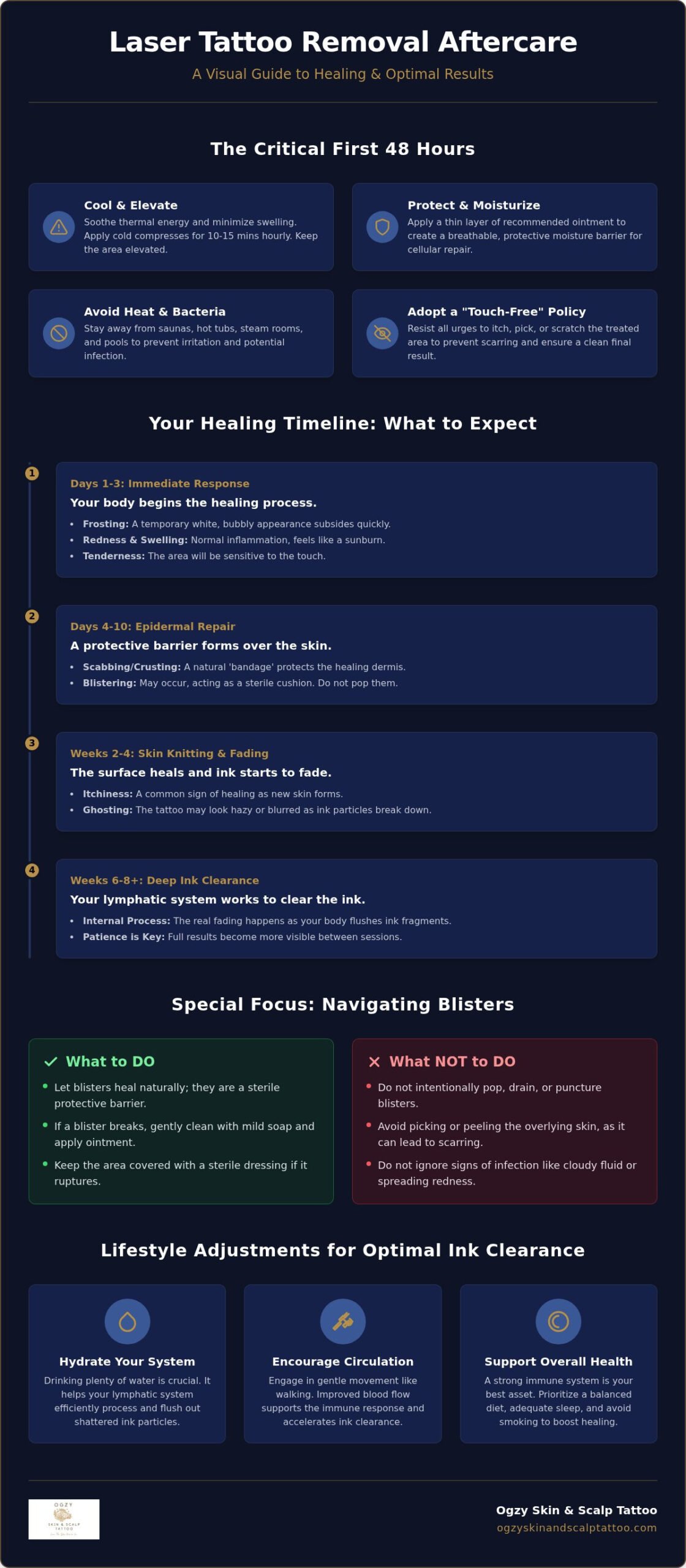
Your primary objective is to dissipate the residual thermal energy within the tissue. Applying cold compresses helps stabilize the skin temperature, while keeping the treated area elevated helps your lymphatic system drain excess fluid more effectively. This simple act of elevation reduces localized throbbing and prevents the accumulation of swelling that can cause discomfort. To protect the site, apply a thin, almost translucent layer of the recommended ointment. This creates a breathable moisture barrier that supports cellular repair without suffocating the skin. You should also strictly avoid high-intensity heat sources. Saunas, hot tubs, and steam rooms introduce bacteria and excessive heat that can aggravate the delicate area and stall your progress.
Managing Swelling and Tenderness
To manage the inevitable tenderness with clinical precision, always place a clean, soft cloth between the ice pack and your skin. Never apply ice directly to the treated site, as extreme cold can be just as damaging as heat. We recommend applying these cold compresses for 10-15 minutes every hour during the first day. This rhythmic cooling cycle keeps inflammation at bay while allowing the blood to circulate. Understanding tattoo removal methods and side effects helps you realize that swelling is a natural byproduct of the body’s immune response as it begins to process the shattered ink.
The “Touch-Free” Policy
Your skin is performing a complex internal restoration, and it’s essential to let it work undisturbed. You must resist the urge to itch, pick, or scratch at the area, even as it begins to feel tight or dry. Picking at the skin can lead to permanent scarring or pigment changes that compromise your final result. When cleaning the site, use a gentle, fragrance-free cleanser and pat it dry with a fresh paper towel. Avoid any rubbing or friction. Normal reactions include redness, slight bruising, and a “sunburned” sensation. However, if you notice spreading redness, extreme pain, or a fever, it’s time for a professional check-in to ensure your journey remains on the path to success.
The Tattoo Removal Healing Timeline: What to Expect
Understanding the natural rhythm of your body’s recovery is essential for a stress-free experience. Healing is not a single event; it is a series of precise biological stages that require patience and consistent laser tattoo removal aftercare. By recognizing what is normal at each phase, you can move through the process with confidence and peace of mind. Your skin is a resilient organ, and when treated with the right care, it possesses an incredible capacity for renewal.
The first three days often bring the most visible changes. You might notice “frosting,” a white, bubbly appearance caused by rapid heating that releases carbon dioxide. This usually subsides within minutes or hours. In the days following, redness and potential pinpoint bleeding are standard responses as your skin reacts to the laser’s energy. From day four to ten, your epidermis begins to repair itself more deeply. This is the stage where scabbing and blistering often occur. While these can look concerning, they are actually signs that your body is creating a protective barrier to heal the dermis underneath. By weeks two through four, the area may become itchy as the skin knits back together. You might also notice “ghosting,” where the tattoo looks hazy or blurred. Finally, during weeks six through eight, the real work happens internally. Your lymphatic system begins the heavy lifting, processing and flushing away the shattered ink fragments.
Navigating the Blistering Stage
Blisters are a sophisticated defense mechanism. They act as a sterile, natural bandage, cushioning the sensitive skin while it regenerates. If a blister ruptures accidentally, don’t panic. Simply clean the area gently with mild soap and apply a thin layer of ointment. It’s important to distinguish between a healthy blister and a potential complication. A healthy blister is filled with clear serum and may be slightly tender. In contrast, an infection often presents with cloudy or yellow discharge, increasing heat in the area, or pain that worsens rather than improves. If you’re concerned about how your skin is responding, the team at Ogzy Skin & Scalp Tattoo is always available to provide guidance and reassurance.
Long-Term Fading and Patience
The most dramatic results usually appear several weeks after your session. This delay happens because your white blood cells need time to transport the microscopic pigment particles to your lymph nodes for permanent removal. Factors like your skin type, the depth of the ink, and the specific colors used all influence the speed of this timeline. Consulting the FDA information on tattoo removal can help you understand the variables that impact your unique results. Waiting the full eight weeks between sessions is vital. It gives your skin the necessary time to recover its structural integrity and ensures each subsequent session is as effective as possible.
Lifestyle Adjustments for Optimal Ink Clearance
While the laser technology serves as the catalyst for your transformation, your daily habits act as the engine that drives your results. Effective laser tattoo removal aftercare extends far beyond the treatment room; it’s about creating an internal environment where your body can thrive. By aligning your lifestyle with your body’s natural regenerative cycles, you can significantly accelerate the fading process and ensure your skin remains healthy and resilient throughout the journey.
Your lymphatic system is the primary waste disposal unit for shattered ink particles. It requires consistent hydration to function at its peak capacity. Drinking plenty of water ensures that these microscopic pigment fragments move efficiently through your system to be flushed away. Complement this with light movement, such as a gentle evening walk. This subtle activity boosts circulation and encourages lymph flow without placing undue strain on the treated area. To further support tissue repair, focus on a nutrient-dense diet. Vitamin C and Zinc are particularly vital for collagen synthesis and skin integrity. Conversely, it’s wise to avoid alcohol and smoking. These substances constrict blood vessels and suppress the immune response, which can delay the skin’s healing and slow down your ink clearance.
Sun Protection in the Austin Heat
In our intense Texas climate, UV exposure is the primary obstacle to successful removal. Sunlight triggers melanin production, which can lead to hyperpigmentation in the delicate, laser-treated skin. For our neighbors in Cedar Park, we recommend a high-quality physical sunblock containing zinc oxide. Unlike chemical filters, these provide a reflective shield that doesn’t absorb heat into the skin. If you’re heading out to the Brushy Creek Lake Park trails, consider wearing lightweight, UV-protective clothing. It’s the most reliable way to ensure your skin remains a pristine canvas for your transformation.
Exercise and Sweat Management
Patience is essential when it comes to your fitness routine. We suggest waiting at least 48 hours before returning to the gym to prevent potential infection. Sweat is naturally acidic and can irritate “raw” or healing skin during the first week, leading to unnecessary discomfort. During humid Texas summers, keeping the area dry is a constant challenge. Wear loose, breathable cotton fabrics to allow for maximum airflow. If you do find yourself perspiring, gently pat the area dry with a clean, lint-free towel as soon as possible to maintain a stable and restorative healing environment.
Specialized Aftercare for Cosmetic Tattoos and SMP Removal
The face is your most visible canvas, and its skin is significantly thinner and more sensitive than the rest of the body. When you transition from body art removal to the delicate work of fading eyebrows, lip liner, or scalp pigments, your approach must become even more refined. Specialized laser tattoo removal aftercare for these areas prioritizes the preservation of your natural features while ensuring the skin remains supple and scar-free. It’s a process of gentle subtraction, where every step is designed to reveal a clearer, more authentic version of yourself.
Precision is vital when managing facial healing. You should strictly avoid applying any makeup to the treated area for at least 10 days. Cosmetics can introduce bacteria or harsh chemicals into the micro-channels created by the laser, which risks irritation or infection. Your sleeping posture also plays a quiet but significant role in your recovery. We recommend sleeping on your back with your head slightly elevated to prevent accidental friction against your pillow. Choosing a silk or satin pillowcase further reduces mechanical stress on the healing tissue, ensuring your skin remains undisturbed during its most active restorative hours.
Caring for the Scalp Post-Laser
Managing the scalp after a session requires a balance of cleanliness and caution. While you may be eager to return to your normal routine, wait at least 48 hours before washing your hair. When you do, use lukewarm water and a very mild, fragrance-free cleanser to avoid disrupting the healing follicles. It’s essential to avoid hats, helmets, or any tight headwear that could cause friction or trap heat against the scalp. This creates a stable environment for the skin to breathe. If you’re interested in how these techniques apply to specific treatments, you can explore our comprehensive guide on Scalp Micropigmentation Cedar Park TX for deeper context on the SMP process.
Protecting Permanent Makeup Sites
When removing eyebrow tattoos, we take extra care to protect your natural hair growth. The laser is calibrated to target pigment without damaging the hair follicles, but consistent laser tattoo removal aftercare is what preserves the texture of the brow area. It’s common to feel a sense of impatience during the “fading” phase, as the pigment may shift in tone before it disappears completely. Stay optimistic; this is a sign that the ink is breaking down. You can typically resume your full skincare routine, including active ingredients like retinol or vitamin C, after about 14 days, once the epidermis has fully sealed. If you’re ready to begin your own journey toward a fresh start, we invite you to learn more about our refined cosmetic removal services today.
Beyond Removal: Regenerative Healing and Skin Revision
While traditional approaches often conclude the moment the last ink particle fades, the Ogzy Recovery Method views this as the beginning of your skin’s second life. Truly effective laser tattoo removal aftercare isn’t just about clearing pigment; it’s about restoring the structural integrity of your skin. We integrate medical-grade growth factors into our protocols to support faster cellular turnover, ensuring that the skin doesn’t just heal, but thrives. This holistic perspective allows us to address the underlying health of the tissue, moving seamlessly from removal into advanced stretch mark revision treatment or scar camouflage if your journey requires it. Our goal is a result that looks and feels as though the ink was never there at all.
The process of ink removal can sometimes leave the skin feeling slightly different in texture, especially if the original tattoo was applied with heavy pressure. By focusing on regeneration, we ensure that your skin’s journey doesn’t stop at a “blank” space. We look for ways to refine the surface, using sophisticated standards of care that prioritize aesthetic artistry as much as clinical success. This transition from removal to restoration is what defines a “refined restorer,” turning a simple procedure into a meaningful personal transformation.
Microneedling as a Recovery Tool
Microneedling serves as a powerful ally in the final stages of your transformation. By creating controlled micro-channels, this treatment encourages the body to produce fresh collagen and elastin, which smooths out any textural irregularities left behind by the original tattoo or the removal process. It also helps break up any stubborn, microscopic residual pigment that the laser might have missed. To understand the sophisticated science behind this, you can read our guide on Microneedling for Scars in Cedar Park. We typically recommend beginning these regenerative treatments four to six weeks after your final laser session, once the skin has fully stabilized and the laser tattoo removal aftercare phase is complete.
Your Journey to Clear, Restored Skin
Your path to restored skin is as unique as the art we’re removing. At Ogzy, we don’t believe in one-size-fits-all solutions. Instead, we craft a customized plan tailored to your specific skin type and the history of your ink. This mission-driven passion ensures that we’re with you every step of the way, from the first pulse of the laser to the final refinement of your skin’s texture. Reclaiming your image has a profound personal impact, and we’re honored to be your partner in that change. If you’re ready to see what’s possible, we invite you to schedule your consultation at Ogzy Skin & Scalp Tattoo and begin your journey toward a clear, restored canvas.
Reclaim Your Canvas and Restore Your Confidence
Your journey toward a fresh start doesn’t end when you leave the clinic. It truly begins as you implement a disciplined laser tattoo removal aftercare routine. By mastering the critical first 48 hours and supporting your body’s lymphatic system through hydration and sun protection, you’re actively accelerating your own transformation. Whether you’re fading a large piece of body art or seeking specialized care for cosmetic tattoos or SMP, remember that patience is your most valuable ally. The most profound results happen quietly, weeks after your session is complete.
As specialists in both body and cosmetic removal serving Cedar Park, Austin, and Round Rock, we’re dedicated to more than just fading ink. Our restorative approach utilizes medical-grade growth factors to ensure your skin remains healthy and vibrant throughout the process. We don’t just want the ink gone; we want your skin restored to its natural, refined texture. If you’re ready to take the next step in your personal journey, we’re here to guide you with expertise and empathy. Book Your Restorative Consultation in Cedar Park today. Your path to a renewed self-image is closer than you think, and we’re honored to be your partner in this restorative change.
Frequently Asked Questions
Can I shower after my laser tattoo removal treatment?
You can shower two hours after your session, but it’s vital to keep the water lukewarm and avoid high-pressure streams directly on the treated area. High heat can aggravate the skin’s sensitivity and increase localized swelling. Use a gentle, fragrance-free soap and avoid any scrubbing or friction. Once finished, gently pat the area dry with a clean paper towel rather than a shared bath towel to maintain a sterile environment for renewal.
What should I do if my skin starts to blister?
If you notice blisters forming, remember that this is a natural, protective response from your body. You should never pop or drain them, as they act as a sterile bandage for the delicate skin underneath. Keep the area clean and covered with a thin layer of recommended ointment. If a blister ruptures on its own, clean it gently and keep it protected. This stage is a vital part of the restorative process.
How long does it take for the skin to fully heal between sessions?
While the surface of your skin may look healed within two weeks, the deeper layers require six to eight weeks to fully recover. Your lymphatic system needs this time to process and remove the shattered ink particles efficiently. Rushing into your next session too early can compromise your results and increase the risk of skin damage. Patience ensures that your skin remains a healthy canvas for the next stage of your personal transformation.
Is it normal for the tattoo to look darker after the first session?
It’s perfectly normal for a tattoo to appear darker or more vibrant immediately after your first session. This often happens because the laser energy oxidizes the metallic elements in the ink or brings deeper pigment closer to the surface. Don’t feel discouraged; this is a sign that the ink has been successfully targeted. Over the coming weeks, your body will begin to flush these fragments away, leading to a noticeable and refined fading effect.
Can I go swimming in Lake Travis or a pool during the healing process?
You must avoid swimming in Lake Travis, public pools, or hot tubs for at least two weeks or until all scabbing and blistering have completely resolved. Submerging the treated area in water introduces a high risk of infection from bacteria and chemicals like chlorine. During your laser tattoo removal aftercare, keeping the site dry and protected is essential for preventing complications and ensuring that your skin’s texture remains smooth and healthy throughout the process.
What kind of ointment is best for laser tattoo removal aftercare?
The best ointment for laser tattoo removal aftercare is typically a simple, medical-grade petroleum-based product or a specialized restorative balm recommended by your specialist. Apply only a very thin, translucent layer to create a breathable barrier. Using too much ointment can suffocate the skin and trap heat, which may lead to irritation or delayed healing. This precise level of moisture supports cellular repair while allowing the skin to breathe and recover its strength.
Will I have a scar after the tattoo is completely removed?
Scarring is extremely rare when using advanced laser technology and following a professional aftercare protocol. Most “scars” associated with removal are actually pre-existing from the original tattooing process. Our restorative approach focuses on skin health and regeneration, often using growth factors to maintain a natural texture. By resisting the urge to pick at scabs and protecting the area from the sun, you ensure a seamless and natural-looking result after the ink is gone.
Can I wear makeup over my laser-treated eyebrow tattoo?
You should wait at least 10 days before applying any makeup over a laser-treated eyebrow tattoo. Facial skin is exceptionally delicate, and the chemicals or pigments in cosmetics can irritate the healing tissue or lead to unwanted infections. Once the epidermis has fully sealed and any redness has subsided, you can resume your normal routine. This brief period of patience protects your natural features and ensures that your cosmetic removal results are clean and precise.