What if the solution to a visible surgical scar wasn’t another invasive procedure, but a sophisticated blend of regenerative science and artistic craftsmanship? Many people carry the physical and emotional weight of surgical marks, feeling that their only options are to hide their skin or risk the complications of another operation. It’s completely natural to feel anxious about returning to the operating table when you just want to feel like yourself again. In 2026, the landscape of non-surgical scar revision has transformed, offering restorative paths that prioritize your comfort and your confidence without the need for additional incisions.
You’re about to discover how advanced paramedical techniques and medical-grade regenerative therapies can refine, fade, and seamlessly camouflage even the most stubborn surgical scars. We’ll explore the latest innovations in stem-cell growth factors and custom pigment matching that allow scar tissue to blend naturally with your surrounding skin. From improving physical tightness to restoring a smooth texture, this guide walks you through the modern methods designed to help you reclaim your appearance. You’ll learn what to expect from a typical series of three to six sessions as you leave the self-consciousness of the past behind and step into a future of renewed self-assurance.
Key Takeaways
- Understand why surgical scars heal unpredictably and how restorative techniques minimize visibility without further invasive procedures.
- Discover how medical-grade stem cells and microneedling drive non-surgical scar revision by triggering your body’s own restorative healing response.
- Learn to distinguish between pigment-based camouflage and “No-Ink” regenerative therapies to choose the best path for your skin.
- Explore how a personalized consultation helps you transition from physical discomfort to a seamless, blended appearance.
- Gain clarity on the timeline and expectations for a multi-session restoration journey designed to reclaim your confidence and self-image.
What is Surgical Scar Revision? Understanding Your Non-Surgical Options
Scarring is a natural and necessary outcome of the biological process of wound repair, but the way a surgical incision matures is often outside of your control. For many, the final result is a visible, textured reminder of a procedure that they would rather forget. Non-surgical scar revision offers a sophisticated path toward refinement that doesn’t involve the risks, costs, or downtime associated with additional invasive surgery. Instead of replacing one incision with another, these modern techniques focus on remodeling the existing tissue to make it as discreet as possible.
Surgical scars often heal unpredictably due to factors like genetics, skin tension, or even minor infections during the recovery phase. If a wound was subject to constant movement or if your body has a predisposition for overactive collagen production, the resulting mark can become wide, raised, or discolored. While traditional surgical re-excision involves cutting the old scar out to “start over,” paramedical revision works with your body’s current landscape. This approach is particularly transformative for common surgical marks, including C-section lines, tummy tuck incisions, and the linear or “dot” scars left behind by hair transplant procedures.
Types of Scars That Benefit from Revision
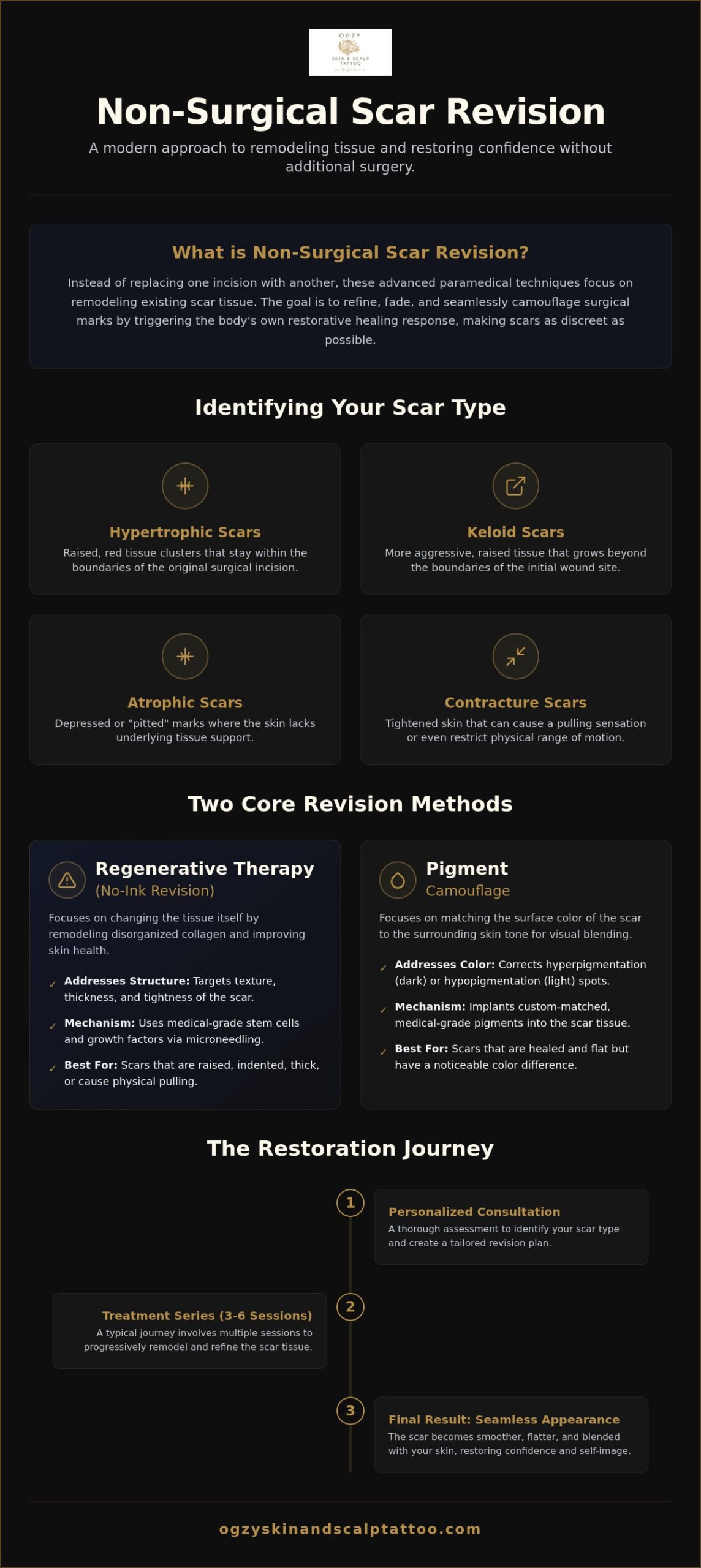
Every scar tells a different biological story, and identifying the type of tissue you have is the first step toward a successful restoration. Hypertrophic scars are perhaps the most common surgical marks, appearing as raised, red clusters of tissue that stay within the boundaries of the original incision. Keloids are similar but more aggressive, as they grow beyond the initial wound site and require a very specialized, cautious touch. Atrophic scars present as depressed or “pitted” marks where the skin lacks underlying support, while contracture scars involve tightened skin that can actually restrict your range of motion or cause physical pulling sensations.
The Emotional Impact of Surgical Scarring
Beyond the physical texture and color, “reminder” scars often carry a heavy psychological weight. They can dictate what you choose to wear or how you feel during intimate moments, acting as a constant tether to a past medical event. By 2026, the aesthetic industry has seen a profound shift toward restorative aesthetics, where the goal is subtle, natural-looking integration rather than “perfection.” Successful non-surgical scar revision isn’t just about changing the surface of the skin; it’s about restoring the confidence and body image that may have been impacted by your surgical journey. When a scar finally blends into the background, the emotional relief is often just as significant as the physical change.
The Science of Regenerative Scar Revision: Remodeling Tissue Without the Knife
Traditional approaches often focus on hiding a scar, but regenerative science aims to change the very nature of the tissue itself. The “No-Ink” revision philosophy utilizes medical-grade stem cells and potent growth factors to encourage the body to heal more effectively than it did the first time. This method is particularly effective for surgical marks that feel thick, tight, or uneven, as it addresses the underlying structure rather than just the surface color. It’s a journey of refinement that values the health of your skin as much as its appearance.
When researching Understanding Your Non-Surgical Options, it’s clear that the focus has shifted toward biological restoration. By utilizing advanced serums during the revision process, we can address the root of the problem: disorganized collagen that formed during the initial healing phase. This is why many specialists now recommend non-surgical scar revision as the primary step for textured surgical scars, especially when the goal is a seamless, natural integration with the surrounding skin.
How Stem Cells and Growth Factors Work
Stem cells act as sophisticated biological messengers that signal cellular repair and the production of healthy new tissue within the scar site. Through this signaling, the body initiates a process of deep collagen remodeling, where old, fibrous, and disorganized tissue is gradually replaced by more pliable structures that mimic the appearance of healthy skin. Utilizing professional medical-grade ingredients ensures a higher concentration of these regenerative factors than any over-the-counter product, providing the precision needed to refine complex surgical trauma.
Microneedling for Surgical Scar Texture
Microneedling serves as the mechanical catalyst for this biological transformation. By creating controlled micro-trauma, the treatment breaks down the dense, tethered fibers that make a scar feel “stuck” or prominent against the skin’s surface. This mechanical stimulation improves the flatness and flexibility of the mark, allowing it to move more naturally with your body’s movements. If you’re looking for specialized microneedling for scars in Cedar Park, you’ll find that this form of non-surgical scar revision offers a gentle yet powerful alternative to the risks of a second surgery.
If you’re ready to see how your skin can respond to these restorative techniques, exploring a personalized revision plan is an excellent starting point for your transformation.
Camouflage vs. Reconstruction: Choosing Your Method
Every scar presents a unique set of challenges, and the path to restoration isn’t one-size-fits-all. When you explore non-surgical scar revision, you’ll typically find two primary paths: the “No-Ink” restorative method and the “Ink” camouflage method. While reconstruction focuses on the physical texture and health of the tissue, camouflage focuses on the visual integration of the scar with your natural skin tone. Selecting the right method requires an artistic eye and a deep understanding of how light and color interact with scar tissue.
In many cases, the most effective results come from a hybrid approach. You might start with regenerative sessions to flatten the tissue and finish with pigment to erase the visual boundary. This tailored strategy ensures that the final result isn’t just an improvement, but a seamless transition that allows you to stop noticing the scar altogether. For residents in Central Texas, finding a specialist who understands the nuances of local skin tones and sun exposure is vital for a result that looks natural in every light.
Medical Grade Scar Revision: Ink vs. No-Ink
- Ink (Camouflage): This is the ideal choice for hypo-pigmented scars, which are marks that have lost their natural melanin and appear white or pale. By custom-blending pigments to match your surrounding skin, we can “color in” the scar so it no longer stands out.
- No-Ink (Restorative): This is best for textured, red, or raised scars. It focuses on smoothing the surface and improving flexibility without the use of pigment.
Before beginning either path, it’s essential that the scar is fully mature. Most specialists recommend waiting at least 12 to 18 months after your surgery to ensure the tissue has stabilized. This patience allows the non-surgical scar revision process to be more predictable and effective, as the underlying biological activity has settled and the scar has reached its permanent color.
Scalp Micropigmentation for Surgical Hair Scars
For those who have undergone hair restoration, the resulting scars can be a source of significant anxiety. Whether you have a linear FUT (strip) scar or the small “dot” scars from an FUE procedure, these marks can be difficult to hide with short hair. Scalp micropigmentation (SMP) offers a specialized form of camouflage that uses follicle simulation to blend the scar into your natural hair pattern. By placing tiny, precise deposits of pigment within the scar tissue, we can create the illusion of hair density where there is none. If you’re struggling with visibility after a transplant, our guide on scalp micropigmentation Cedar Park TX provides a deeper look at how this technique restores a natural appearance.
The Restoration Journey in Central Texas: What to Expect During Your Treatment
Your journey toward skin restoration begins with a personal, in-depth conversation at our Cedar Park studio. We don’t believe in a one-size-fits-all approach to non-surgical scar revision. Instead, we take the time to conduct a thorough skin analysis, looking at your scar’s unique texture, color, and history. During this initial step, we determine whether your skin will respond best to a regenerative “No-Ink” path, a custom-pigmented camouflage, or a hybrid of both. This collaborative planning phase ensures that every subsequent session is precisely tailored to your body’s specific needs and your personal aesthetic goals.
Once your plan is established, the treatment itself is a methodical and artistic process. Most clients describe the sensation as a light scratching or a focused vibration, which is a significant relief for those who feel anxious about the intensity of traditional surgery. We prioritize your comfort throughout the session, maintaining a calm and reassuring environment that feels more like a restorative ritual than a clinical procedure. As we work, you’ll experience the meticulous care taken to ensure that every application of serum or pigment serves the ultimate goal of seamless, natural integration.
Preparing for Your Revision Session
Success starts well before you walk through our doors. To ensure your skin is in its most receptive state, we ask that you prioritize internal hydration and strict sun protection in the weeks leading up to your appointment. It’s also vital that your scar is “mature,” meaning it has fully healed and settled for at least 12 to 18 months. We’ll also provide a list of specific medications or supplements to temporarily avoid, ensuring your body is primed for optimal healing and minimal sensitivity during the revision process.
Recovery and Long-Term Results
One of the most significant benefits of this approach is the minimal downtime. In the first 48 hours, you may experience slight redness or minor swelling, similar to the feeling of a mild sunburn. Unlike surgery, there are no heavy bandages or weeks of restricted movement. However, patience is a vital part of the process. Because we are working with your body’s natural biological cycles, the full restorative results reveal themselves gradually. Most clients achieve their optimal texture and color after a series of three to six sessions, spaced several weeks apart. Once the desired refinement is reached, maintaining your results simply requires consistent sun care and a healthy skin regimen to protect your investment for years to come.
If you’re ready to begin your personal transformation with a specialist who understands your journey, book your consultation at our Cedar Park studio today.
Restoring Confidence with Ogzy Skin & Scalp Tattoo
At Ogzy Skin & Scalp Tattoo, we understand that a scar is more than just a surface mark; it’s a personal story that deserves a thoughtful, artistic resolution. Serving the vibrant communities of Austin, Cedar Park, Leander, Round Rock, and Georgetown, our studio is dedicated to the specialized craft of non-surgical scar revision. We combine the precision of medical-grade technology with a compassionate, patient-centered approach that large surgical centers often overlook. Here, you aren’t just another appointment; you’re a partner in a restorative journey designed to reclaim your self-assurance.
Choosing a boutique, specialist-led clinic means receiving a level of personalized care that is tailored specifically to your skin’s unique behavior. While large practices might offer broad, umbrella services, we focus exclusively on paramedical restoration. This specialization allows us to master the subtle nuances of tissue remodeling and pigment integration, ensuring that your results look natural in the bright Texas sun. We take pride in being a “refined restorer,” where every detail of your treatment is handled with meticulous craftsmanship and artistic integrity.
The Expertise of Opal and the Ogzy Mission
Opal leads our mission with a deep passion for restorative paramedical tattooing and skin rejuvenation. Every procedure is performed with an unwavering commitment to medical-grade standards, safety, and hygiene, ensuring you feel secure throughout your transformation. We believe that everyone deserves to feel comfortable in their own skin, which is why we offer a sophisticated approach to scar and stretch mark revision treatment in Austin. This mission is driven by the belief that true healing happens when clinical expertise meets a warm, reassuring bedside manner.
Ready for a Change?
If you’ve been hesitant to seek help for visible surgical marks, know that there’s a gentle, effective alternative to returning to the operating room. Choosing non-surgical scar revision means choosing a path of minimal downtime, reduced risk, and a gradual, beautiful reveal of your skin’s potential. You don’t have to carry the weight of “reminder” scars any longer. Taking the first step is as simple as booking a restorative consultation with Opal at our Cedar Park studio. Let’s work together to restore your confidence and help you see yourself in a whole new light.
Step Into a New Chapter of Skin Confidence
You’ve seen how the evolution of regenerative aesthetics has turned non-surgical scar revision into a refined art form. By combining the biological power of medical-grade stem cells with the precision of custom pigment matching, it’s now possible to fade surgical marks that once felt permanent. Whether you’re seeking relief from the physical tightness of a C-section scar or looking to blend hair transplant marks with scalp micropigmentation, these modern techniques prioritize your comfort and your results. You don’t have to choose between living with a visible reminder of your surgery or undergoing another invasive procedure.
At Ogzy Skin & Scalp Tattoo, we specialize in providing Central Texas residents with a supportive, expert-led path toward renewal. We focus on the unique needs of your skin, ensuring that every session brings you closer to a look that feels natural and a mind that feels at peace. It’s time to move beyond the self-consciousness of the past and embrace a future where your skin feels like your own again. Book Your Restorative Scar Consultation Today and let’s begin the work of refining your skin and restoring your self-assurance. You deserve to feel whole again.
Frequently Asked Questions
Is non-surgical scar revision painful?
Most clients describe the sensation as a mild scratching or vibration, which is far less intense than the recovery from a surgical procedure. We prioritize your comfort in our Cedar Park studio by maintaining a calm environment and using precise techniques. While individual sensitivity varies, the process is generally well-tolerated without the need for heavy anesthesia. It’s a gentle alternative for those in the Austin area looking to refine their skin’s appearance.
How much does non-surgical scar revision cost in Austin?
The cost of your treatment depends on the size, age, and complexity of the scar tissue being addressed. Because every restoration plan is personalized, we determine the final investment during your initial consultation in our Cedar Park studio. Factors like the number of sessions required and the choice between regenerative serums or pigment camouflage will influence the total. We focus on providing high-quality, restorative results for our Central Texas clients.
Can you hide a C-section scar with a tattoo?
While traditional decorative tattooing is not a service we provide, we specialize in paramedical camouflage for C-section scars. This process involves custom-matching pigments to your natural skin tone to help the scar blend seamlessly with the surrounding area. Unlike a decorative design, the goal is to make the mark virtually invisible. For many Austin mothers, this restorative approach offers a profound sense of emotional relief and renewed body confidence.
How many sessions will I need for my surgical scar revision?
Most clients achieve their desired results within a series of three to six sessions. These appointments are typically spaced several weeks apart to allow your skin’s natural healing cycles to remodel the tissue effectively. During your consultation, we’ll assess your specific scar and provide a realistic timeline for your non-surgical scar revision journey. Consistency is key to seeing the gradual, restorative transformation of your skin’s texture and color.
What is the difference between scar camouflage and a regular tattoo?
Scar camouflage is a paramedical procedure that uses specialized, medical-grade pigments designed to mimic natural skin tones rather than decorative ink. Regular tattoos are intended to stand out, whereas our restorative work is meant to disappear. We use different depths and techniques to ensure the pigment integrates into the scar tissue without looking like a traditional tattoo. This precision is essential for achieving the subtle, seamless results our Austin clients expect.
Will my surgical scar completely disappear after treatment?
While non-surgical scar revision can significantly minimize the visibility and improve the texture of a scar, it cannot completely erase it. The goal of our restorative work is to make the scar blend so naturally with your skin that it is no longer the first thing you or others notice. Most clients see a dramatic improvement in flatness and color, allowing them to feel much more confident in their appearance.
Is regenerative stem cell treatment safe for all skin types?
Yes, our regenerative treatments using medical-grade stem cells and growth factors are safe and effective for all skin tones and types. This “No-Ink” approach works with your body’s natural biology to stimulate healthy tissue repair without the risk of pigment migration or color mismatching. Whether you are in Round Rock or Georgetown, we tailor the application to your skin’s specific needs, ensuring a safe and supportive path toward restoration.
How long do I have to wait after surgery to start non-surgical revision?
We generally recommend waiting at least 12 to 18 months after your surgery before beginning the revision process. This waiting period ensures that the scar tissue is fully mature and the biological activity at the site has stabilized. Starting too early can interfere with the natural healing process and lead to unpredictable results. A mature scar provides a stable foundation for our restorative techniques to achieve the most seamless and lasting refinement.

Article by
Opal Z
Opal is the owner and practitioner behind OGZY Skin & Scalp Tattoo in Austin, Texas. With more than three years in business and a longtime background in the aesthetics industry, she specializes in corrective and restorative treatments designed to address concerns that traditional aesthetics often overlook.
Her work focuses on scar and stretch mark revision, scar camouflage, scalp micropigmentation (SMP), hair regrowth treatments, and laser tattoo and permanent makeup removal. Opal works with a wide range of skin tones and takes an individualized approach to every client, considering skin color, texture, scar characteristics, treatment history, and realistic long-term outcomes.
Through OGZY Skin & Scalp Tattoo, her goal is to combine artistry, aesthetics, and technical treatment knowledge to help clients feel more comfortable and confident in their skin.
Love the skin you’re in.