
How many permanent makeup removal sessions might you need? If you’re searching for PMU removal near me, the answer depends on the pigment and how your skin responds. There is no single session count that applies to everyone.
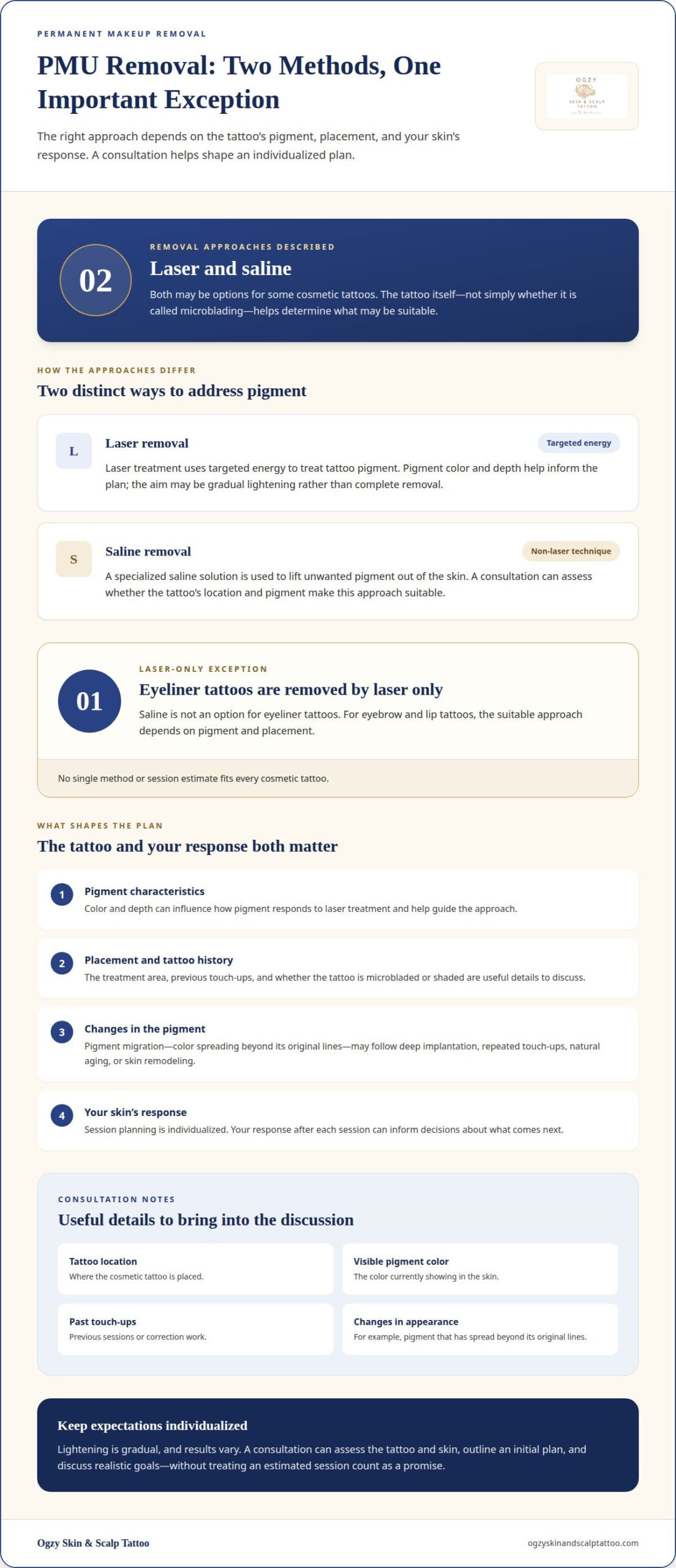
Laser and saline are options for some cosmetic tattoos. Eyeliner tattoos are removed by laser only.
This guide explains treatment suitability, removal methods, aftercare, and how to choose a provider. Use it to prepare for a consultation and decide which questions to ask.
Key Takeaways
- Session planning depends on pigment depth, color, and how your skin responds, so a single estimate won’t fit everyone.
- Laser and saline removal are different approaches; eyeliner tattoos are treated with laser only.
- Understanding what happens during healing can help you plan for care between treatments.
- A thoughtful consultation can assess the tattoo and skin and help set realistic expectations.
- Learn what to look for in a provider’s qualifications and approach before choosing a removal method.
Health Considerations and Treatment Limitations
Whether removal is suitable depends on the cosmetic tattoo’s pigment, placement, and your skin. Pigment depth and color can affect how it responds to laser treatment, and an older tattoo may behave differently from a recent touch-up. Pigment migration, when color spreads beyond its original lines, may follow deep implantation, repeated touch-ups, natural aging, or skin remodeling. These details help shape a realistic treatment plan.
Can eyebrow, eyeliner, and lip permanent makeup all be removed safely? Removal may be suitable for these areas, but no method is right for everyone without assessing the tattoo and skin. Eyeliner tattoos are removed by laser only. For eyebrow and lip tattoos, the appropriate approach depends on the pigment and placement.
A consultation allows the removal professional to assess the tattoo before planning treatment. Be ready to discuss its location, visible pigment color, past touch-ups, and any changes in appearance. For example, migrated eyebrow pigment may call for a different approach than a sharply defined brow tattoo. The practitioner can explain what the chosen method aims to address and its limitations.
Session planning is individualized. The number of eyebrow tattoo removal sessions depends on pigment depth and color, as well as your response to treatment. The number of sessions needed also varies. A consultation can establish an initial plan, while your response after each session informs later decisions. Treat any estimated session count as an estimate, not a promise.
Lightening is gradual, and results vary. A consultation is the best way to discuss what may be realistic for your cosmetic tattoo. Pigment characteristics and individual response matter, so outcomes cannot be guaranteed.
During your consultation and follow-up, focus on specific goals, such as softening an unwanted brow outline or reducing visible lip pigment. Ask how progress will be assessed between sessions and what might prompt a change in the plan. These questions help you understand the process without relying on a fixed timeline or assuming every tattoo responds alike.
Cosmetic Tattoo and Microblading Removal
Cosmetic tattoo removal may use laser or saline, depending on the pigment and treatment area. Microblading is tattooing: pigment sits beneath the skin and may remain visible for years.
For eyebrow tattoos, planning starts with the placement, pigment, and treatment history. Microblading strokes and shaded brows may respond differently, so one method or session plan will not suit every case. Laser treatment uses targeted energy to treat tattoo pigment. Pigment color and depth influence the treatment plan.
PMU Removal Pricing
The cost of brow or PMU removal depends on the treatment method and scope. Before starting, understand what the proposed plan includes, including the removal approach and how progress will be reviewed. The tattoo’s area, pigment, and response can affect the plan, so pricing should reflect your specific case rather than assume every brow needs the same work.
Laser treatment is one option for suitable cosmetic tattoos. It uses targeted energy to treat pigment. The aim may be gradual lightening rather than complete removal. Pigment color and depth, along with your skin’s response, inform the treatment plan. Eyeliner tattoos are removed by laser only, so saline is not an option for that area.
Saline Removal Method
Saline tattoo removal is a non-laser technique. It uses a specialized saline solution to lift unwanted pigment out of the skin. The method differs from laser treatment. A consultation can assess whether the tattoo’s location and pigment make saline a suitable option, and explain what the process involves before treatment begins.
For a microbladed brow, the choice between laser and saline depends on the tattoo itself, not simply the label “microblading.” A consultation can review the pigment and placement, then explain the suitable method and realistic treatment plan. If you’re considering a removal consultation, this is a useful opportunity to discuss the approach for your cosmetic tattoo.
Comfort and Skin Care During Healing
Comfort during removal depends on the method, treated area, and your individual experience. Laser treatment directs energy at pigment, while saline removal uses a specialized solution to lift unwanted pigment. During planning, ask what sensations are expected with the selected method and how the treatment area will be cared for afterward. Clear answers can help you prepare without relying on assumptions about another person’s experience.
After treatment, follow your practitioner’s aftercare instructions for your procedure and treatment area. Removal methods differ, so one general routine may not suit every case. Ask the practitioner to explain the instructions, including what they recommend for care at home. If your treatment involves eyebrow pigment, make sure the instructions address that area specifically.
Skin type is one part of an individualized plan, but it does not determine the entire experience. Pigment color and depth, treatment location, chosen method, and your skin’s response all matter. Share relevant details at your consultation, including previous cosmetic tattoo sessions or correction work. This context helps the practitioner discuss an approach suited to your tattoo and skin.
Healing is also part of planning between sessions. Laser treatment and saline removal use different methods to address pigment. Ask how your aftercare instructions relate to the method used, and follow your practitioner’s instructions rather than relying on a routine intended for another procedure.
Personalized care starts with clear instructions. Before leaving, confirm what your practitioner recommends and whom to contact with questions about the treated area. Refer to the guidance if you are unsure about a step. Avoid relying on advice from an unrelated tattoo experience: care for brow removal, for instance, may differ from care for another area.
Comfort questions belong in treatment planning, not just aftercare. Tell the practitioner if you’re concerned about sensation, the location being treated, or how removal may affect your daily routine. Saline removal is often described as less painful than laser removal, though individual experiences differ. Discussing both the method and your priorities helps you understand the process before deciding how to proceed.
Permanent Makeup Removal
Permanent makeup is cosmetic tattooing used to define features such as brows, eyeliner, or lips. Removal planning starts with the area and the change you want. You may want to soften a brow’s shape, reduce lip color, or address pigment that no longer suits your preferences. Stating your goal helps focus the conversation on what you want to change.
Consider whether you want less visible pigment or a different appearance. These are distinct goals. Removal aims to reduce unwanted tattoo pigment, while correction changes the cosmetic tattoo’s appearance. Clearly describing your priorities helps the practitioner discuss which direction may suit your situation.
Describe the tattoo’s history during treatment planning. Mention earlier touch-ups, changes in shape, or previous removal work. For example, a brow adjusted several times may need a more detailed assessment than one with a single application. This context helps the practitioner discuss your options.
The treatment area matters, too. Brows, lips, and eyeliner each have different placement considerations, so be specific about what you want addressed. Eyeliner tattoos are removed by laser only. If your goal involves eyeliner, make sure the discussion reflects this limitation from the outset.
Think about how you will evaluate progress. Your goal may be to make a tattoo less noticeable rather than remove every trace of pigment. Explain what a meaningful change would look like, such as a softer brow outline or less prominent lip color. The practitioner can then discuss whether that goal is realistic for your tattoo.
Permanent makeup removal is a personal decision, not a standard procedure with the same outcome for everyone. Bring your questions and explain what you hope to achieve. A focused consultation can clarify your goal, review the tattoo’s history, and establish shared expectations before you decide whether to proceed.
What Should I Look for in a Licensed PMU Removal Provider?
Before booking PMU removal, ask what “licensed” means for the specific service and location. The term alone does not explain a practitioner’s training in cosmetic tattoo removal. Ask who issued the credential, what procedures it covers, and who will perform your treatment. The practitioner should be able to explain their qualifications clearly, whether your tattoo is on your brows, lips, or eyelids.
Look for experience with permanent makeup, not just decorative tattoos. Cosmetic pigments can differ in color, depth, and placement. Ask how the practitioner assesses these details and uses them to plan treatment. For example, eyeliner tattoos are removed by laser only, so saline should not be presented as an option for that area.
A useful consultation includes a review of the tattoo and your goals. Mention previous touch-ups, pigment migration, or removal sessions. Ask which method is being considered and why it suits your tattoo. If you want to soften a brow outline, the practitioner should explain how that goal informs the treatment plan without promising a specific result.
Clear explanations matter. A provider should describe the difference between laser and saline removal in plain language. Laser removal uses a device, while saline removal uses a specialized solution applied to the tattooed area. Ask how the method relates to your tattoo’s location and pigment, and what factors could change the plan after treatment begins.
Discuss expected lightening and session variability before deciding. Pigment depth, color, and your individual response can influence the number of laser sessions. A responsible plan distinguishes an estimate from a guarantee and explains how progress will be assessed. Be cautious of claims that every brow or lip tattoo follows the same schedule or responds identically.
Finally, ask for method-specific aftercare instructions and a clear way to raise questions about the treated area. For example, find out what guidance applies after laser treatment versus saline removal. Notice whether the practitioner listens to your concerns, answers directly, and keeps the discussion focused on your tattoo. Those steps help you make an informed choice without relying on broad promises.
Ogzy Skin & Scalp Tattoo: Laser Tattoo Removal
Ogzy Skin & Scalp Tattoo offers certified Nd:YAG laser and saline tattoo removal for unwanted cosmetic pigment. Choosing a method begins with understanding the tattoo’s location, pigment, and your goals. During a consultation, I can assess those details with you and discuss an approach suited to your situation, without assuming every tattoo needs the same treatment.
Laser removal uses focused energy to break tattoo ink into smaller particles. The amount of lightening and number of sessions vary with the pigment and your individual response. During planning, we discuss these factors and distinguish an estimate from a guaranteed result.
Ogzy Skin & Scalp Tattoo uses Nd:YAG laser technology to remove or fade unwanted permanent makeup, cosmetic tattoos, and scalp micropigmentation. The treatment plan depends on the tattoo’s area and characteristics. Eyeliner tattoos are removed by laser only, so laser is the appropriate removal method for eyeliner.
A consultation is also an opportunity to describe what you would like to change. You may want to soften a brow shape, reduce the appearance of lip pigment, or address color that has migrated beyond its original lines. Sharing the tattoo’s history, including previous touch-ups or removal, gives us useful context for assessing the area and discussing realistic expectations.
Healing and response vary, so treatment planning should account for your skin and the tattoo. We can explain the selected method and the factors that may influence your plan. Results vary with skin, tattoo characteristics, and healing; a consultation is the best way to discuss what may be realistic for your case.
If you’re considering PMU removal near you in Austin, I welcome you to book a consultation with Ogzy Skin & Scalp Tattoo. The studio is at 13130 Pond Springs Rd #1105, Austin, TX 78729. You can find the studio website at ogzyskinandscalptattoo.com.
Choose a Next Step That Feels Right
Deciding whether to change your permanent makeup is personal. Take time to consider what you would like to soften, which questions matter most, and whether removal feels like the right direction. A thoughtful conversation can clarify a next step without requiring you to commit before you are ready.
If you’re considering PMU removal near me in Austin, I welcome you to speak with me about your goals and the options that may fit your tattoo. Results vary by skin, pigment, and healing, so a consultation is the best way to discuss what may be realistic for your situation.
Ogzy Skin & Scalp Tattoo is located at 13130 Pond Springs Rd #1105, Austin, TX 78729. You can contact Ogzy Skin & Scalp Tattoo to arrange a consultation and take your next step with care.
Frequently Asked Questions
Remove it, or correct over it?
Choose based on the change you want: less visible pigment or a different cosmetic tattoo design. Correction adds or adjusts pigment; it does not remove the existing tattoo. Before deciding, describe the result you hope for and ask how the existing color could affect that goal. You can discuss the options before choosing a direction.
How much does permanent makeup removal cost?
The cost depends on the treatment plan for your specific tattoo. Ask what the proposed plan includes, how sessions are accounted for, and whether reassessment could change the plan. This helps you understand the full scope before deciding, rather than relying on a general estimate that may not reflect your tattoo or goals.
What are the risks and side effects of permanent makeup removal?
Risks and possible side effects vary with the removal method, tattoo location, and individual skin response. Before treatment, ask the practitioner to explain the potential effects relevant to your treatment area and what changes should prompt you to get in touch. Clear, specific answers help you make an informed decision without assuming someone else’s experience will predict yours.
How can I find a reputable PMU removal provider?
Look for clear answers about the practitioner’s relevant training, experience with cosmetic tattoos, and approach to treatment planning. Ask how they will assess your tattoo and explain the limits of the proposed method. A professional should discuss your goals directly, explain the plan in plain language, and avoid promising a particular outcome.
How do PMU removal methods compare for different pigment colors and skin tones?
Pigment color and depth can affect laser response, while the suitable method also depends on the tattoo’s placement. Laser breaks pigment into smaller particles; saline lifts pigment out of the skin. Skin type is part of an individualized plan, but no specific comparisons by skin tone or pigment color are provided.

Article by
Opal Z
Opal is the owner and practitioner behind OGZY Skin & Scalp Tattoo in Austin, Texas. With more than three years in business and a longtime background in the aesthetics industry, she specializes in corrective and restorative treatments designed to address concerns that traditional aesthetics often overlook.
Her work focuses on scar and stretch mark revision, scar camouflage, scalp micropigmentation (SMP), hair regrowth treatments, and laser tattoo and permanent makeup removal. Opal works with a wide range of skin tones and takes an individualized approach to every client, considering skin color, texture, scar characteristics, treatment history, and realistic long-term outcomes.
Through OGZY Skin & Scalp Tattoo, her goal is to combine artistry, aesthetics, and technical treatment knowledge to help clients feel more comfortable and confident in their skin.
Love the skin you’re in.