
What if a natural-looking hairline isn’t about bringing it lower, but shaping it to suit you? If you’re researching scalp micropigmentation receding hairline options, you may be wondering whether the treatment adds hair or changes how your scalp looks. SMP doesn’t regrow hair or stop hair loss. Instead, it uses tiny pigment impressions to create the appearance of follicles and a more defined hairline.
A changing hairline can make the scalp feel more visible and affect how comfortable you feel about your appearance. It’s also reasonable to worry that a redesigned edge could look too sharp or artificial. A balanced result depends on a thoughtful design that considers your features, existing hair, and preferred look, rather than simply drawing a lower line.
In this guide, you’ll learn what SMP can and can’t change, what contributes to a natural-looking hairline, and what to discuss with a specialist before treatment. You’ll also find practical questions to ask about suitability, design, expectations, and aftercare, so you can make an informed decision at your own pace.
Key Takeaways
- Scalp micropigmentation can create the appearance of a more defined hairline through follicle-like pigment impressions, but it doesn’t regrow hair.
- A natural-looking design considers your facial proportions, existing hair, and personal preferences rather than simply lowering the hairline.
- Scalp micropigmentation for a receding hairline differs from hair-regrowth approaches and surgical transplantation because it creates a cosmetic visual effect.
- Before treatment, discuss your goals, proposed design, relevant provider experience, realistic expectations, and aftercare.
- A personalized assessment can help clarify suitability and design considerations. Ogzy Skin & Scalp Tattoo serves Austin, Cedar Park, Leander, Round Rock, and Georgetown.
What scalp micropigmentation can do for a receding hairline
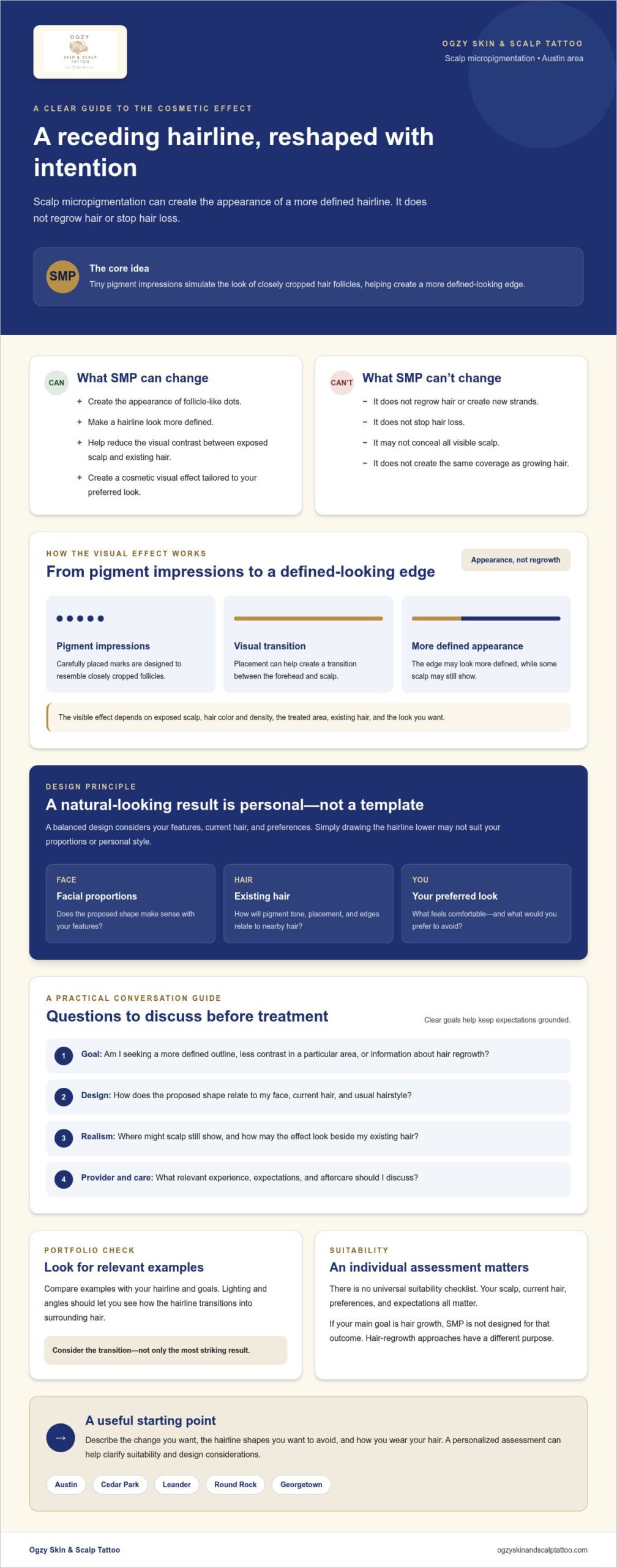
Scalp micropigmentation (SMP) is a cosmetic treatment that places pigment impressions on the scalp to simulate the look of hair follicles. It changes visual appearance, not hair growth. For a receding hairline, the aim may be to create a more defined-looking edge or reduce the contrast between visible scalp and existing hair. It won’t create new strands or stop hair loss.
The visible effect depends on how much scalp is exposed, the color and density of your hair, and the look you hope to achieve. SMP may make an area appear more consistent, but it doesn’t cover the scalp in the same way as growing hair. Ask a specialist to explain what the treatment could realistically change for your hairline, including areas where scalp may still show.
How SMP creates the appearance of a fuller hairline
Carefully placed pigment impressions are designed to resemble closely cropped follicles. Around a hairline, their placement can create a visual transition between the forehead and scalp, helping the edge appear more defined. When pigment and existing hair are viewed together, the contrast may seem less pronounced, though SMP can’t guarantee complete concealment of visible scalp.
The effect depends on your existing hair, the area being treated, and the agreed treatment plan. If you wear your hair longer, the relationship between the pigment and surrounding hair may look different than it would with a closely cropped style. Discuss how you usually wear your hair and whether you want the result to blend with that style. A useful design conversation should address both the hairline itself and how the impressions will appear beside your existing hair.
Who may consider SMP for a receding hairline?
SMP may suit someone looking for a cosmetic way to make a changing hairline look more defined. There isn’t a universal checklist for suitability. Your scalp, current hair, personal preferences, and expectations all matter. An individual assessment can help clarify whether the visual effect aligns with your goals.
If your main goal is to grow hair, SMP isn’t the right tool for that outcome. Ask about separate hair-regrowth treatment options and how their purpose differs from cosmetic follicle simulation. Being clear about whether you want a visual change, biological regrowth, or information about both can make a conversation with a specialist more useful.
Before pursuing scalp micropigmentation receding hairline treatment, make your goal concrete. Are you looking for a more defined outline, or do you mainly want to reduce the contrast in a particular area? Explain what “fuller” means to you and mention any hairline shapes you want to avoid. Those details help keep expectations grounded and give you a clearer basis for discussing suitability.
How SMP hairline design can look natural and balanced
A convincing hairline isn’t simply the lowest line that pigment can create. Its placement needs to make sense with your facial proportions, the pattern of your existing hair, and the look you personally feel comfortable wearing. A shape that seems balanced on one person may feel too straight, low, or prominent on someone else.
A natural-looking SMP design depends on individualized planning, not one template. Planning can include the outline, pigment tone, and how the impressions transition into nearby hair. If you prefer a less sharply defined edge, ask about softer, age-conscious shaping. The design should reflect your preferences, not a prescribed shape or a guaranteed result.
What to discuss about hairline shape and placement
Before settling on a design, describe what you hope to see and what you’d prefer to avoid. You might want a more defined outline without a dramatic change, for example, or feel strongly that the result shouldn’t look unusually straight. Ask how the proposed shape relates to your face and current hair. Lowering the outline just to cover more recession may not suit your proportions or personal style.
Ask how pigment tone and placement will relate to your existing hair, and how the impressions will transition at the edges. An outline that appears disconnected from surrounding hair may look less cohesive. For background on the procedure and considerations to raise with a provider, the Cleveland Clinic’s guide to cosmetic treatment for thinning hair offers a patient-focused reference.
How to assess SMP examples and portfolios
Look for examples that resemble your hairline and goals, rather than judging a portfolio only by its most striking result. Check whether the lighting and angles let you see the hairline transition clearly. If you can’t tell where the forehead ends and the impressions begin, ask for a clearer view or an explanation before drawing conclusions from the image.
Ask the provider to explain the design choices behind an example: why that placement was selected, how it relates to the person’s existing hair, and what makes the result appear balanced. That discussion can reveal more than a finished image alone. It also gives you a practical way to assess whether the approach reflects your priorities.
If you’re exploring scalp micropigmentation receding hairline options, use the design conversation to make your preferences specific. Ask questions until the proposed outline and its relationship to your hair are clear. You can also learn about scalp micropigmentation as you consider what to discuss with a specialist.
Does SMP fix a receding hairline or only change its appearance?
SMP changes how the scalp looks. It doesn’t reverse hair loss or make follicles grow. That distinction matters if you’re weighing scalp micropigmentation for a receding hairline against options intended to support hair growth. SMP uses pigment to create the visual impression of follicles, while regenerative treatments and surgery have different aims and considerations. The Cleveland Clinic describes SMP as a cosmetic treatment for hair loss, not a method of regrowing hair.
The right direction depends on your priority: a cosmetic change, possible hair growth, or understanding both paths. If you’re concerned about medical causes of hair loss or want to explore treatment choices, discuss your situation with an appropriately qualified healthcare professional. An SMP provider can explain the appearance SMP may create, but shouldn’t promise biological regrowth.
SMP versus hair-regrowth treatment
Hair-regrowth treatments are intended to support fuller-looking natural hair, while SMP creates a visual simulation on the scalp. They address different goals, so one isn’t a substitute for the other. If you’re considering options focused on growth, read this guide to hair regrowth without surgery and ask a qualified provider which approaches may be appropriate for you. You can consider appearance and growth as separate goals, rather than assuming one treatment will provide both.
SMP versus hair transplantation
Hair transplantation is a surgical approach intended to relocate hair follicles. SMP uses pigment to create a cosmetic impression of follicles. The treatments differ in process, purpose, and suitability. Don’t make this decision from appearance examples alone. Discuss medical suitability and potential treatment choices with an appropriate professional, and ask what each option can realistically achieve in your circumstances.
If you’re concerned about an overly sharp or mismatched hairline, discuss the proposed outline, its relationship to your existing hair, and the transition at the edges before deciding. A design that looks disconnected or too strongly defined may not match the look you want. Ask the provider to explain how the approach would be tailored to your features, and be clear about what you’d prefer to avoid. Consider SMP for the visual effect it can create, not as a promise to restore a receding hairline.
What to ask before choosing SMP for a receding hairline
A useful discussion should leave you clearer about what treatment may achieve for your hairline, how the design will be planned, and what to expect afterward. Bring your questions and take time to consider the answers. For scalp micropigmentation receding hairline treatment, a thoughtful, case-specific explanation is more helpful than a broad promise of a particular look.
Questions to bring to an SMP consultation
Use this checklist to guide the conversation. You don’t need to decide on the spot.
- Goals: What could SMP realistically achieve for my specific hairline, and what can’t it address?
- Design: How would you adapt the proposed shape to my facial proportions, current hair, and preferred look?
- Relevant experience: Can I review examples involving hairlines and goals similar to mine? How do you approach pigment tone and the transition into existing hair?
- Planning: How will you plan treatment for my individual case, and what factors could affect that plan?
- Expectations and aftercare: What should I expect during healing, what aftercare will you recommend, and how will follow-up be handled?
Ask for provider-specific details about the proposed session plan, healing expectations, and aftercare rather than relying on general information from someone else’s experience. These details may vary by case, so ask for a clear explanation of what applies to you before making a decision.
How to compare providers without relying on promises
Review examples that are clearly presented and relevant to your hairline and goals. Notice whether you can see the outline and its transition into surrounding hair, rather than focusing only on a dramatic before-and-after impression. Ask the provider to explain the choices behind the work and how those choices relate to the individual’s features.
A reassuring discussion includes honest limits as well as possibilities. Look for careful questions about your goals, a clear explanation of suitability, and realistic expectations. You should feel able to ask for clarification or take time to think. If the conversation relies on guarantees, glosses over your concerns, or pressures you to commit, it’s reasonable to pause and seek another opinion.
Ready to learn more about the service and prepare your questions? Explore scalp micropigmentation with Ogzy as you consider your next steps.
Explore personalized scalp micropigmentation near Austin
If you’re considering scalp micropigmentation for a receding hairline, an individual assessment can help turn general ideas into a clearer conversation about your goals. You can discuss the visual change you’re seeking, how a proposed design could relate to your existing hair, and whether SMP appears suited to your expectations. The goal is to understand the options, not to promise a particular result.
Ogzy Skin & Scalp Tattoo offers SMP as a cosmetic option for receding hairlines and serves Austin, Cedar Park, Leander, Round Rock, and Georgetown. A conversation with the clinic can help you explain what you hope to see and ask about the approach for your hairline. SMP creates a visual effect; it doesn’t regrow hair.
What a personalized assessment can help clarify
Start by sharing what’s prompting you to explore treatment. You may want a more defined-looking hairline, feel concerned about visible scalp, or be unsure whether the effect would suit your appearance. A provider can discuss your goals, review the design you have in mind, and outline an individualized approach to consider. Ask what may be achievable for your specific hairline and what SMP can’t address.
Before speaking with a specialist, jot down your questions and, if helpful, examples of hairline shapes you like or prefer to avoid. These can make your preferences easier to explain while leaving room to discuss how design choices may relate to your features. For broader local treatment context, see the SMP Cedar Park guide.
How to take the next step with realistic expectations
Keep the decision grounded in the difference between a cosmetic appearance service and hair regrowth. Ask about suitability and the proposed plan for your case, and make sure you understand the details that matter to you before deciding. If the emotional side of hair loss is also on your mind, explore these hair loss confidence solutions as another source of perspective.
For readers in Austin and nearby communities, Ogzy Skin & Scalp Tattoo offers a place to discuss SMP and your hairline goals without assuming one design fits everyone. You’re welcome to ask about a personalized SMP consultation and bring your questions to the conversation.
Take a Thoughtful Next Step for Your Hairline
A receding hairline can affect how you feel about your appearance, and it’s reasonable to want clear answers before choosing a treatment. The key distinction is that scalp micropigmentation creates a cosmetic impression of follicles; it doesn’t regrow hair. A balanced design should be discussed in relation to your features, existing hair, and preferred look, rather than based on a one-size-fits-all outline.
If you’re considering scalp micropigmentation receding hairline treatment, ask what may be achievable for your hairline, how the design would be planned, and what expectations and aftercare apply to your case. Those conversations can help you decide whether the visual effect aligns with your goals.
Ogzy Skin & Scalp Tattoo offers SMP for receding hairlines and realistic follicle simulation, serving Austin, Cedar Park, Leander, Round Rock, and Georgetown. To discuss your goals and questions, ask Ogzy about a personalized SMP assessment. Take the next step at your own pace, with a clearer sense of what feels right for you.
Frequently Asked Questions
Can scalp micropigmentation help with a receding hairline?
Yes. Scalp micropigmentation can create the appearance of a more defined hairline by placing pigment impressions that simulate closely cropped follicles. It doesn’t regrow hair or stop hair loss. Whether scalp micropigmentation for a receding hairline may suit you depends on your existing hair, preferred look, and individual circumstances. Ask a provider to explain what the treatment could achieve for your hairline and what limitations to expect.
Does scalp micropigmentation make a receding hairline look natural?
It can create a natural-looking appearance when the design is planned around your facial proportions, existing hair, preferred hairline shape, and pigment choices. The transition between the impressions and surrounding hair also matters. No single design suits everyone, and a particular result can’t be guaranteed. Ask to review examples related to your goals and have the provider explain how they would approach your hairline.
Is scalp micropigmentation a hair-regrowth treatment?
No. SMP is a cosmetic procedure that uses pigment to simulate the appearance of hair follicles on the scalp. It doesn’t create new hair or reverse hair loss. If your main goal is hair growth, ask an appropriately qualified provider about treatments intended for that purpose. You can also discuss whether a separate cosmetic approach makes sense for your goals, while keeping its appearance-focused role clear.
How many SMP sessions are needed for a receding hairline?
The number of sessions varies according to the individual treatment plan, the area being addressed, and the provider’s approach. There isn’t a standard session count for every receding hairline. Before deciding, ask the specialist to outline the proposed schedule, explain what each stage involves, and clarify whether follow-up may be recommended. Get expectations for your own case directly from the provider rather than relying on someone else’s treatment experience.
Can SMP lower my hairline?
A proposed design may explore how a more defined hairline could look, but lowering the outline isn’t automatically the best choice. Placement should be considered alongside your facial features, existing hair, and long-term preferences. Ask the provider to explain how the suggested shape relates to your goals and what trade-offs a lower design may involve. Reviewing the proposed outline before treatment can help you decide whether it feels right for you.
Does SMP stop a receding hairline from progressing?
No. SMP changes the scalp’s appearance but doesn’t stop hair loss or alter how hair grows. If your hair changes over time, the relationship between existing hair and pigment may also look different. Ask the provider how this possibility affects planning and whether future adjustments might be worth discussing. A clear explanation of SMP’s limits is more useful than a promise that your hairline will remain unchanged.
How do I choose an SMP provider for a receding hairline?
Review clearly presented examples relevant to your hairline and goals, then ask how the provider would personalize the design and what outcomes and limitations are realistic. A careful discussion should address your questions without pressuring you to decide. If you’re in the Austin area, confirm that the provider serves your location and ask directly about assessment arrangements. Ogzy Skin & Scalp Tattoo serves Austin, Cedar Park, Leander, Round Rock, and Georgetown.

Article by
Opal Z
Opal is the owner and practitioner behind OGZY Skin & Scalp Tattoo in Austin, Texas. With more than three years in business and a longtime background in the aesthetics industry, she specializes in corrective and restorative treatments designed to address concerns that traditional aesthetics often overlook.
Her work focuses on scar and stretch mark revision, scar camouflage, scalp micropigmentation (SMP), hair regrowth treatments, and laser tattoo and permanent makeup removal. Opal works with a wide range of skin tones and takes an individualized approach to every client, considering skin color, texture, scar characteristics, treatment history, and realistic long-term outcomes.
Through OGZY Skin & Scalp Tattoo, her goal is to combine artistry, aesthetics, and technical treatment knowledge to help clients feel more comfortable and confident in their skin.
Love the skin you’re in.