
Scalp micropigmentation may be a good option for people with thinning hair, baldness, or a receding hairline who want the appearance of closely shaved follicles or fuller coverage. A top-rated SMP clinic in Georgetown can assess the areas you’d like to address and tailor the pigment pattern to your hair and scalp. Suitability depends on your goals and the look you want to achieve.
Hair loss can affect how you feel about your appearance, and it’s understandable to want a subtle, natural-looking option. SMP uses precision pigment deposits to replicate hair follicles, creating the visual impression of greater density and reducing contrast between the scalp and existing hair.
This guide explains how SMP works, who may be a suitable candidate, and how it can address baldness, alopecia-related hair loss, and thinning. You’ll also learn what a consultation can cover and what shapes the cost: the price depends on the case and is given after a quote request, with the treatment area, desired coverage, and plan influencing the estimate.
Key Takeaways
- Use your consultation to clarify the look you want, the areas you’d like covered, and the treatment plan that fits your scalp and hair pattern.
- SMP may suit people seeking the appearance of a defined hairline, denser-looking thinning areas, or more even scalp coverage.
- Learn how pigment placement creates a follicle-like effect and what factors shape the number and spacing of treatment sessions.
- Consider how baldness, alopecia-related hair loss, or thinning affects your coverage goals, since each pattern calls for a tailored approach.
- Compare your desired outcome with the scope of SMP, then explore whether hair regrowth treatment or microneedling may also address your concerns.
Appointment requirements and consultation fees
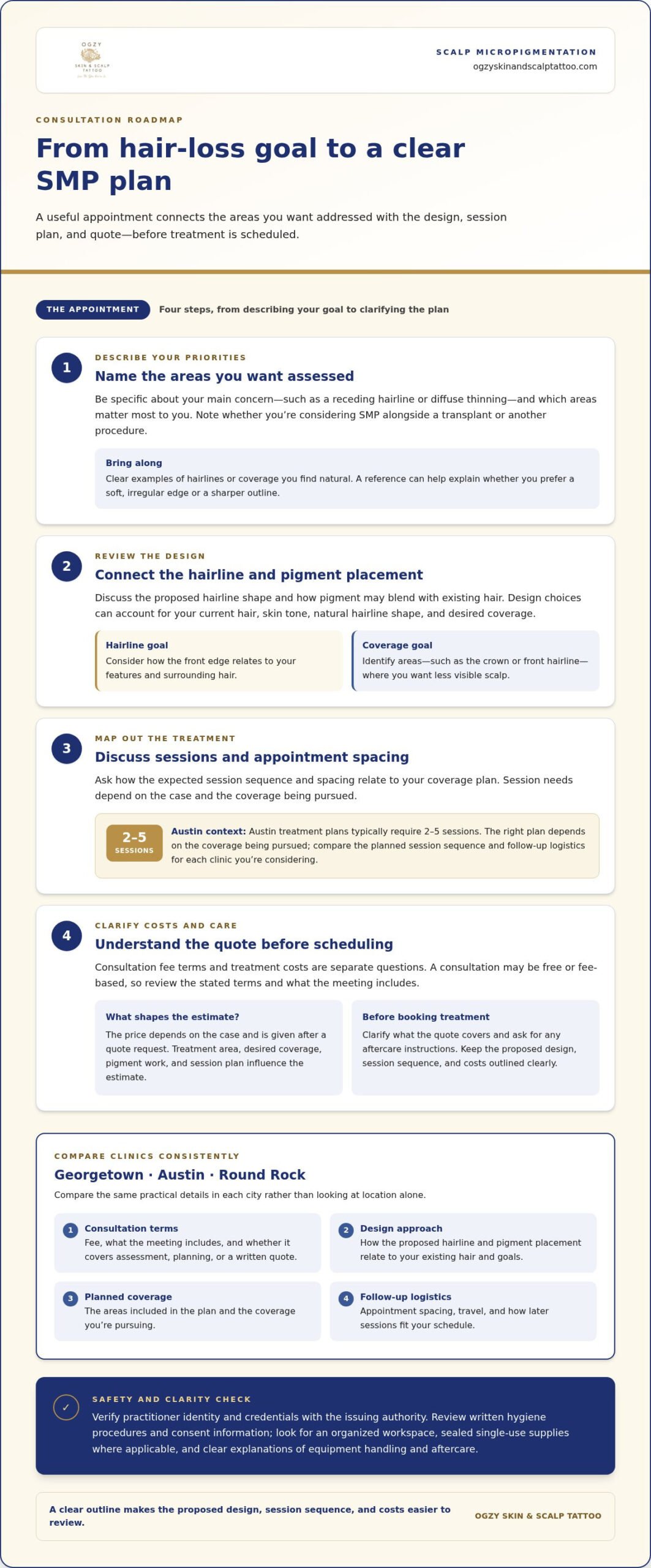
A consultation can turn a broad goal, such as a fuller-looking hairline, into a practical treatment plan. Before booking, note your main concern, the areas you want assessed, and whether you’re considering SMP alongside a transplant or other procedure. Bring clear examples of hairlines or coverage you find natural. This helps make the discussion specific to the look you want.
Consultation fee terms and treatment costs are separate questions. A consultation may be free or fee-based, so review its stated terms before scheduling. If it’s described as free, check what the meeting includes and whether it covers assessment, planning, or a written quote. SMP pricing depends on the case and is given after a quote request; the treatment area, desired coverage, pigment work, and session plan shape the estimate.
A useful appointment follows clear steps. It should connect your goals with the visible pattern of hair loss and the design choices that affect the result.
- Describe the areas you want addressed, such as a receding hairline or diffuse thinning.
- Review the proposed hairline shape and how pigment placement may blend with existing hair.
- Discuss the treatment plan, including expected sessions and spacing between appointments.
- Clarify the quote, what it covers, and any aftercare instructions before scheduling treatment.
Ask for a clear outline of the proposed design, session sequence, and costs. This makes it easier to understand the plan and refer back to the details later.
How do Georgetown clinics compare with options in Austin and Round Rock? Compare the same points in each city: consultation terms, design approach, planned coverage, and follow-up logistics. Austin treatment plans typically require 2-5 sessions, while the right plan depends on the coverage being pursued.
If you’re coming from Georgetown, consider travel and follow-up logistics alongside the treatment plan. Think about how appointments fit your schedule, especially if your plan includes later sessions. Keeping practical details in view can help you choose an approach that works with your routine and coverage goals.
How can you verify an SMP clinic’s licensing, hygiene standards, and safety practices in Texas? Match the practitioner’s identity and credentials to records from the issuing authority, then review the clinic’s written hygiene procedures and consent information. Look for a clean, organized workspace, sealed single-use supplies where applicable, and clear explanations of equipment handling and aftercare.
A top-rated SMP clinic in Georgetown should make the planning conversation understandable, from pigment design to follow-up. Clear answers help you decide whether the proposed procedures fit your goals before committing to treatment.
Who is a good candidate for scalp micropigmentation?
SMP may suit someone seeking a carefully designed visual approach to hair loss, thinning, or a receding hairline. It uses precision pigment deposits to replicate natural hair follicles and create the appearance of greater density, rather than growing new hair. Understanding that distinction helps set clear expectations.
Hairline goals matter as much as the treatment area. Someone with a receding hairline might want a softly defined front edge, while a person with diffuse thinning may prioritize reducing scalp contrast. A personalized design considers existing hair, skin tone, natural hairline shape, and desired coverage. The aim is a balanced appearance, not an abrupt line disconnected from surrounding hair.
SMP can also help camouflage visible scalp scars. The design considers how pigment can blend the scarred area with nearby hair follicles and skin. Scar location, shape, and contrast affect pigment placement, so discuss scar camouflage alongside your hairline and density goals.
Before deciding, consider which description best matches your goal:
- Hairline refinement: You want a more defined-looking hairline that complements your facial features.
- Thinning coverage: You want less visible scalp between existing hairs, without claiming new growth.
- Shaved look: You prefer the appearance of closely cropped follicles across a larger area.
- Scar camouflage: You want pigment placement considered around a scalp scar.
Bring specific examples to the design conversation. A reference photo can show whether you prefer a soft, irregular edge or a sharper outline. Discuss how the proposed hairline relates to your current hair and how density should transition at the temples. These details help shape a natural-looking effect without an overly dramatic design.
Hair-loss patterns and personal preferences differ, so the plan should account for both. If your priority is fuller-looking coverage, explain which areas matter most in everyday styling, such as the crown or front hairline. If you’re also exploring hair regrowth treatment, distinguish that goal from SMP’s pigment-based visual effect.
For a tailored discussion of pigment placement, hairline design, and coverage goals, explore scalp micropigmentation treatment as a next step.
SMP for hair loss and thinning
SMP can create a denser-looking appearance by placing pigment among existing hair. It doesn’t grow hair or replace a hair transplant. Instead, it can reduce the visual contrast between scalp and hair. For example, someone with thinning across the crown may want a more even-looking blend, while someone with a closely shaved style may prefer follicle-like detail across a broader area.
The pattern of hair loss shapes the design. Diffuse thinning calls for a different placement strategy from a receding hairline or a distinct bald area. Identify the areas most visible in your usual hairstyle, then discuss how pigment could blend them with surrounding hair. The goal is realistic-looking density, not the appearance of new strands.
Alopecia can involve different patterns and degrees of hair loss. Desired coverage, existing hair, scalp appearance, and changes in the pattern all inform an SMP plan. Someone with a defined patch may focus on blending its edges, while someone with more widespread loss may consider broader coverage. These are different goals, not a standard design for everyone.
Scalp scars need individual assessment. A scar from a previous hair transplant, for example, may differ in color, texture, and visibility from nearby scalp. Camouflage planning considers the scar’s location and how pigment may blend with surrounding skin and hair. The goal is visual integration, not scar removal. The scar’s appearance can influence placement and coverage.
For thinning-hair density enhancement, discuss how pigment will work with your current hair length and styling habits. A close-cropped look may call for an overall follicle effect, while longer hair may need a subtler approach to reduce visible scalp between strands. Share specific concerns, such as crown show-through under bright lighting or a widening part, to make the coverage discussion more precise.
Use these points to structure the conversation:
- Hair-loss pattern: Identify whether the concern is diffuse thinning, a receding hairline, or a defined bald area.
- Scar location: Note any transplant scar and how it contrasts with nearby scalp.
- Desired appearance: Describe whether you want subtle density or a closely shaved follicle effect.
- Hair routine: Explain your usual length and styling, which affect how SMP integrates visually.
Explore scalp micropigmentation for hair loss as an option for creating a realistic visual blend across thinning areas or scalp scars.
Scalp micropigmentation and how it works
Scalp micropigmentation, often called a hair tattoo, uses precision pigment deposits to replicate natural hair follicles across the scalp. Their spacing, shade, and pattern create the appearance of closely cropped hair. SMP is non-surgical and doesn’t restore hair growth. Instead, it changes how the scalp and existing hair appear together, creating a more defined hairline or a balanced look across baldness and thinning.
A session can take two to four hours. The practitioner first maps the treatment area and plans the design, then places pigment in small, controlled deposits. Placement accounts for existing hair, scalp tone, and the requested finish. A shaved style may call for broader follicle simulation, while thinning hair may need pigment between visible strands.
Treatment is commonly planned over 2-5 sessions. This allows the design to build in stages, with later sessions refining density and blending. The number depends on the area, the desired coverage, and how the pigment develops between appointments. Slight redness after an SMP session may last 24-48 hours. Follow the aftercare directions provided for your treatment.
Who may consider SMP? Someone with a receding hairline, visible thinning, a bald area, or a scalp scar may explore it for a visual change. The design depends on the individual’s hair-loss pattern and desired appearance. If you’re seeking new hair growth, distinguish that goal from pigment-based coverage. A hair transplant is a separate procedure, not part of SMP.
For Georgetown residents considering SMP in Austin or Round Rock, practical details matter alongside the design plan. Consider how easily you can attend planned sessions and return for follow-up. Evaluate the treatment approach in terms of coverage goals, hairline design, pigment integration, and aftercare information.
SMP is sometimes described as permanent makeup, but its appearance can change over time. Results can last up to 4 years before a touch-up is needed. That timeframe makes it useful to discuss maintenance expectations when planning the initial design. If preferences or hair patterns change, the original hairline and density choices may also affect how the result looks later.
A thoughtful consultation gives the practitioner a chance to map the treatment area and discuss whether SMP fits your goals. Ask to review the planned hairline, density transitions, and scar coverage before treatment begins. This helps you understand the visual approach and how each session contributes to the intended result, without confusing a hair tattoo with surgical restoration.
Coverage for baldness, alopecia, and thinning
Scalp micropigmentation addresses the appearance of hair loss by placing pigment to mimic closely cropped follicles. It doesn’t restore hair or treat the cause of alopecia. Instead, it creates a cosmetic visual effect that can soften scalp contrast. In the United States, 50 million men and 30 million women are affected by hair loss. That broad reach includes different patterns and coverage goals, so one design won’t suit everyone.
For baldness, pigment can create a consistent, closely shaved appearance across the scalp. The design follows the head’s shape and considers how the hairline connects with the temples and sides. Someone with a defined bald area may want coverage concentrated there, while someone with more extensive loss may prefer a wider, even effect. The result is visual coverage, not regrowth.
Alopecia can cause distinct patches or more widespread hair loss. For a patch, the design may focus on blending its boundary with surrounding hair. With broader loss, the plan may consider how pigment appears across the whole scalp. Changes in hair pattern also matter: the design should account for current coverage and the look you want if surrounding hair changes.
Thinning presents a different design challenge because existing hair remains part of the result. Pigment placement can reduce the visible contrast between scalp and hair, supporting the appearance of greater density. Up to 80% of women experience hair thinning by age 60. For example, someone concerned about a widening part may prioritize that area, while another person may focus on crown show-through.
- Baldness: Define whether you want a closely shaved appearance or targeted coverage.
- Alopecia: Identify patch boundaries or broader areas you want visually blended.
- Thinning: Point out where scalp visibility affects your part, crown, or overall style.
- Hairline: Consider how the front edge will align with your facial features and remaining hair.
Hair patterns can differ, but SMP design should follow each person’s scalp and desired appearance. Share how you style your hair, which areas draw your attention, and whether you want subtle density or a shaved look. These details guide pigment placement and help keep the cosmetic effect consistent across the treatment area.
For a visual hair loss solution, understand the distinction between pigment coverage and hair regrowth before choosing. Explore scalp micropigmentation coverage options and consider which areas you want addressed.
Ogzy Skin & Scalp Tattoo: Scar and Stretch Mark Revision
Ogzy Skin & Scalp Tattoo offers Scalp Micropigmentation (SMP) for realistic follicle simulation across thinning areas, baldness, and receding hairlines. If a scalp scar is also a concern, Scar and Stretch Mark Revision may address its appearance through medical-grade stem cells, growth factors, or custom pigment camouflage. Microneedling and Hair Regrowth Treatment are additional options for people seeking support for skin or hair concerns. The right direction depends on what you want to address: visual scalp coverage, scar appearance, or hair growth. A focused conversation can help clarify which goal matters most and what approach aligns with it. Contact Ogzy Skin & Scalp Tattoo to discuss your concerns.
Take the Next Step Toward a Look That Feels Like You
Your next step can be a clearer conversation about what you want to see when you look in the mirror. Before reaching out, identify the change that matters most: a softer hairline, less visible scalp, or camouflage for a scar. That priority gives the discussion a personal starting point instead of treating SMP as a one-size-fits-all solution. When looking for a top rated SMP clinic Georgetown residents can access, focus on whether the proposed plan reflects your preferences and explains the approach clearly.
Ogzy Skin & Scalp Tattoo offers Scalp Micropigmentation (SMP), Scar & Stretch Mark Revision, and Microneedling Skin Rejuvenation. These services address different concerns, so start with the outcome you want to explore. A conversation with the clinic can help you explain your goals and consider a suitable direction.
Contact Ogzy Skin & Scalp Tattoo to discuss your concerns and take a considered next step toward feeling more at ease with your appearance.
Frequently Asked Questions
Who carries out the treatments?
Ogzy Skin & Scalp Tattoo is owned and operated by Opal, a specialist in paramedical tattooing and skin rejuvenation. Treatment planning is personalized to your concern and desired outcome, such as follicle simulation for thinning hair or pigment camouflage for a scar. Discuss the design, treatment area, and aftercare to understand how the approach relates to your goals.
Where are you located?
Ogzy Skin & Scalp Tattoo is located in Austin, Texas, and serves people researching scalp and skin treatments in Austin, Cedar Park, Leander, Round Rock, and Georgetown. If you’re travelling from Georgetown, consider how the location fits with your appointment and any follow-up visits. Account for both travel logistics and the treatment plan as you decide on your next step.
How long does it last?
SMP results can last up to 4 years before a touch-up is needed. The appearance may change over time, so consider future maintenance when choosing a hairline or coverage design. For example, someone planning a closely shaved look may want to think about how that design will work with their preferred style later. Your plan should set realistic expectations about the visual effect and possible touch-ups.
How do you choose the right color shade?
The pigment shade is chosen to harmonize with your natural coloring and desired appearance, rather than simply matching a hair dye or photograph. Consider your existing hair, scalp tone, and whether you prefer a closely shaved look or subtle density. Review the proposed shade in relation to your scalp and hair before treatment, and discuss any adjustments needed for a natural-looking blend.
How long does the SMP take to heal?
Slight redness after an SMP session may last 24-48 hours. That describes redness, not a precise timeline for complete healing. Follow the aftercare instructions provided for your treatment, and avoid judging the settled appearance while the scalp is still recovering. If you’re planning an event or photo session, allow time for post-session redness to ease before scheduling it.
How much does SMP treatment cost?
A 25% deposit is required at booking, with the balance due at the first session. A valid credit card is required to book a consultation. Ask for the treatment plan and payment schedule before committing, so you can understand the total cost for your case.
What are the top-rated scalp micropigmentation (SMP) clinics in Georgetown, Texas?
This article doesn’t establish a current ranking of SMP clinics in Georgetown. If you’re looking for a top rated SMP clinic Georgetown residents can access, distinguish a provider’s location from the community it serves. Ogzy Skin & Scalp Tattoo is based in Austin, Texas, and offers SMP with precision pigment deposits that replicate natural hair follicles. Consider whether the proposed design and treatment details match your goals, rather than relying on a label alone.
Which Georgetown, TX SMP clinics have the most Google reviews and highest ratings?
Google review totals and ratings change, so a reliable answer requires a current comparison of Georgetown clinic profiles. This article doesn’t establish which clinic has the most reviews or the highest rating, and it would be misleading to invent a ranking. When reading reviews, look for details relevant to your concern, such as hairline design, thinning coverage, or scar camouflage, rather than relying only on an overall score.

Article by
Opal Z
Opal is the owner and practitioner behind OGZY Skin & Scalp Tattoo in Austin, Texas. With more than three years in business and a longtime background in the aesthetics industry, she specializes in corrective and restorative treatments designed to address concerns that traditional aesthetics often overlook.
Her work focuses on scar and stretch mark revision, scar camouflage, scalp micropigmentation (SMP), hair regrowth treatments, and laser tattoo and permanent makeup removal. Opal works with a wide range of skin tones and takes an individualized approach to every client, considering skin color, texture, scar characteristics, treatment history, and realistic long-term outcomes.
Through OGZY Skin & Scalp Tattoo, her goal is to combine artistry, aesthetics, and technical treatment knowledge to help clients feel more comfortable and confident in their skin.
Love the skin you’re in.