
The right choice depends less on how much coverage you want than on whether you’re seeking new hair or the appearance of it. If you’re comparing scalp micropigmentation vs hair transplant, you may have questions about surgery, recovery, suitability, and whether the result will meet your expectations.
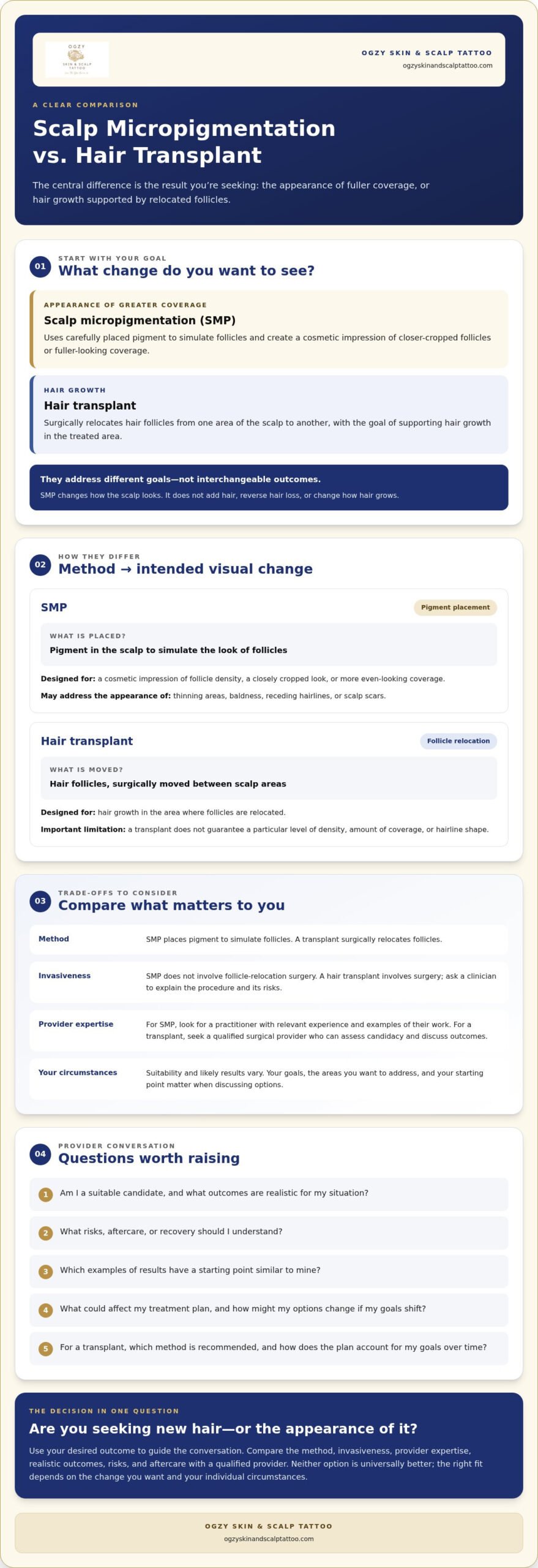
The central difference is what each approach is designed to do. A hair transplant relocates follicles in an effort to support hair growth. Scalp micropigmentation, or SMP, uses realistic follicle simulation to create the appearance of fuller coverage. SMP doesn’t regrow hair or replace transplanted follicles, so the best fit depends on the change you want to see.
This guide compares what each option can realistically achieve and offers questions to raise with qualified providers. If cosmetic follicle simulation fits your goals, you can also explore a personalized SMP consultation with Ogzy Skin & Scalp Tattoo, serving Austin, Cedar Park, Leander, Round Rock, and Georgetown.
Key Takeaways
- Start with your desired outcome: are you seeking hair growth or the appearance of greater scalp coverage?
- When comparing scalp micropigmentation vs hair transplant, consider the method, invasiveness, and provider expertise rather than relying on promotional claims.
- Ask qualified providers about suitability, realistic outcomes, risks, aftercare, and how your options may change if your goals shift.
- Review examples of results with a starting point similar to yours, then ask what could affect your own treatment plan.
- If cosmetic follicle simulation fits your goals, an SMP consultation can help you discuss hairline and coverage preferences in Austin, Cedar Park, Leander, Round Rock, or Georgetown.
Scalp Micropigmentation vs Hair Transplant: What Outcome Are You Seeking?
Begin by naming the change you want: visible hair growth, or the appearance of greater scalp coverage? That distinction is central to the scalp micropigmentation vs hair transplant decision. SMP creates a cosmetic impression. A transplant is surgery intended to relocate hair follicles. Because they address different goals, neither should be treated as a direct substitute for the other.
SMP changes how the scalp looks; a hair transplant relocates follicles in an effort to support hair growth. Keeping this difference in mind helps you assess claims, ask more focused questions, and compare options against the result you actually want.
What scalp micropigmentation changes, and what it does not
Scalp micropigmentation uses carefully placed pigment to simulate hair follicles. The visual effect may resemble a closely cropped scalp or make coverage appear more even. SMP may be used to address the appearance of thinning areas, baldness, receding hairlines, or scalp scars. It changes appearance only: it does not add hair, reverse hair loss, or change how hair grows.
SMP may be worth discussing if you want a fuller-looking appearance without expecting new strands. Before deciding, describe the areas you want to address and the look you prefer, such as a closely cropped style or a less noticeable scalp scar. A provider can explain what a proposed design may and may not achieve for your situation.
What a hair transplant is intended to do
A hair transplant is a surgical procedure in which a clinician relocates hair follicles from one area of the scalp to another. The goal is for the relocated follicles to produce hair in the treated area. The procedure does not guarantee a particular level of density, amount of coverage, or hairline shape.
Suitability and likely results vary. A qualified transplant clinician should assess your circumstances and explain potential benefits and limitations. If you’re considering surgery, ask which method they recommend, what risks may apply, what recovery involves, and how the plan accounts for your goals over time.
In practical terms, consider which description matches your priority: a designed appearance of follicle density, or a surgical option intended to support hair growth. Being clear about that preference can make your first provider conversation more productive.
How SMP and Hair Transplants Work: Pigment Placement vs Follicle Relocation
The methods differ in what is placed in the scalp. SMP is an aesthetic pigment technique; a hair transplant is a surgical procedure that relocates follicles. Neither is universally better. Compare them based on the change you want, your individual circumstances, and the guidance of a qualified provider.
| Factor | Scalp micropigmentation (SMP) | Hair transplant |
|---|---|---|
| Method | Pigment is placed in the scalp to simulate the look of follicles. | Hair follicles are surgically moved from one area of the scalp to another. |
| Intended visual change | A cosmetic impression of closer-cropped follicles or fuller-looking coverage. | Hair growth in the area where follicles are relocated. |
| Invasiveness | Does not involve follicle relocation surgery. | Involves surgery; a clinician can explain the procedure and its risks. |
| Provider type | An SMP practitioner with relevant experience and examples of their work. | A qualified surgical provider who can assess candidacy and discuss outcomes. |
How SMP creates the appearance of follicle density
An SMP practitioner places pigment in the scalp to create a pattern resembling closely cropped follicles. The design can take account of your hairline and coverage goals rather than using the same approach for every scalp. SMP may address the appearance of thinning areas, baldness, receding hairlines, or scalp scars. A medical review discusses how SMP can hide unsightly conditions on the scalp, including scars and some forms of alopecia.
Your existing hair, the areas you want to address, and the look you prefer all matter when discussing suitability. Ask the provider to explain how the proposed design relates to those details and what it cannot achieve. SMP creates a visual effect; it does not create growing hair.
How a transplant differs as a surgical procedure
A transplant aims to relocate follicles, not apply pigment. Two commonly discussed techniques are follicular unit extraction (FUE), in which follicular units are removed individually, and follicular unit transplantation (FUT), in which a strip of scalp is removed and divided into grafts. A qualified surgical provider can confirm which methods they offer and explain their approach.
Recovery, risks, candidacy, and likely results depend on individual circumstances and the specific procedure. Discuss those details directly with a transplant clinician, including how your hair characteristics may affect planning. If cosmetic follicle simulation is also of interest, you can explore a scalp micropigmentation consultation to discuss hairline and coverage preferences.
SMP vs Hair Transplant: Which Trade-Offs Matter Most?
Compare each option with the result you want and the type of procedure you’re prepared to consider. SMP may suit someone focused on a closely cropped, fuller-looking appearance or the visual coverage of a scalp scar. If your goal is growing hair in an area with hair loss, discuss surgical options with a qualified clinician. Neither approach is right for everyone, so an individual assessment matters more than broad claims.
Keep the key distinction in view: SMP can make the scalp look more densely covered, but it does not restore growing hair. It isn’t a substitute for a transplant, and surgery isn’t automatically the right choice for every person seeking a cosmetic change.
When the appearance of fuller coverage may be the priority
If you’re comfortable with a closely cropped look, SMP may be worth exploring as a visual change. Some people also ask whether pigment simulation may reduce the appearance of scalp scars. Before deciding, discuss your goals, scalp, preferred hairline, and coverage with a provider. For more on the service, see the guide Scalp Micropigmentation Cedar Park TX: The Definitive Reference Guide (2026).
When exploring surgical hair restoration may make more sense
If you’re seeking hair growth, a transplant consultation is the relevant conversation to have with a qualified clinician. Discuss hair transplant options, candidacy, limitations, risks, and expected recovery in light of your individual circumstances. Ogzy Skin & Scalp Tattoo provides SMP, not transplant surgery.
Trade-offs at a glance:
- SMP: Creates a cosmetic impression of follicle density; it doesn’t grow hair. Discuss whether the look fits your preferences and scalp.
- Hair transplant: Surgery intended to relocate follicles and support hair growth. A qualified surgical clinician can advise on candidacy, possible results, risks, and recovery.
These are differences in purpose, not predictions of your personal outcome. Suitability, surgical risks, recovery, and likely results require professional evaluation. If you’re still weighing scalp micropigmentation vs hair transplant, identify the change you want, then ask the appropriate provider what their approach can realistically achieve and where its limits are.
Choosing Between SMP and Hair Transplant: Key Questions
A simple decision process can make provider conversations more useful. First, define the outcome you want. Then learn how each method works, ask whether it may suit your circumstances, and compare providers by the clarity of their explanations and the relevance of their experience. When weighing scalp micropigmentation vs hair transplant, look beyond before-and-after images and ask how the proposed approach applies to your starting point.
Questions to ask an SMP provider
Ask how the practitioner will assess your scalp and discuss hairline design and coverage. Request examples of work involving concerns similar to yours, then ask what SMP may not achieve. Clarify how the treatment plan is developed and what aftercare involves. These questions can help you understand the proposed approach without assuming a particular result.
Questions to ask a transplant clinician
A transplant involves medical and surgical considerations, so discuss your circumstances directly with a qualified clinician. Ask whether surgery may be suitable, what alternatives are available, and how the clinician describes realistic outcomes, risks, recovery, and follow-up. You can also ask how future hair loss may affect long-term planning. The clinician should explain how these considerations apply to you rather than offer a one-size-fits-all answer.
- Desired outcome: Am I looking for a cosmetic change, hair growth, or still deciding?
- Method and suitability: What does the recommended approach involve, and what factors could affect whether it’s appropriate?
- Provider and expectations: What relevant qualifications and experience does the provider have, and what limitations should I understand?
- Care and changing goals: What aftercare or follow-up should I expect, and what options might I discuss if my goals change?
If you’re exploring options beyond SMP and surgery, the guide Hair Regrowth Without Surgery: A Guide to Non-Invasive Restoration in 2026 may help you identify questions to raise with a qualified provider. Take time to compare clear, individualized explanations rather than feeling pressured to choose quickly.
If cosmetic follicle simulation is the direction you’re considering, explore an SMP consultation to discuss your hairline, coverage goals, and suitability with Ogzy Skin & Scalp Tattoo. For surgical or medical decisions, seek advice from an appropriate qualified clinician.
Explore Scalp Micropigmentation in Austin and Nearby Communities
If you want the appearance of fuller coverage rather than surgical hair growth, an SMP conversation can help you explore whether cosmetic follicle simulation fits your goals. Ogzy Skin & Scalp Tattoo serves Austin, Cedar Park, Leander, Round Rock, and Georgetown. Discussing your preferences and scalp can help clarify possible next steps, but it cannot promise a particular result or establish medical suitability.
What to bring to an SMP consultation
Be ready to describe the appearance you’re hoping for. You might want to discuss a closely cropped look, a particular hairline design, or the visual coverage of a scalp scar. Sharing relevant scalp history and the areas of concern can help focus the conversation.
Prepare questions about the design, process, limitations, and aftercare. Ask how the provider assesses whether SMP fits your goals and what they believe it can realistically address. A useful discussion should leave you with a clearer understanding, not pressure to proceed.
Choosing the right professional next step
The distinction in scalp micropigmentation vs hair transplant can help you decide whom to consult. If you want hair growth, seek an assessment from a qualified transplant clinician, who can discuss whether surgery may be suitable and explain risks and likely outcomes for your circumstances. Ogzy Skin & Scalp Tattoo offers SMP, not surgical hair transplants.
If cosmetic follicle simulation is closer to your goal, Discuss your SMP goals with Ogzy. Use the conversation to explore your preferred hairline and coverage, ask about the process, and understand whether SMP may fit your preferences. You don’t need to settle the decision before getting your questions answered.
For additional perspective on the personal side of choosing a hair-loss approach, you can also read Reclaiming Your Image: Finding the Right Hair Loss Confidence Solution in 2026. Whatever path you explore, let your desired outcome lead and make space for qualified guidance before committing to a procedure.
Choose a Next Step That Fits Your Goals
The central question in the scalp micropigmentation vs hair transplant decision is what kind of change you want. SMP uses pigment to create the appearance of fuller coverage, while a transplant is a surgical option intended to relocate follicles and support hair growth. Neither guarantees a particular result, and the appropriate next step depends on your goals and individual circumstances.
Ogzy Skin & Scalp Tattoo offers SMP for concerns including thinning hair, baldness, receding hairlines, and scalp scars. A conversation can help you discuss your preferred appearance, coverage goals, and whether cosmetic follicle simulation may fit them. Ogzy does not provide surgical hair transplants, so speak with a qualified transplant clinician if you’re seeking hair growth or considering surgery.
If you’re in Austin, Cedar Park, Leander, Round Rock, or Georgetown and want to explore SMP, discuss your SMP goals with Ogzy. Ask about your preferred hairline, coverage, and the limits of the approach, then decide at your own pace.
Frequently Asked Questions
Is scalp micropigmentation better than a hair transplant?
Neither option is universally better; they’re designed for different goals. SMP creates the appearance of fuller coverage through follicle simulation, while a hair transplant is surgery intended to relocate follicles and support hair growth. When comparing scalp micropigmentation vs hair transplant, consider the result you want, whether you’re willing to consider surgery, and advice from an appropriate provider. A qualified transplant clinician can assess surgical suitability, while an SMP practitioner can discuss cosmetic goals and limitations.
Can scalp micropigmentation make hair grow?
No, scalp micropigmentation does not make hair grow. It places pigment in the scalp to create the visual impression of closely cropped follicles or fuller-looking coverage. It doesn’t add hair, reverse hair loss, or change hair growth. If you’re hoping to encourage hair growth, speak with a qualified healthcare professional about options that may suit your circumstances. Tell any provider whether you want a cosmetic appearance change, hair growth, or both.
How long does scalp micropigmentation last compared with a hair transplant?
Their longevity differs because they work differently, but neither has one guaranteed timeline for every person. SMP pigment may soften or fade over time, and maintenance needs vary. Transplanted follicles may continue to grow hair, but individual factors and ongoing hair loss can affect the appearance of the overall result. Ask an SMP provider about expected fading and touch-ups for your situation, and ask a transplant clinician about long-term planning and follow-up.
Can SMP hide hair transplant scars?
SMP may be used to create the appearance of pigment coverage over some scalp scars, including scars related to a hair transplant, but suitability isn’t automatic. Discuss the scar’s characteristics and your goals with a qualified SMP provider. If the scar is related to surgery, consider asking your transplant clinician whether cosmetic camouflage is appropriate to explore and what factors to consider first. A provider can explain potential limitations without promising a particular result.
Can you get SMP after a hair transplant?
Some people explore SMP after a hair transplant to add the appearance of follicle density or camouflage a scar, but timing and suitability require individualized advice. Ask your transplant clinician whether your scalp is ready for another procedure and discuss relevant risks or recovery considerations. You can then speak with an SMP provider about your desired appearance, treatment planning, and limitations. SMP does not replace transplanted follicles or make them grow.
How do I choose between SMP and a hair transplant in Austin?
Start by deciding whether you want the appearance of fuller coverage or hair growth. For surgery, consult a qualified transplant clinician about candidacy, risks, likely outcomes, and recovery. For cosmetic follicle simulation, Ogzy Skin & Scalp Tattoo offers SMP in Austin and serves Cedar Park, Leander, Round Rock, and Georgetown. Discuss your hairline and coverage goals with an SMP provider, and ask what the approach can realistically achieve for you.

Article by
Opal Z
Opal is the owner and practitioner behind OGZY Skin & Scalp Tattoo in Austin, Texas. With more than three years in business and a longtime background in the aesthetics industry, she specializes in corrective and restorative treatments designed to address concerns that traditional aesthetics often overlook.
Her work focuses on scar and stretch mark revision, scar camouflage, scalp micropigmentation (SMP), hair regrowth treatments, and laser tattoo and permanent makeup removal. Opal works with a wide range of skin tones and takes an individualized approach to every client, considering skin color, texture, scar characteristics, treatment history, and realistic long-term outcomes.
Through OGZY Skin & Scalp Tattoo, her goal is to combine artistry, aesthetics, and technical treatment knowledge to help clients feel more comfortable and confident in their skin.
Love the skin you’re in.