
Imagine looking in the mirror and seeing a harsh, blue-tinted “helmet” where you once hoped for a soft, natural hairline. It’s deeply discouraging when a procedure meant to restore your confidence instead leaves you feeling more self-conscious than before. You aren’t alone in this experience; reports from the International Society of Hair Restoration Surgery show that cases of poorly performed scalp treatments nearly doubled between 2021 and 2025. Many individuals seeking smp for alopecia find themselves dealing with oversaturated pigments or unnatural shapes from inexperienced practitioners. It’s a heavy emotional burden to carry, but your scalp isn’t a lost cause.
This guide provides a professional roadmap to reclaiming your appearance through advanced laser technology and restorative skin techniques. You’ll learn how we can precisely fade unwanted ink and heal underlying tissue to create a clean, healthy canvas. We’ll walk through the specialized process of correcting pigment shifts and softening aggressive hairlines to finally achieve the subtle, realistic results that reflect your true self. Your journey toward a refined and natural look starts with the understanding that professional restoration is always possible.
Key Takeaways
- Identify the technical reasons behind pigment shifts and “blurring” to better understand why your initial procedure may have lacked the desired precision.
- Explore how modern laser tattoo removal serves as a precise tool for either total pigment clearance or strategic fading of oversaturated areas.
- Learn why prioritizing skin health through microneedling is a vital step in preparing the scalp for a successful, high-quality application of smp for alopecia.
- Understand the difference between an unnatural “helmet” look and a hyper-realistic design that utilizes custom pigment matching and soft, layered hairlines.
- Discover the therapeutic role of medical-grade growth factors in healing the skin and restoring its integrity before beginning a corrective treatment.
Why Scalp Micropigmentation for Alopecia Goes Wrong: Identifying the Issues
When you choose Scalp micropigmentation (SMP) to address hair loss, you expect a subtle enhancement that blends seamlessly with your skin. However, technical errors can transform this artistic solution into a source of distress. Understanding why these results fail is the first step toward restoration. Most issues stem from a lack of technical precision or the use of improper materials.
Several specific factors contribute to a “botched” appearance:
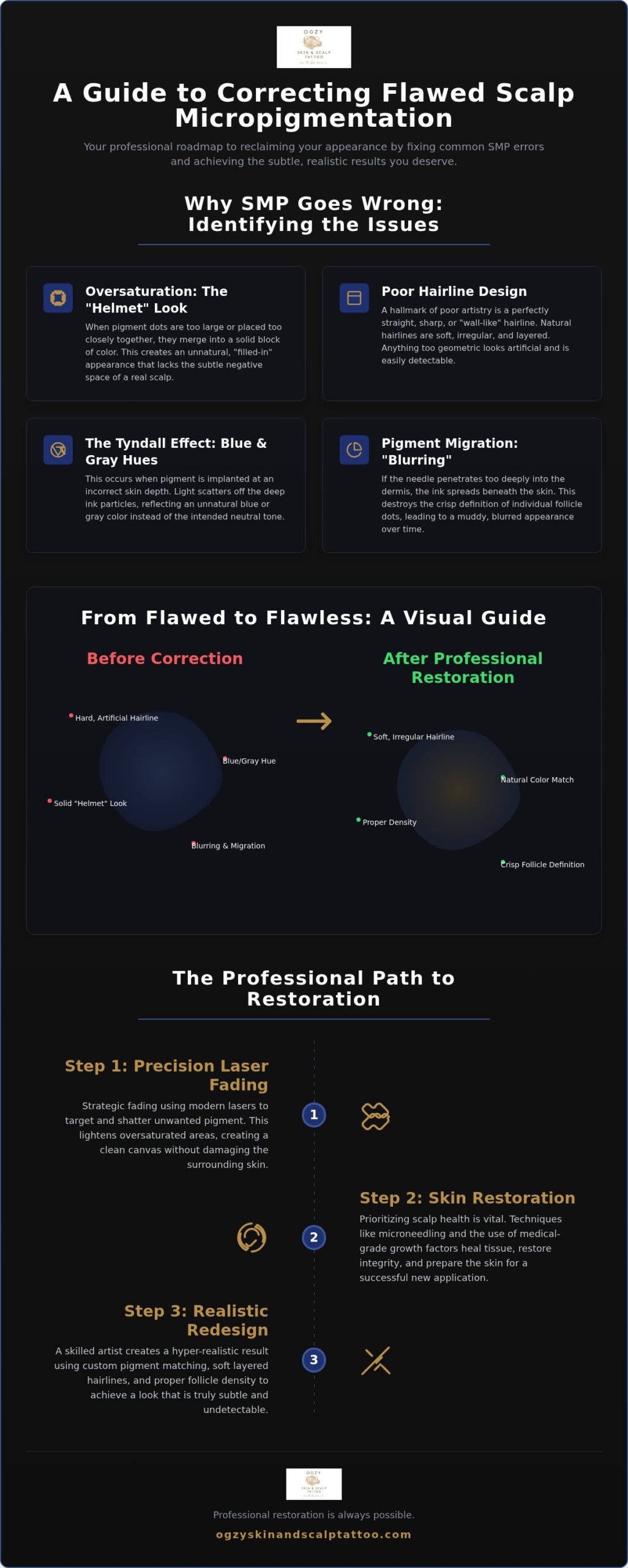
- The Tyndall Effect: This occurs when pigment is placed at an incorrect depth, causing light to scatter and reflect a blue or gray hue rather than the intended charcoal or brown tone.
- Pigment Migration: If a needle penetrates too deeply into the dermis, the ink spreads. This destroys the crisp definition of individual follicle replicates, leading to a muddy, blurred appearance over time.
- Oversaturation: When dots are placed too close together or are too large, they merge into a solid block of color. This creates the “helmet look,” which lacks the natural negative space found on a real scalp.
- Poor Hairline Design: A “wall-like” or perfectly straight hairline is a hallmark of poor artistry. Real hairlines are irregular and soft; anything too geometric looks artificial.
Common SMP Errors Found in Austin Clinics
In the growing Central Texas market, some providers lack the specialized training required for high-level paramedical tattooing. We often see clients from Austin and Cedar Park who received treatments using traditional tattoo ink. This ink is designed for decorative art and contains larger molecules that shift color over time. Specialized pigments for smp for alopecia are formulated to remain stable and fade naturally. Additionally, poor aftercare, such as premature sun exposure or improper cleaning, can cause even a decent application to fade unevenly or blur.
The Emotional Weight of a Bad SMP Result
Living with a botched procedure is exhausting. It’s natural to feel a profound loss of confidence when a solution meant to help you actually highlights the issue. Many people feel a sense of urgency to fix the problem immediately, but a quick “cover-up” using more pigment usually compounds the saturation. Adding more ink to an already crowded canvas only darkens the “helmet” effect. True healing requires a specialist in smp for alopecia correction who understands how to restore the skin’s integrity before attempting to refine the aesthetic. We view ourselves as your partner in this journey, focusing on a restorative path that brings back your self-assurance.
Laser Removal: The Gold Standard for SMP Correction
When a procedure like smp for alopecia doesn’t go as planned, the path forward often involves advanced laser technology. It’s the most effective way to address deep-seated pigment issues without compromising the health of your scalp. Unlike older methods that might cause scarring, modern lasers use selective photothermolysis to target only the ink. This means the surrounding skin remains untouched while the laser’s energy shatters the pigment into tiny fragments. It’s a sophisticated solution that prioritizes your skin’s long-term integrity.
You don’t always need a complete “reset.” Many of our clients in Cedar Park benefit from strategic fading rather than total removal. This approach lightens specific areas, like an overly aggressive hairline or a “helmet” crown, allowing for a more refined redo. By precisely controlling the energy levels, we can lift just enough color to provide a better canvas for a skilled artist to simulate realistic follicles. This nuanced method ensures that the final result looks natural and integrated.
Safety is our absolute priority on the delicate scalp area. We utilize specialized protocols to manage heat and protect the skin’s sensitivity. If you’re feeling anxious about the process, remember that our goal is to act as your compassionate guide throughout this transformation. We focus on a gentle, methodical rhythm to ensure you feel comfortable and informed at every stage of the correction.
How Laser Removal Works for Scalp Pigment
Specific wavelengths are chosen based on your pigment’s color and skin undertone. For the dark, carbon-based inks typically used in smp for alopecia, a 1064nm wavelength is highly effective. Because SMP pigment is usually applied at a shallower depth and in smaller quantities than traditional body art, it often responds much faster to treatment. Once the laser shatters the pigment into microscopic particles, your body’s lymphatic system naturally carries them away over several weeks.
The Step-by-Step Removal Process
Every journey begins with a thorough consultation. We’ll assess your skin type and the current state of your pigment to determine the safest laser settings for your specific needs. During the procedure at Ogzy, we prioritize your comfort by using cooling measures and numbing agents to ensure the experience is as stress-free as possible. Recovery is just as important as the session itself. To achieve the best results, it’s essential to follow the laser tattoo removal aftercare Cedar Park guide exactly. This careful attention to detail ensures your skin heals beautifully, preparing you for the realistic results you’ve always wanted. If you’re ready to start your restorative journey, we invite you to explore our specialized removal services.
Fading vs. Camouflage: Comparing Your Correction Paths
When you’re faced with a botched result, your first instinct might be to hide the mistake under more ink. However, correcting smp for alopecia requires a more strategic and artistic approach than a simple cover-up. At Ogzy, we believe in restoring the natural beauty of your scalp rather than just masking errors. Choosing the right path depends on the current state of your pigment and the health of your skin tissue. We’re here to help you navigate these choices with clarity and hope.
Full removal is often the most compassionate choice for a “reset.” If your previous treatment resulted in heavy migration or a dark “helmet” look, starting with a clean slate allows us to design a new, soft hairline that truly fits your face. Alternatively, partial fading is a brilliant solution for minor adjustments. If the overall density is good but the hairline is too low or too sharp, we can selectively lighten those specific areas. This creates the necessary negative space for a more realistic follicle simulation.
One path we strongly advise against is pigment camouflage using skin-toned or “flesh” inks. These inks often contain titanium dioxide, which can turn an unappealing yellow or chalky white over time. Even worse, these pigments are notoriously difficult to remove with lasers later. Our “Ogzy Approach” always prioritizes fading over heavy cover-ups. We want to ensure your scalp remains a healthy, workable canvas for years to come, avoiding the muddy texture that comes from stacking too many layers of ink.
Choosing the Right Path for Your Scalp
Determining if laser fading is necessary often comes down to saturation levels. If the existing ink is too dark or has blurred into large patches, adding more pigment will only worsen the “blurring” effect. We also carefully evaluate your skin texture. If aggressive needle depth from a previous artist has left behind micro-scarring, we must address that tissue health first. Restoring the skin’s integrity is vital for ensuring that new applications of smp for alopecia stay crisp and realistic rather than spreading into old scar channels.
Comparison Table: Removal vs. Correction
| Method | Primary Goal | Typical Sessions | Ideal Candidate |
|---|---|---|---|
| Full Removal | Complete “reset” for a new design | 3 to 6 sessions | Heavy saturation, blue/green shifts, or total migration. |
| Partial Fading | Lightening specific zones for refinement | 1 to 3 sessions | Harsh hairlines or minor density issues. |
| Quick Cover-Up | Hiding mistakes with more ink | Not recommended | Rarely provides a long-term natural result. |
While a “quick fix” might seem tempting, it often leads to more frustration and additional laser sessions in the future. A multi-stage restorative approach is the gold standard for achieving a look that stands the test of time. We’re dedicated to guiding you through this process with the precision and craftsmanship you deserve.
The Skin Restoration Path: Growth Factors and Healing
A successful correction requires more than just removing old ink. It demands a total restoration of the scalp’s biological health. When a previous artist uses aggressive needle depth, it often leaves behind fibrotic scar tissue that feels tough or uneven. This damaged texture is the primary reason why subsequent attempts at smp for alopecia can fail; the skin simply cannot hold the new pigment with the necessary precision. By focusing on skin health first, we ensure your second journey is your last one.
Think of your scalp as a canvas. If the canvas is torn or weathered, even the most skilled painter can’t produce a masterpiece. We prioritize the “Refined Restorer” approach, which means we don’t just look at the color of the ink, but the integrity of the tissue beneath it. Restoring this foundation is what allows for the seamless integration of new follicle replicates, ensuring they stay crisp and realistic over time.
Regenerative Treatments for Scalp Health
We utilize microneedling for scars Cedar Park to gently break down these hardened areas. This process creates controlled micro-channels that trigger your body’s natural healing response, replacing old scar tissue with fresh, pliable collagen. To accelerate this renewal, we incorporate medical-grade stem cells and growth factors. These sophisticated serums penetrate deep into the dermis to repair damaged tissue at a cellular level, improving blood flow and creating an ideal environment for follicle simulation.
Improving blood flow is essential because healthy circulation ensures that nutrients reach the scalp surface, which supports the longevity of the simulated follicles. When we apply growth factors, we’re essentially providing a blueprint for the skin to rebuild itself. This meticulous attention to the biological foundation is what separates a standard cover-up from a truly refined restoration.
The Timeline for Skin Recovery
Patience is your greatest ally in the restorative process. You should typically wait at least eight weeks after your final laser removal session before beginning regenerative treatments. This “healing window” allows the deep layers of the dermis to settle and reduces the risk of post-inflammatory hyperpigmentation. Rushing back into a new application of smp for alopecia while the skin is still compromised often leads to poor retention or further blurring. We understand the desire for a quick transformation, but we’re here to guide you toward a result that lasts a lifetime.
Maintaining your progress at home is crucial, especially in the intense Texas heat. UV exposure is the enemy of healing skin, so we recommend high-quality scalp protection and consistent hydration. If you’re ready to repair the foundation of your scalp and achieve the realistic results you deserve, schedule your skin restoration consultation today.
Starting Over: Achieving Realistic SMP for Alopecia Simulation
The final stage of your journey is where technical precision meets aesthetic artistry to create a look that feels entirely yours. Once your scalp has been restored to a healthy, pliable state, we can begin the delicate process of rebuilding your confidence. Achieving high-quality smp for alopecia isn’t just about filling in empty space; it’s about replicating the subtle, organic nuances of natural hair growth. We focus on designing a soft, age-appropriate hairline that avoids the harsh, geometric lines often seen in poorly executed work. By using custom-blended pigments that match your unique skin undertones and natural hair shade, we ensure the results remain undetectable and stand the test of time.
Layering is the secret to creating genuine 3D depth. Instead of a flat, monochromatic finish, we apply pigment over multiple sessions to build density gradually. This methodical approach allows us to mimic the way light interacts with a real buzzed scalp, providing a realistic texture that remains convincing even under direct sunlight. Choosing an artist in Austin who understands these complexities is vital, especially when working over a previously corrected area where the skin requires a more sophisticated touch. We take pride in being your partner through this meticulous refinement.
The Art of Realistic Follicle Simulation
Our goal is to create a transition so seamless that it’s impossible to tell where your natural hair ends and the simulation begins. We carefully study your existing growth patterns to replicate the specific angle, flow, and spacing of your follicles. This level of detail is particularly important for those seeking smp for alopecia, as the scalp often requires a varied density to maintain a natural appearance across different zones. For a deeper look at the technical standards and artistic principles we uphold, you can reference our guide on scalp micropigmentation Cedar Park TX.
Your Consultation at Ogzy Skin & Scalp Tattoo
Your journey toward a renewed self-image starts with a specialized assessment in our Cedar Park or Austin studio. During this consultation, we’ll examine your skin’s texture and any remaining pigment from previous procedures to develop a tailored restoration plan. We believe in setting clear, honest expectations, which is why we’ll discuss the likely number of sessions needed to achieve your ideal density. This isn’t a rushed process; it’s a dedicated partnership focused on your long-term success and peace of mind. If you’re ready to leave the frustration of a bad result behind and embrace a refined new look, we invite you to book your transformation and experience the profound impact of professional craftsmanship.
Reclaiming Your Confidence Through Refined Restoration
You don’t have to live with the emotional weight of a poorly executed procedure. Whether you’re dealing with blue-tinted pigments or an unnatural “helmet” look, a professional pathway to restoration exists. By combining advanced laser technology with medical-grade skin revision, we can clear away technical errors and prepare your scalp for a truly realistic transformation. This restorative journey ensures that your second experience with smp for alopecia results in the soft, natural hairline you originally envisioned. It’s about moving from frustration to a renewed sense of self-assurance through precise, artistic craftsmanship.
We specialize in laser SMP removal and fading, alongside expert medical-grade skin revision for clients throughout Austin, Cedar Park, and Round Rock. Our mission is to act as your compassionate guide, ensuring your skin is healthy and your results are seamless. We prioritize your long-term success, focusing on healing the tissue before creating a new, hyper-realistic design. If you’re ready to leave a botched result behind and embrace a look that feels authentic, we’re here to help you start over with clarity and hope.
Book Your Restorative Consultation at Ogzy Skin & Scalp Tattoo today. Your transformation and your confidence are worth the extra care.
Frequently Asked Questions
Can you fix SMP that has turned blue or green?
Yes, advanced laser technology is the most effective way to correct these unwanted color shifts. These shifts often occur due to poor pigment quality or improper needle depth during the initial procedure. We use specific laser wavelengths to shatter the blue or green particles, allowing your body to clear them naturally. Once the area is sufficiently faded, we can apply a new, realistic simulation to restore a natural appearance.
How many laser sessions will I need to fade my bad SMP?
Most individuals require between 2 and 6 sessions depending on the pigment’s depth and saturation. If you only need a slight fading to correct a harsh hairline, you might need fewer sessions than someone with a full “helmet” look. We assess your specific situation during a consultation in our Cedar Park studio to create a tailored timeline that respects your skin’s unique healing capacity.
Will laser removal for SMP cause permanent hair loss?
No, professional laser removal targets the pigment without damaging the hair follicles. The laser energy passes through the skin surface to reach the ink particles below without harming the surrounding tissue. In many cases, the stimulation from the laser followed by restorative microneedling can actually support a healthier scalp environment. It’s a safe, non-invasive way to clear the canvas without compromising your remaining natural hair.
Is it possible to just tattoo over a bad scalp micropigmentation?
While possible, simply tattooing over bad work is rarely the best approach for long-term satisfaction. Adding more ink to an already oversaturated or blurred area often leads to a muddy, dark appearance that looks even less natural over time. We typically recommend strategic laser fading first. This creates the necessary negative space for a refined application of smp for alopecia that looks like real hair follicles.
How soon after laser removal can I get a new SMP treatment?
You should wait at least 8 to 12 weeks after your final laser session before starting a new treatment. This healing window is vital because it allows the skin to fully recover and the lymphatic system to clear the shattered pigment. Rushing the process can lead to poor pigment retention or further skin irritation. We prioritize your long-term skin health to ensure the final restorative result is flawless.
What does the correction process look like for a receding hairline?
For a receding hairline, the correction usually involves softening a harsh or overly geometric edge. We use laser technology to fade the unnatural line and then rebuild it using a “broken” hairline technique. This involves layering smaller, lighter dots in an irregular pattern to mimic the soft transition of real hair growth. The result is a refined, age-appropriate look that blends seamlessly with your natural features.
Is SMP correction more painful than the original treatment?
Laser removal and corrective tattooing involve some discomfort, but it’s generally manageable for most people. We use cooling devices and numbing agents at our Austin area clinic to ensure you remain comfortable throughout the process. Many people find the emotional relief of fixing a bad result far outweighs the temporary physical sensation. We move at a steady, reassuring pace to prioritize your well-being and peace of mind.
How do I choose the best artist for SMP correction in Austin?
Look for a specialist who understands both laser removal and the artistry of paramedical tattooing. A refined restorer should have a portfolio showing successful corrections, not just initial applications. It’s important to choose someone who uses medical-grade growth factors and advanced technology. At Ogzy, we serve the Austin and Round Rock areas with a focus on empathy, precision, and achieving hyper-realistic results for every individual seeking smp for alopecia.

Article by
Opal Z
Opal is the owner and practitioner behind OGZY Skin & Scalp Tattoo in Austin, Texas. With more than three years in business and a longtime background in the aesthetics industry, she specializes in corrective and restorative treatments designed to address concerns that traditional aesthetics often overlook.
Her work focuses on scar and stretch mark revision, scar camouflage, scalp micropigmentation (SMP), hair regrowth treatments, and laser tattoo and permanent makeup removal. Opal works with a wide range of skin tones and takes an individualized approach to every client, considering skin color, texture, scar characteristics, treatment history, and realistic long-term outcomes.
Through OGZY Skin & Scalp Tattoo, her goal is to combine artistry, aesthetics, and technical treatment knowledge to help clients feel more comfortable and confident in their skin.
Love the skin you’re in.