The surgical “smile” of an FUT strip or the scattered “moth-eaten” tracks of FUE extractions shouldn’t be the price you pay for a fuller head of hair. If you find yourself constantly checking the mirror or avoiding short haircuts to hide these visible reminders of your procedure, you aren’t alone. It’s a heavy burden to carry the very evidence of a journey meant to restore your confidence. This is why smp for hair transplant scars has evolved into a sophisticated art form that goes beyond simple camouflage, offering a path to genuine restoration.
We understand the anxiety that comes with scar tissue, especially the fear that pigment might “bleed” or look unnatural against the skin. You deserve a solution that prioritizes both aesthetic precision and the health of your scalp. In this 2026 revision guide, you’ll discover how combining scalp micropigmentation with regenerative skin revision can seamlessly conceal surgical tracks while improving the underlying tissue texture. We’ll explore how our Cedar Park clinic uses medical-grade growth factors and 3D layering techniques to help you finally wear a buzz cut with total, unshakeable confidence.
Key Takeaways
- Learn how to distinguish between FUE and FUT scar patterns to determine the most effective concealment strategy for your specific scalp.
- Discover how smp for hair transplant scars utilizes custom pigment matching to blend surgical tracks into your natural hair density.
- Explore the “inkless” revision method that uses regenerative serums and growth factors to refine skin texture and promote healing.
- Understand the treatment timeline and why a 75-85% improvement in scar appearance is a realistic goal for most clients.
- Find out why local expertise in Cedar Park and Austin is essential for the specialized care required in complex scar revision.
The Reality of Hair Transplant Scars: FUE vs. FUT
Seeking a hair transplant is a courageous step toward reclaiming your identity. However, many find that the restoration comes with an unexpected trade-off: the presence of surgical scars. While the top of the head looks fuller, the donor area at the back often reveals the history of the procedure. This is where Scalp Micropigmentation (SMP) becomes essential for achieving a truly seamless look. These marks can be particularly frustrating because they often dictate how you wear your hair, forcing you to keep it longer than you’d like just to maintain privacy.
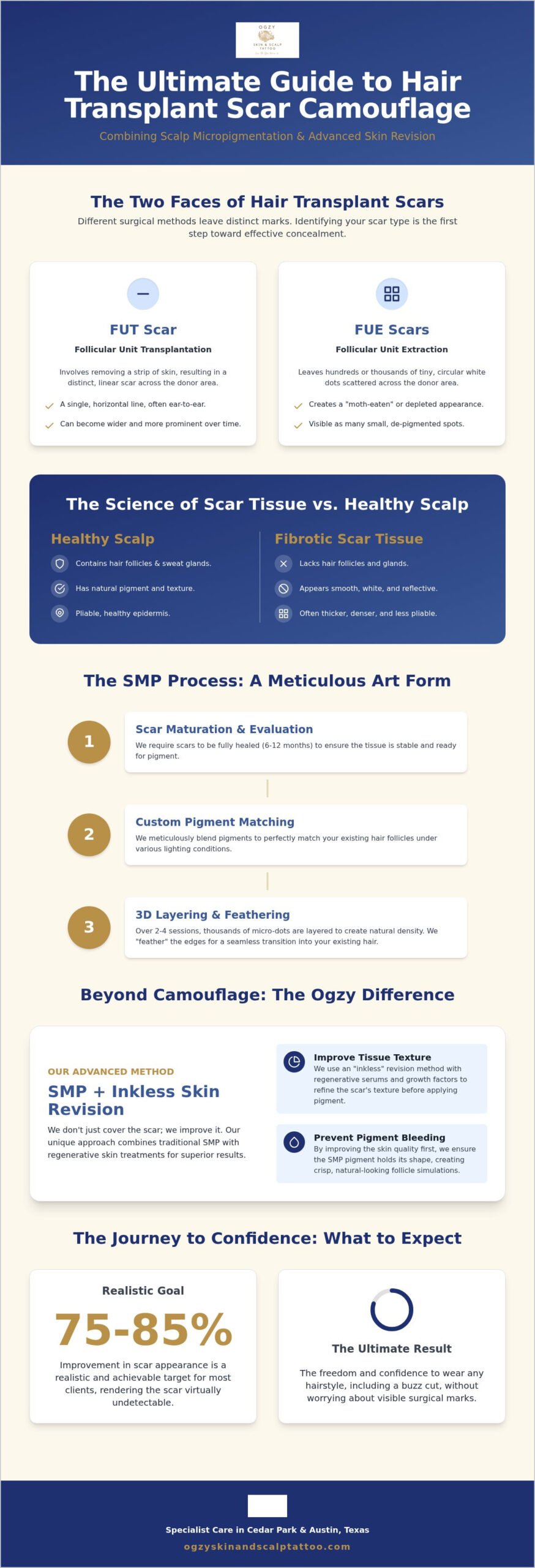
The two primary surgical methods leave very different imprints on the scalp. Follicular Unit Extraction (FUE) is often marketed as a scarless option, yet it actually leaves hundreds or thousands of tiny, circular white dots. When these extractions are dense, they create a “moth-eaten” or depleted appearance in the donor zone. Follicular Unit Transplantation (FUT), on the other hand, involves removing a strip of skin, resulting in a distinct linear scar. Both types can become glaringly obvious the moment you attempt a modern, short hairstyle.
Why Scar Tissue is Different from Scalp Skin
Scar tissue isn’t just skin that’s been damaged; it’s a completely different biological structure. Unlike healthy scalp tissue, fibrotic scar tissue lacks hair follicles and sweat glands. This absence of natural features makes the area look smooth and reflective, creating a sharp “white” contrast against the surrounding pigmented skin. The density and toughness of this tissue are also higher. It’s often thicker and less pliable than the epidermis you were born with, which can make traditional camouflage difficult without specialized expertise in smp for hair transplant scars.
- FUE Scars: These appear as small, circular white dots scattered across the donor area, often causing a “thinned out” look.
- FUT Scars: These manifest as a single, horizontal line that can stretch from ear to ear, often becoming wider over time.
The Psychological Impact of Visible Surgical Marks
There’s a profound irony in undergoing hair restoration only to feel forced to hide the back of your head. Many of our clients in the Cedar Park and Austin area express a sense of regret or anxiety, feeling as though they’ve merely traded one insecurity for another. From our perspective as a “Refined Restorer,” we see this work as more than just an aesthetic fix. It’s about emotional healing. Reclaiming your self-assurance means being able to walk into a room without worrying about “surgical tracks” catching the light. True restoration happens when the physical reminders of the surgery disappear, allowing you to focus on your new look rather than your past procedure. Utilizing smp for hair transplant scars is the final step in that journey toward complete confidence.
How SMP for Hair Transplant Scars Works
Concealing a surgical mark isn’t as simple as applying a flat layer of color. It’s a meticulous, multi-layered process that transforms rigid tissue into a soft, undetectable shadow. The journey begins with an evaluation of scar maturity. We typically require scars to be fully healed, which generally takes 6 to 12 months, before we begin. This patience ensures the tissue has stabilized and can safely receive pigment without unexpected shifting or irritation. When you’re ready, Combining SMP and Hair Transplantation techniques allows us to finish what the surgeon started, creating a look of effortless density.
Once the skin is ready, we focus on custom pigment matching. We don’t use a “one-size-fits-all” black or brown; instead, we blend tones to match your existing hair follicles under various lighting conditions. Our specialists then use a pointillistic deposit method, placing thousands of micro-dots to mimic natural hair density. This isn’t a single-day fix. True smp for hair transplant scars requires layering over 2 to 4 sessions. This gradual buildup ensures the pigment settles naturally and stays exactly where it’s intended, preventing the “tattooed” look that many fear.
Blending and Feathering Techniques
The secret to a truly invisible scar lies in the transition. An artist must “feather” the pigment, extending the follicle simulation beyond the scar’s edges and into the surrounding healthy hair. This technique is vital for breaking up the harsh, geometric lines of a linear FUT scar. For those dealing with FUE dot patterns, we use specialized scalp micropigmentation Cedar Park TX methods to fill the “empty” spaces, restoring the appearance of a uniform donor area. If you’re curious about how this might look on your own scalp, discussing your scar revision options with a specialist is the best first step.
Managing Pigment Retention in Fibrotic Tissue
Scar tissue is notoriously unpredictable. Because it’s denser and less porous than standard skin, it may require more sessions to achieve the desired saturation. We take a conservative approach, using shallow needle depth to avoid “blowouts,” which happen when pigment spreads too deeply into the dermis. By building density slowly and respecting the unique biology of your scalp, we ensure the results are refined and long-lasting. We don’t just want to hide the scar; we want to integrate it so seamlessly that you forget it was ever there.
The Ogzy Difference: Ink vs. No-Ink Scar Revision
While traditional scalp micropigmentation is a masterclass in visual deception, some scars require more than just artistic camouflage. If your surgical site feels raised, rigid, or indented, simply applying pigment might not achieve the seamless integration you desire. This is where we differentiate ourselves as specialists. We offer both traditional smp for hair transplant scars and innovative “inkless” revision techniques. By addressing the skin’s physical health, we ensure the final result looks and feels like natural scalp tissue.
Our approach to microneedling for scars in Cedar Park focuses on triggering the body’s innate healing response. Instead of hiding the scar with ink, we use precise micro-channels to break down fibrotic tissue and stimulate new collagen production. This process is often documented in clinical studies, such as research on Scalp Micropigmentation for Hair and Scalp Deformities, which highlights how specialized treatments can address complex surgical outcomes. While pigment provides immediate visual camouflage, no-ink revision offers long-term textural improvement.
Medical-Grade Stem Cells and Growth Factors
We don’t just stop at mechanical stimulation. During the revision process, we infuse the area with medical-grade stem cells and growth factors designed to soften tough, raised surgical scars. These potent serums work at a cellular level to reorganize the collagen fibers, which helps restore a more natural skin tone to the area. Regenerative serums improve SMP pigment retention by creating a healthier, more receptive skin environment for future artistic work. This focus on skin health is what allows us to achieve results that look indistinguishable from the surrounding scalp.
When to Choose Pigment Camouflage vs. Regenerative Revision
Choosing the right path depends on the unique characteristics of your scar. For flat, white scars that have already matured and leveled with the surrounding skin, pigment camouflage is often the most effective way to restore the appearance of hair density. However, for scars that are raised, red, or noticeably indented, we recommend starting with regenerative revision. The “Ogzy Method” often combines these two worlds. We first refine the texture and health of the skin through regenerative sessions before applying the final layers of smp for hair transplant scars for the ultimate seamless look. This dual-action strategy ensures your confidence is built on a foundation of healthy, restored skin.
The Treatment Journey: From Consultation to Recovery
Every successful restoration begins with a shared vision. During your initial consultation in Cedar Park, we focus on setting realistic, transparent goals for your scalp’s transformation. For most clients seeking smp for hair transplant scars, we aim for a 75-85% improvement in the scar’s visibility. This target ensures that while the skin may never return to its pre-surgical state, the surgical mark becomes undetectable to the naked eye under normal lighting conditions. We view this phase as a partnership, where your comfort and long-term satisfaction are the primary measures of our success.
Preparation for your procedure is simple but vital for achieving the best possible results. We ask that you avoid blood thinners and direct sun exposure for at least 48 hours before your appointment. Healthy, calm skin is the most receptive canvas for our specialized pigments. When you arrive for your session, you’ll experience a bedside manner that balances clinical authority with a warm, reassuring presence. We understand the vulnerability that comes with scar revision, and our goal is to make the experience as restorative for your spirit as it is for your scalp.
What to Expect During the Healing Phase
Immediately following the procedure, the treated area will likely show some redness, mimicking the appearance of a minor sunburn. This is a natural part of the skin’s regenerative process and typically subsides within 24 to 48 hours. Over the first month, you’ll observe the pigment “settling” as it interacts with your skin’s natural chemistry and softens into its final, realistic shade. While the first session establishes the necessary foundation, the second session is where the magic of camouflage truly happens. This is when we refine the artistic details and ensure the smp for hair transplant scars perfectly mirrors your natural hair density.
Long-term Maintenance of Scar SMP
Your restoration is designed to be durable, typically maintaining its refined appearance for 3 to 6 years before a brief touch-up is required. The longevity of your results depends heavily on your commitment to aftercare, particularly during the critical first 7 days. Protecting your scalp from the intense Texas sun is your most effective tool for keeping the pigment crisp and preventing premature fading. For broader insights into maintaining skin health and protecting your investment, you can explore our specialized guide on laser tattoo removal aftercare in Cedar Park.
If you’re ready to leave the frustration of surgical marks behind and reclaim your self-assurance, book your personalized consultation at Ogzy Skin & Scalp Tattoo today.
Choosing a Scar Revision Specialist in Central Texas
Selecting the right professional for smp for hair transplant scars is a decision that directly impacts your daily peace of mind. While national chains might offer corporate consistency, they often lack the nuanced, artistic touch required for complex surgical tissue. Local expertise in Cedar Park, Austin, and Round Rock matters because scar revision isn’t a “one and done” event. It requires a specialist who is available for meticulous follow-up care and who understands how the unique Texas climate can affect skin healing and pigment longevity.
You aren’t just looking for a technician; you’re looking for a “Refined Restorer.” This is a specialist who balances a deep clinical understanding of skin biology with the aesthetic eye of a paramedical artist. Beware of “bargain” SMP offers that seem too good to be true. Scar tissue is significantly more complex than healthy scalp skin; it’s prone to pigment migration and unpredictable retention. Correcting a botched scar cover is much more difficult and costly than doing it right the first time. Viewing your hair loss confidence solution as a personalized journey ensures you choose a partner who values your long-term self-assurance over a quick transaction.
Corrective Work: When Previous SMP Fails
Sometimes, the path to restoration begins with undoing the past. If you’ve had a poor experience elsewhere that resulted in “ink bleeds” or unnatural colors, we utilize advanced laser technology to gently fade poor previous attempts. When we start a new revision plan for smp for hair transplant scars, we follow a “less is more” philosophy. We prefer to build density gradually, ensuring the tissue remains healthy and the follicle simulation stays crisp. Ogzy has become the trusted destination for those who need their previous SMP fixed by a dedicated specialist.
Your Next Steps Toward Restored Confidence
The transformative power of a hidden scar is often life-changing. It’s the freedom to stand in a checkout line or sit in a brightly lit office without wondering if someone is staring at your surgical tracks. We invite you to take the next step toward that freedom. Our clinic is conveniently located for clients in Leander, Georgetown, and the greater Austin area. We provide private, empathetic consultations where we can assess your unique scar and design a personalized path toward renewal. Your confidence is waiting to be restored, and we’re here to guide you through every step of the process.
Step Into a Future Without Surgical Marks
Your journey toward a fuller head of hair shouldn’t end with the frustration of visible surgical tracks. We’ve explored how smp for hair transplant scars provides the final bridge between surgical restoration and the freedom to wear your hair as short as you’d like. By integrating artistic follicle simulation with medical-grade stem cell revision, we can transform the rigid texture of FUE and FUT scars into a soft, undetectable shadow. This isn’t just about hiding a mark; it’s about reclaiming the self-assurance you sought from the very beginning.
At Ogzy Skin & Scalp Tattoo, we specialize in this dual-action approach, serving clients throughout Cedar Park and the Greater Austin area with a commitment to artistic integrity. Whether you’re dealing with depleted FUE donor zones or a traditional linear strip, our expert revision techniques offer a path to renewal that looks and feels natural. You’ve already done the hard work of restoration; let us help you finish the masterpiece with the precision and care you deserve.
Book Your Private Scar Revision Consultation at Ogzy Skin & Scalp Tattoo Today and take the final step in your transformation. We’re here to ensure your results are seamless, your skin is healthy, and your confidence is fully restored.
Frequently Asked Questions
How many sessions will I need to hide my hair transplant scar?
Most clients require 2 to 4 sessions to achieve a truly seamless result. The initial visit establishes the necessary foundation, while subsequent sessions allow us to layer pigment and adjust for how your unique fibrotic tissue retains the ink. Because scar tissue is denser than regular skin, this gradual buildup is essential to prevent pigment spreading and ensure the camouflage looks indistinguishable from natural hair.
Is SMP for scars painful compared to the original hair transplant?
You’ll find the process significantly more comfortable than a surgical procedure. Since we only penetrate the upper layers of the dermis, the sensation is often described as a light, rhythmic scratching or localized pressure. We prioritize your comfort throughout the appointment. Because there’s no surgical cutting or heavy anesthesia required, the physical stress on your body is minimal compared to your original transplant experience.
Can SMP hide both FUE (dots) and FUT (strip) scars effectively?
Yes, smp for hair transplant scars is highly effective for both FUE and FUT patterns. For FUE, we fill the small white dots to restore the appearance of uniform donor density across the back of the head. For FUT, we use specialized feathering techniques to break up the harsh, linear edge of the strip scar, blending it into the surrounding hair so the eye no longer tracks the surgical line.
What happens if I decide to grow my hair out later?
If you choose to grow your hair longer, the treatment simply remains as a subtle, helpful shadow on the scalp. It won’t be visible through thick hair, but it provides the added benefit of making your donor area look denser if you experience any thinning. The treatment is designed to be versatile, giving you the freedom to switch between a buzz cut and longer styles without any visible evidence of the procedure.
How much does scalp micropigmentation for scar camouflage cost?
The investment for scar camouflage depends on the total surface area and the complexity of the tissue. Since every surgical mark is unique, we provide personalized quotes during your private consultation. Factors that influence the total include the number of sessions required to achieve a 75-85% improvement and whether you need regenerative revision alongside traditional pigment to address textural irregularities or raised tissue.
Can I get SMP if my scar is still red or raised?
We recommend addressing the texture of red or raised scars before applying any pigment. If a scar is still active or hypertrophic, we often start with regenerative treatments like microneedling and medical-grade stem cells. This process flattens the tissue and normalizes the skin tone, creating a much better canvas for smp for hair transplant scars and ensuring the final result is smooth, flat, and realistic.
Will the pigment change color or turn blue over time?
When performed with specialized, high-quality pigments, the color won’t turn blue or green. We use carbon-based pigments specifically formulated for the scalp that fade into a lighter version of the original shade over 3 to 6 years. This ensures that as the treatment naturally ages, it maintains its integrity and continues to look like a natural hair follicle rather than a traditional decorative tattoo.
Is there any downtime after a scar revision session?
There’s virtually no traditional downtime, and most clients return to their normal work routine the following day. You’ll likely experience some minor redness, similar to a light sunburn, for about 24 to 48 hours. It’s vital to follow specific aftercare instructions, such as avoiding heavy sweating, swimming, or direct sun exposure for the first 7 days to protect the settling pigment and ensure long-lasting results.