
Light hair doesn’t rule out a natural-looking result: SMP for light hair in Austin can be tailored with lighter pigment, then built gradually to suit the scalp and desired density. Lighter-skinned clients may need an extra session, and the treated area can look redder or more irritated at first before it settles. The key is choosing a subtle approach that complements both hair color and skin tone.
It’s understandable to wonder whether scalp pigment will look too dark or defined against fair hair and skin. Careful pigment selection and a gradual approach help create a softer result. The healed appearance can also differ from what you see immediately after treatment.
This guide explains how pigment and density are planned for light hair, how healing can affect the appearance, and what to consider when comparing SMP options in Austin. You’ll also learn how the treatment works and how to approach your next step with realistic expectations.
Key Takeaways
- Light hair can be approached with softer pigment and a design shaped around the contrast between hair and scalp.
- Building pigment gradually helps refine darkness and density instead of creating a heavy look all at once.
- Blonde and red-haired clients can consider follicle simulation; a subtle treatment is often preferred for fair coloring.
- Plan for healed results to differ from the immediate appearance, since lighter skin can look redder or more irritated at first.
- An extra session may be needed to complete treatment for lighter-skinned clients, so density and healing should guide the process.
Austin SMP clinics and artists
Choosing an Austin clinic for light-hair SMP starts with reviewing its design approach. Look for examples featuring fair skin and blonde, red, or gray hair. These can help you assess whether the follicle impressions look soft against low-contrast coloring. A useful portfolio includes healed results, not just fresh treatments, since pigment can look more pronounced at first. Compare examples with coloring similar to yours, and consider whether the hairline and density look natural for each person.
Location matters for practical reasons, especially when treatment is built over multiple visits. Consider how easily you can reach the Austin clinic from home or work, and whether the route suits your schedule. Austin traffic can make a nearby appointment more manageable than a long cross-town trip. The clinic’s address should also be clear before you plan travel. Don’t assume a business serves every Austin neighborhood simply because it appears in a local search.
During a consultation, discuss pigment shade, dot size, pressure, and the planned hairline. Lighter-skinned clients may need lighter pressure and smaller dots. These adjustments help keep the follicle pattern delicate rather than overly defined. Ask how the artist adapts the design where natural hair meets thinning areas. For example, a soft transition can avoid a sharp boundary between treated and untreated scalp. A gradual plan also allows the developing density to guide later refinements.
What are the risks and side effects of SMP, especially for fair skin? Fair skin can look redder and more irritated immediately after treatment, and it may need extra settling time. Pigment that appears too dark or dots that stand out can create visible imperfections, which is why lighter pigment and gradual building matter.
What aftercare and sun-protection rules apply after SMP? Follow the clinic’s written aftercare instructions, keep the treated scalp clean as directed, and protect it from direct sun while it settles. Avoid picking or rubbing the area, and follow the practitioner’s guidance on when to resume your usual scalp care.
Ask for a clear explanation of how the clinic handles healing between visits. Lighter-skinned clients may require an extra session to complete treatment. The timing and density should respond to how pigment settles, rather than forcing a darker result immediately. Bring reference photos that show your preferred hairline and everyday appearance. Use them to discuss what feels realistic for your hair color, scalp contrast, and existing coverage.
For SMP for light hair in Austin, compare examples of light hair, healed photographs, and design details. Ask how pigment and placement will be tailored to your coloring and desired density. If you’re travelling from Cedar Park, Leander, Round Rock, or Georgetown, factor the Austin location into planning any follow-up visits. These practical and aesthetic details can help you understand the process before treatment begins.
Gradually building pigment darkness and density
For light hair, SMP is planned around a gradual build, not a single application aimed at maximum darkness. Pigment shade and placement work together to create visual balance along the hairline and in thinning areas.
Density Coverage for Thinning Hair
SMP uses precise pigment deposits to replicate natural hair follicles in areas where the scalp shows through thinning hair. This can make the spaces between existing hairs less noticeable, creating the appearance of fuller coverage without adding hair. For example, a plan may focus on a visible part or crown rather than applying equal density across the scalp.
Consider how the design will blend with your existing hair. A soft transition at the hairline can prevent a dense-looking border beside finer growth. Coverage also depends on the contrast between hair and scalp, the size of the thinning area, and your preferred density. These details guide pigment placement and the visual depth of the result.
Session Planning for Light Hair
There isn’t one fixed session count for every light-haired client. The treated area, desired coverage, skin tone, and how pigment settles all influence the plan; lighter-skinned clients may need an extra session to complete treatment. Progress is assessed as the work develops, so the practitioner can refine density rather than making the first pass too dark.
Think of each appointment as an opportunity to assess the developing pattern. If the initial application looks subtle after the scalp settles, the design can be built up in selected areas. This approach can be helpful around a pale hairline, where abrupt darkness may stand out. The aim is a connected impression with a soft edge.
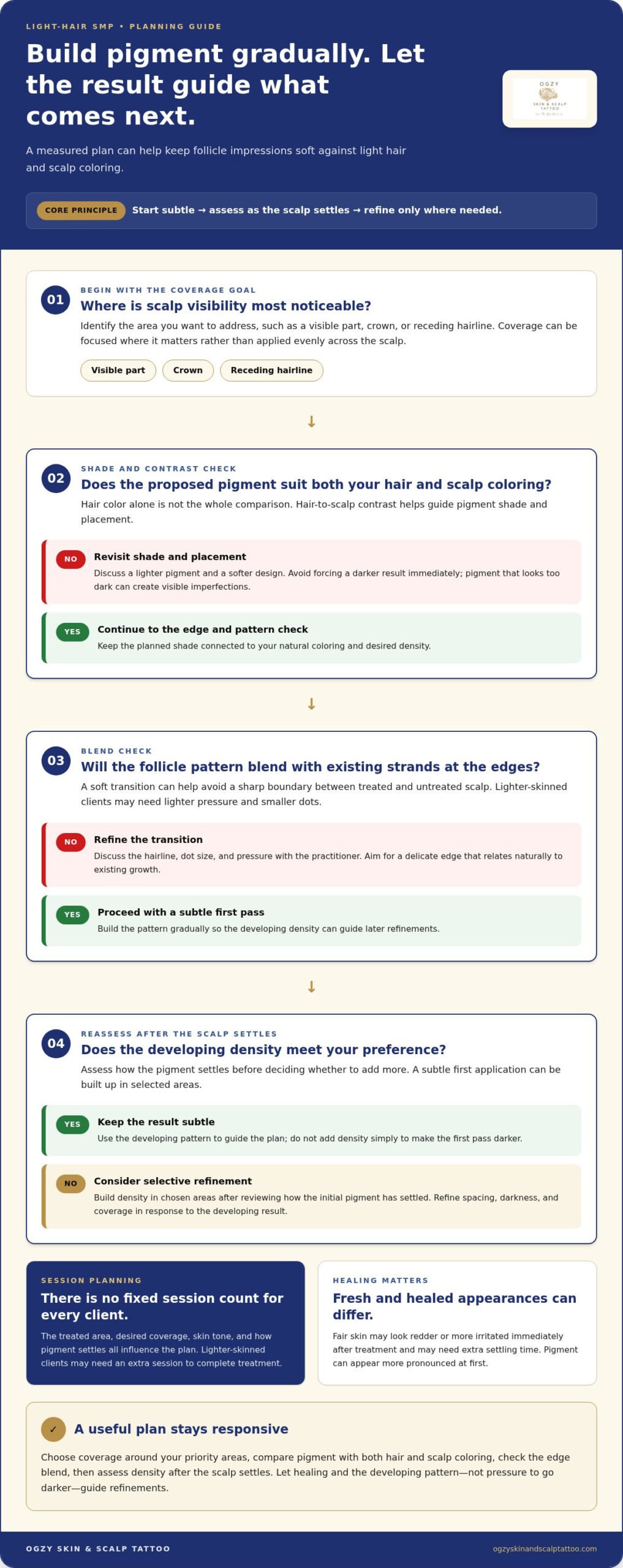
For an even progression, discuss the intended shade and coverage before treatment begins. Then consider these points as the plan takes shape:
- Identify the areas where scalp visibility concerns you most, such as a part, crown, or receding hairline.
- Compare the proposed pigment with your natural hair and scalp contrast, not hair color alone.
- Review how the pattern will blend into existing strands at the edges.
- Assess density after each stage before adding more pigment.
Gradual layering helps reduce the risk of visible imperfections on lighter skin. It also gives the practitioner room to refine spacing, darkness, and coverage in response to the developing result. A uniform, heavily filled pattern may not suit fine blonde or red hair; measured placement can preserve a more delicate appearance.
Hair loss can continue or change, so the design should account for the areas treated and the surrounding growth. A focused plan for a thinning crown differs from one addressing a broad, receding hairline. To understand how a tailored density treatment approach can address visible thinning, consider how pigment and existing hair will work together.
Scalp Micropigmentation doesn’t work for blonde / red haired clients?
SMP can create follicle-like impressions for blonde and red-haired clients. During a consultation, ask how pigment shade, impression size, placement, and the treatment plan will be adapted to your hair and scalp.
Pigment Application and Follicle Simulation
Scalp micropigmentation uses precision pigment deposits to replicate natural hair follicles. For fair-haired clients, the aim is a pattern that complements existing strands rather than forming a stark, uniform field. Consider impression spacing, transitions at the edges, and how the design follows the natural growth direction.
For example, treating a thinning part requires a different layout from shaping a receding hairline. Ask how placement will be adapted for each area and blended with remaining hair. This helps you understand the visual design before treatment begins.
Matching Pigment to Follicle Size
The average hair follicle on a Caucasian scalp is usually between 60 and 100 μm. This scale helps explain why follicle simulation depends on controlled, fine impressions rather than broad marks. For light hair, a softer treatment can keep the replicated pattern from overpowering nearby strands.
Ask how the practitioner will account for your hair color, scalp tone, and coverage goals. A pale scalp with fine blonde hair presents a different contrast from red hair with denser strands. The pattern should read as individual follicle impressions, not a solid block of color.
Consultation Topics for Light Hair
Use the consultation to clarify the design and how it will develop. Ask how pigment will suit your hair and skin contrast, how the hairline will be planned, and how density will vary across the crown or part. Review healed examples with coloring similar to yours.
Also discuss how the result will be assessed before the design is adjusted. Ask what the practitioner looks for in the treated pattern and how placement can be adapted if the initial appearance seems too prominent. Clear answers help you understand the plan as well as the intended look.
Bring a photograph of your usual hairstyle and parting to make the discussion specific. A side part, for example, may expose a different area than hair worn forward. Point out where thinning is most noticeable, then explain whether you prefer a subtle fill or a more defined hairline. This connects the treatment plan to your everyday appearance.
Light coloring does not rule out SMP, but it calls for careful coordination. Compare the proposed follicle pattern with your natural strands, scalp tone, and preferred styling. A softer design can suit blonde, red, and other fair hair. The planned density depends on the area being treated and the look you want.
Scalp micropigmentation in Austin
In Austin, SMP can create a defined hairline on pale skin, but the design needs to suit your coloring. The treatment uses precision pigment deposits to replicate natural hair follicles. For light hair, placement, pigment tone, and contrast all shape how the result looks.
A practical first step is mapping the treatment area. The practitioner considers your existing hairline, thinning pattern, and preferred level of definition. A softened edge, for example, can blend with fine blonde hair, while a sharper outline may look more prominent against fair skin. The design should account for your scalp as well as your hair.
During treatment, pigment is placed in small impressions across the planned area. Austin providers use single-use tools, according to the available market information. Ask how the practitioner will adapt pressure and dot scale for your skin and hair. A deliberate pattern helps distinguish individual follicle impressions from a solid-looking patch.
Light coloring can make contrast especially noticeable. A defined hairline remains possible on pale skin, but it calls for a different approach than treatment for darker skin. The design may use a softer appearance and careful transitions. Review the proposed outline before pigment application, including how it will connect with existing hair at the temples and front.
Scalp micropigmentation and facial micropigmentation address different areas and visual goals. Scalp treatment replicates the appearance of follicles across thinning or bald areas; facial procedures focus on features of the face. If your concern is a receding hairline or visible scalp, make sure the discussion centers on scalp placement, pigment, and the intended density.
Before an Austin appointment, organize the details that can guide a useful treatment plan:
- Bring a clear example of your usual hairstyle and hairline.
- Point out where thinning or hair loss is most noticeable.
- Discuss how a softer outline could work with pale skin and light hair.
- Review the planned pigment placement before treatment begins.
These steps make the procedure easier to understand before the first application. They also help clarify how the design will look from the front, sides, and crown. A natural-looking result depends on the relationship between those areas, not only the front hairline. In Austin, choosing a plan for your actual hair pattern helps keep the treatment focused and visually cohesive.
Why healed results may look different
Fresh and healed SMP are different stages of the process. On lighter skin, redness and irritation may be more noticeable immediately after treatment. Assess the appearance after the scalp has had time to settle.
Changes in Healed Appearance
Right after treatment, fair skin may look redder or more irritated. As the scalp settles, that temporary appearance changes, and the pigment may look softer than it did initially. Compare the treated area under consistent lighting rather than relying on a close-up taken immediately after an appointment.
Ask to see healed examples with skin and hair coloring similar to yours. Look at impression definition, hairline edges, and how the pigment blends beside existing strands. These details offer a more useful comparison than a fresh result alone.
SMP Result Longevity
The appearance of SMP can change over time. Pigment shade, placement, skin characteristics, and sun exposure all influence how crisp the impressions look. A subtle pattern, for example, may remain less noticeable than a darker, more defined design as its appearance evolves.
Discuss how the treatment plan accounts for your preferred density and long-term look. Review healed results and ask what changes to look for, such as softer edges or reduced contrast. This gives you a clearer basis for understanding how the appearance may evolve.
Client reviews can add context, but read them alongside photographs. Written accounts may describe the treatment experience, while photographs show visual details. Check whether images show fresh or healed results, and compare similar angles, lighting, hair length, and scalp coverage.
Bright overhead lighting, for instance, can make scalp contrast appear stronger than softer lighting. A cropped hairline photo may also hide how the design connects with the temples. Look for views of the front, sides, and crown to assess the overall pattern.
Use this simple review process:
- Separate fresh-treatment photographs from healed-result photographs.
- Compare hair color, skin tone, and thinning pattern with your own.
- Notice whether the hairline looks balanced from more than one angle.
- Read reviews for details about communication and the healing journey.
Sun exposure can influence how the scalp and pigment appear, so include everyday outdoor habits in your discussion. A person who spends time outside may need a different maintenance conversation than someone who usually wears a hat. Follow the aftercare guidance provided for your treatment, especially while the scalp settles.
Understanding healed appearance helps set a realistic visual reference before choosing density. If you’re ready to discuss your goals and the way SMP may suit your hair and scalp, explore a personalized SMP treatment plan.
Ogzy Skin & Scalp Tattoo: Scar and Stretch Mark Revision
Ogzy Skin & Scalp Tattoo offers Scalp Micropigmentation (SMP) for people seeking to address the appearance of thinning hair, baldness, or a receding hairline. If your priority is fuller-looking coverage, a personalized SMP plan can account for your hair color, scalp tone, and preferred density. If your goal is to support hair regrowth rather than create follicle-like impressions, Hair Regrowth Treatment is another option. Scar & Stretch Mark Revision is a separate service for people looking to improve the appearance of scars or stretch marks.
Choosing a next step starts with clarifying what you want to change: scalp appearance, hair fullness, or scar visibility. Visit Ogzy Skin & Scalp Tattoo to discuss which approach fits your goals.
Take the Next Step With a Clear Vision
Choosing SMP for light hair in Austin is a personal decision shaped by how you want to look and feel in everyday life. Before moving forward, identify the change that matters most, whether it’s a more defined hairline, fuller-looking coverage, or a softer overall impression. Sharing that priority can make the next conversation specific and considered.
Ogzy Skin & Scalp Tattoo offers Scalp Micropigmentation (SMP), Microneedling, and Scar and Stretch Mark Revision for different appearance-related goals. If you’re ready to discuss scalp micropigmentation or explore an approach suited to your priorities, contact Ogzy Skin & Scalp Tattoo. A thoughtful conversation can help you move ahead with greater clarity and confidence.
Frequently Asked Questions
Considering your SMP options in Austin?
Start by deciding what you want SMP to address: visible scalp, a receding hairline, or the overall appearance of density. SMP for light hair in Austin can be planned around your natural coloring and preferred definition. Someone with fine blonde hair, for example, may prioritize a softer hairline, while someone with a thinning crown may focus on coverage. Your goal gives the design conversation a clear starting point.
Which Austin clinics offer scalp micropigmentation (SMP) for light or blonde hair?
Ogzy Skin & Scalp Tattoo offers Scalp Micropigmentation (SMP) in Austin. Its local service area also includes Cedar Park, Leander, Round Rock, and Georgetown. For light or blonde hair, discuss how pigment shade and scalp tone relate to the look you want. Bring a clear photo of your usual hairstyle so the treatment plan can address the areas you notice most.
Can SMP look natural on blond, red, or gray hair?
Yes, SMP can be designed for blonde, red, and gray hair. A natural-looking result depends on coordinating the follicle pattern with your hair and scalp coloring, rather than matching hair color alone. Gray hair with a pale scalp, for example, may call for a different visual balance than red hair with stronger contrast. Review healed examples with similar coloring to assess how the design blends.
What pigment shades and techniques work best for light hair and fair skin?
For fair skin and light hair, a softer design can be a useful starting point. The practitioner can tailor pigment placement and density to the area. A subtle transition at the temples, for instance, may look more cohesive than a sharply outlined hairline. Discuss how the follicle pattern will complement your scalp tone and connect with existing hair.
How much does SMP cost in Austin, and what affects the price?
The extent of the treatment area and the design’s complexity affect the plan. SMP requires a 25% deposit at booking, with the balance due at the first session. These figures apply to SMP only. Ask for a quote based on the areas you want addressed and your intended density.
What should I look for when comparing Austin SMP providers and portfolios?
Compare healed portfolio images, not only freshly treated results. Look for clients with coloring and hair patterns similar to yours, then assess the hairline from several angles and how impressions blend with existing hair. Also consider the consultation process and booking policies.
How long does SMP last, and when do touch-ups become necessary?
SMP can soften gradually, so refinement may be considered if fading or changes in definition affect the appearance you want. Sun exposure, skin characteristics, pigment placement, and the original design can influence how the result looks over time. Rather than relying on a fixed schedule, compare the treated area with your preferred look. If the hairline or density no longer feels balanced, discuss whether an adjustment is appropriate.

Article by
Opal Z
Opal is the owner and practitioner behind OGZY Skin & Scalp Tattoo in Austin, Texas. With more than three years in business and a longtime background in the aesthetics industry, she specializes in corrective and restorative treatments designed to address concerns that traditional aesthetics often overlook.
Her work focuses on scar and stretch mark revision, scar camouflage, scalp micropigmentation (SMP), hair regrowth treatments, and laser tattoo and permanent makeup removal. Opal works with a wide range of skin tones and takes an individualized approach to every client, considering skin color, texture, scar characteristics, treatment history, and realistic long-term outcomes.
Through OGZY Skin & Scalp Tattoo, her goal is to combine artistry, aesthetics, and technical treatment knowledge to help clients feel more comfortable and confident in their skin.
Love the skin you’re in.