
The most successful scalp micropigmentation results aren’t actually finalized in the artist’s chair; they are carefully cultivated during the delicate, restorative days that follow your session. It is natural to feel a bit of trepidation when you notice the initial redness or the first signs of pigment darkening. You have made a significant investment in your self-confidence, and the fear of ruining those crisp, natural-looking follicles through a simple aftercare mistake is a weight many clients carry during their transformation journey.
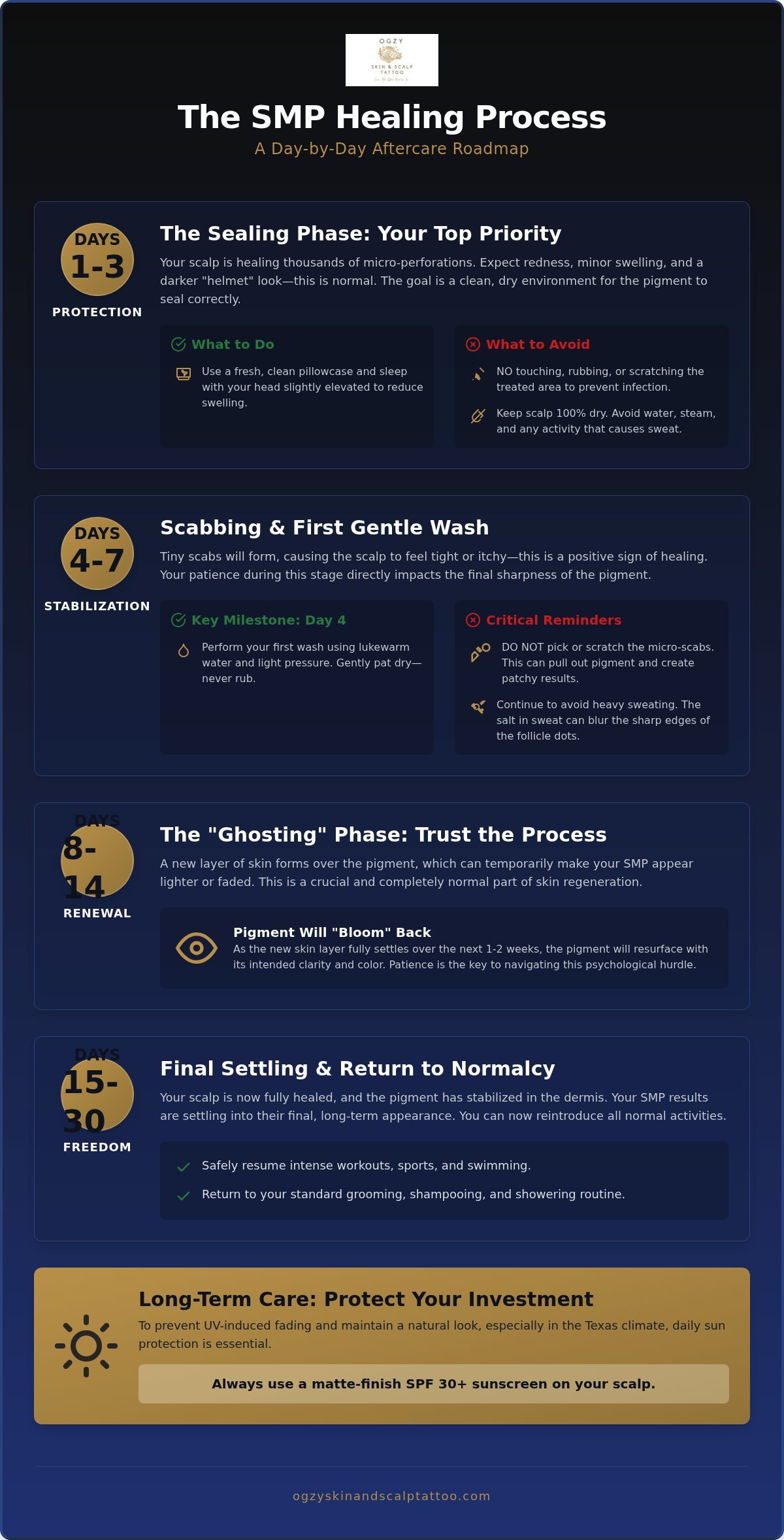
We believe that the path to a renewed self-image should be paved with clarity rather than confusion. By mastering the smp healing process day by day, you can navigate the inevitable stages of scabbing and pigment stabilization with absolute certainty. This guide offers a sophisticated roadmap through the next few weeks, detailing exactly when you can return to your normal routine and how to ensure your results remain as sharp and seamless as the day they were applied. We will explore the rhythmic transition from the first 24 hours of protection to the final, long-term settling of your refined new look.
Key Takeaways
- Understand why initial redness and a darker appearance are normal signs that your scalp is beginning the meticulous work of sealing your new follicle simulation.
- Learn the precise protocol for your first gentle rinse on day four, ensuring you maintain the integrity of the pigment without risking premature fading.
- Master the psychological hurdle of the ghosting phase between days 8 and 14, where a new layer of skin temporarily obscures your results before they resurface with clarity.
- Navigate the smp healing process day by day with a clear timeline for when to safely resume intense workouts, swimming, and your standard grooming routine.
- Discover how to protect your investment in the Texas climate by utilizing matte-finish SPF 30+ to prevent UV-induced fading and maintain a natural, shine-free look.
The First 24 Hours: Protecting Your Fresh Follicle Simulation
Your journey toward a restored hairline begins the moment you leave the studio. In these first few hours, your scalp will likely exhibit a noticeable flush of redness and minor swelling, which are completely standard physiological responses to the precision work performed. You might observe what some call a “helmet” effect; this is simply because the freshly deposited dots appear larger and more saturated than they will once they settle. This phase is known as the sealing phase, where your body works diligently to close the thousands of micro-perforations made during the procedure to protect the new pigment beneath the surface.
Maintaining a strict “no-touch” rule is your most important task during this initial window. Every time you touch your scalp, you introduce bacteria to a vulnerable area, significantly increasing the risk of localized infection or irritation that could compromise the final result. To support your body’s restorative efforts, focus on impeccable sleep hygiene:
- Always use a fresh, clean pillowcase to minimize bacterial exposure.
- Sleep with your head slightly elevated to encourage lymphatic drainage and reduce minor swelling.
- Avoid any friction or pressure on the treated area.
What is Normal on Day 1?
The pigment often looks significantly darker on the first day because the ink hasn’t fully settled into the dermis and is reacting to the air through oxidation. Healthy redness should look like a mild sunburn, whereas rare adverse reactions would involve excessive heat or spreading inflammation. Headwear choices are critical; your scalp needs to breathe to heal effectively. Avoid all fitted hats, beanies, or caps; if you must cover your head for your commute, choose only very loose, breathable headwear that does not make direct contact with the treated zones.
The “Dry Heal” Philosophy
Understanding the smp healing process day by day requires a commitment to the “dry heal” philosophy for at least the first 24 to 48 hours. Keeping the scalp 100% dry is a non-negotiable requirement for pigment retention. If water or moisture reaches the area too soon, it can cause a phenomenon known as “wicking,” where the liquid pulls the pigment out of the skin before it has a chance to stabilize. This means you must avoid steam from hot showers, which can open the pores, and stay away from high-heat environments or activities that induce even minor perspiration.
Days 2 to 7: The Scabbing and Stabilization Window
As you progress through the smp healing process day by day, the window between day two and day seven represents a critical period of physical stabilization. By day two or three, you’ll likely notice your scalp feeling somewhat tight or itchy. This sensation occurs as thousands of tiny, pinpoint scabs form over each simulated follicle. These micro-scabs act as your body’s natural bandages, shielding the pigment as it settles into the dermis. It is vital that you resist the urge to scratch or pick at these spots. Picking can prematurely lift the pigment, resulting in a patchy or uneven appearance that detracts from the refined craftsmanship of your session.
Adhering to FDA safety guidelines for cosmetic tattoos ensures you’re treating your scalp with the clinical care it deserves during this transition. If the itching becomes distracting, remember that this is a sign of healthy cellular repair. Navigating the smp healing process day by day requires a blend of discipline and trust in your body’s ability to heal. You are a partner in this restorative journey, and your patience during this week directly influences the crispness of your final look.
Your First Gentle Wash (Day 4-5)
Day four marks a significant milestone: your first rinse. You shouldn’t use traditional shampoos, especially those containing harsh sulfates, as they can irritate the healing tissue. Instead, use lukewarm water and very light pressure to gently cleanse the area. When you finish, never rub the scalp with a towel. Instead, pat the skin dry with a clean, lint-free cloth to maintain the integrity of the scabbing process. If your skin feels excessively parched, you may apply a thin layer of fragrance-free, medical-grade moisturizer to soothe the area.
The Danger of Premature Sweating
Living in the Austin or Cedar Park area means managing the Texas heat is a constant factor in your recovery. Sweat contains salt, which acts as a mild solvent. If you allow dripping sweat to sit on your scalp before day seven, it can blur the sharp edges of your follicle dots. We recommend a strict seven-day rule for athletes and gym-goers. While light walking in a climate-controlled environment is perfectly safe, you should avoid heavy cardio or outdoor activities until the scabs have naturally exfoliated. If you have questions about your specific activity level, our team at Ogzy Skin & Scalp Tattoo is always available to provide personalized guidance based on your unique healing rate.
The Ghosting Phase: Why Your SMP Seems to Disappear (Days 8–14)
Between days 8 and 14, many clients experience a sudden dip in confidence as their results seem to vanish into thin air. This is the notorious “Ghosting Phase,” a completely normal part of the smp healing process day by day. After the initial scabbing has naturally exfoliated, the pigment often appears dull, faded, or even entirely gone in certain patches. It’s often called the “Ugly Duckling” stage because the scalp can look uneven or unfinished, but this is simply a sign that your body is effectively protecting the new ink. You aren’t losing your investment; your skin is simply undergoing a necessary biological transition.
It’s vital to remember that scalp micropigmentation is a sophisticated layering process rather than a one-and-done tattoo. Your first session focuses on building a soft, natural foundation. The subsequent sessions are where we add the density, depth, and refinement that create a truly realistic look. Trusting the “refined restorer” approach of your specialist is key during this week. We anticipate this fading and use it as a guide to see how your skin specifically holds the pigment before we proceed with your next application.
The Science of the Epidermal Veil
This temporary disappearance happens because a fresh layer of epidermis is growing over the pigment. Think of it as a milky, translucent veil that obscures the crispness of the follicles beneath while the skin is still thick and healing. During this time, you must not attempt to “scrub off” the dull layer to see the ink better. Forcing exfoliation will damage the delicate tissue and could lead to permanent patchiness. For a deeper look at what to expect across your full treatment plan, our Scalp Micropigmentation Cedar Park TX guide provides detailed session expectations to keep you informed and at ease.
When to Contact Your Artist
While ghosting is expected, you should know how to differentiate it from genuine pigment migration. Normal ghosting is a uniform dullness, whereas migration looks like blurred, spreading smudges that lose their follicle shape. We recommend taking weekly progress photos in the same lighting. These shots are invaluable for your artist to review during your follow-up consultation. Use this time to prepare your questions for the second “fill-in” session. If you notice any unusual discharge or persistent heat, reach out immediately, but for standard fading, stay patient and watch as the smp healing process day by day reveals your transformation.
Days 15–30: Pigment Stabilization and Scalp Health
As you enter the final stretch of the first month, the anxiety of the ghosting phase begins to dissolve into genuine excitement. This period marks the “Return of the Follicle,” where the pigment starts to pop back through the surface with renewed clarity. Your skin has moved past the initial trauma and the thickening of the epidermal layer, allowing the simulated follicles to settle into their permanent positions. Tracking the smp healing process day by day reveals that by day 21, your scalp is no longer just a healing wound; it is a canvas where art and biology have successfully integrated.
Once you cross the three week threshold, you can finally reintroduce a more familiar grooming routine. You’re no longer restricted to gentle water rinses; you can resume using regular, mild shampoos to keep the area clean. It’s also the ideal time to begin very gentle exfoliation. Removing the lingering dead skin cells that accumulated during the earlier scabbing phases helps reveal the true crispness of the treatment, preventing the follicles from looking blurred or muted under a layer of dry skin.
Returning to the Gym and Pool
While you might feel ready to dive back into your old habits, your scalp still requires a level of sophisticated protection. We advise waiting at least 30 days before exposing your scalp to chlorinated pools or salt water, as these elements can be surprisingly abrasive to settling pigment. For those who enjoy high-intensity interval training (HIIT), ensure you continue to wipe away sweat promptly to prevent salt buildup. Maintaining the health of the underlying tissue is paramount; many of our clients find that incorporating microneedling for scalp health in the months following their SMP helps keep the skin supple and receptive to the pigment for years to come.
The Importance of Moisturizing
A common mistake during the latter half of the smp healing process day by day is neglecting hydration. When the scalp becomes overly dry, it takes on an “ashy” or greyish hue that can make even the most expert SMP look unnatural. To maintain the artistic integrity of your results, you must keep the skin hydrated with non-comedogenic oils or lotions. These products provide a healthy glow without clogging the pores or distorting the appearance of the simulated follicles. Establishing this 30 day maintenance habit ensures your transformation remains vibrant and seamless. If you’re ready to finalize your look or have questions about your specific progress, book your follow-up session with our specialists today to ensure your results are nothing short of perfection.
Optimizing Your SMP Results in the Texas Climate
Living in Central Texas presents unique environmental challenges that can influence the longevity of your new follicle simulation. While you have navigated the smp healing process day by day with meticulous care, the intense UV index in Austin and Cedar Park remains the primary enemy of pigment vibrancy. Ultraviolet rays act as a catalyst for pigment breakdown, potentially causing your refined results to fade or shift in tone if left unprotected. To maintain the artistic integrity of your treatment, we recommend integrating a high-quality, matte-finish SPF 30 or higher into your daily morning ritual. This prevents unwanted shine while acting as a restorative shield against the relentless Texas sun.
The Ogzy protocol is specifically tailored to our local climate, moving beyond generic aftercare to provide a sophisticated, long-term strategy for our clients. We view the first year of your transformation as a period of maturation. As the pigment settles and the skin naturally regenerates, you’ll observe the dots becoming even more indistinguishable from natural hair follicles. We suggest booking a 12 month refresh consultation to evaluate how your skin has responded to the environment and to ensure the density remains perfectly balanced. This proactive approach ensures your self-assurance stays as high as it was on the day of your final session.
Managing Sweat and Humidity
Central Texas summers are notoriously humid, which can lead to excessive moisture on the scalp even after the initial healing window has closed. For residents in Georgetown and Round Rock who enjoy an active outdoor lifestyle, we recommend a “blotting” technique rather than “wiping.” When you feel moisture accumulating, use a soft, lint-free cloth to gently press against the skin; this avoids the friction that can irritate the scalp or dull the pigment over time. If you’re spending the afternoon at a local park or lake, choose loose-fitting, ventilated headwear that provides shade without trapping heat against your healing tissue.
The Ogzy Partnership
At Ogzy Skin & Scalp Tattoo, we believe your transformation is a collaborative journey. Opal’s extensive background in hair regrowth without surgery deeply informs our understanding of the smp healing process day by day. This clinical expertise allows us to offer more than just a service; we provide a restorative experience that accounts for your scalp’s health at a cellular level. You aren’t just a client; you’re a partner in a process of renewal. Your new image is a powerful step toward reclaiming your identity, and we are dedicated to guiding you through every stage of this life-changing transition with precision and compassion.
Embracing Your Restored Confidence
Your transformation is a journey of precision and patience. By understanding the smp healing process day by day, you’ve moved from the initial intensity through the challenging ghosting phase to a state of crisp, natural stabilization. Protecting your investment from the Texas sun and maintaining skin hydration are the final steps in ensuring your new look remains seamless. At Ogzy Skin & Scalp Tattoo, we don’t just apply pigment; we restore self-assurance through a deeply empathetic lens. As Cedar Park’s specialist in realistic follicle simulation, Opal provides a restorative approach that includes customized healing plans for every skin type. This expertise ensures that your journey toward a renewed self-image is supported by a dedicated paramedical tattoo expert who understands the unique needs of your scalp.
Ready to reclaim your confidence? Book a consultation with Ogzy Skin & Scalp Tattoo today.
You’ve taken a powerful step toward a permanent solution for hair loss. We look forward to being your partner in this profound personal transformation and helping you maintain your refined results for years to come.
Frequently Asked Questions
How long does the SMP healing process take from start to finish?
The full smp healing process day by day generally takes four to six weeks to reach complete stabilization across all scheduled sessions. While the initial surface healing of the micro-perforations occurs within the first seven to ten days, the internal pigment settling and skin regeneration continue for a month. This methodical timeline ensures that the simulated follicles integrate seamlessly with your natural skin tone for a refined and permanent result.
Can I wear a hat immediately after my scalp micropigmentation session?
You should avoid wearing fitted hats for at least the first 48 hours to allow the scalp to breathe and prevent friction. If you must cover your head for your commute, choose only very loose, clean, and breathable headwear that does not touch the treated area. Tight caps can trap heat and bacteria, which may lead to irritation or compromise the delicate sealing phase of your new follicle simulation.
What happens if I accidentally sweat or get my head wet during the first 3 days?
If you accidentally moisten your scalp, gently blot the area immediately with a clean, lint-free cloth without rubbing. Moisture or sweat acts as a solvent that can wick the pigment out of the dermis before it stabilizes, potentially leading to blurred results. It is vital to stay in a cool environment during these first 72 hours to ensure the smp healing process day by day remains on track for crisp follicles.
When is it safe to shave my head after an SMP treatment?
You should wait at least ten days before using a razor or electric shaver on the treated area. Shaving too early can disrupt the scabbing process or irritate the newly formed skin layer that is protecting the pigment. By day ten, the surface has typically closed enough to handle gentle grooming, though we recommend using a clean shaver and avoiding any harsh aftershave products that contain high alcohol content.
Why does my scalp micropigmentation look patchy during the second week?
Patchiness during the second week is a standard part of the ghosting phase where new skin grows over the pigment. As the initial scabs exfoliate, a milky layer of epidermis temporarily obscures the ink, making it look dull or uneven. This is not a sign of failure; it is a biological transition. The pigment will resurface with greater clarity as the skin settles and matures over the following two weeks.
Is it normal for my scalp to be itchy during the healing phase?
Itching is a very common and healthy sign that your skin is repairing the micro-perforations from the procedure. This sensation usually peaks between days three and seven as the tiny scabs begin to form and dry out. You must resist the urge to scratch or pick at the area, as this can pull the pigment out prematurely. Using a fragrance-free, medical-grade moisturizer after day four can help soothe this discomfort.
What kind of shampoo should I use once I can wash my head?
Once you reach day four or five, you should use a gentle, sulfate-free shampoo or a mild baby wash. Avoid products with harsh chemicals, heavy fragrances, or exfoliating beads, as these can irritate the healing tissue. When washing, use lukewarm water and light pressure with your fingertips. Always pat the scalp dry with a clean towel instead of rubbing to maintain the artistic integrity of the simulated follicles.
How do I protect my SMP from fading in the Austin sun?
Protecting your results in the Central Texas climate requires a high-quality, matte-finish SPF 30+ sunscreen applied daily. UV rays are the primary cause of pigment fading and can alter the color of your SMP over time. We also recommend wearing loose-fitting hats during prolonged outdoor activities in Austin or Cedar Park. This proactive care ensures your investment remains sharp and vibrant despite the intense local sun exposure.