
You don’t have to love every mark on your skin to stop being self-conscious about scars. A gentle starting point is to notice the assumptions you attach to a scar and remember that it doesn’t define your worth or how others see you. Acne scars can be especially difficult when they catch your attention each time you look in the mirror.
If you’ve felt tempted to hide your skin, avoid certain clothes, or worry that people are focused on your scars, those feelings are real. You’re not being vain or overly sensitive. Body image and confidence can be shaped by what you’ve been through, and acceptance doesn’t mean pretending you’re happy with every part of your appearance.
This article explores how scars can affect confidence, self-image, and social interactions, with a closer look at acne scars and the self-consciousness they can bring. You’ll find ways to challenge harsh assumptions, feel more at ease in everyday situations, and consider scar revision if you’d like to soften a scar’s appearance.
Key Takeaways
- Notice when a scar-related assumption is shaping your choices, then consider what you actually know about other people’s reactions.
- Explore how scar revision may help soften a scar’s appearance, while keeping emotional acceptance separate from changing your skin.
- Practice small steps toward feeling more comfortable in social situations instead of waiting to feel completely confident.
- For acne scars, focus on realistic self-image and challenge the pressure to meet polished ideals of perfection.
- A personalized consultation can help you understand whether scar and stretch mark revision fits your goals.
How scar treatment may affect confidence and emotional well-being
Choosing scar treatment can involve appearance, memories, and confidence. A scar may bring surgery, an accident, or acne to mind whenever you see it. Treatment may help address a feature that concerns you, but it doesn’t determine your worth or define what the experience means. You can want a scar’s appearance to change while still accepting that it’s part of your story.
Medical approaches vary according to the scar and your goals. Options may include topical products, laser treatment, or scar revision surgery. Laser treatment uses focused light, while revision surgery removes scar tissue and creates a new incision. These approaches aren’t interchangeable. For example, someone concerned about an acne scar may have different questions from someone considering revision of a surgical scar. A qualified clinician can explain the purpose of each option and what the process involves.
Topical treatments may include silicone gels, corticosteroid creams, and vitamin E oil. These products have different uses, so don’t assume one is suitable for every scar. Before trying a topical option, write down what you hope to address, such as a raised area or visible color difference. Then discuss that goal with a qualified clinician. A specific question can make the conversation more useful than a broad request for a product recommendation.
Scar care may continue over time. One burns survivor described receiving aftercare for ten years following her accident. Her experience illustrates that scar-related care can extend well beyond one appointment, but it doesn’t set a timeline for anyone else. If treatment is part of your plan, consider how ongoing appointments, healing, and emotional support fit into your everyday life.
Before deciding on an approach, name your main concern. Is it the scar’s texture, color, visibility, or the emotions it brings up? Separating those concerns helps clarify what treatment might address and what may call for emotional support. For example, a procedure may target appearance, while talking with someone you trust may help you process memories linked to the scar.
Scar treatment costs in the United States vary with the method and scope of care, so there isn’t one standard amount. Insurance coverage also depends on your specific plan and treatment; contact your insurer to ask how it handles the care you’re considering.
To find local support in Austin, Cedar Park, Leander, Round Rock, or Georgetown, search a health plan directory or nearby health system for dermatologists and therapists. Look for clinicians whose profiles mention scar care, body image, or appearance-related distress. When scheduling, ask whether they work with concerns like avoiding photographs or feeling anxious about a visible scar.
How scars can affect body image and social interactions
A visible scar can change how you experience an ordinary setting. You might scan a room before choosing where to sit, or wonder whether people notice your arm before they hear what you say. That attention can shift from the conversation to monitoring your appearance. A beach invitation or sleeveless outfit may then feel like a decision about exposure, not simply comfort.
These reactions can influence body image over time. A scar may become the feature you check first in photographs, mirrors, or changing-room lights. Around 1 in 3 people with visible scars will experience depression or anxiety. That figure doesn’t define what you’ll feel, but it helps show that emotional strain can accompany visible scarring.
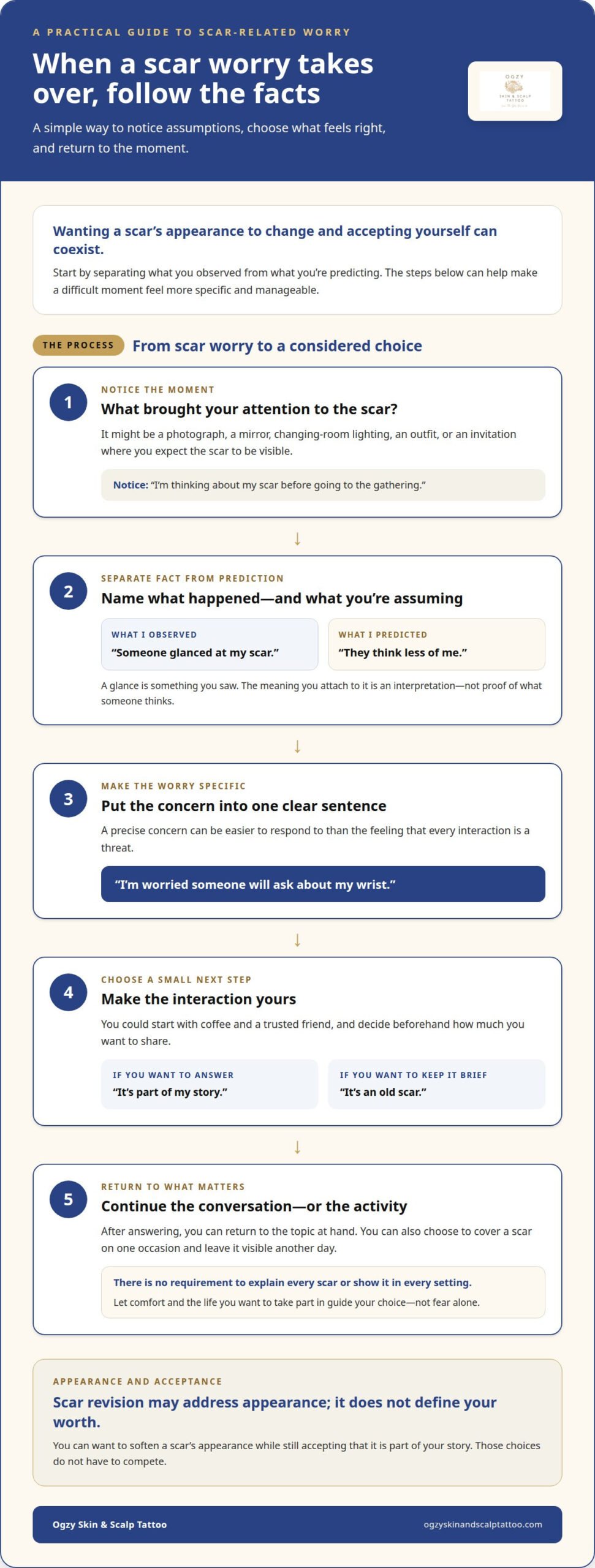
Social anxiety may lead to specific forms of avoidance. You might skip swimming because a scar is visible in a swimsuit, decline a gathering where short sleeves feel expected, or avoid intimacy because you fear rejection. Avoiding one event can bring brief relief, yet make the next invitation feel harder. Naming the exact concern, such as “I’m worried someone will ask about my wrist,” makes the fear more manageable than treating every interaction as a threat.
Isolation can grow gradually. A person who repeatedly turns down dinners, dates, or family photos may miss chances to feel included, even when friends aren’t focused on the scar. Try choosing one low-pressure activity, such as coffee with a trusted friend, and decide beforehand how much you want to share. You can answer a question with a simple “It’s part of my story,” or change the subject.
Scars can also affect close relationships. If you expect a partner to judge a mark, you might hide it or avoid touch without knowing how they’ll respond. Consider sharing what feels difficult in a private conversation. For example, “I feel exposed when this scar is visible” gives the other person context without requiring you to explain its history.
Clothing and makeup can offer options when you want extra coverage. A sleeve, scarf, or higher neckline can cover a chosen area; makeup formulated for skin camouflage may help conceal some visible marks. These are choices, not obligations, and comfort should guide what you wear.
Try separating what you observed from what you predicted. If someone glances at a scar, the observation is the glance; “they think less of me” is an interpretation. That distinction can interrupt a spiral before you cancel plans or withdraw from conversation. You can also prepare a short response, such as “It’s an old scar,” then return to the topic at hand.
Feeling at ease doesn’t require showing every scar or explaining it to everyone. You can cover a mark for one occasion and leave it visible another day. The useful measure is whether your choice supports the life you want, such as joining a pool day with friends or wearing clothes you enjoy, rather than letting fear make the decision.
Challenging assumptions about others’ reactions
A visible scar can make a glance feel like a judgment. If someone looks toward your cheek, you might immediately think, “They’re staring at my acne scars.” But the glance alone doesn’t tell you what they noticed or thought. They may be looking at your expression, listening to your words, or simply shifting their attention. Separating what happened from what you fear it means can make room for a more balanced interpretation.
Cognitive behavioral techniques can help you examine body-image thoughts. Write down the situation, your first thought, the evidence for it, and a more balanced alternative. For example, replace “Everyone will ask about my arm” with “I don’t know what anyone will ask, and I can choose how to respond.”
Try a small behavioral experiment instead of treating a prediction as fact. If you expect coworkers to focus on a scar, wear your usual short-sleeved shirt in a familiar setting and notice what happens. Record observable details, such as whether anyone comments, rather than guessing what a person’s expression means. The goal isn’t to prove nobody notices. It’s to learn whether your feared outcome matches the interaction.
Prepare a response for questions that feel personal. A short line such as “It’s a scar from an old injury” can close the subject, while “I’d rather not discuss it” sets a clear boundary. Practicing either sentence aloud before a family dinner or work event may make it easier to use. You can share more when you choose, not because someone asks.
Notice how comparison shapes your expectations. A retouched photo or carefully framed social media post doesn’t show everyone’s everyday skin. If scrolling leaves you judging your scar against polished images, take a break and choose a more grounded reference, such as how your body looks in ordinary daylight. This doesn’t dismiss your feelings; it helps you identify what is influencing them.
Depression or ongoing distress can make self-critical thoughts feel especially convincing. A practical check-in is to note when those thoughts arise, what happened just before, and whether they change your plans. For instance, if you cancel a visit after worrying about a scar, record the fear and what you needed in that moment. Patterns can reveal when additional emotional support could help.
Use curiosity rather than certainty when interpreting other people. Ask yourself, “What else could explain that pause?” or “What do I know, not assume, about this person’s reaction?” A friend who changes the subject may be distracted, not rejecting you. Repeating this check during real conversations can help you stay present instead of mentally rehearsing how others might judge your appearance.
Accepting physical and emotional scars
To feel less self-conscious about visible scars, choose one small action that feels manageable. You might wear a short-sleeved shirt at home, look at a photograph without zooming in, or tell a trusted friend what feels difficult. Acceptance doesn’t require liking every mark. It means making room for your physical appearance without letting one scar make every decision.
Try separating the scar from the meaning you attach to it. Write two short lines: “What I see” and “What I tell myself it means.” For example, “a line on my shoulder” is what you see; “people will judge me” is an assumption. This exercise doesn’t erase hard feelings. It helps you notice when a physical detail has become a wider story about your worth.
Graham, a burns survivor, said he had 45 operations over 28 years. His experience shows how physical scars can sit within a much longer personal history. You don’t need to describe your own history to earn understanding. If someone asks, you can share a brief answer, set a boundary, or say you’d rather talk about something else.
Marijo, a cancer survivor, said she had been dealing with changes to her appearance for four years. Adjusting emotionally can take time, especially when a scar connects with a difficult event. Consider naming both parts: “This mark is on my skin, and it reminds me of what happened.” Recognizing the reminder doesn’t mean it defines your identity or future.
Showing a scar by choice can help reduce the power of hiding it. Start with a setting you control, such as sharing an unedited photo with a close friend or wearing a chosen outfit for a short visit. You can decide what feels comfortable and change your mind. The aim isn’t to prove anything to other people; it’s to practice having choices.
Support groups and therapy can help with scar-related distress. A support group offers space to hear how others describe similar experiences, while therapy can help you explore body image, memories, and self-critical thoughts. You might begin by writing down what you hope to discuss, such as avoiding photos or feeling uneasy in close relationships.
Remember that people who have experienced trauma aren’t alone, even when their scars or histories differ. Choose someone who listens without pushing for details, and tell them what support looks like for you. That could mean company at a social event, a patient conversation, or simply not being asked to explain your scar. Acceptance can include connection, boundaries, and the freedom to seek a physical change if you want one.
Acne scars and self-consciousness
Acne scars can keep an old struggle present in your daily routine. One person described dealing with acne for 23 years, showing how long appearance concerns can become part of someone’s story. A scar may draw your attention in a mirror or photograph, even when others are focused on the conversation. If you want to stop being self conscious about scars, begin by noticing the moments that bring that feeling forward. The mark is visible, but it doesn’t tell your whole story.
Notice what triggers self-consciousness. Is it a bright bathroom mirror, a close-up photo, or an upcoming dinner? Write down the situation and the thought that follows, such as “Everyone will notice my cheek.” Then separate what you know from what you’re predicting. This small distinction can keep one moment from becoming a rule about every social interaction.
Unrealistic images can intensify comparison. Magazines and social media often present polished, carefully selected appearances, which can make ordinary skin seem like a flaw. If scrolling leaves you scrutinizing acne scars, take a break and choose a more realistic reference, such as an unedited photo of yourself in natural light. Wanting to stop being self conscious about scars doesn’t mean you need to meet an impossible standard to deserve comfort.
Try shifting attention toward what you want to do, not just how you think you look. Before meeting a friend, choose one detail to focus on: the meal, the conversation, or a question you want to ask. If you catch yourself checking your reflection repeatedly, return to that chosen detail. This isn’t denial; it gives the rest of your experience room.
You can also decide how much you want to explain. If someone asks about a mark, “I’d rather not discuss my skin today” is a complete boundary. If you feel comfortable sharing, a simple response about your acne history may be enough. You don’t owe a stranger a personal account, and you can choose a different response with someone you trust.
Acceptance and wanting a change can exist together. You might appreciate your resilience while still wishing a scar were less noticeable. Before exploring appearance-focused options, identify your goal: do you want to feel more comfortable in photos, wear a particular outfit, or spend less time thinking about the mark? Clear aims can help you evaluate whether an approach fits what matters to you.
If you’re considering a change to acne scars, explore scar revision options and the questions you may want to discuss. Keep your goal personal and realistic: feeling more at ease matters more than matching a magazine image. A scar can be part of your history without becoming the measure of your confidence.
Ogzy Skin & Scalp Tattoo: Scar and Stretch Mark Revision
Ogzy Skin & Scalp Tattoo offers Scar and Stretch Mark Revision for people who want to improve the appearance of marks that affect their confidence. Not every scar needs pigment. The no-ink revision treatment uses medical-grade serum, while custom pigment camouflage is another option. A consultation can help you discuss your goals and what may be realistic for your scar.
Revision is a gradual process. Many people need about 3 to 5 sessions, spaced 6 to 8 weeks apart as the skin heals; more extensive or severe scars can require additional sessions. Results vary by skin, scar type, and healing. The aim is thoughtful refinement, not changing what your experience means to you.
If you’d like to explore scar or stretch mark revision, contact Ogzy Skin & Scalp Tattoo or visit the studio at 13130 Pond Springs Rd #1105, Austin, TX 78729.
Choose a Next Step That Feels Right for You
Feeling more at ease doesn’t have to mean never noticing your scar. It can mean choosing clothes, joining a conversation, or being photographed without letting worry decide for you. Learning to stop being self-conscious about scars is personal; your next step might be practicing a kinder response to yourself, talking with someone you trust, or exploring whether a change in appearance fits your wishes.
You’re allowed to take your time and define what comfort means for you. If scar revision feels like a path you’d like to consider, a conversation can help clarify your goals and what may be realistic for your skin. There’s no need to justify wanting a scar softened, and no requirement to pursue treatment to accept yourself.
Contact Ogzy Skin & Scalp Tattoo to discuss scar and stretch mark revision in a calm, supportive setting. Whatever you choose, let the decision reflect your own needs, not pressure to meet someone else’s idea of how you should look.
Frequently Asked Questions
How can I respond to questions or comments about my scars?
Decide how much you want to share, and use a brief response that feels comfortable. You could say, “I’m not discussing that today,” then ask the other person a question or shift topics. For repeated comments, calmly restate your boundary. You don’t have to explain a scar to move the conversation on.
What scar treatments are available, and how effective are they?
Options include topical treatments, laser procedures, surgery, and scar revision or camouflage. Their suitability and likely effect depend on the scar and the change you hope to see. A consultation can help clarify the approach and realistic goals. No method guarantees the same result for everyone, and treatment may focus on improving appearance rather than removing a scar completely.
When should self-consciousness about scars be treated as a mental health concern?
Consider seeking support if distress regularly interferes with work, relationships, or activities you value. For example, persistent worry that keeps you from attending appointments or spending time with friends deserves attention. A mental health professional can help you explore those feelings and find coping strategies. You can seek support even if you’re unsure whether your experience meets a particular label.

Article by
Opal Z
Opal is the owner and practitioner behind OGZY Skin & Scalp Tattoo in Austin, Texas. With more than three years in business and a longtime background in the aesthetics industry, she specializes in corrective and restorative treatments designed to address concerns that traditional aesthetics often overlook.
Her work focuses on scar and stretch mark revision, scar camouflage, scalp micropigmentation (SMP), hair regrowth treatments, and laser tattoo and permanent makeup removal. Opal works with a wide range of skin tones and takes an individualized approach to every client, considering skin color, texture, scar characteristics, treatment history, and realistic long-term outcomes.
Through OGZY Skin & Scalp Tattoo, her goal is to combine artistry, aesthetics, and technical treatment knowledge to help clients feel more comfortable and confident in their skin.
Love the skin you’re in.