
Hair thinning in women can mean increased shedding, a gradual loss of density across the scalp, or both. For women in Leander, the first step to stop hair thinning is understanding its pattern and possible cause, which may include hormonal changes or heredity.
It’s understandable to feel unsettled when your part looks wider or your hair seems less dense, especially when the cause isn’t clear. Hair loss doesn’t have one explanation or one solution. This article explains how hormones and family history may contribute, what a professional evaluation can involve, and which options may be worth discussing. It also distinguishes between addressing the cause of thinning and creating the appearance of greater scalp density, so you can weigh what each approach can and can’t do.
Key Takeaways
- Hair loss can mean increased shedding, gradual thinning, or both, and the pattern can offer clues about its cause.
- Hormonal changes, family history, illness, medications, and hair-care practices may all be relevant to understanding thinning.
- A professional evaluation may include a scalp examination, a hair-pull test, or blood tests to investigate possible contributing factors.
- Recognizing whether thinning is widespread or follows a hereditary pattern can help clarify which care options to discuss.
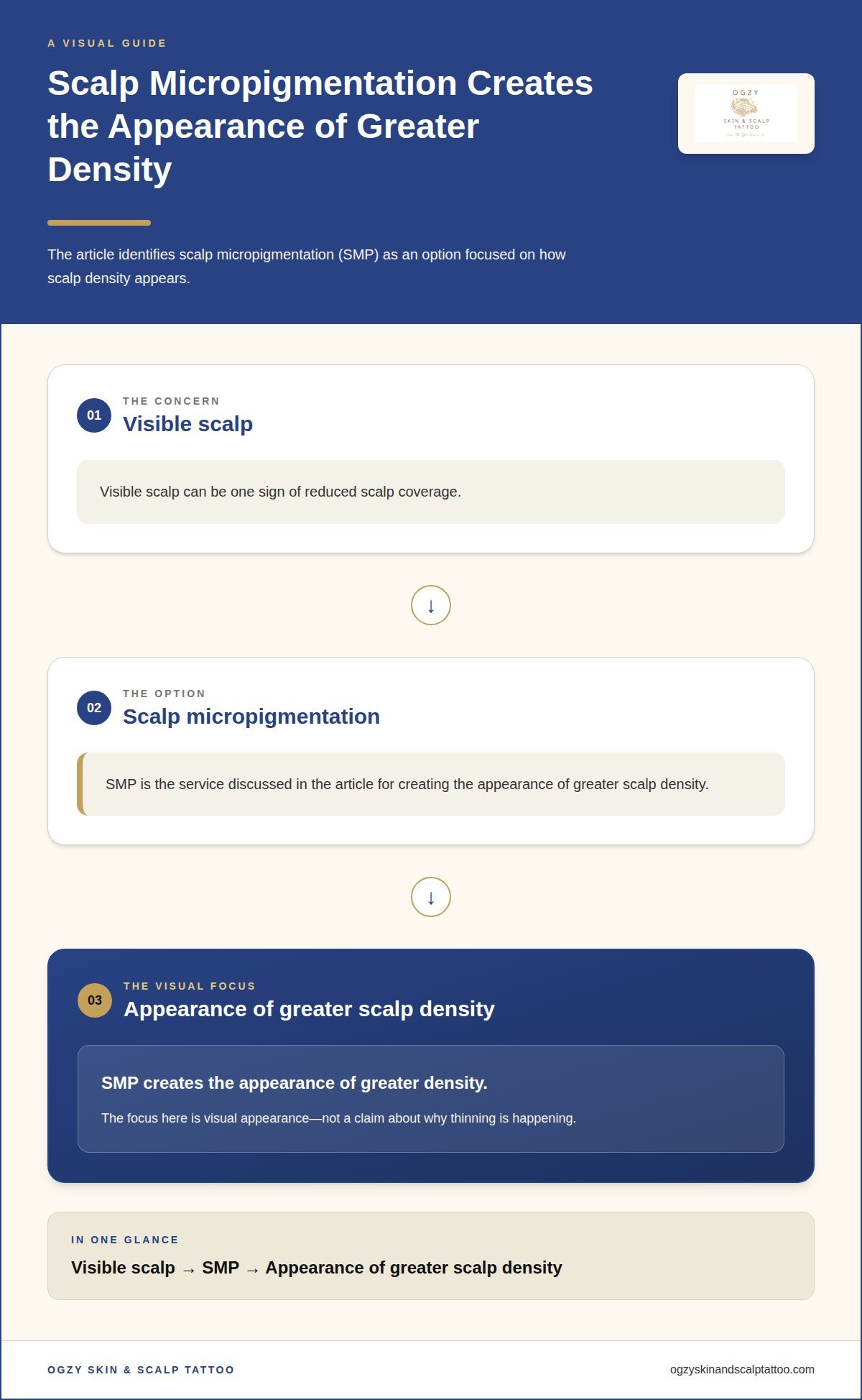
- Scalp micropigmentation creates the appearance of greater density; it does not regrow hair.
What is hair loss in women?
Hair loss in women may appear as increased shedding, gradual thinning, or both. For women in Leander, understanding the pattern and possible causes is a useful first step toward addressing the concern.
Signs and Causes of Thinning
Female hair thinning involves reduced scalp coverage or increased shedding. A widening part, a smaller-looking ponytail, or visible scalp can make the change easier to spot. The pattern matters: thinning across the scalp may have different causes from breakage near areas repeatedly pulled by hairstyles. Women in Leander can describe these changes to help clarify what has shifted.
Hair loss is common among women and may become more noticeable with age. Possible causes include low iron, thyroid disease, insufficient protein, some medications, illness, and hair-care practices. An illness accompanied by a high fever can be followed by increased shedding, which usually resolves within a few months.
Daily habits can also affect hair strands. Repeated tight hairstyles may cause traction alopecia, a type of hair loss linked to pulling that can become permanent if tension continues. Excessive heat, strong chemicals, and hair straighteners can weaken hair and increase breakage. Eating too few calories can also contribute to significant shedding.
Supplements or vitamins may help when a deficiency is involved, but taking more than needed can carry risks. Too much selenium, vitamin A, or vitamin E has been linked to hair loss. The U.S. Food and Drug Administration does not regulate dietary supplements for safety and effectiveness before sale. Blood tests can help assess certain nutrient levels before you take supplements.
Diagnosing Female Hair Loss
Diagnosis draws on the hair-loss pattern, medical history, and scalp examination. A dermatologist may use trichoscopy, a magnified scalp examination, to help distinguish female-pattern hair loss from telogen effluvium, a shedding condition. A pull test can assess shedding and breakage. Identifying the likely cause matters because care options depend on the evaluation.
An evaluation may include blood tests for conditions that contribute to shedding, such as thyroid disease or low iron. A scalp biopsy can help determine whether infection is involved. The findings guide discussion of possible underlying causes. For example, addressing a confirmed medical or nutritional issue differs from reducing heat damage or repeated hairstyle tension.
Smoking causes inflammation throughout the body, which can worsen hair loss. Not getting enough iron or protein can also lead to hair loss, while adequate iron, zinc, and vitamin D are important for hair health. Tight hairstyles, friction, and excessive heat from styling tools can weaken hair. Discuss these factors during an evaluation of shedding and scalp changes. The U.S. Food and Drug Administration states that mesotherapy is not FDA-approved in the United States.
Hair-loss care in Leander and the greater Austin area
Care options depend on the type of thinning and its likely cause. A dermatologist can assess the pattern and discuss medical treatments, including topical minoxidil for female-pattern hair loss.
Shedding and Hair-Loss Thresholds
Daily shedding is normal, with people generally losing 50 to 100 hairs each day. A higher count alone cannot identify why hair is falling out. Note whether shedding persists, changes noticeably, or appears alongside reduced density. That context helps a clinician assess whether the change needs further attention.
Prevention and Dermatologist Consultation
Hair-care adjustments can reduce breakage from friction, pulling, and heat. Use a gentle shampoo, apply conditioner after washing, and consider a leave-in detangler. Looser hairstyles and less frequent use of hot tools can also limit strain. If you’re concerned about how to stop hair thinning in Leander, a dermatologist can assess persistent changes and discuss appropriate care.
Medications and Topical Minoxidil
Topical minoxidil is an over-the-counter option for female-pattern hair loss. In the United States, women can find a 2% solution or 5% foam. Follow the product instructions when applying topical minoxidil. Treatment takes at least six months to help prevent further loss and begin hair growth. Cost varies by product and retailer.
Minoxidil’s benefits depend on continued use, and hair gained during treatment may fall out again about three months after stopping. Experts recommend consistent use for one year before deciding whether it’s working. A dermatologist can discuss suitability, application, and potential concerns based on your health and scalp.
Oral prescription medicines are another topic to discuss at a medical appointment. Spironolactone may be considered for some women, particularly when signs of excess androgens are present. Finasteride may be discussed for some post-menopausal women. Medical history and pregnancy considerations matter, so don’t start or change a prescription without guidance from a qualified healthcare professional.
No single approach suits every cause of thinning. Reducing heat, for example, may limit breakage, while medical treatment may address a diagnosed pattern-loss condition. Hair transplantation is a separate surgical option, and diffuse thinning can affect candidacy. To stop hair thinning, women in Leander should first establish whether the concern involves shedding, breakage, or gradual density changes.
Thrive Medical says illness, surgery, or major stress can trigger heavy hair shedding a few months later, and the hair often grows back. It also says low iron and some vitamin deficiencies can cause hair shedding, especially in women. Cleveland Clinic defines hair loss in women as losing more than 125 hairs per day. These possible clues can help frame a discussion with a clinician, while the pattern and context of the change remain important.
Thrive Medical says minoxidil is used by both men and women and is available in oral or topical forms. For oral treatment, Dr. Tosti uses a 0.6mg dose of oral minoxidil for women. Dr. Tosti prescribes spironolactone at 50 to 200 milligrams daily, particularly for pre-menopausal women with signs of hyperandrogenism. A qualified clinician can discuss whether a particular option is appropriate based on individual health and circumstances.
Hormonal influences and medical history
Hormone shifts and medical history can help explain why thinning begins or changes. For a useful evaluation, connect the timing of shedding with health events, medication changes, and symptoms.
Pregnancy and childbirth can alter the hair-growth cycle, with related changes usually resolving within about nine months. A clinician may ask when shedding began and whether it followed pregnancy, childbirth, illness, surgery, or major stress. That timeline can help distinguish temporary shedding from female-pattern hair loss, which often develops differently.
Thyroid function is another relevant factor. An underactive or overactive thyroid can thin hair across the scalp, and a blood test can check thyroid function. Low iron and some vitamin deficiencies may also contribute. Bring existing test results to an appointment, as they can help guide decisions about further evaluation.
Medication history matters, too. Some medications can contribute to hair loss, so make a complete list of prescriptions, over-the-counter products, and recent changes. Include the name, dose, and approximate start date when available. Don’t stop a prescribed medicine on your own; the timing and reason for each prescription are important context for the clinician.
Minoxidil and finasteride are hair-loss treatments, not substitutes for investigating possible causes. Their suitability depends on your health and circumstances. A clinician can consider the pattern of thinning, medical history, and possibility of pregnancy before discussing medication choices. This keeps treatment decisions grounded in an individual evaluation.
Prepare for an appointment by noting when shedding began, where thinning appears, and whether it has changed. Include recent childbirth, thyroid history, illness, surgery, stress, and medication changes. Mention scalp symptoms and hair practices, such as frequent heat styling or tight hairstyles. These details give the dermatologist a clearer timeline than a general description alone.
Costs in Leander vary with the type of evaluation, testing, medication, and treatment duration. There is no single amount that applies to every woman or every hair-loss treatment. For insurance or Medicare planning, identify the specific visit, test, or medication and review how your plan handles it. Diagnostic evaluation and ongoing treatment are separate costs to clarify.
Use a gentle shampoo and conditioner if fragile strands break during washing, but hair-care changes can’t identify thyroid disease or medication-related shedding. A medical history and targeted testing help distinguish those possibilities from female-pattern loss. The distinction matters because a shampoo routine, minoxidil, and treatment of an underlying condition address different parts of the problem.
Diagnosis and testing
A hair-loss evaluation combines your history, a scalp examination, and targeted tests. Each step helps distinguish shedding, female-pattern hair loss, breakage, or another condition before treatment options are considered.
The evaluation starts with a timeline. A dermatologist asks when thinning began, whether it is spreading, and what changed beforehand. Pregnancy, illness, surgery, stress, medication changes, and family history can all provide context. The clinician also examines the scalp’s pattern and condition. Widespread thinning, patchy alopecia, and breakage along the hairline offer different clues.
A hair-pull test assesses active shedding. During the examination, a doctor gently pulls several dozen hairs and notes how many come out. The result is considered alongside your timeline and scalp appearance, not as a stand-alone diagnosis. Breakage and shedding can look similar in a brush but point to different causes.
A scalp examination may include trichoscopy, which uses magnification to inspect hair and follicles. It helps distinguish female-pattern hair loss from telogen effluvium, a form of increased shedding. The clinician looks at distribution and visible differences across the scalp. These details help show whether thinning follows a broader pattern or has another presentation.
Blood tests can look for medical conditions linked to hair loss. Depending on your history, a clinician may investigate thyroid disease, low iron, or selected vitamin and mineral levels. Low ferritin can affect hair growth, including when results fall within a laboratory’s normal range. Test results help connect possible deficiencies or conditions with the observed pattern.
A scalp biopsy may be a diagnostic step when infection is a concern. It examines a small scalp sample to help determine whether infection contributes to hair loss. This test answers a different question from blood work or trichoscopy. The examination and medical history help establish whether it is relevant.
Hair density and thickness can be measured before treatment and again during care. Comparing measurements gives the clinician a consistent way to monitor change over time. Photographs can also document the same areas under similar conditions. A wider-looking part or visible scalp area provides a practical point of comparison.
Bring a current list of medications and supplements, along with dates for major health changes. Include product names, recent changes, and any prior test results. Blood tests can help assess certain vitamin or mineral levels before you take a hair-growth supplement. This matters because excess selenium, vitamin A, or vitamin E has been linked to hair loss.
Diagnosis doesn’t depend on a single result. The pattern, pull-test findings, scalp examination, blood work, and biopsy each answer different questions. Together, they help identify which underlying factors deserve attention and support a more informed discussion of care options.
Hereditary pattern thinning
Hereditary pattern thinning is gradual hair loss influenced by family history. In female-pattern hair loss, thinning usually affects the scalp overall, and women do not usually become completely bald. Recognizing this pattern matters because it differs from sudden, heavy shedding after illness or stress.
Family history provides useful context, but it doesn’t establish a diagnosis by itself. Note whether relatives experienced gradual thinning, where it appeared, and how it changed over time. Share those observations with a dermatologist alongside your own timeline. A widening part or reduced overall density may describe your experience more clearly than a general report of hair loss.
Female-pattern thinning can progress gradually, so a single glance may not reveal the change. Comparing photographs of your part and crown, taken under similar lighting, can make changes easier to observe. Keep the images for your medical appointment rather than relying only on daily impressions. Shedding can also have other causes, so both pattern and timing matter.
Female-pattern hair loss affects about 30 million people in the United States. That figure describes how widespread the condition is, not what causes one person’s thinning. A dermatologist may consider the scalp pattern, family history, medications, and health changes together. Trichoscopy can help distinguish female pattern hair loss from telogen effluvium, a type of increased shedding.
Treatment discussions depend on the diagnosis and your health history. Topical minoxidil, sold under the brand name Rogaine, is one option discussed for female-pattern loss. Spironolactone may be considered for some patients, particularly when signs of excess androgens are present. Before discussing prescription medication, a clinician weighs suitability, possible risks, and the pattern being treated.
Consistency matters when assessing treatment. Minoxidil may take at least six months to prevent further loss and begin hair growth, and continued use is needed to retain its benefits. Hair gained during treatment may fall out again about three months after stopping. These timelines can frame a conversation with your clinician, but they don’t promise a particular outcome.
Bring questions about progression, treatment duration, and how change will be measured. Hair density and thickness tests can be performed before and during treatment to monitor progress. Ask how those measurements relate to your part, crown, or other areas of concern. A clear baseline helps patients and clinicians discuss changes using the same reference points.
Ogzy Skin & Scalp Tattoo: Scalp Micropigmentation
Ogzy Skin & Scalp Tattoo offers scalp micropigmentation (SMP) for women who want the appearance of greater scalp density. SMP deposits pigment to create realistic follicle-like impressions; it does not regrow hair or treat the underlying cause of thinning.
If your priority is understanding or addressing ongoing hair loss, start with a medical diagnosis and discuss care options with a qualified healthcare professional. SMP may suit you if you’re considering a cosmetic way to soften the contrast between your hair and visible scalp. A consultation can help you discuss what may be realistic for your hair pattern and goals.
If you’d like to explore SMP, contact Ogzy Skin & Scalp Tattoo to discuss your questions and arrange a consultation.
Choose a Next Step That Fits Your Goal
For women in Leander hoping to stop hair thinning, the next step is to distinguish medical care from cosmetic choices. A dermatologist can assess ongoing hair loss and discuss appropriate treatment options. If your focus is the appearance of reduced scalp density, scalp micropigmentation (SMP) offers a cosmetic approach that simulates hair follicles. It doesn’t regrow hair or address the underlying cause.
You don’t have to choose an approach before understanding what it involves. A conversation about your priorities can clarify whether SMP fits your goals or whether medical evaluation should remain your focus. The right direction starts with what matters most to you and what each option is designed to do.
If you’d like to discuss SMP, contact Ogzy Skin & Scalp Tattoo to arrange a consultation. The studio is at 13130 Pond Springs Rd #1105, Austin, TX 78729. A thoughtful next step can bring greater clarity and confidence.
Frequently Asked Questions
What are the cycles of hair growth?
Scalp hair moves through growing, transition, and resting phases. The growing anagen phase can last two to eight years; catagen, the transition phase, takes about two to three weeks. Telogen, the resting phase, lasts about two to four months before hairs shed. Because follicles cycle independently, shedding doesn’t happen all at once. Eyelashes, eyebrows, and body hair have shorter growing phases, around one month.
What are common causes of hair thinning in women?
Common contributors include hereditary pattern changes, thyroid disease, low iron, insufficient protein, some medications, illness, and hair-care practices that cause breakage or pulling. A tightly pulled hairstyle, for example, can affect the hairline, while thinning across the scalp may have a different explanation. Several causes can overlap, so timing, distribution, and medical history help clarify the pattern.
When should women see a doctor for hair loss, and what tests are used?
Consider a medical evaluation when thinning persists, progresses, or appears in distinct patches. A clinician may review your history, examine your scalp, perform a pull test, or use trichoscopy, a magnified scalp examination. Blood tests can investigate conditions related to shedding, while a scalp biopsy may help assess possible infection. Bring a medication list and note when the change began.
Which dermatologists or hair-loss clinics in Leander, Texas treat women?
For a medical diagnosis in Leander, look for a dermatologist who evaluates hair loss in women and can assess scalp patterns and possible underlying conditions. Ask whether the visit includes a scalp examination and discussion of relevant testing. Ogzy Skin & Scalp Tattoo offers scalp micropigmentation, a cosmetic service that simulates the appearance of follicles; it doesn’t diagnose hair loss or treat its medical cause.

Article by
Opal Z
Opal is the owner and practitioner behind OGZY Skin & Scalp Tattoo in Austin, Texas. With more than three years in business and a longtime background in the aesthetics industry, she specializes in corrective and restorative treatments designed to address concerns that traditional aesthetics often overlook.
Her work focuses on scar and stretch mark revision, scar camouflage, scalp micropigmentation (SMP), hair regrowth treatments, and laser tattoo and permanent makeup removal. Opal works with a wide range of skin tones and takes an individualized approach to every client, considering skin color, texture, scar characteristics, treatment history, and realistic long-term outcomes.
Through OGZY Skin & Scalp Tattoo, her goal is to combine artistry, aesthetics, and technical treatment knowledge to help clients feel more comfortable and confident in their skin.
Love the skin you’re in.