Camouflage is designed to blend a stretch mark’s color with the surrounding skin, not erase the mark or change its texture. With stretch mark camouflage in Austin, revision is a process: most people need about 3 to 5 sessions, spaced 6 to 8 weeks apart depending on how the skin heals. The goal is a softer, more cohesive appearance.
If you’re considering stretch mark camouflage in Austin, careful tone matching is central to creating a natural-looking blend. The color may look different after treatment as the skin heals, so understanding this process helps set realistic expectations.
This guide explains how stretch mark camouflage works, what affects skin tone matching, and why some marks may benefit from inkless preparation before pigment is considered. You’ll learn what to expect during planning and healing, along with aftercare considerations for the treated area. The right approach depends on the skin’s condition, the marks’ characteristics, and how the area responds as it heals.
Key Takeaways
- Learn what a consultation considers when shaping a personalized plan for your stretch marks.
- Understand how careful pigment selection helps blend color differences while respecting your natural skin tone.
- See what camouflage can address, and why changes in texture may need a different approach.
- Discover why pigment can look different as skin heals and what to keep in mind about sun exposure.
- Explore how to decide whether scar and stretch mark revision is a suitable next step for your goals.
Consultation and personalized treatment planning
A consultation connects your goals with the area, scar condition, and treatment method. Planning also covers the sessions, healing intervals, and practical recovery details.
Personalized Treatment Planning
The assessment considers each stretch mark’s location, color, texture, and extent, including marks across the abdomen or breast area. These details help determine whether to begin with regenerative serum, consider pigment, or plan both approaches in sequence. Not every mark needs ink, so the plan should explain the purpose of each step.
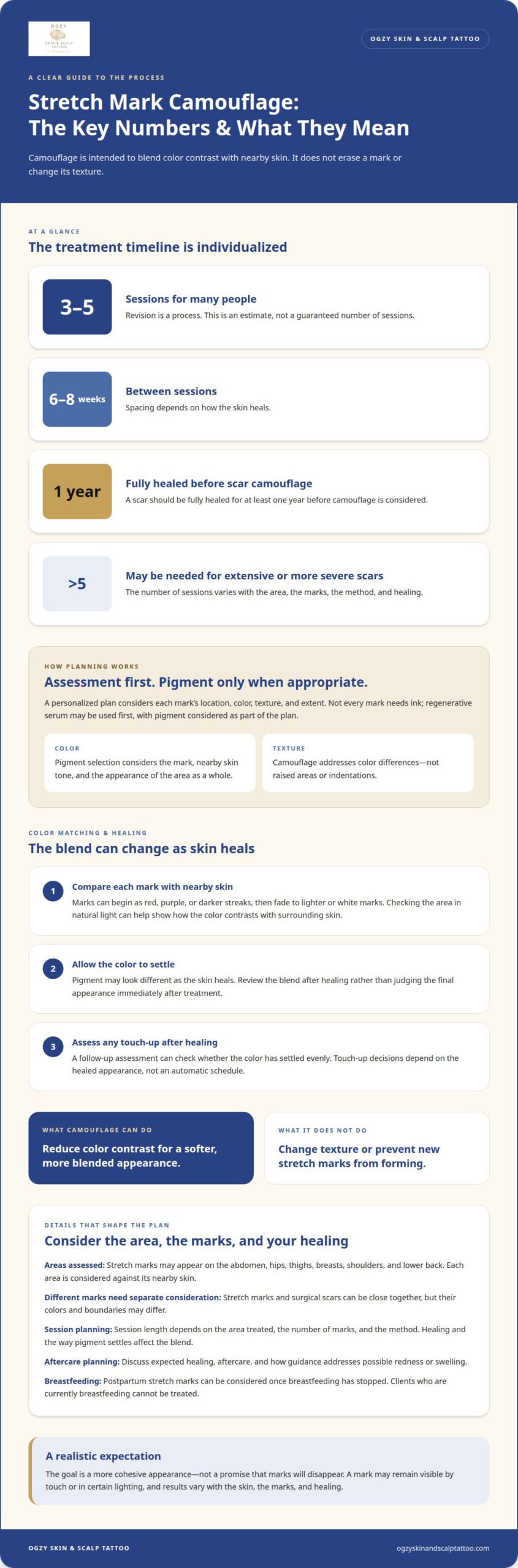
Revision is a process: most people need about 3 to 5 sessions, spaced 6 to 8 weeks apart depending on how the skin heals. Extensive or more severe scars can need more than 5. Session length depends on the area treated, the number of marks, and the planned method, so the treatment area matters when arranging your day.
When assessing stretch mark camouflage in Austin, review healed examples across different skin tones and scar types, and ask about the artist’s paramedical tattoo training and hygiene practices. Look for clear explanations of the process, not just photos taken immediately after treatment.
Scar and Discoloration Treatment
Surgical scars and stretch marks are assessed for their condition and color before a camouflage plan is chosen. A scar should be fully healed for at least 1 year before camouflage is considered. Discoloration may be part of the assessment, but hyperpigmentation is treated only when it comes from a scar.
Camouflage addresses color differences, not raised scars or indentations. If a surgical scar has both a texture change and color contrast, clarify which concern the proposed treatment addresses. This distinction helps set realistic expectations for what camouflage can soften.
Costs and Insurance Coverage
The cost depends on the treatment plan, including the areas being treated, the extent of the marks, the method, and the sessions involved. Ask for a breakdown of what the plan includes rather than comparing one session without considering the full treatment process.
Insurance does not usually cover stretch mark treatments because they’re considered cosmetic. If you’re budgeting, account for the planned sessions and the possibility that extensive or more severe scars may need more than 5. No price or insurance assumption can replace a clear, personalized treatment outline.
Preparing for an Appointment
Before your appointment, note the areas you want assessed and bring examples of your goals, such as making abdominal marks blend more subtly. Share relevant scar history and discuss the procedure, session spacing, and aftercare during planning. Postpartum marks can be considered once breastfeeding has stopped. Clients who are currently breastfeeding cannot be treated.
Ask how the aftercare guidance addresses possible redness or swelling and what to expect immediately after treatment. Before scheduling around an important event, discuss the expected appearance and healing process. A consultation is the practical first step toward a plan tailored to your skin and goals.
Blending marks with surrounding skin tone
Stretch mark camouflage aims to reduce the color contrast between a mark and the surrounding skin. Pigment selection takes into account the nearby skin tone, the mark’s color, and how the area looks as a whole.
Stretch Mark Camouflage in Austin: Fading and Disappearance
Stretch marks form when skin stretches or shrinks quickly, tearing collagen and elastin fibers in the dermis. They may start as red, purple, or darker streaks, then gradually fade to lighter or white marks.
Fading can soften the appearance of stretch marks, but they rarely disappear completely. A camouflage plan considers the color that remains rather than assuming every mark will respond the same way. Check each area in natural light, since a pale line can contrast differently with surrounding skin indoors.
Color matching aims to make the contrast less noticeable. The goal is a more blended appearance, not a smoother surface: pigment addresses color differences, not indentations or raised texture.
Stretch Marks and Abdominal Scars
Stretch marks and surgical scars can both appear on the abdomen, but they are different. Stretch marks develop as skin stretches or shrinks; a surgical scar follows an incision. Each area should be assessed separately, especially when both types of marks are close together.
For example, someone may have stretch marks across the abdomen and a distinct C-section scar below them. Their colors and boundaries can differ, so one pigment choice may not suit every area. Assessment considers the surrounding skin tone and each mark before planning camouflage.
Stretch marks can also appear on the hips, thighs, breasts, shoulders, and lower back. Their location affects how the surrounding skin is viewed during color matching. Compare each mark with nearby skin, not a separate body area that naturally has a different tone.
Results and Touch-Up Needs
There is no fixed duration for every camouflage result. Healing and the way pigment settles affect the blend, while later skin changes may alter the contrast. Camouflage does not prevent new stretch marks from forming after further changes to the body.
A follow-up assessment can determine whether the treated color has settled evenly and whether any sections still stand out. Touch-up decisions depend on the healed appearance, not an automatic schedule. Review the area after healing rather than judging the final blend immediately after treatment.
Because pigment addresses color rather than texture, a mark may remain visible by touch or in certain lighting. A consultation can help clarify the intended color change and whether the planned approach fits your goals. For a closer look at personalized camouflage planning, consider how your marks compare with the surrounding skin tone.
What is Tattoo Scar Camouflage?
Tattoo scar camouflage uses carefully selected pigment to soften a scar’s color contrast with nearby skin. It changes the scar’s appearance, not its underlying shape or texture.
Camouflage and laser treatment work differently: camouflage blends color with pigment, while laser treatment is a separate method. The suitable option depends on the mark and the change you want to address.
Camouflage Tattooing Process
During camouflage, pigment is applied to bring a pale or differently colored mark closer in tone to the surrounding skin. The aim is to make the color contrast less noticeable, not to make the mark invisible. For example, pigment may be considered for a light stretch mark against deeper-toned skin.
Not every mark needs ink. Some plans begin by preparing the skin with regenerative serum, with pigment considered later. This staged approach makes the area’s condition and response part of the decision, rather than treating every stretch mark the same way.
Scar Eligibility and Assessment
Assessment considers the scar’s color, location, texture, and condition. A flat, pale surgical line presents a different camouflage question from a raised burn scar or pregnancy-related stretch marks. These distinctions help identify whether the main concern is color, texture, or both.
Camouflage primarily addresses color differences. It does not flatten raised scars or fill indentations, so pigment should not be presented as a way to create a smoother surface. Hyperpigmentation is considered for treatment only when it comes from a scar.
Keloid and burn scars need individual assessment because their appearance and texture can vary. A consultation can consider the specific area and whether its condition suits camouflage. Scars on most body areas can be considered, including under the eyes, but location alone does not establish suitability.
Scar Suitability and Maturity
Scar maturity matters before tattoo camouflage is considered. A scar generally needs to be fully healed for at least 1 year before it is considered for camouflage. For a surgical scar, this means assessing its healed condition, not simply relying on when surgery took place.
Stretch marks also vary. Some remain lighter as they fade, while others contrast more with surrounding skin. Pregnancy-related marks and abdominal surgical scars should be assessed separately when both are present. Their color, texture, and healing all inform the approach.
Before choosing a procedure, define your goal: reducing color contrast, addressing texture, or both. Camouflage pigment is used to blend color, not treat texture. That distinction clarifies what the procedure can and cannot address.
Color matching and pigment healing
Pigment matching considers the natural skin around a mark and how the color may look as the area heals. The aim is a considered blend, not an exact match under every lighting condition.
Pigment Matching and Color Testing
Start by comparing the stretch mark with nearby, unaffected skin. Notice differences in lightness, warmth, and undertones, and consider whether the surrounding skin varies across the treatment area. For example, abdominal skin may not match the tone of the upper thigh.
Ask how pigment choices are assessed and what happens if the healed color differs from its initial appearance. Color testing can help explain the proposed tone and technique, but it is not proof of a guaranteed outcome. A clear discussion helps you understand the decision before treatment.
Custom Pigment Selection
Custom matching involves selecting or combining pigment tones to relate to your natural skin, rather than relying on one universal shade. The mark, nearby skin, and placement all matter. A pale stretch mark against medium-toned skin presents a different matching task from a darker mark against lighter skin.
Color selection should account for subtle differences in tone across a body area. A specialist considers the specific treatment zone instead of matching to a distant area, such as using an arm as the sole reference for the abdomen. This keeps the planned blend connected to the skin around the mark.
Healing changes how pigment looks. The fresh appearance differs from the settled result, so assess the blend after the skin has healed rather than immediately after treatment. Skin, scar type, and healing affect the color; an initial match alone cannot predict the final result.
Good planning also separates color from texture. Pigment can soften color contrast, but it cannot fill an indentation or level raised skin. If a stretch mark looks darker in one area and lighter in another, those differences can inform pigment selection, while texture remains a separate consideration.
When reviewing a proposed match, consider the mark alongside the closest surrounding skin, not just a sample shade or photograph. Ask what the pigment is intended to blend, how healing affects its visible tone, and how the approach accounts for differences within the same area. These details make expectations clearer.
Aftercare and sun protection
Aftercare supports healing and helps protect the color match as pigment settles. Follow the care instructions for your treated area, since appropriate steps depend on the method and your skin’s response.
Sun exposure deserves attention. Camouflaged skin does not tan like the surrounding skin, so tanning can make the color difference more noticeable. Protect the treated area from sun exposure according to your practitioner’s instructions, especially when clothing leaves the abdomen or shoulders exposed.
Think of sun protection as part of preserving the blend, not as a way to change your natural skin tone. If you plan outdoor activities in Austin, such as time by a pool or walking in direct sun, ask how to protect the treated area during healing. Do not assume a tan will make pigment and nearby skin match more closely.
Use topical products carefully. Do not apply a cream, oil, or other product to the treated area unless your aftercare instructions allow it. If a product is part of your regular routine, ask when you can use it again. A familiar moisturizer is not automatically suitable for freshly treated skin.
Keep the expected appearance in perspective as healing progresses. Pigment can look different after treatment than it does once the skin has healed, so the immediate color is not the final comparison. For example, assess a treated stretch mark against nearby skin after healing, in consistent lighting, rather than beside a sun-tanned area.
Weight changes can affect how stretch marks look by changing the surrounding skin. Camouflage addresses existing color contrast; it does not prevent new marks as the body changes. New marks may differ in color or location from the treated area and need a separate assessment.
Planning aftercare can make the process easier to manage. Before treatment, clarify which topical products to pause, how to protect the area from sun, and what changes to expect during healing. Write down the steps so you can follow them at home.
Stretch marks are a personal, cosmetic concern, and wanting their appearance to feel less noticeable is a valid goal. A careful healing period gives the treated skin time to settle before you assess the blend or discuss any next step. For guidance on planning stretch mark camouflage, bring your aftercare questions into the consultation.
Ogzy Skin & Scalp Tattoo: Scar and Stretch Mark Revision
Ogzy Skin & Scalp Tattoo offers Scar and Stretch Mark Revision for people seeking to soften the appearance of stretch marks or scars. Not every area needs pigment. During planning, I assess the skin and determine whether regenerative serum should come first, with pigment considered later if appropriate. This tailored approach considers the mark’s condition, color, and healing rather than applying one method to every concern.
A consultation is a helpful next step if you want to understand what may be realistic for your skin. We can discuss your goals, the area you want addressed, and how treatment may be planned. Results vary according to skin, scar type, and healing.
You’re welcome to visit Ogzy Skin & Scalp Tattoo online or in person at 13130 Pond Springs Rd #1105, Austin, TX 78729.
Choose a Next Step That Feels Right for You
Deciding whether to camouflage a stretch mark is personal. You do not need every detail figured out before exploring your options. Start with what you would like to feel different, whether that means feeling more at ease in certain clothing or understanding what pigment work may address.
If you’re considering stretch mark camouflage in Austin, a thoughtful conversation can connect your goals with an approach suited to your skin. Bring your questions and share what you hope to achieve. The focus should be on an informed choice, not pressure to proceed.
At Ogzy Skin & Scalp Tattoo, Scar and Stretch Mark Revision is tailored to the area and your concerns. When you’re ready, book a consultation to discuss your goals and treatment options.
Contact Ogzy Skin & Scalp Tattoo to begin a conversation about your goals, or visit the studio at 13130 Pond Springs Rd #1105, Austin, TX 78729. You deserve to feel informed and comfortable as you decide what comes next.
Frequently Asked Questions
Does scar tissue affect camouflage results?
Yes. Scar tissue can respond differently from nearby skin, so pigment may settle unevenly across areas with different characteristics. That is why assessment should consider each section separately, especially when marks vary in texture or appearance. Skin, scar type, and healing all influence the outcome; reviewing the area after it heals is more useful than judging it immediately after treatment.
What does a paramedical tattoo artist do?
A paramedical tattoo artist uses tattooing techniques for appearance-related concerns such as scar and stretch mark camouflage. The artist assesses the area, considers whether pigment is appropriate, and plans how to blend color with nearby skin. The goal is to address a specific concern with a tailored approach. A consultation lets you discuss your goals and understand what the proposed treatment can address.
Can postpartum stretch marks be treated while breastfeeding?
No. Clients who are currently breastfeeding cannot be treated. Postpartum stretch marks can be considered once breastfeeding has stopped. If you’re planning ahead, consider the timing of your consultation and proposed treatment, and share your current breastfeeding status during planning. This helps determine when the discussion can move forward.
How much does stretch mark camouflage cost in Austin?
The cost depends on the treatment plan, not a single standard amount. The area’s size and extent, the method selected, and the sessions involved affect the overall scope. Ask for a clear breakdown of what the plan includes, including any separate stages. Stretch mark treatments are generally considered cosmetic and are not usually covered by insurance.
How does stretch mark camouflage compare with laser treatment or microneedling in Austin?
Camouflage uses pigment to reduce color contrast, while laser treatment is a separate method; neither is automatically more suitable. Some plans prepare the skin with regenerative serum before considering pigment. The right approach depends on the mark and how the skin responds.
What are the risks, side effects, and contraindications of stretch mark camouflage?
Redness or swelling may occur, and sun protection matters because camouflaged skin does not tan like surrounding skin. A scar must be fully healed for at least 1 year before camouflage is considered, and clients who are currently breastfeeding cannot be treated.

Article by
Opal Z
Opal is the owner and practitioner behind OGZY Skin & Scalp Tattoo in Austin, Texas. With more than three years in business and a longtime background in the aesthetics industry, she specializes in corrective and restorative treatments designed to address concerns that traditional aesthetics often overlook.
Her work focuses on scar and stretch mark revision, scar camouflage, scalp micropigmentation (SMP), hair regrowth treatments, and laser tattoo and permanent makeup removal. Opal works with a wide range of skin tones and takes an individualized approach to every client, considering skin color, texture, scar characteristics, treatment history, and realistic long-term outcomes.
Through OGZY Skin & Scalp Tattoo, her goal is to combine artistry, aesthetics, and technical treatment knowledge to help clients feel more comfortable and confident in their skin.
Love the skin you’re in.