Stretch mark camouflage is priced per session, not as a one-size-fits-all total. The cost of a stretch mark tattoo in Leander depends on how many sessions your skin and treatment area need, and camouflage typically takes 3 to 4 sessions to build color in layers. Treatment may also include 2 to 3 sessions focused on preparing skin texture.
It makes sense to want a clear budget before deciding whether to begin. Stretch marks differ in size, appearance, and skin response, so the treatment approach and session plan matter more than a single price when estimating the work involved.
This guide explains how the available options differ and what to consider when planning treatment. You’ll learn why mature, white stretch marks may be suitable for camouflage, while no-ink revision uses medical-grade serums instead of pigment. Understanding these approaches can help you discuss your options with greater clarity.
Key Takeaways
- Understand why session-based pricing can reflect the skin’s needs more accurately than a flat package.
- Learn how stretch mark color and maturity can influence whether camouflage is a suitable approach.
- See which treatment-area and session-plan details can affect the overall cost.
- Explore the key safety considerations and how to think through your options around Leander, Cedar Park, and Austin.
- Find out how Scar and Stretch Mark Revision may fit into a personalized approach to visible stretch marks.
How much does it cost to get a stretch mark tattoo?
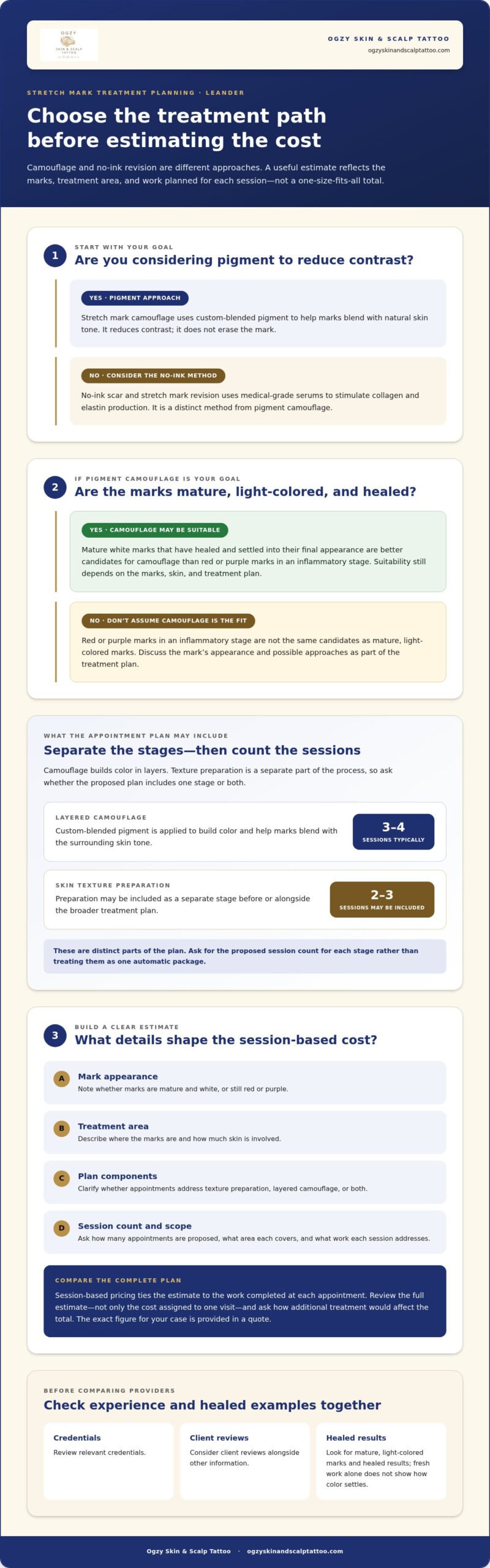
The cost of a stretch mark tattoo in Leander depends on the approach and treatment plan. Scar camouflage uses custom-blended pigment to help marks blend with your natural skin tone, while no-ink scar and stretch mark revision uses medical-grade serums to stimulate collagen and elastin production. These are distinct methods, so the right option depends on your marks and goals.
Camouflage is generally suited to mature, light-colored stretch marks. White marks that have healed and settled into their final appearance are better candidates than red or purple marks in an inflammatory stage. That difference matters for planning: the color and maturity of a mark help determine whether camouflage is appropriate, rather than simply how visible it looks in a photograph.
Stretch mark camouflage uses custom-blended pigment to reduce the contrast between a mark and the surrounding skin. It does not erase the mark. The aim is a more blended appearance, with pigment selected to match your natural skin tone. Skin tone and texture vary across the body, so the same approach may not suit every mark.
Color is built in layers rather than treated as a single application. Camouflage typically requires 3 to 4 sessions to build color in layers. Treatment may also include 2 to 3 sessions to prepare the skin texture. These are separate parts of the process, so a treatment plan can involve texture preparation as well as pigment sessions. The final session count influences the overall cost.
To compare stretch mark tattoo artists near Leander, review relevant credentials, client reviews, and before-and-after photos together. Look for examples of mature, light-colored marks and healed results, since fresh work alone doesn’t show how the color settles.
For a useful cost estimate, organize the details that affect the plan before requesting a quote:
- Mark appearance: Note whether the marks are white and mature or still red or purple.
- Treatment area: Describe where the marks are and how much skin is involved.
- Plan components: Ask whether the proposed sessions address texture preparation, layered camouflage, or both.
- Session count: Use the proposed number of appointments to understand how the total is calculated.
The right approach depends on the treatment area, skin texture, mark appearance, and your goals. Compare the methods and what each appointment addresses, rather than relying on a generic package total. A consultation can help you discuss a plan suited to your case.
Session-based pricing
Session-based pricing ties the estimate to the work completed at each appointment. Stretch mark camouflage typically takes 3 to 4 sessions to build color in layers, while treatment may include 2 to 3 sessions to prepare skin texture. Those parts of the plan affect the total differently, so ask for a clear breakdown of what each session addresses.
A useful treatment plan clearly distinguishes its components. For example, no-ink revision uses medical-grade serums to stimulate collagen and elastin, while camouflage uses custom-blended pigment to help marks blend with natural skin tone. Ask what each appointment addresses and how the proposed approach relates to your goals.
As you review a plan, use these steps to understand how its pricing is structured:
- Identify the treatment stages: Determine whether the plan includes texture preparation, camouflage, or both.
- Clarify the session count: Ask how many appointments are proposed for each stage.
- Understand the per-session scope: Note which area and treatment work each appointment covers.
- Review the overall estimate: Compare the full plan, not just the cost assigned to one visit.
Session pricing also makes it easier to discuss adjustments as treatment progresses. If skin response or color blending calls for a different approach, the next appointment can be considered within the developing plan. The estimate should make clear what is included now and how additional treatment would affect the overall total. That clarity helps you plan without assuming every person needs an identical course.
For a practical comparison, imagine two people with marks of different sizes or skin textures. Their treatment areas and preparation needs may differ, even if both are considering camouflage. A flat package could treat those cases as equivalent, while session-based pricing reflects the appointments and work assigned to each plan. The deciding factor is the treatment required, not simply the name of the procedure.
Before committing, keep a written record of the proposed stages, session count, and purpose of each appointment. Use that outline to compare the plan with your priorities, such as addressing texture before adding pigment. You can also review stretch mark revision as you consider a tailored treatment approach.
The price depends on the treatment area, skin texture, preparation needs, and number of sessions. The exact figure for your case is provided in a quote, so review it alongside the planned stages and appointment scope.
Which studios near Leander, Cedar Park, and Austin offer stretch mark camouflage tattooing?
Build a local shortlist by searching for “stretch mark camouflage” alongside Leander, Cedar Park, Round Rock, Georgetown, and Austin. Compare each studio’s service descriptions. A general tattoo listing alone doesn’t show whether the studio offers stretch mark camouflage or no-ink revision.
Start with Leander, then include Cedar Park, Round Rock, Georgetown, and Austin in your local search. Record each studio’s location and the exact wording it uses for its services. “Stretch mark camouflage” is more specific than “cosmetic tattooing,” which can refer to other procedures. Use that distinction to identify relevant information.
Look for examples of healed stretch mark camouflage. A useful portfolio shows the original marks and treated area in comparable lighting, with skin tone and texture visible. For example, photos of mature, light-colored marks are more relevant than images of a different procedure. Photos can help you assess the work, but they don’t establish how your skin will respond.
Use a consistent comparison checklist for every studio profile:
- Service description: Does the page specifically describe stretch mark camouflage?
- Relevant portfolio: Are there examples of stretch marks, rather than only decorative tattoos or other cosmetic work?
- Reviews: Do written reviews describe the same procedure and the client’s experience?
- Plan clarity: Does the information explain how treatment is tailored to the marks and skin?
Read reviews for details, not just star ratings. A review that names the procedure and describes communication, planning, or follow-up offers more context than a brief comment about a studio visit. Compare several reviews across each Leander, Cedar Park, or Austin listing before drawing conclusions. Reviews reflect individual experiences, so they shouldn’t be treated as a guarantee of a particular result.
Finally, keep a shortlist of studios whose public information clearly addresses stretch mark camouflage. Note which locations provide relevant examples and which describe the treatment process. This organized comparison helps you separate a general tattoo service from a studio that presents specific information about camouflage, without assuming that every studio in the Austin area offers the same work.
What factors affect the cost of stretch mark camouflage tattooing?
The number of sessions needed is the main factor behind stretch mark camouflage cost. Each appointment contributes to the total, so a plan involving more visits requires more treatment time. Skin type and the extent of the marks also matter because people’s skin can respond differently. An estimate should reflect the work planned for your specific treatment area, rather than assume every case follows the same schedule.
The size and distribution of the treatment area help define the scope of the work. A small group of marks in one area differs from marks spread across several areas. Placement also matters when marks vary in shape or density. For example, a concentrated patch may call for a different plan than fine lines across a wider section of skin.
Skin texture and preparation can shape the treatment plan. Camouflage focuses on blending color, while texture preparation addresses a different aspect of the marks. If a plan includes both, each part contributes to the appointments and work involved. Ask for the estimate to identify which sessions address texture and which focus on pigment. That breakdown helps explain why two plans may differ, even when both concern stretch marks.
Mark maturity and color are relevant when considering camouflage. Mature, white marks may be suitable, while red or purple marks that are still changing may not be. Color differences also influence pigment selection, since the aim is to bring the mark closer to the surrounding skin tone. Discuss the appearance and maturity of your marks when considering this option.
Skin response and pigment blending can influence how the work is staged. The skin’s response becomes clear as treatment progresses, and layered application allows color to be built gradually. That makes session count a practical pricing factor, not just an administrative detail. A plan should connect the proposed appointments to the area, texture, and color work, so the estimate has a clear basis.
To make a consultation more focused, note these details before discussing a treatment plan:
- Map the area: Note where marks appear and whether they are concentrated or spread out.
- Describe their appearance: Record whether they look mature and light-colored, or red and purple.
- Separate treatment goals: Identify whether your priority is texture preparation, camouflage, or both.
- Review the session plan: Connect each proposed appointment with the treatment work it covers.
The price depends on the treatment area, skin texture, mark appearance, and number of sessions. Your exact case-specific figure is provided in a quote, with those factors informing the estimate.
Is stretch mark camouflage tattooing safe, and what risks or side effects should clients consider
Camouflage uses pigment applied to the skin, so it’s important to discuss the procedure and your skin’s condition before treatment. It isn’t risk-free. Potential concerns include irritation, infection, an unwanted pigment response, or color that doesn’t blend as intended. These outcomes aren’t inevitable, but they belong in a clear discussion.
Skin condition matters. Mature, white stretch marks that have healed and settled are generally better candidates for camouflage. Red or purple marks in an inflammatory stage aren’t candidates for camouflage. Treating marks while their appearance is still changing can complicate planning and expectations. The mark’s color and maturity are therefore relevant to both suitability and risk.
Pigment matching is another consideration. Skin tone can vary across one treatment area, and pigment may look different after application than during planning. Custom-blended color aims to create a closer blend, not erase the mark. A pigment that looks close on one section of skin may appear more noticeable beside a different surrounding tone.
Before deciding on camouflage, discuss these points as part of your treatment planning:
- Skin condition: Identify marks that are still red or purple, changing, or not fully settled.
- Previous reactions: Share relevant experiences with pigments or skin procedures.
- Color expectations: Understand that camouflage seeks to reduce contrast, not remove the mark.
- Hygiene and process: Ask how the treatment area and tools are handled during the procedure.
- Aftercare: Get clear instructions for caring for treated skin and recognizing concerns that need attention.
Reviews and healed photographs can help you understand how a studio presents its work, but they can’t predict your individual skin response. Compare examples showing similar marks and skin tones. Look for a clear explanation of the plan, pigment selection, and possible limitations. This helps you make an informed decision without treating someone else’s result as a promise.
If skin is actively inflamed or its appearance is changing, camouflage isn’t the appropriate step at that stage. That distinction matters: suitability should come before pigment selection or appointment planning. A thoughtful assessment can identify whether the marks have settled enough for camouflage and clarify what the procedure is intended to address.
For a personalized discussion of stretch mark revision and treatment considerations, explore stretch mark revision options.
Ogzy Skin & Scalp Tattoo: Scar and Stretch Mark Revision
Ogzy Skin & Scalp Tattoo offers Scar and Stretch Mark Revision for people considering options for visible marks. The approach may use medical-grade stem cells, growth factors, or custom pigment camouflage, depending on the revision method. If your priority is reducing contrast, pigment camouflage may be relevant; if you’re exploring a different revision approach, discuss how the options relate to your skin and goals.
Bring questions about your marks’ maturity, texture, and color, as well as the treatment approach you’re considering. These details can help focus a conversation about whether revision aligns with your needs. The goal is to understand what each method is intended to address, not to assume one approach suits every mark.
For a calm next step, contact Ogzy Skin & Scalp Tattoo or visit ogzyskinandscalptattoo.com.
Take the Next Step With Clarity
Choosing whether to pursue camouflage is personal. A useful next step is to connect your priorities with a treatment approach, rather than focusing only on appearance. Consider what you hope to address, what questions remain, and how comfortable you feel discussing your goals.
If you’re weighing the cost of a stretch mark tattoo in Leander, start by clarifying which approach you want to explore. Ogzy Skin & Scalp Tattoo offers Scar & Stretch Mark Revision and Microneedling Skin Rejuvenation, as well as Scalp Micropigmentation (SMP). For stretch marks, Scar & Stretch Mark Revision is the relevant service to discuss.
There’s no need to rush your decision. Clear information can help you choose a next step that feels considered and appropriate for you. Contact Ogzy Skin & Scalp Tattoo to discuss your goals and explore your options with care.
Frequently Asked Questions
Want to Know the Investment for Your Stretch Marks?
Your estimate depends on the treatment approach and the work planned for your marks. Before discussing an investment, note the areas you want addressed, their color and texture, and whether your priority is pigment camouflage or a no-ink revision approach. These details help frame a useful conversation about the treatment plan. For an individual estimate, the exact figure is provided in a quote for your case.
What Does the Treatment Include?
Stretch mark treatment may involve pigment camouflage or a no-ink revision approach, which are distinct methods. Camouflage uses custom-blended pigment to help marks blend with natural skin tone. No-ink revision uses medical-grade serums rather than pigment. The right details to clarify are which approach is proposed, what each appointment addresses, and whether texture preparation is part of the plan. That distinction helps you understand the intended treatment before deciding.
What is the average cost of stretch mark camouflage tattooing in Leander, TX?
There isn’t a single average that reflects every Leander treatment plan. Session-based pricing varies with the area treated, skin texture, mark appearance, and number of sessions. A useful estimate is specific to the work proposed for your case, not a general regional figure. When reviewing a quote, consider the planned treatment stages and appointments together so you can understand what the overall estimate covers.
How do stretch mark tattoo artists in Leander price treatment: per session, area, or hour?
The right treatment approach depends on the marks and your goals. Camouflage uses custom-blended pigment to blend marks with natural skin tone, while no-ink revision uses medical-grade serums. Ask what the proposed method addresses and how it relates to your concerns. That gives you a clearer basis for comparing options than focusing on a generic rate.
What is the typical price per square inch for stretch mark camouflage tattooing near Leander?
A square-inch figure doesn’t explain the session-based pricing approach for camouflage. The estimate depends on the treatment area, skin texture, mark appearance, and the number of sessions in the plan. Two areas of similar size may call for different treatment stages. Instead of comparing square-inch rates, review the proposed appointments and what each one addresses, then use the case-specific quote to understand the full investment.
How many sessions are usually needed to camouflage stretch marks, and what is the total cost?
Camouflage typically requires 3 to 4 sessions to build color in layers, while treatment may include 2 to 3 sessions to prepare skin texture. These are separate treatment components, so clarify which apply to your plan rather than adding the ranges automatically. The total cost depends on the session plan and your case. The quote should connect the proposed appointments with their treatment purpose.
Who is eligible for stretch mark camouflage tattooing, and how mature or light must stretch marks be?
Mature, white stretch marks that have healed and settled may be suitable for camouflage. Red or purple marks that are still changing may not be. Color isn’t the only consideration: maturity and skin condition matter too. If you’re assessing your marks, note whether their color or appearance is still changing, then discuss suitability during a consultation.

Article by
Opal Z
Opal is the owner and practitioner behind OGZY Skin & Scalp Tattoo in Austin, Texas. With more than three years in business and a longtime background in the aesthetics industry, she specializes in corrective and restorative treatments designed to address concerns that traditional aesthetics often overlook.
Her work focuses on scar and stretch mark revision, scar camouflage, scalp micropigmentation (SMP), hair regrowth treatments, and laser tattoo and permanent makeup removal. Opal works with a wide range of skin tones and takes an individualized approach to every client, considering skin color, texture, scar characteristics, treatment history, and realistic long-term outcomes.
Through OGZY Skin & Scalp Tattoo, her goal is to combine artistry, aesthetics, and technical treatment knowledge to help clients feel more comfortable and confident in their skin.
Love the skin you’re in.