
A thicker-looking result doesn’t always require changing how your hair grows. If you’re exploring how to get thicker hair without surgery in Austin, scalp micropigmentation (SMP) is one option. It uses carefully placed pigment to create the appearance of greater density, not new or regrown hair.
Noticing thinning can raise questions about what’s changing and what might help. It’s understandable to want clear, realistic options without pressure or promises. Hair loss can involve gradual thinning or increased shedding, with possible contributors including genetics, hormonal changes, stress, and medical conditions.
This article explains what hair loss means, outlines non-surgical approaches, and describes how SMP creates a denser-looking scalp. It also covers lifestyle and hair-care factors that may contribute to thinning, helping you understand what different options can and cannot do.
Key Takeaways
- Scalp micropigmentation (SMP) creates the appearance of greater hair density with carefully placed pigment; it doesn’t grow or restore hair.
- A consultation helps clarify your goals and shape an individualized treatment plan around your scalp and desired look.
- SMP can create the look of density for thinning hair, baldness, or a receding hairline.
- Understanding what SMP can and can’t do can help you decide whether its cosmetic effect aligns with your expectations.
- At Ogzy, the focus is on a considered, personalized approach rather than promising a particular outcome or schedule.
How Scalp Micropigmentation Creates the Look of Density
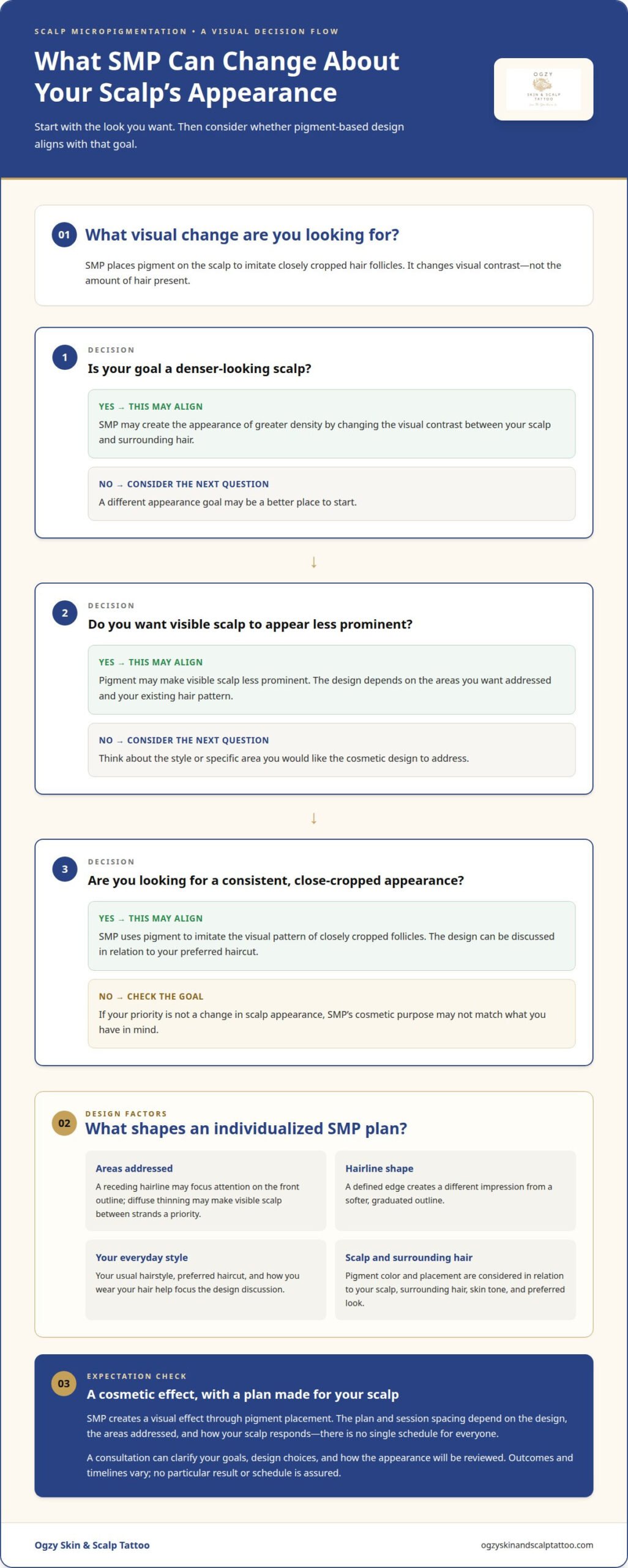
Scalp micropigmentation (SMP) is a non-surgical cosmetic procedure that places pigment on the scalp to imitate closely cropped hair follicles. It changes visual contrast, not the amount of hair you have. If you’re considering how to create the look of thicker hair without surgery in Austin, SMP is an appearance-focused option.
SMP may make visible scalp less prominent or create the look of a close-cropped style. It doesn’t add strands or alter existing hair. A consultation can clarify your desired appearance and the design choices that may support it, without promising a particular result or timeline.
Treatment Sessions and Frequency
SMP is performed in sessions, with the plan and spacing based on the design, the areas being addressed, and how your scalp responds. There isn’t one schedule for everyone. Ask what each visit is intended to accomplish, how the appearance will be reviewed, and when the design may be reassessed.
Session duration and recommended frequency depend on your individual plan. Discussing these details helps you understand the process before deciding. Another person’s schedule or result may not reflect what makes sense for your scalp and desired look.
What affects an SMP treatment plan in Austin, Texas? The areas addressed and design complexity shape an individual plan, so there isn’t one approach for everyone. A consultation is the place to discuss your specific service and the appearance you want to create.
SMP and the Cosmetic Appearance of Hair
SMP uses pigment to create the look of closely cropped hair follicles on the scalp. It changes the visual appearance of the area, rather than the amount of hair you have. During a consultation, I can discuss the design and how it may relate to your goals.
SMP may create the appearance of greater density by changing the contrast between the scalp and surrounding hair. It does not add strands or alter existing hair. Its cosmetic effect depends on the areas addressed and the design selected for your scalp.
What should I discuss during an SMP consultation? You can talk about your desired look, the areas you want addressed, and your scalp history. We can discuss the procedure and design options without assuming a particular session count or outcome.
What does SMP do for thinning hair? SMP creates a cosmetic appearance by placing pigment on the scalp. It may make visible scalp less prominent, but it doesn’t identify why hair is thinning or change the amount of hair you have.
Consultation and Individualized Treatment Planning
A consultation begins with your priorities. You may want to soften the appearance of a receding hairline, make visible scalp less prominent, or create a consistent close-cropped look. Each goal involves different design considerations, so describe how you usually wear your hair and which areas concern you.
Your existing hair pattern and scalp guide the plan. Someone with a receding hairline may focus on the front outline, while someone with diffuse thinning may be concerned about visible scalp between strands. Discussing these differences helps identify the visual areas that matter most to you.
Hairline design is a central decision. A defined edge creates a different impression from a softer, graduated outline, particularly with longer hair. Your usual hairstyle, preferred shape, and desired contrast can inform a design that feels consistent with your appearance.
Color and placement also shape the overall impression. Pigment is planned in relation to your scalp and surrounding hair, rather than selected by color alone. During consultation, discuss how the proposed appearance relates to your natural pattern, skin tone, and preferred haircut.
An individualized plan should clarify which areas are included and the visual effect each area is intended to create. It should also explain how the design will be reviewed during the process. These details help you understand the approach without assuming a particular session count or outcome.
Bring practical examples to the conversation. If you keep your hair very short, explain that preference. If you wear it longer and notice scalp showing through, describe where it happens. These details keep planning focused on the look you want in everyday settings.
Scalp Micropigmentation in Austin
Scalp micropigmentation is a cosmetic option that uses pigment to imitate the visual pattern of closely cropped follicles. It doesn’t stimulate follicles or change the amount of hair present. This distinction helps clarify what SMP is designed to do.
For people asking how to create the look of thicker hair without surgery in Austin, a useful first step is defining the change they want. SMP may suit someone seeking a denser-looking scalp. Pigment creates a visual effect; it does not change the hair itself.
SMP may create a more consistent appearance where thinning or baldness makes the scalp more visible. It can also be planned around a receding hairline. The approach depends on your existing pattern, the areas you want addressed, and the contrast between your scalp and surrounding hair.
Hair loss can change the appearance of scalp coverage. Pigment can alter that visual impression, but it can’t reverse hair loss or change the amount of hair you have. Keeping these outcomes distinct helps you decide whether a cosmetic procedure matches your goal.
SMP’s purpose is cosmetic: it creates the look of density through pigment placement. A consultation can help you understand the design options and whether this appearance-focused service aligns with what you want.
Results and Expectations
SMP creates a visual effect through pigment placement. Depending on the design, it may make the scalp appear less exposed or make a closely cropped style look more consistent. It doesn’t create fuller strands, increase hair count, or ensure a particular appearance.
Results and timelines vary with the plan and how your scalp responds. Ask how the design will be assessed as the process advances and what informs any refinements. Understanding that process is more useful than assuming everyone follows the same schedule or reaches the same result.
Changes in your existing hair can affect how the overall appearance reads over time. For example, if hair around treated areas becomes thinner, contrast between pigmented and untreated areas may become more noticeable. Planning can account for your current pattern, but it can’t predict how that pattern will change.
Use consultation to decide whether the cosmetic effect fits your expectations. Discuss the design, areas addressed, session approach, and limits of SMP. The central question is whether a denser-looking scalp, rather than a change in your hair itself, aligns with your goal.
Scalp Micropigmentation at Ogzy Skin & Scalp Tattoo
Ogzy Skin & Scalp Tattoo offers scalp micropigmentation (SMP) for people seeking the appearance of greater hair density. I’m Opal, a paramedical tattoo artist, and my approach centers on a considered design suited to your scalp, existing hair pattern, and preferences. SMP creates a visual effect with pigment; it doesn’t grow hair or change hair follicles.
That distinction sets a clear foundation. If your goal is to make visible scalp less prominent or create the appearance of a closely cropped style, SMP may be worth discussing. If you’re expecting new hair or regrowth, this cosmetic service isn’t designed to provide that. A conversation about your priorities can help you decide whether its visual effect fits what you want.
A Personal Consultation Comes First
At a consultation, we can discuss the areas that draw your attention, how you usually wear your hair, and the appearance you hope to achieve. You can describe concerns such as a receding hairline, thinning across the top, or visible scalp between existing strands. These examples help clarify your goals without assuming one design suits everyone.
I also use this discussion to explain what SMP can and can’t do. The plan should reflect your current hair pattern and preferred look, rather than an idealized result. We can consider how subtle or defined you want the overall effect to appear and which areas matter most to you.
Designing for Your Features and Hair Pattern
A natural-looking design depends on more than choosing a pigment shade. Hairline shape, the distribution of existing hair, scalp visibility, and your usual hairstyle all influence how the finished appearance may read. A softer outline creates a different impression from a more defined edge, so your preferences are part of the planning conversation.
For example, if you keep your hair very short, discuss how the hairline and surrounding areas work together at that length. If you wear your hair longer, the conversation may focus on where the scalp shows through and how the visual effect relates to your existing strands. These are planning examples, not promises of a particular result.
Pigment placement is planned to create the impression of follicle-like detail. The purpose is visual balance, not to imitate every feature of natural hair under every condition. Lighting, hairstyle, and the amount of surrounding hair can affect how density appears, so the design conversation should include your everyday preferences.
What the Individualized Plan Should Clarify
Your treatment plan should identify the intended areas and describe the design approach in plain language. It should also allow for reviewing the appearance as the process moves forward. SMP is detailed cosmetic work, and thoughtful planning keeps expectations connected to the goal: a denser-looking scalp, not new or fuller-growing hair.
We can discuss how the hairline relates to your facial features, whether the focus is localized or spread across the scalp, and how the design fits your style. If you’re uncertain how bold an effect you want, say so. That preference matters. Planning makes the proposed direction understandable before you proceed.
A useful consultation also gives you space to ask about pigment, placement, and the limits of the procedure. You should leave understanding what appearance SMP is intended to create, which areas the plan addresses, and what it cannot change. A clear conversation supports a considered decision, not an expectation of hair growth.
Session Planning Without a Fixed Promise
The number and spacing of sessions depend on your individual plan and how your scalp responds. I don’t promise a universal session count or schedule. The approach is considered around the design, the areas being addressed, and the need to assess the appearance as the work progresses.
During planning, ask how progress will be reviewed and what each visit is intended to address. A staged approach allows the design to be considered over time, rather than treating one schedule as right for everyone. Timing should be discussed in relation to your plan, not borrowed from another person’s experience.
This matters because two people can have different starting patterns and visual goals. One may want a defined hairline effect, while another may focus on reducing contrast across a thinning area. Those goals involve different considerations. A personal plan keeps the conversation specific without implying a guaranteed timeline.
Considering SMP Alongside Your Priorities
Some people want a cosmetic change in how their scalp appears; others are focused on why their hair is thinning. These are different concerns. SMP addresses appearance through pigment placement, not the cause of hair loss. If your main question is about changes in hair growth or scalp health, SMP alone cannot answer it.
It’s reasonable to take time before deciding. Reflect on how you prefer to wear your hair, which areas you want to address, and whether the look of added density aligns with your expectations. Bringing those points to a consultation makes it easier to discuss a design that feels relevant to you.
My role is to explain the cosmetic service clearly and help you understand the proposed approach. I won’t promise fuller hair, regrowth, or a specific outcome. The goal is to discuss whether SMP’s visual effect fits your priorities and outline a considered plan based on your scalp and desired appearance.
A Calm Next Step
If you’re considering SMP in Austin, contact Ogzy Skin & Scalp Tattoo to arrange a consultation. We can discuss your goals, review the areas you’re concerned about, and talk through whether a cosmetic density effect aligns with the look you want. It’s an opportunity to understand the process without pressure or promised results.
Ogzy Skin & Scalp Tattoo is located at 13130 Pond Springs Rd #1105, Austin, TX 78729. To learn more or request a consultation, visit ogzyskinandscalptattoo.com.
Choose a Next Step That Fits Your Goals
Deciding how to get thicker hair without surgery in Austin starts with being clear about the change you want. If your priority is the appearance of added density, a conversation about scalp micropigmentation can help you understand whether its cosmetic effect suits your expectations. You don’t need to arrive with every detail decided; begin with the areas you’d like to address and the look that feels right to you.
I welcome thoughtful questions and an open discussion about what SMP can realistically create. A consultation is a chance to talk through your goals and decide on a next step without pressure or a promised outcome.
If you’re ready to explore the option, contact Ogzy Skin & Scalp Tattoo. The studio is at 13130 Pond Springs Rd #1105, Austin, TX 78729. You can take the process one considered decision at a time.
Frequently Asked Questions
Can I Thicken My Hair Without a Transplant?
Yes, some approaches can support hair growth or create the appearance of more density without a transplant. Finasteride and minoxidil are medication options for certain types of hair loss, while scalp micropigmentation (SMP) uses pigment to create a cosmetic density effect. SMP doesn’t thicken strands or produce regrowth. The best fit depends on whether your goal is to affect hair growth or change its visual appearance.
How Many Treatment Sessions Will I Need for Optimal Hair Growth?
There isn’t one session count that applies to every treatment or person. SMP is designed to change the appearance of scalp density, not stimulate hair growth, and its session plan depends on the individual design. PRP treatment plans also vary. If your goal is hair growth, the cause of thinning and the treatment being considered shape the plan; a session count alone can’t promise an outcome.
Why Is My Hair Becoming Thinner?
Hair thinning can be associated with genetics, hormonal changes, stress, or medical conditions. Normal shedding also occurs, with the scalp typically shedding 50 to 100 hairs daily. The pattern and timing can offer useful context: gradual changes may differ from sudden shedding or patchy loss. SMP can create a cosmetic density effect, but it doesn’t identify why hair is thinning.
What Are Evidence-Based Nonsurgical Treatments for Thinning Hair?
Options depend on the type of hair loss. Minoxidil is approved to treat female pattern baldness, and finasteride is FDA-approved to slow hair loss and stimulate regrowth in most men. These are medication options, not SMP. SMP creates the look of density through pigment and doesn’t change hair growth. A clinician can help assess which approaches match your situation and discuss potential risks.
Do PRP Injections or Low-Level Laser Therapy Improve Hair Thickness?
PRP uses platelet-rich plasma from your own blood, injected into the scalp, and may promote natural hair growth by increasing blood supply to hair follicles. It doesn’t guarantee thicker hair. Low-level laser therapy is separate from SMP, which creates a cosmetic appearance rather than stimulating follicles. Ask a qualified healthcare professional about the evidence, suitability, and risks of any treatment you’re considering.
What Can Cause Hair Thinning, and What Tests Should a Doctor Consider?
Possible contributors include genetics, hormonal changes, stress, and medical conditions. There isn’t one test panel that suits every pattern of thinning. A doctor can consider your health history and the timing and pattern of hair changes when deciding whether tests are appropriate. Sudden shedding and gradual thinning, for example, may prompt different questions. SMP changes appearance, so it can’t determine an underlying cause.
Which Austin Dermatologists or Hair-Loss Clinics Offer Nonsurgical Treatments?
For a cosmetic approach in Austin, Ogzy Skin & Scalp Tattoo offers SMP to create the appearance of follicle density. It’s distinct from medical evaluation or treatments intended to affect hair growth. If your priority is understanding why your hair is thinning, a dermatologist can evaluate that concern. Choose based on whether you need medical assessment or a cosmetic density effect.
Does minoxidil make hair thicker, and how long does it take?
Minoxidil is approved to treat female pattern baldness. Results from minoxidil products take months, rather than weeks, to show.

Article by
Opal Z
Opal is the owner and practitioner behind OGZY Skin & Scalp Tattoo in Austin, Texas. With more than three years in business and a longtime background in the aesthetics industry, she specializes in corrective and restorative treatments designed to address concerns that traditional aesthetics often overlook.
Her work focuses on scar and stretch mark revision, scar camouflage, scalp micropigmentation (SMP), hair regrowth treatments, and laser tattoo and permanent makeup removal. Opal works with a wide range of skin tones and takes an individualized approach to every client, considering skin color, texture, scar characteristics, treatment history, and realistic long-term outcomes.
Through OGZY Skin & Scalp Tattoo, her goal is to combine artistry, aesthetics, and technical treatment knowledge to help clients feel more comfortable and confident in their skin.
Love the skin you’re in.