Camouflage is about reducing color contrast, not removing a tummy tuck scar: carefully selected pigment is tattooed into the scar to help it blend with nearby skin. For tummy tuck scar camouflage in Austin, the scar usually needs to be fully healed for at least 12 months before treatment. The color and texture of a scar both affect how noticeable it appears.
If a tummy tuck scar looks darker or raised, it can be hard to know whether camouflage is the right approach. Scar camouflage uses custom-blended pigment to soften color contrast with nearby skin, but it does not change scar texture. Understanding what it can address and how to assess a scar can help you decide what to explore next.
Here, you’ll learn how camouflage works, why scar color and texture can vary, and how aftercare and sun exposure affect healing. You’ll also get a clearer picture of what to consider when exploring this option in Austin.
Key Takeaways
- Learn how paramedical tattooing blends scar color with surrounding skin, and why pigment selection is tailored to the area.
- Understand how darker tones and uneven color influence the approach to correction and neutralization.
- See how aftercare and avoiding direct sunlight during healing can help protect the treated pigment.
- Discover why raised or wide scars may need a different revision approach than color camouflage alone.
- Explore the factors that shape a treatment plan, including scar characteristics and the gradual process of building color.
What is Tattoo Scar Camouflage?
Paramedical tattooing places carefully selected pigment into a healed scar to soften its color contrast with nearby skin. For tummy tuck scar camouflage in Austin, the scar’s color, texture, and healing status all help determine whether pigment is a suitable option.
When choosing an Austin provider, look for relevant tattooing credentials, paramedical training, and experience assessing scar tissue. Ask how the practitioner considers color and texture before planning treatment.
Paramedical Tattooing in Austin
In Austin, Cedar Park, Leander, Round Rock, and Georgetown, paramedical tattooing offers a color-focused option for some fully healed tummy tuck scars. Unlike decorative tattooing, its purpose is to blend the scar with surrounding skin, not add an image. Scar tissue can take pigment differently from unaffected skin, so the plan should account for its color and texture.
How Scar Camouflage Tattooing Works
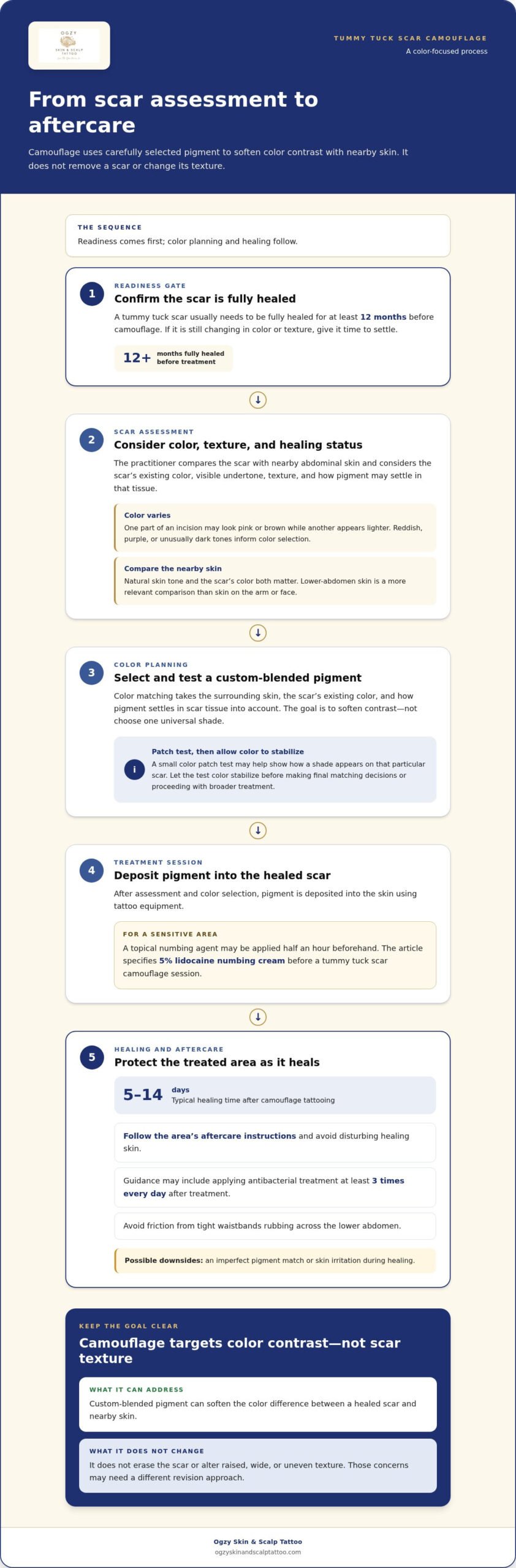
Medical scar camouflage involves assessing the scar, selecting pigment, then depositing it into the skin with tattoo equipment. A color patch test may help show how a chosen shade appears, and the color is allowed to stabilize before tattooing proceeds. For a sensitive area, a topical numbing agent may be applied half an hour beforehand; 5% lidocaine numbing cream is applied before a tummy tuck scar camouflage session.
Camouflage and Cover-Up Tattoos
A cover-up tattoo uses a decorative design to conceal or incorporate a scar into artwork. Scar camouflage takes a different approach: custom-blended pigment is selected to soften contrast with nearby skin. This distinction matters when deciding how you want the area to look. Camouflage addresses color, not raised or uneven texture.
Color matching is deliberate, not simply a matter of choosing a shade by eye. Skin tone, the scar’s existing color, and how pigment settles in that tissue all influence selection. A small patch test and time for the color to stabilize can guide the next step before a larger area is treated.
Healing also affects timing. A tummy tuck scar usually needs to be fully healed for at least 12 months before camouflage. A scar that is still changing in color or texture needs time to settle before pigment can be matched thoughtfully.
Camouflage reduces visual contrast; it does not erase the scar. If a dark line is the main concern, pigment may help soften its color difference. If raised tissue is the concern, pigment alone will not alter texture. This distinction helps set a realistic goal before treatment.
Look for a practitioner with relevant tattooing credentials and specific paramedical training in scar camouflage. Experience assessing scar tissue and planning color matches is also useful. Credentials alone don’t determine how pigment will settle, so consider how the practitioner explains the proposed approach for your scar.
Why is my tummy tuck scar dark?
A dark tummy tuck scar can contrast with nearby skin because its color differs from the surrounding skin. The appearance may vary along one incision: one portion can look pink or brown, while another appears lighter. Scar age, natural skin tone, and the scar’s current color all matter when considering pigment camouflage.
Skin tone correction starts with an assessment, not an assumed “matching” shade. The practitioner compares the scar with nearby skin and considers how pigment will look against both. For example, a warm brown scar against a deeper complexion calls for a different color assessment than a pale scar against lighter skin. The goal is to reduce contrast, not cover every mark with one universal pigment.
Color assessment considers the scar’s visible undertone alongside the surrounding skin. If a scar looks reddish, purple, or unusually dark, those tones inform the custom pigment selection. Choosing a shade based only on the scar’s darkest point can leave a visible mismatch, so camouflage should be planned for the specific area rather than selected from a generic skin-tone chart.
Custom ink matching also needs to account for natural variation across the body. Skin on the lower abdomen may not match skin on the arm or face, so the nearby abdominal skin is the more relevant comparison. A small test area can help show how a pigment reads on that particular scar before broader application. The test color needs time to stabilize before final matching decisions.
Skin tone affects visual contrast, but it does not determine whether a scar is ready for tattooing. A scar that is still changing, has uneven color, or feels different from the surrounding skin needs careful assessment. A stable, lighter line and a dark, uneven line present different color-matching challenges, even if both follow a tummy tuck incision.
Stretch marks can also differ from surgical scars in color and pattern, so they shouldn’t automatically receive the same pigment plan. The artist considers each area separately, including its tone, texture, and relationship to surrounding skin. If a dark mark is the primary concern, clarify whether the goal is to soften its color contrast or address another feature. That distinction can help keep expectations grounded and support confidence in the treatment plan.
For tailored guidance on color-focused scar and stretch mark revision, bring attention to the exact areas and tones that concern you most.
Healing, aftercare, and sun exposure
Healing after tummy tuck scar camouflage tattooing typically takes 5 to 14 days. Possible downsides include an imperfect pigment match or skin irritation during healing.
Healing Time and Aftercare
For the first 5 to 14 days, follow the aftercare instructions for the treated area and avoid disturbing healing skin. Aftercare guidance may include applying antibacterial treatment at least 3 times every day after treatment. Keep the area comfortable by avoiding friction from tight waistbands, which can rub across a lower-abdominal scar.
Sun Exposure During Healing
Avoid direct sunlight on the treated scar during healing. UV rays can fade pigment and change its color, making the healed shade less consistent with surrounding skin. In Austin, plan clothing that covers the abdomen during outdoor activities instead of exposing freshly treated skin to direct sun.
Follow-Up Sessions
Follow-up camouflage sessions are typically spaced several weeks apart, allowing the treated skin time to heal before more pigment is added. A follow-up assessment is advised 60-90 days after treatment. At that visit, the practitioner can assess how the color has settled and whether another session is appropriate.
Healing is a process, not a single appointment. A tummy tuck scar tattoo may need 5 to 14 days for the skin to heal, while pigment settling informs later decisions. Don’t judge the final color during the first days; the appearance can shift as the skin recovers.
Keep aftercare simple and consistent. Follow the practitioner’s directions for cleaning and applying antibacterial treatment, including the stated frequency of at least 3 times every day after treatment. Avoid picking at the area or adding products outside those instructions. These steps help protect the treated skin while it heals.
Sun protection matters throughout that healing period. Direct exposure can affect the pigment, so cover the abdomen with clothing when spending time outside. If clothing shifts during a walk or outdoor activity, reposition it to keep the treated scar covered. Avoid applying sunscreen to freshly treated skin unless the aftercare instructions say it’s appropriate.
Use the follow-up appointment to discuss color and texture together. A camouflage session changes pigment, not scar texture, so describe any unevenness or sensitivity that remains. Since follow-up sessions are spaced several weeks apart, the skin has time to recover before the next decision. The 60-90 day review also gives the practitioner a clearer view of the settled color.
Raised, wide, extended, fleur-de-lis, and belly-button scars
Tummy tuck surgery can leave scars with different shapes, widths, colors, and textures. For each area, distinguish what pigment camouflage may address from what it cannot change.
Abdominal Scar Types
A lower-abdominal incision may appear as a long line, while a fleur-de-lis pattern can include a vertical section as well. A belly-button scar is a separate area, with curves and edges that affect pigment placement. Raised or wide scar tissue also differs from a narrow, flat line, so consider shape and texture alongside color.
Extended scars may continue beyond the central abdomen, and each section can look or feel different. For example, one part might appear darker while another is raised. Consider the full surgical area before deciding which portions concern you. Pigment camouflage can soften color contrast, but it will not narrow a wide scar or change raised tissue.
Scar Color and Pigmentation
White or light scars may stand out against deeper surrounding skin, while dark or hyperpigmented scars can contrast against lighter skin. Compare each area with the skin beside it instead of assuming the entire incision has one shade. A lower-abdominal scar can vary along its length, so matching should account for those visible changes.
Scar color can shift as healing progresses. A newly changed area and a stable, lighter line present different matching questions. A tummy tuck scar usually needs to be fully healed for at least 12 months before camouflage. That timing matters because pigment selection depends on the scar’s settled appearance, not a temporary color change.
Scars Suitable for Camouflage
Camouflage is most relevant when color contrast is the main concern and the scar is fully healed. A flat, pale line and a dark line may both benefit from color assessment, but their pigment choices differ. Raised edges, width, and uneven texture also matter because a color-focused tattoo does not correct those features.
Before planning treatment, identify your goal for each area: reducing a pale line’s contrast, softening a dark patch, or addressing color variation across an extended incision. This separates pigment goals from texture concerns. A treatment assessment should consider the scar, its color, and the surrounding skin together, rather than applying one technique to every abdominal mark.
Scars change over time, so compare the current appearance with earlier photographs if available. A line that has become lighter, for example, may need a different pigment match than it did during earlier healing. Focus on the present color and texture, then consider whether camouflage addresses the feature you want to refine. Pigment can adjust visual contrast, not scar shape.
Tummy tuck scar camouflage
A tummy tuck scar camouflage plan in Austin starts with a clear goal: soften the scar’s color contrast while preserving the natural appearance of the surrounding skin. Ogzy Skin & Scalp Tattoo offers Scar Camouflage using custom-blended pigments matched to natural skin tone. It does not remove the incision, narrow a wide line, or change raised texture. Knowing which feature matters most helps shape a focused plan.
Start by identifying what you want to refine. Is the scar darker than nearby skin, pale and noticeable, or uneven in color along the incision? A line that looks darker at its center, for example, calls for a different color assessment from its lighter edges. Describe the whole area rather than focusing only on its most visible point.
Next, consider whether color camouflage matches your goal. Pigment addresses color contrast, while scar shape and texture remain separate concerns. If a lower-abdominal incision is wide or raised, color may still be a concern, but tattooing will not change the scar’s dimensions. This distinction helps avoid expecting one technique to address every feature of a surgical scar.
A custom plan considers the scar and surrounding skin together. Skin tone, the scar’s current color, and variations along the incision all inform pigment choices. A belly-button scar, for instance, has curves that differ from a straight lower-abdominal line. Each area needs its own assessment, even when both scars resulted from the same surgery.
Camouflage is gradual. Treatment commonly requires 2-4 or more sessions to build color density and refine the appearance. The number of sessions depends on how the scar takes pigment and how much color adjustment is needed. Rather than treating the first appointment as the finished result, view each stage as part of a progressive matching process.
Changes in weight can affect how abdominal skin lies, which may change how a scar looks across the body. Consider whether the scar’s appearance has been stable before focusing on a final color match. If its surrounding skin or visible tone is still changing, those differences matter when planning pigment and assessing the result.
Before treatment, write down your priorities: color blending, the appearance of one section, or consistency along the incision. Note what feels most noticeable in everyday settings, such as clothing or swimwear. These details make a consultation more focused and help distinguish a realistic camouflage goal from a request to erase or reshape scar tissue.
If you’re ready to discuss a personalized approach, explore scar revision options for your tummy tuck scar.
Ogzy Skin & Scalp Tattoo: Scar and Stretch Mark Revision
Ogzy Skin & Scalp Tattoo offers Scar & Stretch Mark Revision, including no-ink revision using medical-grade serums and Scar Camouflage with custom-blended pigments. For tummy tuck scars, the right approach depends on whether your concern is color contrast or another feature. The distinction between pigment camouflage and no-ink revision can help you describe your goals clearly.
Consider scar and stretch mark revision if a healed area remains a concern and you want to explore options beyond color camouflage alone. Share what you hope to refine, such as a dark line, uneven appearance, or visible stretch marks. That gives the discussion a practical starting point without assuming every method suits every scar.
To discuss scar and stretch mark revision, contact Ogzy Skin & Scalp Tattoo in Austin.
Choose a next step that feels right for you
Your next step can be simple: decide what you’d most like to change about your scar’s appearance, then use that priority to guide a conversation about your options. If you’re considering tummy tuck scar camouflage in Austin, think about whether color blending addresses your main concern or whether you’re also seeking broader scar revision. A clear goal helps keep the discussion focused on what matters to you.
Ogzy Skin & Scalp Tattoo offers Scar and Stretch Mark Revision, Microneedling, and Scalp Micropigmentation (SMP). For a conversation about scar revision and a path forward, contact Ogzy Skin & Scalp Tattoo. You can take the next step at your own pace, with your priorities leading the way.
Frequently Asked Questions
Does the success of treatment depend on scar tissue?
Yes. Scar tissue affects how pigment settles and how closely the treated area blends with nearby skin. A flat, pale line and a thicker, uneven scar can call for different approaches, even on the same abdomen. Scar color, texture, and contrast with surrounding skin all shape the assessment. For example, each section of a long incision may need to be considered separately.
How long does it take for the tummy tuck tattoo to heal?
Healing after tummy tuck scar tattooing typically takes 5 to 14 days. During that period, follow the aftercare instructions and keep direct sunlight off the treated skin, since UV exposure can affect pigment. The skin’s early appearance isn’t the same as the settled color, so avoid judging the match while it’s healing. Plan clothing that covers the lower abdomen during outdoor activities.
How long does the procedure take?
A tummy tuck scar tattoo procedure generally takes one to three hours. The treated area’s size and the detail involved influence how the appointment is organized. A long incision may need more careful work than a small, localized section, and the practitioner may focus on one area at a time. Ask how the planned treatment area will be approached so you can prepare for the appointment.
What is tummy tuck scar camouflage tattooing, and how does it work?
It’s a paramedical tattooing technique that places custom pigment in a healed scar to soften color contrast with nearby skin. It differs from decorative tattooing because the goal is blending, not creating artwork. Pigment is selected for the scar and surrounding skin, then applied in stages as needed. This approach addresses color, not scar width, raised texture, or the incision itself.
Which Austin providers offer tummy tuck scar camouflage or paramedical tattooing?
Ogzy Skin & Scalp Tattoo offers Scar & Stretch Mark Revision and Scar Camouflage in Austin, serving clients in Cedar Park, Leander, Round Rock, and Georgetown. The key distinction is whether your concern is color or texture. Camouflage uses custom-blended pigment, while no-ink revision uses medical-grade serums. Consider which feature you want to address when exploring treatment.
How long after a tummy tuck should you wait before scar camouflage?
A tummy tuck scar usually needs to be fully healed for at least 12 months before scar camouflage. The waiting period gives the scar time to settle, so its color and texture can be assessed more reliably. If different portions of the incision look unlike one another, note those changes before planning pigment. The current appearance, rather than the original surgical date alone, guides assessment.
Who is a good candidate for tummy tuck scar camouflage?
A suitable candidate for scar camouflage has a fully healed scar and wants to reduce color contrast rather than change scar shape or texture. Someone bothered by a pale line against surrounding skin, for example, has a color-focused goal, while a raised edge involves a separate concern. Describing the change you want helps distinguish camouflage from other scar revision approaches.
How many sessions are needed, and how long do results last?
Scar camouflage commonly takes 2-4 or more sessions to build color density and refine the match. Sessions are typically spaced several weeks apart, allowing the skin to recover before additional pigment is applied. Pigmentation may need retouching after 3-5 years. How the pigment settles and the scar’s color contrast help shape the treatment plan and any later touch-up decisions.

Article by
Opal Z
Opal is the owner and practitioner behind OGZY Skin & Scalp Tattoo in Austin, Texas. With more than three years in business and a longtime background in the aesthetics industry, she specializes in corrective and restorative treatments designed to address concerns that traditional aesthetics often overlook.
Her work focuses on scar and stretch mark revision, scar camouflage, scalp micropigmentation (SMP), hair regrowth treatments, and laser tattoo and permanent makeup removal. Opal works with a wide range of skin tones and takes an individualized approach to every client, considering skin color, texture, scar characteristics, treatment history, and realistic long-term outcomes.
Through OGZY Skin & Scalp Tattoo, her goal is to combine artistry, aesthetics, and technical treatment knowledge to help clients feel more comfortable and confident in their skin.
Love the skin you’re in.