
If you’re wondering what to expect during tattoo removal, it helps to know that the process is gradual, with treatment and healing taking place over time. You may have questions about discomfort, how your skin could look afterward, and how long fading may take. Each session is one step in a treatment plan, and your experience depends on your skin, the pigment, and your goals.
Laser treatment breaks tattoo pigment into smaller particles that your body gradually processes. Tattoos don’t all fade at the same pace, and removal usually isn’t completed in one visit. Pigment color and density, tattoo characteristics, and skin type all help shape a treatment plan and the changes you may see. Your goal matters too, whether you want to fade a tattoo or reduce its visibility as much as possible.
This guide covers what happens before, during, and after a session, including possible sensations, visible skin reactions, and ways to prepare for a useful treatment discussion. It also explains why plans vary, so you can approach a conversation with a local specialist feeling informed and prepared.
Key Takeaways
- Know what to expect during tattoo removal, from discussing your goals to understanding how laser energy interacts with pigment.
- Learn what sensations and visible skin changes may occur, and why they can vary from person to person.
- Prepare for your appointment by noting skin considerations and questions you’d like to discuss.
- Understand why fading or removal takes time and why your skin needs a healing period between treatment steps.
- See how a personalized plan can account for your skin type, pigment, and goals, including treatment for tattoos, cosmetic pigment, or previous scalp micropigmentation.
What to Expect During Tattoo Removal: The Journey Begins With Your Goals
Before discussing the laser or what a session may feel like, start with a practical question: what would you like to change? You may want an old design to look less prominent, make room for a future cover-up, or revise cosmetic pigment that no longer suits your preferences. Your reasons are personal and don’t need to fit anyone else’s idea of tattoo regret.
Laser tattoo removal is a gradual process intended to fade unwanted pigment. It isn’t instant, and treatment can’t guarantee that every visible trace will disappear. Some people want substantial fading rather than complete removal, particularly if they’re considering a cover-up. Others hope to reduce the pigment’s appearance as much as possible. Describing your preferred outcome helps make the treatment discussion more useful without promising a particular result.
What does laser tattoo removal aim to change?
The aim is to reduce the visibility of pigment through a planned course of treatment, guided by your goals. Laser tattoo removal can also be used for permanent makeup, cosmetic tattoos, and previous scalp micropigmentation. For background on different approaches and factors that can influence removal, explore Tattoo removal.
Describe what you want to see differently, rather than focusing only on the word “removal.” For example, you might want a design to be less noticeable in everyday life or hope to soften pigment in a particular area. These are useful starting points for planning, not guarantees about how your skin or pigment will respond.
Why can the experience differ from person to person?
No two treatment plans are identical. Planning takes into account skin type, pigment, tattoo characteristics, and your aesthetic goals. These details help guide how the area is assessed and what expectations make sense to discuss. Visible changes also vary, so another person’s timeline or outcome can’t reliably predict yours.
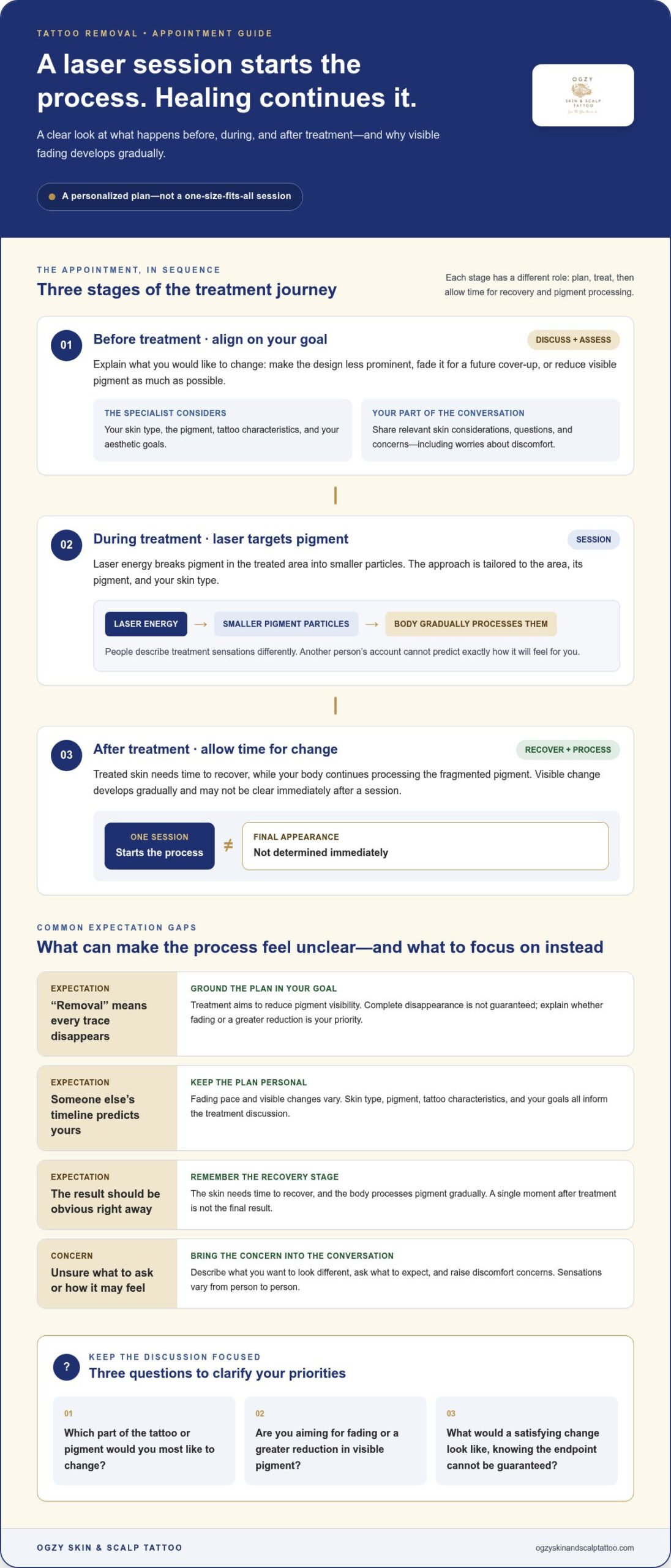
Before your appointment, consider the details you want to share:
- Which part of the tattoo or pigment would you most like to change?
- Are you aiming for fading, or hoping to reduce the pigment as much as possible?
- What would a satisfying change look like to you, while understanding that the endpoint can’t be guaranteed?
Your answers keep the conversation focused on your priorities and help separate your desired result from assumptions about what removal should look like. If your goals change as you learn more, that can be part of the discussion too.
Ogzy Skin & Scalp Tattoo offers advanced laser technology in Austin for decorative tattoos, permanent makeup, cosmetic tattoos, and previous scalp micropigmentation. Treatment plans are customized around your skin type, pigment, and aesthetic goals. Your tattoo, your skin, and the change you want all matter when setting realistic expectations before treatment begins.
What Happens During a Laser Tattoo Removal Appointment?
A laser tattoo removal appointment is a guided process, not simply a laser switched on over the area. You discuss what you hope to change, the specialist assesses the tattoo or pigment, and you review the treatment plan and what to expect. The session then follows an approach tailored to your situation. Knowing the general steps can make the appointment feel more predictable, even though each person’s experience differs.
What happens before the laser treatment?
The conversation starts with the area you want treated and your desired outcome. Explain whether you’re looking for fading or a greater reduction in visible pigment, and share any relevant skin considerations. The specialist assesses the area and discusses how your skin type, pigment, and aesthetic goals inform the plan. This helps set realistic expectations instead of assuming every tattoo should follow the same approach.
Bring questions about the process or explain what concerns you most. If you’re unsure how to describe your goal, start with what you’d like to look different. That gives the discussion a practical focus and helps align the plan with your priorities. The goal is clarity, not pressure to choose an endpoint before you feel ready.
What does the laser do to tattoo pigment?
During treatment, laser energy targets pigment in the treated area and breaks it into smaller particles. Your body gradually processes those particles, which can contribute to fading over time. The laser begins that process, but visible changes develop gradually as your body processes the fragmented pigment.
The approach is tailored to the area, including its pigment and your skin type, rather than treated as a one-size-fits-all procedure. That matters because the same experience or visible change can’t be assumed for everyone. Personalizing the plan also keeps the discussion focused on your goals and the characteristics of the pigment.
People describe sensations during laser treatment differently, so another person’s account can’t predict exactly how it will feel for you. If you’re concerned about discomfort, mention it during the appointment discussion. Ask what to expect and raise concerns as they come up. You don’t need to minimize how you feel or assume your experience will match someone else’s.
The appointment is one part of the process. The treated skin needs time to recover, and your body continues processing pigment after the session. The change may not be immediately clear, so understanding what to watch for can help you avoid treating a single moment as the final result.
For Austin-area readers, discussing laser tattoo removal with Ogzy connects the appointment process to your personal goals. Knowing what happens before, during, and after treatment gives you a clearer foundation for the next steps.
What Does Tattoo Removal Feel Like, and How Should You Interpret Changes?
Questions about discomfort and how your skin may look afterward are a natural part of learning what to expect during tattoo removal. There isn’t one sensation or visible response that applies to everyone. Understanding that variation helps you prepare without treating another person’s experience as a prediction of your own.
Is tattoo removal painful?
Laser treatment can cause discomfort, but people experience and describe sensations differently. Your skin, the area being treated, and your individual sensitivity all affect how it feels. There’s no need to compare removal with getting a tattoo or assume someone else’s account will match yours. Share your concerns during treatment planning so they can be part of the discussion.
If you feel uneasy, say so before treatment begins. Ask what sensations may occur and how the session will proceed. Being open about your concerns helps the specialist understand what you would like to know. It’s also reasonable to pause and ask a question if you’re unsure about what you’re experiencing.
What changes or trade-offs should you understand?
Fading happens gradually, and pigment may not disappear completely. The treated skin can react as it heals. Reactions vary and can include redness, tenderness, swelling, blistering, or changes in skin pigment. Scarring is also a possible risk. These are considerations to discuss, not a prediction that any particular reaction will happen to you.
Try to view the area in context rather than judging the outcome immediately after treatment. Skin changes are part of the healing period, while pigment fades gradually over time. Discuss which changes may be relevant to your skin and what to do if you have concerns during recovery.
Your goal can shape the trade-offs you’re weighing. If you want to make a design less prominent before a cover-up, fading may be the aim rather than removing every trace. If you’d rather reduce unwanted pigment without replacing it, explain that goal. Choosing not to treat is also a valid option. The decision should reflect what feels right for you, not pressure to pursue a particular result.
As you weigh your options, consider these questions:
- What change would feel meaningful to you?
- Would fading meet your goal, or are you hoping for a greater reduction in visible pigment?
- What questions do you have about sensation, skin reactions, or healing?
There’s no single correct answer. A thoughtful discussion of your comfort concerns, desired endpoint, and possible skin responses can help you decide whether to proceed and set realistic expectations. The aim is an informed choice that respects both your skin and your reasons for considering treatment.
How to Prepare for Tattoo Removal and Navigate the Healing Period
Thoughtful preparation can help you feel more at ease, although it can’t predict how your skin will respond or guarantee a particular result. Tattoo removal involves treatment followed by a healing period, and the process may include more than one appointment. Allow room in your schedule for treatment and recovery rather than expecting one visit to settle the outcome.
What should you plan before an appointment?
Before your appointment, organize your goals and questions. Note what change you hope to see, what you want to understand about possible skin reactions, and any skin considerations you’d like to discuss. This isn’t a test or a promise of results. It helps focus the conversation so you can feel informed before deciding how to proceed.
This short checklist can help keep the discussion centered on what matters to you:
- Describe whether you’re hoping for fading or a greater reduction in visible pigment.
- Share relevant skin considerations and mention concerns about treatment or healing.
- Ask what changes may be realistic for your goals and what risks to understand.
- Consider your schedule so you have room to focus on healing after treatment.
What should you expect while your skin heals?
Healing is part of the treatment journey, not a sign that the process is finished. The treated skin may look or feel different as it recovers, and individual responses vary. Avoid judging the overall change too soon: visible fading develops gradually, while your skin needs time to heal between treatment steps. Follow the care instructions provided for your treatment.
Follow the individualized care instructions provided for your treatment. They’re specific to your plan, so general advice from someone else may not fit your situation. Direct questions about your skin or its response to the guidance you received rather than assuming another person’s recovery is a template for yours.
For more detailed guidance, see laser tattoo removal aftercare guidance. It can help you prepare for the recovery side of what to expect during tattoo removal. Keep in mind that each appointment is one stage in a gradual process.
Preparation is most useful when it creates clarity, not pressure to predict every detail. If you’re considering laser tattoo removal in Austin, discuss your tattoo removal goals as part of a personalized treatment plan shaped around your skin, pigment, and aesthetic preferences.
Choosing a Personalized Tattoo Removal Plan in the Austin Area
A useful treatment plan starts with your goals, not a one-size-fits-all promise. At Ogzy Skin & Scalp Tattoo, advanced laser technology is used for unwanted decorative tattoos, permanent makeup, cosmetic tattoos, and previous scalp micropigmentation. Whether you hope to soften pigment or reduce its appearance, your reasons are personal and deserve a thoughtful, non-judgmental discussion.
How does Ogzy tailor laser tattoo removal?
Ogzy customizes treatment plans around your skin type, the pigment being treated, and your aesthetic goals. These considerations shape a discussion that reflects your situation rather than assuming every tattoo or cosmetic pigment will respond alike. Sharing what you hope to change and what questions you have helps set realistic expectations without guaranteeing a particular endpoint.
People come in with different concerns. You may want to address an unwanted tattoo, revise cosmetic pigment, or change previous scalp micropigmentation. Start by explaining what matters to you now. Your preferences may have changed, or the pigment may no longer fit the look you want. There’s no need to justify that decision; it’s useful context for a personalized plan.
As you consider what to expect during tattoo removal, remember that a plan is based on your skin, pigment, and desired change. That personal focus can help you understand the approach and its limits before deciding how to move forward.
What is a helpful next step for Austin-area clients?
If you’re in Austin or a nearby community, discuss your tattoo or cosmetic pigment and the outcome you have in mind with Ogzy. The clinic serves Austin, Cedar Park, Leander, Round Rock, and Georgetown. Sharing your goals and questions is a practical first step toward understanding how a personalized laser tattoo removal plan may fit your needs.
You don’t need to arrive with every answer. Explain what you’d like to change, whether your goal is fading or a greater reduction in visible pigment, and what concerns you’d like addressed. The conversation can clarify the next steps while keeping expectations realistic and centered on you.
If you’re ready to talk through your options, Discuss your tattoo removal goals with Ogzy.
Take the Next Step at Your Own Pace
Deciding to explore tattoo removal doesn’t mean you need every answer today. Start by identifying what you’d like to change and what would help you feel comfortable moving forward. An honest conversation can make your options clearer while leaving room for your goals to evolve.
Understanding what to expect during tattoo removal is less about predicting every detail and more about making an informed choice that feels right for you. Your questions matter, as does the outcome you have in mind. There’s no need to rush the decision.
When you’re ready, discuss your tattoo removal goals with Ogzy. A thoughtful conversation can help you consider a choice that feels informed and personal.
Frequently Asked Questions
How many tattoo removal sessions will I need?
There isn’t one session count that fits every tattoo. The number depends on factors such as the tattoo’s size, pigment, density, and location, along with your skin and desired degree of fading. During planning, discuss the outcome you’re hoping for and how progress will be evaluated. An estimate can guide expectations, but it can’t promise a particular endpoint. Understanding what to expect during tattoo removal means allowing for a process tailored to your circumstances.
How long should I wait between tattoo removal sessions?
The appropriate interval depends on your treatment plan and how your skin responds, so don’t assume a standard calendar schedule is right for you. Your skin needs time to recover, and treatment planning should account for that healing before another session is considered. Follow the timing guidance provided for your treatment rather than comparing your schedule with someone else’s or trying to speed up the process.
Can laser tattoo removal remove every tattoo completely?
No, complete removal can’t be guaranteed. Laser treatment is intended to fade pigment, but how much it changes varies with the tattoo and individual factors. Some people may choose to reduce visibility rather than expect every trace to disappear. Before treatment, be clear about what “removed” would mean to you, and discuss realistic expectations for your specific tattoo instead of relying on someone else’s result.
Can I get a new tattoo over an area treated with laser removal?
It may be possible to tattoo an area after laser treatment, but the skin should be fully healed and ready first. Don’t plan a cover-up based only on a calendar date or on how the area looks shortly after a session. Discuss your intention with the specialist managing your removal plan, who can advise whether the skin’s current condition and treatment progress make it an appropriate next step.
How much does tattoo removal cost?
The cost depends on the treatment plan for your tattoo, so a general figure may not reflect your situation. The area being treated, its pigment, and your aesthetic goal are relevant to planning. Describe what you hope to change and the area you want addressed to discuss a plan tailored to your needs. Ogzy serves clients in Austin, Cedar Park, Leander, Round Rock, and Georgetown.
Can laser removal be used for permanent makeup or scalp micropigmentation?
Yes. Laser tattoo removal can be used for permanent makeup, cosmetic tattoos, and previous scalp micropigmentation, as well as decorative tattoos. These forms of pigment can have different purposes and personal significance, so explain what you want changed and the outcome you’re considering. A treatment plan can then be shaped around your skin type, pigment, and goals without assuming that every area or person will respond in the same way.
What should I do if my skin seems unusually irritated after treatment?
If your skin looks or feels more irritated than the care guidance led you to expect, follow the individualized instructions provided for your treatment and contact the clinic for direction. Describe what has changed and when you first noticed it. Avoid adding products or changing your care routine based on guesswork. Clear, timely communication can help you understand what to do next in the context of your treatment plan.

Article by
Opal Z
Opal is the owner and practitioner behind OGZY Skin & Scalp Tattoo in Austin, Texas. With more than three years in business and a longtime background in the aesthetics industry, she specializes in corrective and restorative treatments designed to address concerns that traditional aesthetics often overlook.
Her work focuses on scar and stretch mark revision, scar camouflage, scalp micropigmentation (SMP), hair regrowth treatments, and laser tattoo and permanent makeup removal. Opal works with a wide range of skin tones and takes an individualized approach to every client, considering skin color, texture, scar characteristics, treatment history, and realistic long-term outcomes.
Through OGZY Skin & Scalp Tattoo, her goal is to combine artistry, aesthetics, and technical treatment knowledge to help clients feel more comfortable and confident in their skin.
Love the skin you’re in.