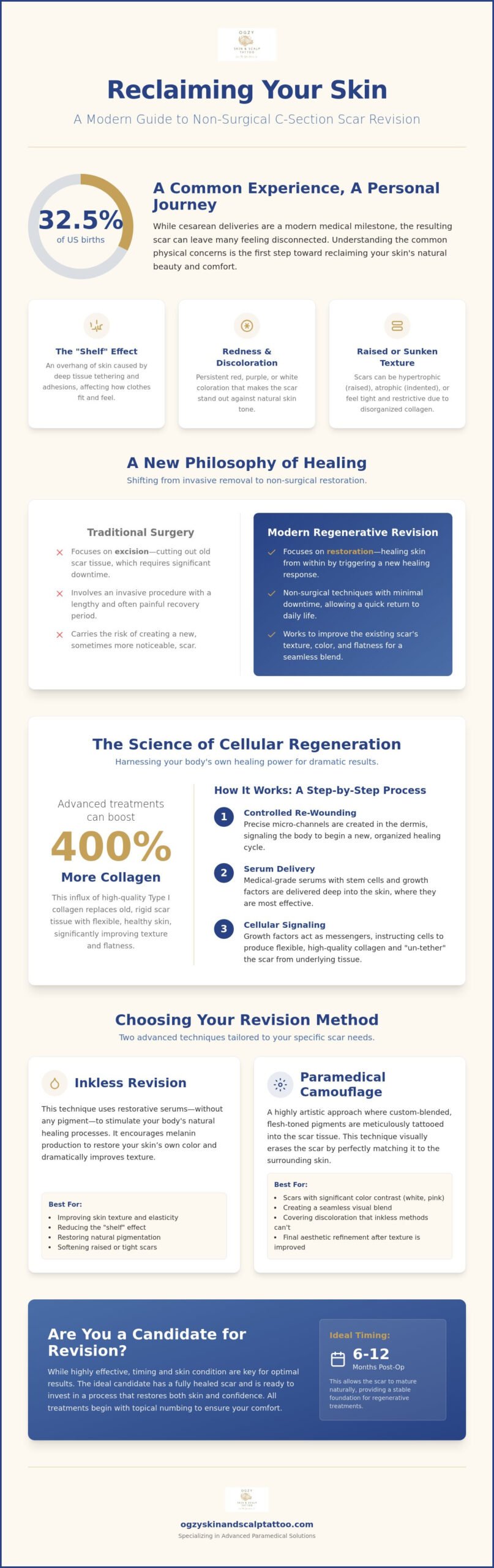
Did you know that 32.5% of all live births in the United States now occur via cesarean delivery? While this procedure is a life-giving milestone, the resulting mark often leaves women feeling a profound disconnect from their own bodies. Whether you’re struggling with the physical “shelf” that affects how your clothes fit or the persistent redness that makes the mark stand out, seeking a C-section scar revision doesn’t have to mean returning to the operating table.
You likely feel that your body deserves to feel like home again; we believe that healing should be as gentle as it is effective. You can reclaim your skin’s natural beauty through advanced, non-surgical techniques that restore both texture and tone. In this guide, we will explore how medical-grade regenerative treatments can boost collagen by up to 400% and how the meticulous art of paramedical tattooing creates a seamless blend with your surrounding skin. You’ll discover how to achieve a flatter, smoother appearance that allows you to feel truly confident in your own skin again.
Key Takeaways
- Learn how modern C-section scar revision provides a non-surgical path to smoothing the “shelf” effect and improving skin texture without the recovery time of traditional surgery.
- Discover the science behind medical-grade stem cells and growth factors that signal your body to produce healthy collagen for deep skin regeneration.
- Compare the benefits of custom pigment camouflage and inkless revision to see which artistic approach best erases the visible line of your scar.
- Gain clarity on the restorative journey, from the use of topical numbing for comfort to the step-by-step process of professional skin refinement.
Beyond the Knife: Understanding Modern C-Section Scar Revision
Many women view their C-section scar as a badge of strength; however, that doesn’t mean you must accept the physical discomfort or aesthetic disconnect it may cause. Modern C-section scar revision is no longer a binary choice between living with a permanent mark or undergoing another invasive surgery. Instead, it exists on a sophisticated spectrum of care. While traditional plastic surgery focuses on “removing” the old tissue through excision, regenerative aesthetics focuses on “restoring” the skin’s integrity from the inside out. This restorative philosophy treats the scar as a living part of your story that simply needs a more refined healing response.
The complexity of a cesarean incision makes it unique compared to other surgical marks. The common “shelf” effect, or skin overhang, often results from deep tissue tethering. During the healing process, internal layers of fascia and muscle can stick together, creating adhesions that pull the skin inward. This structural anchoring is why the scar often feels tight, looks indented, or creates a stubborn bulge that resists diet and exercise. Choosing the right path for revision requires understanding these underlying biological layers.
Why Do C-Section Scars Heal Differently?
Every body responds to trauma with a unique biological signature. Factors such as genetic predisposition, the amount of tension on the incision, and your body’s specific inflammatory response dictate the final look of the mark. Understanding The Science of Scar Formation helps explain why some women develop raised, firm tissue known as hypertrophic scars, while others may experience keloids that grow beyond the original boundary. Some may even see atrophic scars, which appear as thin, sunken lines. The color of the mark, whether it is deep purple, bright red, or stark white, is determined by blood flow and the density of the collagen fibers packed into the area.
The Limitations of Traditional Scar Creams
It is common to reach for over the counter silicone sheets or topical gels, but these solutions rarely address deep surgical scars effectively. While they may provide a protective barrier, they lack the ability to penetrate the dermis and reorganize the dense, chaotic collagen bundles that cause a scar to stand out. Professional-grade C-section scar revision requires a more deliberate intervention. By utilizing controlled “re-wounding” techniques, we can trigger a new, organized healing response. This process replaces the old, rigid tissue with flexible, high-quality collagen, allowing the skin to finally lay flat and blend seamlessly with your natural tone.
The Science of Regeneration: Stem Cells and Growth Factors
The healing journey takes a sophisticated turn when we move beyond surface treatments and look into cellular communication. In modern paramedical aesthetics, we utilize medical-grade stem cells to speak the language of your skin. This isn’t about masking a mark. It’s about fundamentally changing how the tissue behaves. By creating precise micro-channels in the dermis, we deliver potent serums that reach the depths where the scar is rooted. This delivery system bypasses the skin’s barrier to place growth factors exactly where they are needed to initiate a structural shift. This methodical approach allows us to address the root cause of the scar’s appearance rather than just its surface texture.
If you’re curious about how these biological messengers can transform your specific scar, you can explore the restorative options at Ogzy Skin & Scalp Tattoo to see if you’re a fit.
How Growth Factors Change the Scar Architecture
Growth factors act as biological messengers. They signal your body to stop producing the stiff, disorganized tissue that makes a scar feel rigid and start producing high-quality Type I collagen instead. This shift in architecture is crucial for C-section scar revision because it helps “un-tether” indented marks from the underlying fascia. As the skin regains its elasticity, it begins to lay flatter and feel more pliable. In many cases, we use an “inkless” method of repigmentation. This technique encourages the body to restore its own natural melanin, helping the scar blend into your surrounding skin tone without the need for pigment. Medical-grade stem cells significantly accelerate the healing timeline compared to standard microneedling by providing the raw materials necessary for rapid cellular turnover.
Who is a Candidate for Regenerative Revision?
Not every scar is ready for treatment at the same time. Generally, the ideal candidate has a scar that is between 6 and 12 months old, as this allows the initial clinical approaches to scar revision to settle naturally. Your overall health and skin type also play a role in the outcome. Regenerative treatments are remarkably safe for all skin tones, including darker Fitzpatrick scales, because they rely on your body’s own biological response rather than aggressive heat or lasers. It’s also vital that you have completed your breastfeeding or pregnancy journey before beginning this process. This ensures your hormones are stable and your body can focus all its energy on the restorative work at hand. This patience ensures your skin is in the optimal state for a successful transformation.
Ink vs. No-Ink: Choosing Your Revision Method
Deciding between ink and inkless techniques is a pivotal step in your personal transformation. While we’ve discussed the biological groundwork of healing, these specific methods are where the artistry of C-section scar revision truly comes to life. We carefully evaluate the unique pigment and texture of your mark to determine which path will yield the most natural result. Whether your goal is to blend a stark white line or flatten a persistent ridge, understanding the full spectrum of ink vs no ink scar revision defines your final aesthetic outcome. At Ogzy, we don’t believe in a one-size-fits-all solution; we focus on the specific needs of your skin.
The Art of Custom Pigment Camouflage
Paramedical tattooing is a highly specialized craft that differs significantly from traditional decorative tattooing. We utilize medical-grade pigments specifically formulated to mimic the subtle, multi-tonal nuances of human skin. These pigments are designed for stability, meaning they won’t shift into unwanted blue or green hues as the years pass. Our primary goal is seamless integration. We aim to make the scar virtually invisible to the naked eye at a conversational distance, allowing you to feel at ease in swimwear or intimate settings. This method is particularly effective for scars that have lost their natural color and appear as white or silvery lines. To preserve this meticulous match, you’ll need to prioritize sun protection. Since the camouflaged area won’t tan at the same rate as your surrounding skin, a high-quality SPF is essential for maintaining your results throughout Your Journey to Skin Restoration.
Inkless Revision: The Power of Natural Healing
Inkless Skin Revision (ISR) offers a different, yet equally sophisticated, philosophy. Instead of introducing external color, we use a specialized serum cocktail to wake up your body’s own pigment-producing cells, called melanocytes. This method is a powerhouse for texture improvement. If your scar has a noticeable bump, ridge, or “shelf” effect, ISR works to soften those fibrotic fibers and smooth the skin’s surface. It’s often the first step in a comprehensive plan. You might wonder which is right for you. Generally, we follow a simple guideline for selection:
- Choose Inkless if: Your scar is currently red, purple, or significantly raised. This method is best for smoothing texture and encouraging natural repigmentation.
- Choose Pigment Camouflage if: Your scar is white, flat, and older than one year. This is the “finishing touch” that erases the visible line.
The “Ogzy approach” often involves a tailored combination of both. We might begin with several inkless sessions to flatten and refine the skin’s architecture, then finish with a custom pigment application to ensure the scar disappears into your natural complexion. This dual-layered strategy ensures that both the feel and the look of your skin are fully restored. Many of our clients also find that the same regenerative principles apply when they explore a stretch mark camouflage tattoo as part of a comprehensive body confidence plan.
What to Expect: Your Journey to Skin Restoration
Understanding the path forward often eases the natural anxiety that comes with any aesthetic procedure. Your journey toward a more confident self is a methodical process designed to respect your body’s natural healing rhythm. Unlike the heavy recovery associated with surgical alternatives, non-surgical C-section scar revision focuses on gradual, sophisticated refinement. Each session is a step toward renewal, moving you closer to a version of yourself that feels more integrated and whole. We prioritize your comfort and peace of mind at every stage, ensuring you feel like a partner in your own transformation.
The most common question we hear is about the sensation of the treatment itself. We use a high-potency, medical-grade topical numbing agent to ensure your experience is as comfortable as possible. Most clients describe the feeling as a light, rhythmic vibration or a minor scratching sensation rather than pain. While you might notice initial improvements quickly, achieving a truly seamless result usually requires a series of 3 to 5 sessions. This allows your skin to build layers of healthy collagen and, if necessary, for us to layer pigments with the precision of a fine artist. If you’re ready to start this restorative process, you can book your personal consultation to begin your customized plan.
The Consultation and Skin Analysis
Every restoration begins with a deep dive into the unique characteristics of your skin. During your one-on-one consultation at Ogzy, we meticulously assess the depth, color, and mobility of your scar. We look for adhesions that might be causing that “tethered” look and determine how the tissue responds to light pressure. If we’re planning a custom pigment camouflage, a patch test is a vital step. We apply a tiny amount of pigment to a discreet area to ensure the color settles perfectly and matches your natural undertones before proceeding with the full revision. This phase is about more than just technical data; it’s about listening to your story and understanding your goals.
Downtime and Aftercare Reality
One of the greatest benefits of this specialized craft is how little it disrupts your life as a busy mother. While surgical revision can sideline you for weeks, non-surgical methods typically involve only 24 to 48 hours of “social downtime.” You might experience some mild redness or swelling, similar to a light sunburn, but this fades quickly. To ensure the best pigment retention and healing, you’ll need to follow a few simple guidelines:
- Avoid submerging the area in water, such as pools, hot tubs, or baths, for at least one week.
- Keep the area protected from direct sun exposure to prevent pigment shifting.
- Wear loose, breathable clothing to minimize friction against the treated skin.
Most mothers find they can return to their normal daily routines with their children immediately after leaving the clinic. This ease of recovery makes it possible to prioritize your self-care without sacrificing your family commitments.
Why Austin Mothers Trust Ogzy for C-Section Revision
Opal’s dedication to the craft of paramedical aesthetics makes Ogzy a unique destination for those seeking more than a surface-level fix. We approach C-section scar revision with the precision of a specialist and the heart of a mentor. While many aesthetic centers offer dozens of disparate services, we’ve chosen to master a niche craft. This focus allows us to provide a level of meticulous detail that ensures your results are as natural and seamless as possible. We don’t just see a scar; we see an opportunity to restore your skin’s integrity and your personal confidence.
Our clinic serves as a central hub for mothers across Central Texas. Whether you are coming from Cedar Park, Round Rock, or Georgetown, you’ll find a professional environment that values your time and your personal transformation. We combine the latest in regenerative science with a deeply personalized touch, positioning us as the premier choice for women who refuse to settle for anything less than excellence. By choosing a specialist who focuses exclusively on skin and scalp restoration, you’re ensuring that your body is in the hands of a true expert.
A Specialized Sanctuary for Skin Healing
We understand that discussing a surgical scar can feel vulnerable. That’s why we’ve created a private, supportive environment where discretion and comfort are our highest priorities. Every treatment utilizes medical-grade serums and the most stringent safety standards to protect your health while we refine your skin. Our commitment to using high-quality growth factors and stem cells ensures that your healing is supported by the best that modern science has to offer. If you’re looking to address other areas of concern, we also offer specialized Stretch Mark Revision Treatment to help you achieve a comprehensive sense of renewal and body confidence.
Taking the Next Step Toward Confidence
Your body has done incredible things, and it’s okay to want to feel like yourself again. Transformation is a journey, but you don’t have to walk it alone. We invite you to join us for a no-pressure consultation where we can explore the specific architecture of your scar and design a path forward that feels right for you. There is genuine hope for a smoother, flatter, and more integrated appearance that lets you look in the mirror with joy. It’s time to bridge the emotional gap between your current reflection and how you deserve to feel. You can schedule your C-section scar consultation in Cedar Park today and take the first step toward reclaiming your self-assurance.
Reclaim Your Confidence and Your Skin’s Natural Story
Restoring your self-assurance after a cesarean delivery doesn’t require another invasive surgery. We’ve explored how medical-grade stem cells and growth factor technology can physically un-tether scar tissue, while custom pigment matching allows the mark to blend seamlessly into your natural skin tone. These non-surgical advancements offer a sophisticated way to smooth the “shelf” effect and neutralize discoloration with minimal disruption to your life as a mother. At Ogzy, we specialize in this refined art of paramedical tattooing and skin rejuvenation, specifically serving mothers in Cedar Park, Austin, and Round Rock who value artistic precision and restorative science.
Your journey toward a flatter, smoother scar is a personal one, and you deserve a partner who understands both the science and the soul of the process. If you’re ready to see what modern C-section scar revision can do for your body and your spirit, we’re here to guide you through every step of the restoration. You don’t have to live with a mark that feels like a barrier between you and your reflection. Book Your Confidential Scar Revision Consultation today to explore a tailored plan for your skin. It’s time to feel truly at home in your body again.
Frequently Asked Questions
How soon after a C-section can I start scar revision treatments?
You should wait at least six to twelve months before beginning your journey toward skin restoration. This timeframe allows the surgical mark to fully mature and ensures the tissue is stable enough for regenerative work. Starting too early can disrupt the body’s natural inflammatory phase. By waiting until the mark has settled, we can more accurately assess the texture and color for a more predictable and successful outcome.
Is C-section scar revision painful?
Most clients find the procedure very manageable due to the application of medical-grade topical numbing. You won’t feel sharp pain; instead, you’ll likely notice a light rhythmic vibration or a mild scratching sensation. We prioritize your comfort throughout the session, ensuring you feel relaxed as we work to refine your skin’s appearance. Our goal is to make the experience as restorative for your mind as it is for your body.
Will insurance cover the cost of non-surgical scar camouflage?
Non-surgical C-section scar revision is generally considered a cosmetic procedure and is not covered by most health insurance plans. While some surgical revisions might be partially covered if they address functional pain or restricted movement, paramedical tattooing and regenerative treatments are elective aesthetic choices. It’s always a good idea to check with your provider, but you should plan for this as an out-of-pocket investment in your personal self-confidence.
How many sessions of microneedling with growth factors will I need?
Most women see the most transformative results after a series of 3 to 5 sessions spaced several weeks apart. Every body heals at a different pace, so we tailor the timeline to your skin’s specific biological response. These sessions are essential to allow the medical-grade growth factors to fully reorganize the collagen layers. This gradual approach creates a smoother, flatter surface that looks natural and feels significantly more pliable.
Can you fix an old C-section scar that is several years old?
Yes, we can successfully treat scars that are many years old with excellent results. In fact, older scars are often very stable and respond beautifully to the restorative stimulus of regenerative treatments. Whether your mark is two years old or twenty, the process of specialized microneedling and pigment camouflage can still trigger significant improvements. It’s never too late to seek a C-section scar revision and reclaim a sense of comfort in your skin.
What is the difference between paramedical tattooing and a regular tattoo?
Paramedical tattooing is a specialized restorative craft that uses medical-grade pigments designed to mimic natural skin tones without shifting color over time. Unlike decorative tattooing, which uses bold inks and artistic designs, our goal is subtle, seamless integration. We focus on camouflage and skin health rather than creating a visible mark. This ensures the scar disappears into your natural complexion rather than standing out as an intentional piece of art.
Can I get scar revision if I plan to have more children in the future?
You can certainly receive treatment if you plan to have more children, though many women choose to wait until their family is complete for the most permanent results. A future pregnancy and another incision may alter the outcome of your revision. However, if the scar is currently causing you emotional distress or physical discomfort, treating it now can provide relief and improved skin elasticity before your next journey into motherhood.
What happens if my scar is a raised keloid-can it still be treated?
Raised or keloid scars can be treated, but they require a methodical, texture-first approach to ensure safety and efficacy. We often utilize inkless skin revision to help flatten the firm, excess collagen before considering any pigment camouflage. This ensures we aren’t just masking the color but actually refining the architecture of the scar. We focus on creating a more level and pliable surface that feels integrated with the surrounding healthy skin.