
You look in the mirror each morning, but instead of seeing your natural beauty enhanced, your eyes fixate on the unnatural arc of a faded brow or the harsh edge of an old scalp treatment. It’s exhausting to carry the weight of a beauty decision that didn’t go as planned, especially when it’s right there on your face. You likely feel a mix of frustration and a very real fear that trying to fix it could lead to permanent scarring or painful burns. You aren’t alone; as of 2026, the demand for restorative procedures is rising as more people seek to reclaim their natural look after a procedure that didn’t meet their expectations.
Modern cosmetic tattoo removal in Cedar Park has evolved into a sophisticated, restorative art that focuses on healing as much as clearing. This guide will show you how advanced laser technology can safely erase unwanted permanent makeup and scalp micropigmentation while prioritizing the long-term health and integrity of your skin. We’ll walk through the critical differences between laser and saline methods, explain the realistic timeline for your personal transformation, and detail the regenerative protocols that ensure your skin remains a beautiful, healthy canvas for your fresh start.
Key Takeaways
- Understand why cosmetic tattoo removal is essential for correcting pigment migration or outdated permanent makeup shapes while preserving your natural features.
- Learn how specialized laser energy fragments ink particles deep within the skin without compromising the health of the surrounding tissue.
- Compare the benefits of laser treatments against saline alternatives to determine which method offers the most effective path for your unique skin type.
- Discover the specific recovery roadmap and why a methodical 6-to-8 week healing period is vital for a clear, restorative outcome.
- Explore how a personalized consultation in Cedar Park ensures your journey from removal to skin revision is handled with professional precision and care.
Understanding Cosmetic Tattoo Removal: Why PMU and SMP Need Correction
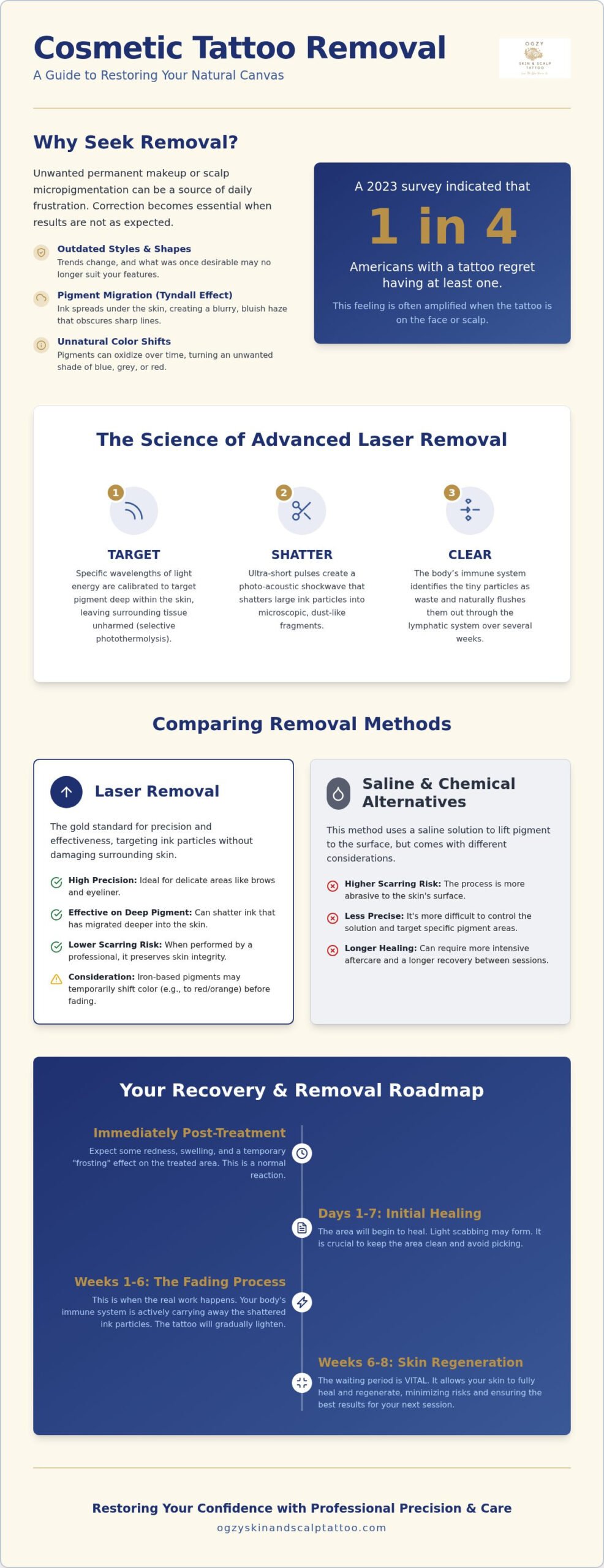
Cosmetic tattoo removal is the specialized process of lifting or neutralizing pigment from permanent makeup (PMU) and scalp micropigmentation (SMP). Unlike traditional body art, these procedures involve delicate facial skin or the sensitive scalp area. When the original work migrates, shifts into an unnatural blue or grey tone, or simply falls out of style, professional correction becomes a necessity. A 2023 survey indicated that 1 in 4 Americans with a tattoo regret at least one of them; this sentiment is often amplified when the ink is prominently located on the face or scalp. These pigments are often formulated differently than standard tattoo ink. They are designed to be semi-permanent but can become trapped or altered by the skin’s natural chemistry over time.
Many people initially consider a “cover-up” to fix a mistake, but adding new pigment over a saturated area often leads to a heavy, muddy appearance that lacks the subtlety of natural skin. This is why professional practitioners often recommend at least partial fading first. For a comprehensive overview of tattoo removal techniques and the science behind these processes, understanding the limitations of layering ink is crucial. You can’t simply paint over a mistake on the skin; you have to clear the canvas first to achieve a refined, natural-looking result.
The Emotional Impact of Unwanted Cosmetic Tattoos
Living with a facial tattoo that feels “wrong” creates a unique kind of distress. It isn’t just about aesthetics; it’s about how you present yourself to the world every day. We see many clients who feel a deep sense of embarrassment or anxiety over botched work. A restorative approach recognizes that this journey is about more than just physics and light. It’s about reclaiming your self-assurance and feeling like yourself again. The consultation serves as a safe space where your concerns are heard and a clear, hopeful path forward is established, replacing fear with a concrete plan for renewal.
When to Choose Removal Over Camouflage
It’s tempting to try and hide a bad brow with more ink, but skin has a finite limit to how much pigment it can hold. When the tissue is fully saturated, adding more color will only result in a blurry, unnatural look. Another clear sign that you need cosmetic tattoo removal is the “Tyndall effect,” where pigment has migrated too deep or spread horizontally, creating a bluish haze under the skin. In these cases, removal is the only way to restore the crisp, clean lines or natural skin tones you desire. We focus on the health of the skin under the ink to ensure that the restoration is seamless and lasting.
The Science of Laser Removal for Sensitive Facial and Scalp Areas
Laser technology has evolved from a broad tool into an instrument of clinical artistry. It operates on the principle of selective photothermolysis, where specific wavelengths of light energy are calibrated to target pigment without disturbing the surrounding epidermis. By delivering ultra-short pulses of energy, the laser creates a photo-acoustic effect that shatters the pigment into dust-like particles. This precision is vital for the face and scalp, where the skin is thinner and more vascular than other parts of the body. Once the ink is fragmented, your immune system’s macrophages step in to naturally flush these particles through the lymphatic system over several weeks.
Safety is the cornerstone of every restorative procedure we perform. We utilize specialized protocols to protect your most delicate features, such as stainless steel ocular shields for eyeliner work and cooling systems to manage thermal energy on the scalp. This meticulous approach aligns with FDA information on tattoo removal, which emphasizes the importance of using cleared medical devices and following strict safety standards. By respecting the skin’s biological limits, we ensure that the removal process is a path toward healing rather than further irritation.
Laser Removal for Brows and Eyeliner
Correcting brows often involves managing color shifts that occur as the laser interacts with specific ink formulations. Many cosmetic pigments contain iron oxides that may temporarily turn orange or red after the first session; this is a normal, predictable part of the chemical transition as the ink breaks down. For eyeliner, the focus is on extreme precision to clear migrated “tails” or blurred edges without impacting the lash line. Laser removal stands as the superior choice for deep pigment saturation because it penetrates the dermal layers to shatter ink that non-laser methods simply cannot reach. This depth ensures that even the most stubborn, dark pigments are addressed effectively.
Fading and Correcting Scalp Micropigmentation (SMP)
When scalp micropigmentation is applied too deeply or with incorrect technique, it can lose its individual “follicle” appearance and merge into a solid, helmet-like shadow. We use targeted laser frequencies to break up this saturation, often performing partial fading rather than total removal. This creates the necessary space to re-apply a more realistic, textured follicle simulation. Crucially, the laser’s wavelength is attracted to the ink pigment rather than the natural hair follicle’s root, allowing us to clear the unwanted shadow while preserving your existing hair. For a complete understanding of how this process works step by step, our guide on how to fade scalp tattoo with laser walks through the precise techniques and safety protocols used in modern restorative treatments. If you’re looking for a partner to help you refine your look, exploring your options for restorative laser care can provide the clarity you need to move forward with confidence.
Comparing Removal Methods: Laser vs. Saline and Chemical Alternatives
Choosing the right path for cosmetic tattoo removal feels overwhelming when you’re already dealing with the stress of an unwanted result. Laser removal remains the gold standard because it reaches deeper dermal layers to clear pigment with unmatched speed and efficiency. In contrast, saline removal is a non-laser alternative that relies on the principle of osmosis to lift ink to the surface. While some practitioners still suggest chemical peels or dermabrasion, these methods are rarely recommended for modern restorative work due to the high risk of scarring and unpredictable results on delicate facial tissue. We believe in choosing the most refined path that respects your skin’s integrity while delivering a clear, fresh start.
Deciding between these paths depends on several factors, including the chemical composition of your ink and your specific skin type. If your brows have turned a stubborn blue or grey, laser is usually the most effective solution. However, if the original artist used titanium dioxide (white) to lighten a shade, a specialized approach is required. According to the FDA on tattoo removal options, lasers are generally the most common and effective method, but it’s essential to consult with a specialist who understands how different pigments react to light energy. This decision framework ensures we don’t just remove ink, but actually restore the skin’s natural beauty.
The Pros and Cons of Saline Removal
Saline removal can be a helpful tool for specific scenarios, particularly when dealing with light-reflective colors like white, yellow, or flesh tones that lasers often struggle to “see.” It involves tattooing a specialized salt solution into the skin to draw the pigment out as a scab forms. The primary downside is the timeline. Saline often requires significantly more sessions than laser for dark, saturated work, and the healing process involves visible scabbing that can be difficult to manage on the face. It remains a viable option for clients with specific medical contraindications to laser light, but it requires a high level of patience and a longer recovery period.
Why Laser is the Preferred Choice for 2026
As we move through 2026, advancements in picosecond technology have solidified laser as the preferred restorative method. These modern devices deliver energy in trillionths of a second, which creates a mechanical shattering effect rather than relying solely on heat. This means less thermal damage to your skin and a much faster path to clear results. We can now target specific layers of ink with surgical precision, allowing for the subtle fading mentioned in previous sections without compromising the surrounding tissue. This level of control is what makes a truly restorative transformation possible, giving you the confidence that your skin is in expert hands.
Your Recovery Roadmap: Healing Times and Skin Care Post-Removal
The moments immediately following your cosmetic tattoo removal session are the beginning of a profound skin transformation. You will likely notice a phenomenon called “frosting,” which is a temporary white reaction where the laser energy has successfully interacted with the pigment. This is often accompanied by mild redness and swelling, similar to the sensation of a light sunburn. These initial effects typically subside within 24 to 48 hours, but the true work happens beneath the surface. Your body requires a methodical 6-to-8 week gap between appointments to allow the lymphatic system to clear the fragmented ink particles and for the dermal layers to fully recover. For a detailed look at what influences your specific timeline, you can explore our guide on how many sessions for tattoo removal to set realistic expectations for your journey.
Healing is a deliberate, biological process. We don’t just focus on the removal of unwanted color; we prioritize the restoration of the skin’s natural texture and resilience. By integrating regenerative protocols, we ensure that the area remains healthy and ready for a fresh start, rather than being left with the trauma of aggressive treatment. This integrated approach is what separates a clinical procedure from a truly restorative experience. Following the laser tattoo removal aftercare Cedar Park specialists recommend is just as critical as the treatment itself, since the way you care for your skin in the quiet weeks between sessions ultimately determines the quality of your final results.
The Ogzy Recovery Method: Beyond Simple Aftercare
Many clients come to us with internal scarring or “tough” skin caused by the original, poorly executed tattoo. We often utilize microneedling in conjunction with removal to break up this underlying scar tissue, which helps the skin regain its natural suppleness. To accelerate this renewal, we apply medical-grade growth factors that signal the skin to repair itself at a cellular level. Stem cell treatments support the skin’s structural integrity post-laser by providing the essential building blocks for collagen synthesis and tissue refinement. This ensures the final result is clear, smooth skin that looks and feels rejuvenated.
Managing Costs and Expectations in Austin
The total investment in your restoration depends on several unique variables, including the depth of the original ink, the age of the tattoo, and the total surface area being treated. While it’s tempting to look for the lowest price, “cheap” removal services often lack the sophisticated technology and specialized protocols required for facial work, frequently resulting in skin damage that costs more to fix later. You can find a comprehensive breakdown of these variables in our guide to laser tattoo removal cost in Austin. We believe in transparent pricing that reflects the expert craftsmanship and high safety standards required to protect your appearance. To begin your journey toward clear skin, we invite you to schedule your restorative consultation today.
Restoring Your Confidence with Ogzy Skin & Scalp Tattoo in Cedar Park
Reclaiming your natural appearance is a journey that requires both technical mastery and a deep understanding of the skin’s delicate biology. Our Cedar Park studio serves as a sanctuary for those in the greater Austin area, including the communities of Round Rock, Georgetown, and Leander. We specialize in the intersection of clinical precision and aesthetic artistry, ensuring that every cosmetic tattoo removal plan is as unique as the individual seeking it. We don’t believe in a one-size-fits-all approach; instead, we look at the specific depth of your pigment, the history of your previous procedures, and your ultimate goals for your skin’s future.
Our consultation process is designed to be a collaborative partnership where we map out a clear, restorative path forward. Whether you are seeking a total removal or a strategic fading to prepare for a more refined set of brows or a scalp micropigmentation refresh, we focus on the long-term health of your tissue. By addressing the skin’s needs first, we ensure that you aren’t just erasing a mistake, but are actively building a healthy foundation for whatever comes next in your personal transformation.
Why Choose a Paramedical Specialist for Removal?
The difference between a general laser technician and a paramedical specialist lies in the understanding of pigment behavior within human tissue. An artist who works daily with the nuances of paramedical tattooing understands how ink interacts with different skin types and how it will likely shift during the removal process. Our commitment to “skin-first” results means we prioritize the preservation of your skin’s integrity above all else. We’ve helped many Austin residents move past the frustration of botched facial work, guiding them toward a natural look that restores their self-assurance and simplifies their daily routine. It’s about seeing the person behind the procedure and treating your face with the meticulous care it deserves.
Ready for a Fresh Start? Your Next Steps
Taking the first step toward a fresh start is often the most empowering part of the process. Booking a consultation at our Cedar Park studio allows us to assess your skin in person and provide you with a realistic timeline for your results. To make the most of your first visit, it’s helpful to bring a history of your tattoo, including when it was originally performed and any touch-ups you’ve had over the years. This information helps us calibrate our technology to your specific needs. Full skin restoration is entirely possible, and we are here to guide you through every phase of the healing process. Your journey toward a renewed self-image begins with a single, supportive conversation, and we’re honored to be a part of that transformation.
Your Path Toward a Renewed and Confident Self
Deciding to move past an unwanted cosmetic procedure is a significant step toward reclaiming your natural beauty. We’ve explored how cosmetic tattoo removal is no longer just about erasing ink; it’s a sophisticated restorative process that combines advanced laser safety protocols with the artistry of paramedical skin revision. By choosing a methodical approach that respects your skin’s unique biology, you can replace the anxiety of “botched” work with the relief of a clear, healthy canvas. Whether you’re in Cedar Park, Austin, or Round Rock, you have access to a partner who prioritizes your skin’s long-term health and your personal peace of mind.
You don’t have to carry the weight of an outdated look any longer. Our specialized protocols are designed to guide you safely through each phase of healing, ensuring your journey is as comfortable as it is transformative. If you’re ready to see a reflection that truly feels like you again, we invite you to Book Your Restorative Consultation in Cedar Park today. Your fresh start is waiting, and we’re here to help you achieve the natural, refined results you deserve. You’ve taken the first step by seeking information; now, let’s take the next step together toward a brighter, more confident future.
Frequently Asked Questions
How many sessions will it take to remove my cosmetic tattoo?
Most clients require between 3 to 10 sessions for complete clearance, though the exact number depends on your unique pigment chemistry. Factors such as the depth of the original ink and how your immune system responds to fragmented particles will influence the timeline. We assess these variables during your initial consultation to provide a realistic roadmap for your transformation. Patience is essential; your body needs time to flush out the ink naturally between each appointment.
Is cosmetic tattoo removal on the face more painful than body tattoos?
Facial removal is generally more sensitive than body work, but the sessions are significantly shorter in duration. Because the treatment areas for brows or eyeliner are small, the actual laser time often lasts only a few minutes. We prioritize your comfort by using specialized cooling techniques to manage the sensation throughout the procedure. Most clients describe the feeling as a quick snapping against the skin that resolves almost immediately after the session is finished.
Can laser removal cause permanent hair loss in my eyebrows?
Modern laser technology targets pigment rather than hair follicles, so permanent hair loss is extremely rare when performed correctly. You might notice temporary whitening of the hair or slight singeing during the session, but your natural brow hair typically continues its growth cycle normally. In fact, by clearing the skin of heavy pigment and stimulating the area, many clients find that their natural hair remains healthy and undisturbed throughout the restorative process.
Will laser removal leave a scar on my face or scalp?
Professional cosmetic tattoo removal shouldn’t leave a scar when performed with the correct protocols and diligent aftercare. We use precise energy levels that shatter ink without damaging the surrounding tissue or creating the heat buildup associated with scarring. Following your post-treatment instructions is the most critical factor in ensuring your skin heals smoothly and retains its natural texture. Our “skin-first” approach focuses on preserving the integrity of your delicate facial and scalp tissue.
Can you remove only a part of my microblading or SMP?
Yes, we can perform highly targeted removals to correct specific areas like migrated “tails” or uneven arches. This precision allows us to refine the shape of your brows or scalp line without disturbing the work you wish to keep. It’s an excellent option for those who generally like their cosmetic tattoos but need subtle adjustments to achieve a more balanced appearance. We treat the laser like a fine-tuned eraser to restore symmetry and natural flow.
How long do I have to wait after removal before getting a new cosmetic tattoo?
You should wait at least 8 to 12 weeks after your final removal session before applying new pigment. This period ensures the skin has completely healed and your immune system has finished clearing the old ink particles. Rushing into new work can lead to poor pigment retention or unwanted color shifts in the future. We always prioritize the long-term health of the tissue to ensure your fresh start is both beautiful and lasting.
Is laser removal safe for darker skin tones?
Laser removal is safe for darker skin tones when using specific wavelengths and more conservative energy settings. We utilize specialized protocols to minimize the risk of hyperpigmentation or hypopigmentation, ensuring the pigment is addressed without altering your natural skin tone. A personalized consultation is vital for those with more melanin; it allows us to tailor the treatment frequency and intensity to your skin’s unique needs and safety requirements.
What is the difference between fading and full removal?
Fading is a strategic process used to lighten existing cosmetic tattoo removal work enough to allow for a successful cover-up or correction. Full removal aims for complete clearance of all visible pigment, which typically requires more sessions and a longer overall timeline. We help you decide which path is best based on whether you want to return to a completely natural look or simply refine your current cosmetic enhancements with a fresh, updated application.