
Most people think the laser does all the work, but the truth is that your body’s immune system is the real artist behind the fading process. It’s a biological marathon rather than a laser sprint. We know how draining it feels to carry a piece of art that no longer resonates with your identity, and the uncertainty of the process can be overwhelming. You want to know exactly how many sessions for tattoo removal you’ll need to finally see clear skin without risking damage or unnecessary costs.
This guide reveals the precise factors that influence your clearing timeline, from the depth of the ink to the sophistication of the technology used. We’ll walk through the science of picosecond pulses and how they protect your skin’s health while shattering pigment more effectively than ever before. You’ll learn about the clinical scales specialists use to predict your progress and how a customized plan can offer a predictable path to renewal. It’s time to replace anxiety with a clear, professional roadmap toward the restored version of yourself.
Key Takeaways
- Understand that your body’s immune system, not just the laser, performs the heavy lifting by flushing out shattered ink particles over several weeks.
- Learn how the Kirby-Desai scale helps specialists estimate how many sessions for tattoo removal you’ll need based on your skin type, ink depth, and location.
- Discover the significant differences between removing traditional decorative ink and the specialized techniques required for fading scalp micropigmentation or cosmetic tattoos.
- Identify specific aftercare habits, like supporting your lymphatic system and protecting your skin from the Texas sun, that can accelerate your healing and fading timeline.
- Shift from generic estimates to a restorative, personalized treatment plan that prioritizes your skin’s health and long-term integrity.
The Reality of the Timeline: Why One Session Is Never Enough
It is a common misconception that lasers simply “erase” ink like a pencil on paper. In reality, the process is far more collaborative between technology and biology. When clients ask how many sessions for tattoo removal they’ll need, the answer depends heavily on their body’s internal cleaning crew. The laser serves as a catalyst, but your immune system performs the actual clearance. This is a journey of fragmentation, not evaporation. Each treatment is a step toward reclaiming your skin’s natural canvas, requiring a steady, patient approach to ensure the most restorative results possible.
The Fragmentation Process: What the Laser Actually Does
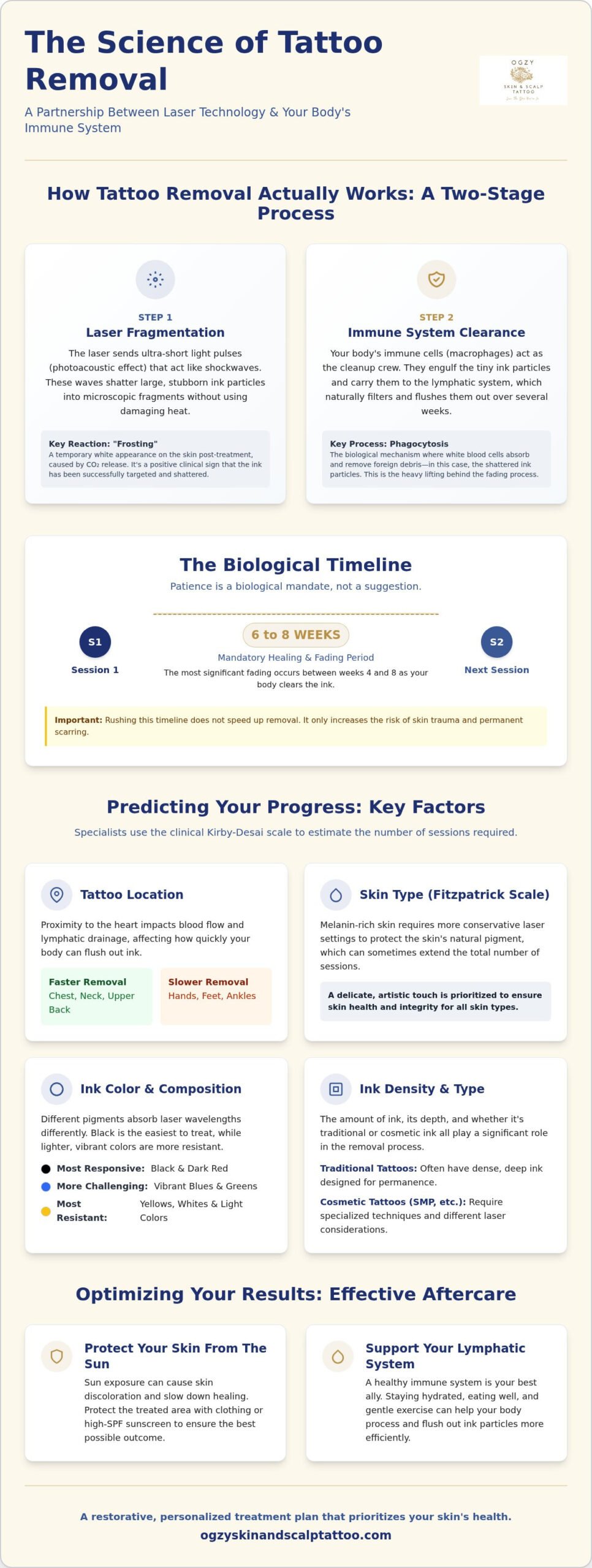
Modern lasers use a photoacoustic effect to target stubborn ink. Instead of using heat to burn the pigment, the laser sends rapid pulses of light that create pressure waves. These waves shatter large ink droplets into microscopic particles. Immediately after a session, you might see “frosting” on the skin’s surface. This is a temporary clinical reaction where carbon dioxide gas is released, signaling that the ink has been successfully disrupted. Phagocytosis is the body’s method of cleaning up ink debris, where specialized white blood cells called macrophages engulf the tiny particles. Understanding the variety of Tattoo removal techniques helps clarify why this fragmented approach is the safest standard for maintaining skin health.
The Biological Waiting Period: Why Patience is the Key
Your lymphatic system acts like a filter for your body. It has a limited bandwidth for processing shattered pigment. Standard gaps of six to eight weeks between treatments are biological mandates, not mere suggestions. Rushing this timeline doesn’t speed up the fading; it only increases the risk of permanent scarring or skin trauma. The most significant fading often occurs between weeks four and eight after a session. This is when your immune system is working hardest to carry away the ink debris. Many social media videos show “instant results,” but these are often misleading. They capture the temporary frosting effect rather than the actual long-term clearance. True transformation happens beneath the surface during the weeks of rest between your appointments. By respecting this biological rhythm, you ensure that your skin remains healthy and vibrant throughout the entire process. Patience is your most valuable partner in achieving a clear and natural look.
When determining how many sessions for tattoo removal are required, we must account for this internal timeline. Your body needs time to heal and transport the shattered particles. We view ourselves as your partner in this process, guiding you through each phase with professional expertise and a restorative touch. Every session builds upon the last, steadily moving you toward the self-assurance you deserve.
Predicting Your Progress: The Kirby-Desai Scale and Key Factors
Every person’s skin tells a unique story, which means there is no universal number for a removal timeline. To provide clarity, specialists use the Kirby-Desai scale. This clinical tool is the gold standard for predicting how many sessions for tattoo removal a client might require. It assigns numerical values to several variables, creating a sophisticated estimate tailored to your specific biology. By analyzing these factors, we can move away from guesswork and toward a predictable, restorative path for your skin.
The Fitzpatrick scale, which categorizes skin types by their reaction to UV light, plays a vital role in this calculation. Melanin-rich skin requires a more delicate, artistic touch. We often use more conservative laser settings to protect the natural pigment of the skin, which can sometimes extend the total number of sessions. Location is another surprising factor. Tattoos located closer to the heart, such as on the chest or neck, benefit from robust blood flow and superior lymphatic drainage. This allows the body to flush away shattered ink particles more efficiently than it can for tattoos on the hands, ankles, or feet.
The Role of Ink Color and Chemical Composition
Ink isn’t just a single substance; it’s a complex blend of pigments and carriers. Black and red inks are typically the most responsive to laser energy because they absorb a wide range of wavelengths. Conversely, vibrant blues, greens, and yellows often require specialized technology and additional patience. Modern, high-pigment inks are designed to be permanent, which means they contain a higher density of particles that the body must process. There is also the risk of oxidization in certain cosmetic pigments, where the ink may temporarily darken or shift in tone before fading. Reviewing the FDA consumer guide on tattoo removal can help you understand the importance of choosing professional-grade technology to manage these chemical complexities safely.
Physical Factors: Location, Age, and Skin Health
Your lifestyle and the age of your ink significantly influence the clearing process. Older tattoos, especially those over ten years old, have often already begun to fade as the body naturally attempts to break down the foreign pigment. This makes them much easier to treat than a fresh, saturated piece. Your overall health is equally important. Since your immune system does the heavy lifting, habits that support circulation are essential. Clinical observations suggest that smoking can significantly decrease the efficacy of laser treatments by constricting blood vessels and slowing the lymphatic response. Supporting your body’s natural healing capacity is the best way to ensure a smooth transition toward clear skin. If you’re curious about how these variables apply to your specific situation, a personalized consultation can provide the detailed roadmap you need for your transformation.
Cosmetic vs. Traditional Tattoos: Does the Ink Type Matter?
Not all ink is applied with the same intent or to the same depth. Traditional decorative tattoos are typically designed for permanent, high-density saturation within the deeper dermis. In contrast, cosmetic pigments used for permanent makeup or scalp micropigmentation are often placed more superficially, yet they present unique chemical challenges that influence the clearing process. When determining how many sessions for tattoo removal are necessary, a specialist must first identify the “personality” of the ink and the specific layer of skin it inhabits. This distinction is vital for ensuring a restorative outcome that preserves the integrity of your natural complexion.
The chemical composition of cosmetic pigments often differs from the carbon-based or heavy-metal inks used in traditional artistry. Some cosmetic inks contain iron oxides or titanium dioxide, which can react unexpectedly to laser energy. Scientific frameworks like The Kirby-Desai Scale provide a foundational starting point for these predictions, but the nuances of paramedical tattooing require an even more refined level of expertise. A specialist who understands the delicate balance of skin revision can navigate these complexities, ensuring that the fading process remains gentle and effective. For those dealing with unwanted permanent makeup or brow pigmentation, understanding the full scope of cosmetic tattoo removal options available in Cedar Park can help you approach your journey with greater confidence and realistic expectations.
Removing Permanent Makeup (PMU) and SMP
Removing ink from delicate areas like the eyebrows or the scalp requires specialized wavelengths and a compassionate, precise touch. Scalp micropigmentation (SMP), while shallower than a traditional tattoo, often covers a broad surface area and requires a specific strategy to avoid damaging hair follicles. We focus on a sophisticated approach to Scalp Micropigmentation Cedar Park TX by prioritizing skin health during every corrective session. Clients may sometimes notice a “ghosting” effect, where a faint silhouette of the pigment remains temporarily. This is a natural part of the biological transition as the body continues to process the residual particles.
Fading for Revision vs. Total Clearance
Your ultimate goal significantly dictates the length of your journey. If you are seeking a “revision” mindset, such as lightening an old piece to make room for a new, high-quality cover-up, you may only require 2 to 4 sessions. This lightens the canvas enough for a tattoo artist to work without the old ink muddying the new design. Total clearance, aiming for 100% clear skin, is a more intensive commitment that typically spans 8 to 12 sessions. This restorative path is similar to how we approach scar and stretch mark revision; it is about steady, incremental progress that respects the skin’s natural healing capacity. Whether you want a fresh start or a complete return to your natural state, a customized plan ensures your expectations align with biological reality.
Optimizing Your Results: How to Speed Up the Fading Process
You aren’t just a passive participant in your skin’s transformation. While the laser provides the necessary catalyst by shattering pigment, your daily habits determine how efficiently those particles leave your system. This active involvement is a key variable in determining how many sessions for tattoo removal you’ll ultimately require. By nurturing your body’s natural processes, you can maximize the results of every visit and move toward clear, healthy skin with greater confidence.
The Cedar Park Sun Factor: Protecting Your Investment
Living in Central Texas presents unique challenges for skin revision. The intense UV exposure in Cedar Park and Austin can stimulate melanin production, which often leads to hyperpigmentation in areas recently treated by a laser. Protecting your investment means becoming vigilant about sun safety to avoid delays in your treatment schedule. If your skin is tanned or sun-damaged, we may need to postpone your next session to ensure your safety and prevent long-term pigment changes.
- Zinc-based protection: Use mineral sunscreens with at least SPF 30 every single day, even on cloudy afternoons.
- UPF clothing: Wear protective layers when spending time outdoors at local spots like Brushy Creek or Lake Travis.
- Winter timing: Consider scheduling removals for large, exposed areas during the cooler months when sun intensity is naturally lower.
Boosting Your Body’s Natural “Cleaning” Crew
Your lymphatic system is the engine of your progress. It relies on consistent hydration to maintain the fluid flow necessary to transport shattered ink debris to your lymph nodes for excretion. Drinking plenty of water is one of the simplest ways to support this internal transit system. Additionally, light cardiovascular exercise, such as a brisk walk or a gentle cycle, helps stimulate lymphatic drainage and keeps your immune response active. This internal movement is what actually clears the “ghost” of your old tattoo from your skin, and staying active can often influence how many sessions for tattoo removal are needed for your specific case.
Maintaining the integrity of your skin barrier is equally important for a smooth recovery. Using the specific ointments we recommend prevents the skin from becoming overly dry or brittle between appointments. It is vital that you resist the urge to pick at any scabs or flaking skin. Picking can cause premature removal of the skin’s protective layer, which often leads to unnecessary ink retention or permanent scarring. A healthy, uninterrupted healing cycle ensures you stay on track for your next appointment without setbacks. To start your journey with a specialist who prioritizes your skin’s long-term health, book your personalized assessment today.
The Ogzy Approach: Expert Laser Removal in Cedar Park
At Ogzy Skin & Scalp Tattoo, we believe that the path to clear skin should be as restorative as it is effective. We understand the emotional weight of carrying a tattoo that no longer represents who you are. Our philosophy is rooted in being a “refined restorer,” where we prioritize the long-term health of your skin over aggressive, high-pressure treatments. When you visit our Cedar Park studio, we don’t just provide a generic estimate. We look at your unique biology and the specific history of your ink to determine how many sessions for tattoo removal will offer the most seamless results for your specific skin type.
Our approach is built on a partnership between the specialist and the client. We recognize that every journey toward renewal is personal, which is why we develop customized treatment plans rather than one-size-fits-all packages. This meticulous attention to detail ensures that your skin remains vibrant and healthy throughout the fading process. By integrating our laser expertise with other advanced skin services, such as Scar and Stretch Mark Revision, we provide a holistic path toward reclaiming your self-assurance and a clear, natural image.
Why Choose a Specialist in Paramedical Tattooing?
Choosing a specialist who understands paramedical tattooing offers a distinct advantage in skin physiology. Our founder, Opal, brings a sophisticated blend of clinical precision and aesthetic artistry to every session. This specialized knowledge is critical when handling complex cases, such as correcting failed scalp micropigmentation or fading delicate facial cosmetic tattoos. We understand how pigment behaves within different layers of the dermis and how to adjust our technology to protect your skin’s integrity. This expertise allows us to navigate the nuances of high-pigment saturation and unique ink chemistries that standard clinics might overlook. Before beginning your sessions, understanding the laser tattoo removal cost Austin clients can expect helps you plan a complete, uninterrupted treatment journey without financial surprises along the way.
Your First Step Toward Renewal
Your first visit to our Cedar Park studio is designed to be a calm, educational experience. During this initial consultation, we’ll perform a thorough assessment of your tattoo, considering its age, location, and the density of the ink. We’ll discuss the biological factors that influence your timeline and provide a predictable schedule that respects your body’s natural healing rhythm. We never prioritize speed over safety; instead, we focus on achieving complete clearance while maintaining the sophisticated craftsmanship your skin deserves.
It’s time to stop feeling frustrated by slow progress or anxious about the unknown. We invite you to experience a supportive, results-oriented environment where your transformation is our primary mission. Whether you’re looking to fade an old piece for a fresh revision or want to return to a completely clear canvas, we’re here to guide you with compassion and expertise. Reach out to us today to book your no-pressure consultation in the Austin area and receive a personalized estimate of how many sessions for tattoo removal you’ll need to begin your journey of renewal.
Embracing Your Path to Restored Skin
Reaching the decision to clear your skin is a powerful step toward reclaiming your identity. You now understand that fading ink is a sophisticated biological collaboration between your immune system and advanced laser technology. Factors such as ink composition, skin type, and location all influence how many sessions for tattoo removal are required to achieve your desired outcome. By prioritizing skin health and patient aftercare, you aren’t just removing a tattoo; you’re nurturing a total transformation.
Our studio provides specialized expertise in fading decorative ink and correcting complex scalp micropigmentation for clients across Austin, Cedar Park, and Round Rock. We combine clinical precision with a restorative, empathetic touch to ensure your journey is as seamless as the results. You deserve a specialist who views your skin as a canvas for renewal rather than just a technical task. We’re dedicated to helping you move forward with a clear, healthy image that feels like the real you.
Book Your Personalized Tattoo Removal Consultation with Ogzy to receive a roadmap tailored specifically to your biology. The version of yourself you’ve been waiting for is just a few sessions away, and we’re here to guide you through every step of the process with care and expertise.
Frequently Asked Questions
How long do I have to wait between tattoo removal sessions?
Biological mandates require a six to eight week waiting period between your appointments. This window gives your immune system the necessary time to flush out shattered ink particles through the lymphatic system. Rushing this restorative process doesn’t speed up the fading; it only increases the risk of skin trauma and permanent scarring.
Is it possible to remove a tattoo in just 3 sessions?
Complete clearance in only three sessions is rare for professional, deeply saturated ink. However, the answer to how many sessions for tattoo removal you’ll need depends on your ultimate goal. If you only wish to lighten an old piece for a high-quality cover-up, three sessions may provide a sufficiently faded canvas for your new artist.
Why does it take more sessions to remove a tattoo on the ankle than on the chest?
Circulation and blood flow are the primary reasons for the difference in fading speed. Tattoos on the chest are closer to the heart and major lymph nodes, which allows for more efficient pigment transport. Because the ankle is further from the heart, the body takes longer to carry fragmented particles away, often extending the total timeline.
Will my tattoo be completely gone, or will there be a shadow?
Most clients achieve between 90% and 95% clearance, which typically looks like a return to natural skin. Occasionally, a faint “ghost” or shadow may remain if the original artist applied the ink too deeply or if there was pre-existing scarring. We focus on a restorative approach to minimize these shadows and prioritize your skin’s health.
How much does each session of laser tattoo removal cost in Austin?
Pricing in the Austin and Cedar Park area is determined by several specific factors, including the physical size of the tattoo and the complexity of the ink colors. Because we believe in a personalized approach, we provide a detailed estimate during your initial consultation. For a comprehensive breakdown of what shapes your total investment, our 2026 guide to laser tattoo removal cost in Austin covers safety standards, pricing variables, and what to expect at every stage. This ensures your plan reflects the unique needs of your skin rather than a one-size-fits-all package.
Does the type of laser (Pico vs. Q-switch) change the number of sessions needed?
Picosecond technology generally requires fewer sessions because it shatters ink into much smaller, dust-like particles. These tiny fragments are significantly easier for your immune system to engulf than the larger pieces created by older Q-switch lasers. This advanced technology also uses pressure waves rather than heat, which protects the surrounding skin from damage.
Can I get a new tattoo over the area once the old one is faded?
You can certainly get a new tattoo over the treated area once the skin has fully recovered. We recommend waiting three to six months after your final removal session to ensure the tissue is completely restored and ready to hold new pigment. This allows for a seamless integration of your new artwork and ensures long-term clarity.
What happens if I stop my removal sessions halfway through?
If you choose to stop your treatments early, your tattoo will simply remain in its current state of fading. There is no biological danger in pausing your journey, but you won’t achieve the complete clearance you originally sought. Many clients find that even a partial removal makes them feel more confident and hopeful about their transformation.