
What if that “permanent” hairline mistake didn’t have to be permanent at all? It’s a heavy burden to carry when a treatment meant to restore your confidence results in an unnatural “helmet” look or a hairline that feels far too harsh. You likely feel a mix of frustration and hesitation, worrying that a fade scalp tattoo laser procedure might cause scarring or permanently damage your delicate hair follicles. You aren’t alone in this feeling; many clients seek a way to soften their look without starting entirely from scratch.
This 2026 restorative guide provides the clarity you need to move forward. You’ll learn the precise step-by-step process of fading or removing old scalp micropigmentation to restore your natural look or prepare your skin for a professional correction. We’ll walk through the safety of modern picosecond technology, the expected timeline for results, and how a specialist approach ensures your skin remains healthy and refined. By the end, you’ll have the confidence to reclaim a soft, seamless hairline that looks like yours, not like a tattoo.
Key Takeaways
- Understand the difference between total removal and strategic fading to correct unnatural hairlines or pigment shifts.
- Discover how to fade scalp tattoo laser treatments safely using a precise, step-by-step approach that protects your skin and follicles.
- Learn why saturated skin requires a professional “reset” before you can achieve a soft, natural-looking correction.
- Identify the critical aftercare rules that ensure a smooth recovery and prevent premature sun damage or scarring.
- Gain confidence in choosing a specialist who combines technical laser expertise with an artist’s eye for scalp micropigmentation.
Why Fade a Scalp Tattoo? Understanding SMP Correction
Reclaiming your reflection after a disappointing scalp micropigmentation (SMP) experience is a journey of restoration. It’s common to feel a sense of betrayal when a treatment meant to boost your confidence results in a look that feels heavy or artificial. Scalp tattoo fading is the controlled reduction of pigment density, a process that prioritizes skin health while softening harsh lines. While body art removal often aims for complete disappearance, modern laser tattoo removal techniques applied to the scalp focus on lightening the existing work to allow for artistic refinement. This approach understands that your goal isn’t just to erase a mistake, but to create a sophisticated, natural appearance that integrates seamlessly with your features.
Fading differs significantly from traditional tattoo removal in both depth and intent. SMP pigments are typically placed in the upper dermis, shallower than traditional decorative ink. Because the scalp is delicate, using a fade scalp tattoo laser requires a nuanced touch to break down pigment without compromising the integrity of your hair follicles. It’s a restorative path designed to lift the “weight” of a botched procedure, validating the emotional toll of a poor experience while offering a clear, professional solution to regain your self-assurance.
Signs Your SMP Needs Fading or Removal
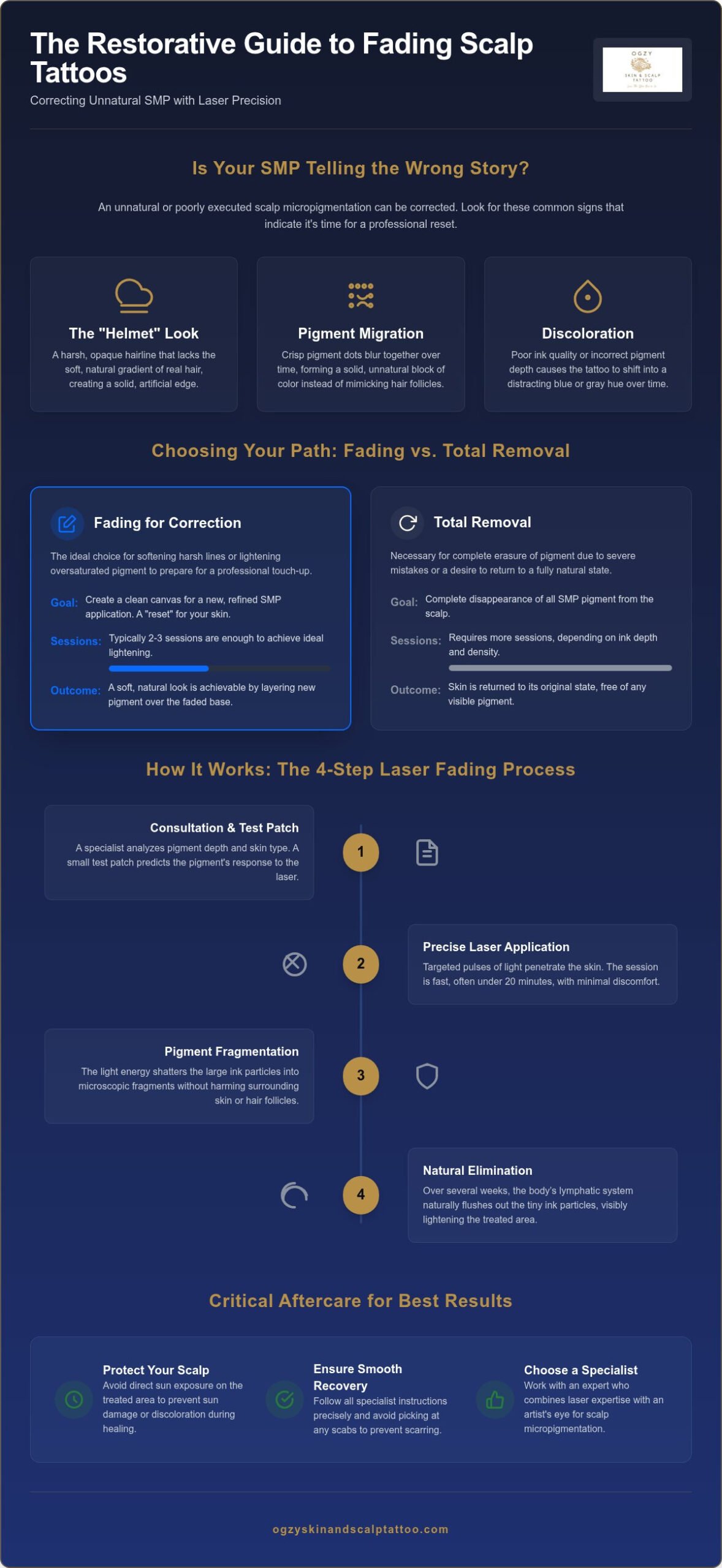
Identifying the need for correction often starts with a feeling that something is “off” when you look in the mirror. You might notice pigment migration, where the crisp dots originally intended to mimic hair follicles begin to blur together into a solid, unnatural block of color. Discoloration is another frequent concern; poor ink quality or improper depth can cause the pigment to shift into a distracting blue or gray hue. Perhaps the most common reason for seeking a fade scalp tattoo laser is the “helmet look.” This occurs when a hairline is designed without a soft gradient, resulting in a harsh, opaque edge that lacks the subtle artistry of a natural hair pattern.
The Goal: Erasure vs. Preparation for Correction
Choosing between total removal and strategic fading depends entirely on your desired outcome. Fading acts as a “reset” for your skin, creating a clean canvas for a more realistic SMP application. When the skin becomes saturated with too much pigment, it’s impossible to add more ink without it looking muddy or dense. By lightening the old work, we create space for fresh, fine impressions that can mimic real hair growth. Total removal isn’t always the answer. Often, just two or three sessions are enough to soften the old work so a specialist can perform a professional correction. A dedicated consultation is essential to map out these aesthetic goals, ensuring we choose the path that leads to your most authentic self.
The Step-by-Step Process to Fade Scalp Tattoo with Laser
Your journey toward a refined hairline begins with a meticulous clinical evaluation. This initial consultation is the most critical phase of the restoration, as it allows us to analyze the specific depth of the pigment, your skin type, and the likely composition of the ink used in your previous procedure. Because scalp micropigmentation involves specialized cosmetic pigments rather than traditional tattoo ink, the approach must be tailored to ensure the delicate scalp tissue remains healthy and receptive to future work. We often perform a small test patch during this stage to observe how your skin responds and to predict the speed of the pigment’s breakdown.
When you decide to fade scalp tattoo laser pigments, you’re choosing a path of precision. The technology works by emitting targeted pulses of light that penetrate the skin to reach the ink particles. These pulses shatter the pigment into microscopic fragments without harming the surrounding hair follicles. The U.S. Food and Drug Administration (FDA) emphasizes that safe and effective tattoo removal relies on high-quality devices and trained professionals who understand skin anatomy. Once the ink is fragmented, your body’s immune system takes over; the lymphatic system naturally flushes out these tiny particles over several weeks, leading to a visible lightening of the treated area.
What Happens During a Typical Session?
A standard session is designed to be efficient and supportive. After cleansing the scalp and providing you with protective eyewear, the specialist applies the laser to the targeted areas. Many clients describe the sensation as similar to the quick snapping of a rubber band against the skin. While there is minor discomfort, the process is remarkably fast. Most sessions focused on fading a specific area, such as a harsh hairline or a localized “blur,” are completed in under 20 minutes. If you’re ready to discuss your specific restoration goals, a consultation at Ogzy Skin & Scalp Tattoo can provide the clinical clarity you need to move forward with confidence.
Timeline and Session Spacing
Patience is a vital component of a successful restoration. We typically space sessions six to eight weeks apart to allow the skin to heal completely and give the immune system ample time to clear the fragmented pigment. Rushing this process can compromise skin integrity and lead to suboptimal results. Keep in mind that the number of sessions for tattoo removal varies depending on the density of the original ink and your skin’s unique healing rate. Using a fade scalp tattoo laser approach allows us to track your progress through high-resolution photography, ensuring we stop exactly when the desired level of lightness is achieved for your new, natural look.
Fading for Correction vs. Total Removal: Choosing Your Path
Deciding whether to pursue a strategic fade or a total removal is a pivotal moment in your restorative journey. It’s a choice that depends entirely on your ultimate aesthetic goals and the current state of your scalp. Many clients come to us after attempting to “camouflage” a bad procedure with more ink, only to find the result looks muddy or heavy. This happens because of the “saturated skin” problem; the dermis has a physical limit to how much pigment it can hold. When you use a fade scalp tattoo laser to lighten that old work, you’re effectively creating room for a new, more refined application that looks soft and natural rather than crowded.
The commitment required for these two paths differs significantly in both time and investment. A typical 2-session fade is often enough to break up dense blocks of pigment, providing a lightened base for a specialist to work over. In contrast, a total removal might require 6 or more sessions to achieve a completely blank slate. For many, a slight “ghosting” or shadow of the old tattoo is actually the ideal outcome. This faint remnant acts as a subtle guide for your next SMP artist, allowing them to map out a more sophisticated hairline while ensuring the new impressions blend seamlessly with the existing tone.
It’s also natural to worry about how these treatments affect your existing hair. You don’t have to fear for your follicles; the laser is designed to target the pigment particles specifically, leaving the surrounding tissue and hair roots unharmed. This precision is supported by FDA information on tattoo removal, which confirms that when performed by a specialist, laser technology is a safe way to address unwanted ink. By choosing a targeted fade scalp tattoo laser approach, you’re prioritizing the health of your skin while moving toward a look that finally feels like you.
When Fading is the Better Option
Fading is a sophisticated choice for those who still want the benefits of SMP but need a “refresh” to modernize their style. It’s the best path if you need to:
- Soften a harsh, “lego-like” hairline while maintaining the density on the crown of your head.
- Correct minor color shifts, such as pigment that has turned slightly blue or gray over time.
- Lighten a localized area of migration where the original dots have blurred into a solid mass.
When a Clean Slate is Necessary
Sometimes, the most restorative thing you can do is start completely over. A total removal is usually necessary when dealing with severe complications that camouflage cannot fix. You should consider a clean slate if:
- Traditional, deep-seated tattoo ink was used incorrectly, leading to permanent discoloration that won’t blend with cosmetic pigments.
- You’ve had a total change of heart regarding the shaved-head aesthetic and prefer to return to your natural skin tone.
- The original work was placed so poorly or with such severe migration that any new ink would only worsen the “helmet” effect.
Scalp Recovery: Actionable Aftercare for Best Results
The healing phase is where the true restoration of your skin takes place. While the laser does the technical work of shattering pigment, your body’s natural processes determine the final aesthetic outcome. A successful fade scalp tattoo laser treatment requires a partnership between the specialist’s skill and your commitment to aftercare. By prioritizing skin integrity and maintaining a healthy scalp environment, you ensure that the fragmented ink is flushed out efficiently while the tissue remains supple and ready for future refinement. This period of recovery is just as important as the session itself for achieving a soft, natural appearance. Following the laser tattoo removal aftercare Cedar Park specialists recommend can make a significant difference in how quickly and cleanly your skin heals between sessions.
The First 48 Hours
During the initial two days, your scalp is in its most sensitive state. You may notice a temporary effect called “frosting,” where the treated area appears white or bubbly immediately after the light pulse. This is a normal clinical reaction and usually subsides within minutes. Shortly after, the pigment might actually look darker than before; don’t be alarmed, as this is a sign that the ink has been fragmented and pulled toward the surface. It’s vital to keep the area cool and clean. Avoid any products containing alcohol, fragrances, or harsh acids. When sleeping, try to keep your head slightly elevated to minimize minor swelling, and avoid any positions that put direct, prolonged pressure on the treated zones.
Long-term Healing and Sun Protection
As the initial redness fades, your focus should shift toward long-term skin health and protecting your investment. Sun exposure is the primary cause of post-inflammatory hyperpigmentation, which can lead to dark, uneven patches that complicate your restoration. Applying a high-quality SPF is non-negotiable whenever you step outside, even on Austin’s cloudiest days. You should also wait at least five to seven days before resuming heavy exercise. Excessive sweating can irritate the healing dermis and trap bacteria in the pores, potentially leading to minor infections or delayed healing.
If your hairline correction involves both scalp pigments and permanent makeup, you may also need to consider cosmetic tattoo removal to ensure a completely harmonious result. This holistic approach ensures every aspect of your facial frame is addressed with the same level of precision. Throughout this journey, remember the “hands-off” rule. Picking or scratching at any minor crusting can lead to permanent scarring, which is the opposite of the refined, natural look we are working to achieve. If you have questions about your specific healing progress, you can always reach out to the experts at Ogzy Skin & Scalp Tattoo for guidance tailored to your skin’s needs.
Restoring Confidence at Ogzy Skin & Scalp Tattoo
Choosing the right partner for your skin’s restoration is a decision that carries significant emotional weight. It’s often said that the best person to correct a scalp tattoo is someone who truly understands how they are created. At Ogzy Skin & Scalp Tattoo, we bring an artist’s eye and a technician’s precision to every procedure. Because we specialize in both scalp micropigmentation and laser removal, we understand the specific nuances of cosmetic pigments, including their depth, composition, and how they interact with different skin types. This dual expertise ensures that when we fade scalp tattoo laser pigments, we do so with the ultimate goal of a natural, refined finish in mind.
Our commitment to your transformation is rooted in a philosophy of subtlety and integrity. We don’t just aim to erase the past; we work to restore your self-assurance. Whether you’re dealing with a harsh “lego” hairline or pigment that has shifted in color, we provide a supportive, results-oriented environment where your concerns are heard and validated. Your previous experience shouldn’t define your future look. We treat every session as a collaborative step toward reclaiming your personal image, ensuring the results are so seamless they appear entirely natural.
Expertise in Central Texas
Located in Cedar Park, we are proud to serve the vibrant communities of Austin, Round Rock, and Georgetown. We understand that seeking a corrective procedure can feel daunting, which is why we’ve cultivated a private, welcoming environment where you can feel at ease. Opal’s specialized background in paramedical tattooing and restorative skin revision allows for a level of personalized care that goes beyond standard med-spa treatments. We prioritize the health of your skin above all else, using advanced technology that respects the delicate nature of the scalp while achieving the clarity you desire.
Taking the First Step Toward Restoration
Moving forward begins with gathering the right information for your specific situation. We know that understanding the laser tattoo removal cost in Austin and the surrounding areas is a practical factor in your decision-making process. During your initial visit, we’ll provide a transparent breakdown of what to expect, from the number of sessions required to the specific aftercare steps for your skin type. Preparing for your first visit is simple; just come with your questions and a clear vision of the look you’ve always wanted.
Your journey to a softer, more natural hairline is closer than you think. A botched or heavy scalp tattoo is a temporary setback, not a permanent reality. With the right technology and a specialist who cares about the artistry of the final result, you can finally achieve the look you were promised from the start. Don’t let a past mistake hold you back from feeling like yourself again. Book your restorative consultation today and discover how a professional fade scalp tattoo laser plan can reset your confidence.
Your Path to a Refined and Natural Restoration
Reclaiming your image after a botched scalp procedure is more than a technical correction; it’s an emotional renewal. You’ve learned that you don’t have to live with a harsh or unnatural hairline forever. By choosing to fade scalp tattoo laser pigments strategically, you create the essential canvas needed for a soft, hyper-realistic finish. This restorative journey relies on the perfect balance of advanced technology, patient aftercare, and a specialist who understands the intricate artistry of scalp micropigmentation. Fading is your reset button, allowing you to move from a place of embarrassment to a future of subtle, sophisticated results.
At Ogzy Skin & Scalp Tattoo, we specialize in this delicate corrective work. We combine compassionate, specialist-led care in Cedar Park with advanced laser technology designed specifically for safe skin restoration. You deserve a look that blends seamlessly and restores your self-assurance without the weight of past mistakes. It’s time to move toward a future where you feel like yourself again. Schedule Your Restorative Consultation with Opal today to begin your personalized transformation. Your journey back to a natural, confident look starts with this single, restorative step.
Frequently Asked Questions
Is laser fading for scalp tattoos more painful than the original SMP?
Most clients find the sensation of a laser pulse more intense than a needle, but the process is significantly faster. While a scalp micropigmentation session can last several hours, a session to fade scalp tattoo laser pigments usually finishes in under 20 minutes. Many describe the feeling as a quick snap of a rubber band against the skin. We prioritize your comfort and move efficiently to ensure the experience is as manageable as possible.
How many sessions will I need to fade my scalp tattoo for a correction?
Fading for a correction typically requires between 2 and 4 sessions, depending on the density of the original pigment and how your immune system responds. This is a much shorter timeline than total removal, which often requires 6 or more sessions for a completely clear result. During your initial consultation, we’ll analyze your specific pigment depth to give you a realistic expectation of the restorative timeline needed for your new look.
Will the laser damage my existing hair follicles or prevent hair growth?
No, the laser technology we use is designed to target pigment particles specifically without harming the surrounding tissue or hair follicles. The light energy passes through the skin and is absorbed only by the ink in the upper dermis. Your natural hair growth remains unaffected by the treatment. This precision allows us to focus entirely on restoring the appearance of your scalp while maintaining the health of your existing hair.
Can I get new scalp micropigmentation immediately after laser fading?
You must wait at least 8 to 12 weeks after your final laser session before applying new scalp micropigmentation. This waiting period is vital because it allows the skin to heal completely and ensures your immune system has finished flushing out the fragmented pigment particles. Rushing into a new application on unsettled skin can lead to poor ink retention or unintended color shifts, compromising your final restorative result.
How much does it cost to fade a scalp tattoo with laser in Cedar Park?
The investment for your treatment depends on the size of the area being addressed and the number of sessions required to reach your desired level of fading. Because every scalp is unique, we provide personalized estimates during our restorative consultations. We focus on providing a clear, transparent plan that aligns with your aesthetic goals, ensuring you understand the path toward reclaiming a natural and refined hairline without any hidden surprises.
What are the risks of laser removal for darker skin tones?
The primary concern for darker skin tones is the risk of hyperpigmentation or hypopigmentation if the laser is not handled with extreme precision. We use advanced technology with adjustable settings that allow us to protect the skin’s natural melanin while effectively shattering the tattoo pigment. Performing a small test patch is a critical safety step we take to ensure your skin responds beautifully and healthily to the restorative process.
Can I fade just the hairline of my SMP without touching the rest?
Yes, we can precisely target localized areas like a harsh, “helmet-like” hairline or blurred sideburns while leaving the rest of your SMP untouched. This targeted approach is ideal for clients who are happy with the density on their crown but need to soften the front for a more natural gradient. Using a fade scalp tattoo laser in this way allows for a sophisticated correction that integrates seamlessly with your existing work.
What happens if I don’t wait long enough between laser sessions?
Rushing the time between sessions increases the risk of skin irritation, permanent scarring, and pigment “muddying.” Your body needs a minimum of 6 to 8 weeks to naturally flush out the fragmented ink particles through the lymphatic system. Treating the area too soon doesn’t actually speed up the fading process; instead, it can compromise the integrity of your skin and make it more difficult to achieve a clean, professional result.