What if the silver “stripes” you’ve been told are permanent could actually become a seamless part of your past? It’s incredibly frustrating to invest hope into topical creams that offer no visible change, leaving you with a lingering anxiety about the permanence of your skin’s texture. You deserve to feel comfortable in your own skin, which is why stretch mark camouflage has emerged as such a transformative solution for those seeking true restoration.
In this guide, you’ll discover how advanced paramedical tattooing and regenerative treatments can seamlessly blend stretch marks and scars with your natural skin tone. We’ll explore a dual-pathway approach to skin revision that combines the science of medical-grade growth factors with the meticulous precision of custom pigment artistry. You’ll learn exactly how these restorative treatments work to create a uniform, smooth appearance that requires very little maintenance over time. Let’s walk through the process of reclaiming your confidence and achieving the lasting results that traditional skincare simply cannot provide.
Key Takeaways
- Discover how paramedical tattooing functions as a specialized form of micropigmentation designed to restore skin by blending silvery textures into your natural tone.
- Compare the benefits of regenerative “inkless” methods using medical-grade stem cells against the artistic color correction provided by stretch mark camouflage.
- Learn why maturity is essential for successful revision, as ideal candidates possess marks that are at least 12 to 24 months old and lighter than their surrounding skin.
- Walk through the restoration journey to understand how a thorough consultation and meticulous pigment application ensure a seamless, natural-looking result.
- Identify the critical standards for choosing a specialist, focusing on the importance of healed portfolios and a professional, clinical environment for your safety.
What is Stretch Mark Camouflage and How Does it Work?
Imagine looking in the mirror and seeing skin that feels whole again. For many, stretch marks are more than just lines on the body; they represent a source of quiet anxiety and a barrier to self-assurance. Stretch mark camouflage offers a sophisticated solution to this concern, utilizing the principles of paramedical tattooing to restore what time and life have changed. This specialized form of micropigmentation focuses on skin restoration, aiming to blend the white, silvery, or light texture of stretch marks into the surrounding skin for a seamless finish.
While traditional tattooing focuses on adding decorative art to the skin, paramedical tattooing is a restorative discipline. It’s a form of specialized micropigmentation that falls under the broader category of Cosmetic Camouflage. The primary goal isn’t to stand out, but to blend in, meticulously matching the lighter tones of your scars with your natural complexion. As we move through 2026, the focus of aesthetic care has shifted toward authenticity and subtle refinement. Reclaiming your skin confidence isn’t about chasing an impossible standard; it’s about feeling unburdened when you choose your wardrobe for a day at the pool or a morning at the gym.
The Anatomy of a Stretch Mark
Stretch marks, or striae, are essentially scars that form within the dermis when the skin is stretched beyond its elastic capacity. This rapid expansion causes the connective fibers to tear, resulting in a loss of natural melanin within the affected area. Because this tissue is distinct from healthy skin, it doesn’t respond to UV exposure in the same way. Tanning will not hide stretch marks because the scar tissue cannot produce pigment, which often makes the light lines appear even more prominent against darkened skin. This contrast is what creates the “striped” appearance that many clients find distressing.
The Concept of Paramedical Micropigmentation
Achieving a natural result requires an artist who acts as a refined restorer, blending technical skill with an eye for subtle nuances. At Ogzy Skin & Scalp Tattoo, we use custom-blended pigments that mimic the complex layers of human skin. This isn’t a one-size-fits-all application; every treatment is a bespoke stretch mark revision treatment tailored to your unique biology. By depositing these specialized pigments into the upper layers of the skin, we can neutralize the stark contrast of scars and restore a sense of uniformity. The result is a long-term solution that requires minimal maintenance, allowing you to focus on living your life rather than hiding your skin.
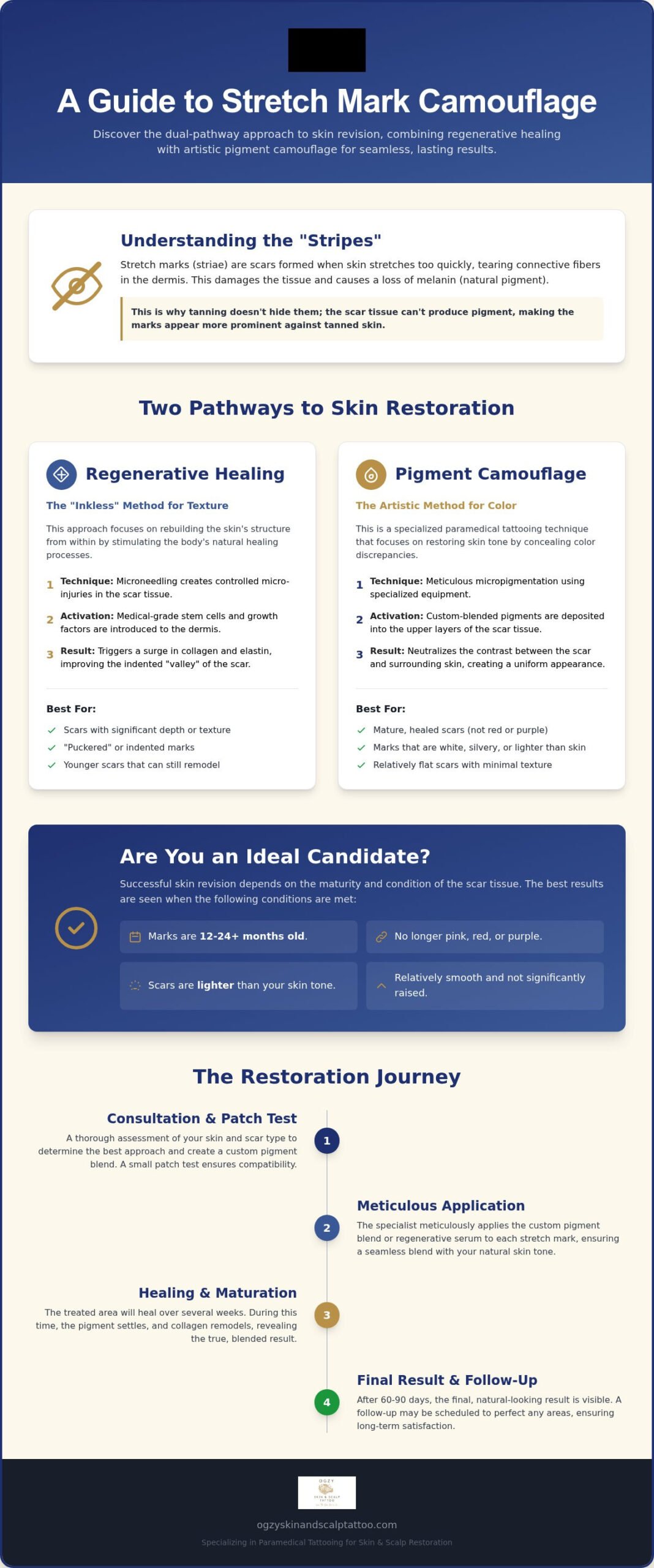
Regenerative Healing vs. Pigment Camouflage: Which is Right for You?
Every skin journey is deeply personal. While some individuals are primarily concerned with the physical depth and “puckered” texture of their scars, others are more focused on the stark, white contrast that makes their marks stand out against a tan. The choice between these two restorative pathways depends entirely on your skin’s current state and your ultimate goals for revision. Understanding the distinction between regenerative healing and stretch mark camouflage is the first step toward a successful transformation.
At Ogzy Skin & Scalp Tattoo, we often view these treatments as complementary rather than mutually exclusive. A “refined restorer” approach means assessing whether your skin needs a structural rebuild, a color correction, or a thoughtful combination of both. By addressing the biological foundation of the scar first, we can often achieve a more seamless and natural-looking result that stands the test of time.
Medical-Grade Stem Cells and Growth Factors
The regenerative method, often referred to as “inkless” camouflage, focuses on the body’s innate ability to heal itself. This process utilizes specialized microneedling techniques to create controlled micro-injuries in the scar tissue. Instead of depositing pigment, we introduce medical-grade stem cells and growth factors into the dermis. This triggers a surge in collagen and elastin production, which is essential for improving the “valley” or indentation of deep stretch marks. According to the Stretch marks diagnosis and treatment overview by Mayo Clinic, various therapies aim to stimulate this type of structural change. For younger scars or those with significant textural irregularities, focusing on rejuvenation first is often the most effective strategy.
Custom Pigment Camouflage
When the texture of the skin is relatively flat but the color remains white, silvery, or translucent, pigment-based stretch mark camouflage is the ideal choice. This method relies on sophisticated color theory to custom-blend a shade that matches your unique skin tone perfectly. We take great care to account for your specific Fitzpatrick skin type, ensuring that the pigment remains stable and looks natural in all lighting conditions. This artistry allows the marks to visually disappear into the surrounding tissue, providing that uniform appearance you’ve been seeking. If you’re unsure which path is best for your specific needs, you can explore our restoration options to see how we tailor each session to your individual skin profile.
Ultimately, the goal is to provide a long-term solution that requires minimal maintenance. Whether we are rebuilding the skin’s architecture with growth factors or refining its tone with custom pigments, the outcome is the same: skin that looks smooth, uniform, and restored. This dual-pathway approach ensures that we don’t just cover up the concern, but truly revise the skin from the inside out.
Ideal Candidates: Who Can Benefit from Skin Revision?
Not everyone is an immediate candidate for skin restoration, and that’s okay. The process of stretch mark camouflage is deeply rooted in biological timing and the natural healing cycle of your body. To achieve the seamless, invisible results you desire, your skin must reach a specific state of readiness. We prioritize the long-term health of your tissue above all else, ensuring that every session builds toward a lasting transformation rather than a temporary fix.
The most important factor is the age of the scar. We follow a strict guideline: your stretch marks or scars must be at least 12 to 24 months old. This timeframe allows the tissue to fully mature and the color to stabilize. Additionally, the marks should be lighter than your natural skin tone. If your scars are white, silvery, or translucent, they are perfect “canvases” for pigment restoration. We also work with a wide range of Fitzpatrick skin types, including darker complexions, provided the scar itself has lost its original inflammatory pigment and is lighter than the surrounding area.
Assessing Scar Maturity and Color
When you look at your skin, the color tells a story about its healing stage. Red, pink, or purple marks indicate that the body is still actively sending blood flow to the area to repair the dermal tear. Attempting stretch mark camouflage during this phase can lead to unpredictable results or even further scarring. We wait for these vibrant tones to fade into a stable, cool-toned white or silver. It’s also vital that your weight has remained relatively stable for at least six months. New fluctuations can create fresh tearing, which disrupts the uniformity of the revision. This level of patience is especially important for C-section scar revision, where the depth of the incision requires a fully settled foundation before we begin our artistry.
Beyond Stretch Marks: Surgical and Trauma Scars
The reach of paramedical tattooing extends far beyond traditional stretch marks. Many of our clients seek us out after major life events or elective procedures to soften the visual impact of their journey. We frequently treat scars resulting from tummy tucks, breast augmentations, and facelifts, helping to mask the tell-tale signs of surgery. This restorative expertise is also a powerful tool in the world of hair restoration. For those who have undergone surgical transplants and are left with visible donor site scarring, we can use these same techniques to simulate hair follicles. This often works in tandem with a scalp tattoo for hair loss to provide a comprehensive, 360-degree restoration of your confidence. Whether it’s a trauma scar or a surgical line, our goal is to help you move forward without the constant visual reminder of the past.
The Restoration Journey: What to Expect During and After Treatment
Stepping into the restoration journey is a significant emotional transition, moving from the frustration of feeling “striped” to the anticipation of a uniform finish. At Ogzy Skin & Scalp Tattoo, we treat this process as a dedicated partnership. It isn’t just a clinical procedure; it’s a guided path toward reclaiming your self-assurance through meticulous care and artistic precision. Understanding each phase of the journey helps replace anxiety with hope as you watch your skin transform.
The process begins with an in-depth consultation where we evaluate your skin’s health and unique undertones. We don’t just look at the surface; we analyze the way your skin reflects light and how it has responded to past changes. This mapping phase is critical for successful stretch mark camouflage, as it allows us to test custom pigments against your natural complexion. We also discuss the psychological impact of your scars, ensuring your goals align with the realistic, restorative outcomes we can achieve together. Usually, a personalized plan involves one to three sessions to reach the optimum density and blend.
The Consultation and Mapping Process
During the procedure, your comfort is our absolute priority. We apply a specialized topical numbing agent to ensure the experience is as relaxing as possible. As a “refined restorer,” our specialist uses a light, artistic touch to deposit pigment into the skin, carefully mimicking the natural variations of your tone. You might feel a slight pressure, but the focus remains on precision and subtlety. Every stroke is intentional, designed to integrate the scar tissue into the surrounding healthy skin without creating a “heavy” or artificial appearance.
The immediate aftermath involves some redness and swelling, which is a natural part of the body’s inflammatory response. You’ll enter what we call the “dark stage,” where the pigment appears more intense than the final result. Don’t worry; this is temporary. Over the next 60 to 90 days, the pigment settles into the dermal layer, softening and maturing until it matches your skin perfectly. This settling period is where the true artistry of the revision becomes visible.
Healing and Aftercare in Central Texas
Living in the Austin and Cedar Park area presents unique challenges for healing, specifically the intense Central Texas heat. For the first four weeks, avoiding direct sun exposure on the treated area is non-negotiable. UV rays can alter the pigment before it has fully settled, leading to uneven results or premature fading. We recommend specific topical treatments to support stem cell absorption and keep the tissue hydrated during this critical window. Remember, “patience is the best pigment.” The eight-week window following your session is when the true magic of stretch mark camouflage happens. If you’re ready to start this transformation, we invite you to schedule your personal skin assessment today and take the first step toward lasting confidence.
Choosing a Specialist for Stretch Mark Camouflage in Cedar Park & Austin
Selecting a specialist for your skin restoration is a decision that carries significant emotional weight. This isn’t just about a cosmetic change; it’s about trusting someone with your story and your self-image. When you’re searching for stretch mark camouflage in the Austin area, it’s essential to look beyond marketing claims and focus on the technical proficiency and empathetic approach of the artist. The right specialist acts as a dedicated partner, guiding you through the complexities of dermal healing with both clinical authority and a reassuring bedside manner.
One of the most critical steps in your research is a thorough review of a specialist’s portfolio. You should specifically look for healed results rather than just immediate “before and after” photos. Immediate work often shows redness and swelling, which can mask how the pigment actually settles into the tissue. A truly skilled “refined restorer” will be proud to show you how their work looks 60 to 90 days post-procedure, demonstrating a seamless integration with the client’s natural skin tone. Just as reviewing scalp micropigmentation before and after galleries reveals how pigment truly behaves once fully healed, the same principle applies when evaluating stretch mark camouflage portfolios. Local accessibility in Cedar Park and Round Rock is also a vital consideration, as it ensures you can easily attend follow-up sessions and assessments as your skin matures through the restoration process.
Questions to Ask Your Paramedical Artist
During your consultation, don’t hesitate to ask detailed questions about the artist’s background and methodology. A qualified professional should have extensive training in both traditional pigment-based stretch mark camouflage and regenerative, inkless methods. Ask how they approach skin tone matching for your specific ethnicity and Fitzpatrick type, as different complexions require a nuanced understanding of color theory to prevent ashiness or discoloration. Additionally, verify their experience with surgical scar revision, especially if you’re looking to address incisions from a tummy tuck or C-section. This specialized skill set ensures they understand the unique behavior of scar tissue compared to healthy skin.
The Ogzy Skin & Scalp Tattoo Difference
At Ogzy Skin & Scalp Tattoo, our commitment to restorative skin healing is personal. We maintain a clean, clinical environment that exceeds industry standards, ensuring your safety and comfort at every stage. We’re proud to serve the communities of Cedar Park, Austin, and Leander, providing a space where clients feel understood and hopeful about their transformation. Our expertise isn’t limited to the body; we also offer comprehensive care for those seeking a hair loss confidence solution, applying the same principles of precision and artistry to scalp micropigmentation. For clients who want to understand what separates a natural-looking result from an obvious one, our guide on achieving a realistic scalp tattoo with undetectable hair follicle simulation outlines the same exacting standards we apply across all of our paramedical services. Reclaiming your image is a journey of renewal, and we are here to provide the sophisticated craftsmanship you need to feel whole again. If you’re ready to move past the anxiety of “striped” skin, we invite you to reach out and discover the profound impact of specialized skin revision.
Step Into a Future of Restored Confidence
Your skin tells a story of growth and change, but you have the power to decide how that story is visually told. By embracing a dual-pathway approach that integrates medical-grade growth factors with the artistic precision of stretch mark camouflage, you’re investing in a sophisticated restoration. This journey moves beyond surface-level fixes, focusing instead on structural refinement and seamless tone integration. Whether you’re addressing mature surgical scars or silvery “stripes,” you deserve a solution that provides lasting uniformity and requires minimal maintenance.
Led by Opal, a specialist in regenerative skin revision, our Cedar Park studio serves the Greater Austin area with a commitment to empathetic, professional care. We utilize medical-grade growth factors to improve skin texture while ensuring every pigment application is a masterpiece of subtlety. You don’t have to carry the weight of skin-related anxiety into another season. It’s time to reclaim your image and feel completely at home in your skin once again.
Book Your Restorative Consultation at Ogzy Skin & Scalp Tattoo today. We look forward to being your partner in this transformative journey toward renewal and self-assurance.
Common Questions About Skin Restoration
Is stretch mark camouflage a permanent solution?
Stretch mark camouflage is a long-term restorative solution, typically lasting between 2 to 5 years before a touch-up is needed. While the specialized pigments are deposited into the dermal layer, they will naturally fade over time due to your skin’s cellular turnover and external factors like sun exposure. Maintaining the vibrancy of your results is simple with periodic maintenance sessions, ensuring your skin remains smooth and uniform for years to come.
Does the treatment hurt? What is the pain level?
Most clients describe the sensation as a light scratching or vibrating feeling rather than significant pain. We prioritize your comfort by applying a professional-grade topical numbing agent before the procedure begins. On a scale of 1 to 10, most individuals report a pain level between 2 and 3. This makes the experience very manageable for those seeking a restorative and stress-free transformation of their skin’s appearance.
Can I go in the sun or tan after the procedure?
You must avoid direct sun exposure and tanning for at least four weeks following your session. UV rays can alter the pigment while it is settling in the tissue, potentially causing it to shift color or fade prematurely. Once the area is fully healed, we recommend using a high-SPF sunscreen to protect the integrity of the revision and your overall skin health, especially in the intense Central Texas climate.
How many sessions of stretch mark revision will I need?
Most clients achieve their desired results within one to three sessions. The exact number depends on the severity of the scarring, your skin’s ability to retain pigment, and whether you are using regenerative growth factors alongside the tattooing. We space these appointments roughly 8 weeks apart. This allows the tissue to mature and the color to fully settle before we refine the blend in subsequent visits.
What is the difference between laser stretch mark removal and camouflage?
Laser treatments focus on resurfacing the skin’s texture through heat, whereas stretch mark camouflage uses custom pigments to blend the color of the scar with your natural skin tone. While lasers can improve texture, they often fail to restore the lost melanin in white or silvery marks. Camouflage provides the visual uniformity that laser treatments frequently lack, making the marks virtually disappear into the surrounding healthy tissue.
Is it safe to get camouflage if I plan on getting pregnant again?
It is physically safe to receive the treatment, but we generally recommend waiting until you have finished growing your family. New pregnancy-related stretching can create fresh dermal tears through or near the treated area, which may disrupt the seamless appearance of the previous revision. Completing your restoration sessions after your skin has fully settled ensures the most stable and lasting aesthetic outcome for your body.
Will the pigment change color if I lose or gain weight?
Minor weight fluctuations generally don’t cause the pigment to change color, though significant changes can stretch the skin and affect the density of the application. The custom-blended pigments are designed to remain stable within the dermis. However, if the skin stretches enough to create new tears, you may require a touch-up to maintain the uniform look of your stretch mark camouflage and ensure the blend remains seamless.
Can you camouflage keloid scars?
We cannot treat active keloid scars with pigment camouflage because the tissue is too unstable and prone to further growth. Paramedical tattooing is most effective on flat, mature, and light-colored scars that have fully healed. If you have a raised or keloid scar, we first focus on regenerative methods to help flatten the texture before considering any pigment-based color correction to ensure a safe and successful result.