
What if the secret to erasing a scar wasn’t found in a surgeon’s scalpel, but within the very building blocks of your own biology? If you’ve spent years hiding behind heavy makeup or feeling frustrated by expensive creams that promise the world but deliver nothing, you aren’t alone. It’s exhausting to look in the mirror and see a permanent reminder of a past injury or surgery that doesn’t reflect your vibrant spirit. We understand that seeking a stem cell scar treatment isn’t just about vanity; it’s about the profound personal impact of feeling comfortable and confident in your own skin again.
In 2026, the landscape of aesthetic medicine has shifted from simply masking imperfections to achieving true biological restoration. You’ll discover how medical-grade growth factors and regenerative serums are revolutionizing skin revision by actually healing the tissue from the inside out rather than just covering it up. This article explores the sophisticated science behind these advanced treatments, explains how they encourage seamless integration with your natural skin, and previews the journey toward a more refined, restored version of yourself.
Key Takeaways
- Learn why modern scar revision focuses on biological restoration through signaling molecules rather than just filling or masking the skin’s surface.
- Understand the critical role growth factors play in remodeling tissue and why promoting the right type of collagen is essential for achieving a smooth, natural-looking texture.
- Discover when a stem cell scar treatment is the superior choice over traditional pigment camouflage, especially for addressing deep indentations and complex texture issues.
- Get a clear roadmap of the regenerative journey, from the initial assessment of your scar’s history to the gentle, comfort-focused experience of the procedure itself.
- Explore how the combination of technical precision and empathetic care at Ogzy Skin & Scalp Tattoo provides a supportive partnership for your personal transformation.
What is Stem Cell Scar Treatment? Beyond Surface-Level Repair
A modern stem cell scar treatment represents a departure from traditional methods that simply aim to camouflage or fill a skin defect. Instead of masking the surface, this regenerative approach utilizes the power of signaling molecules to communicate with your cells. It’s a sophisticated method of biological tissue remodeling that encourages the body to rewrite its own healing story. Your skin possesses a remarkable, often untapped, “intelligence”-a natural blueprint for repair that remains dormant until the right signals arrive to trigger a more refined response.
As we move through 2026, regenerative aesthetics has reached a significant turning point. Advanced laboratory standards and a deeper understanding of What is Stem Cell Therapy have made these once-exclusive treatments more accessible to those seeking non-surgical solutions. We’ve moved beyond the era of “quick fix” aesthetics, entering a time where we can partner with the body’s innate healing mechanisms to achieve results that look and feel entirely natural.
The Problem with Traditional Scars
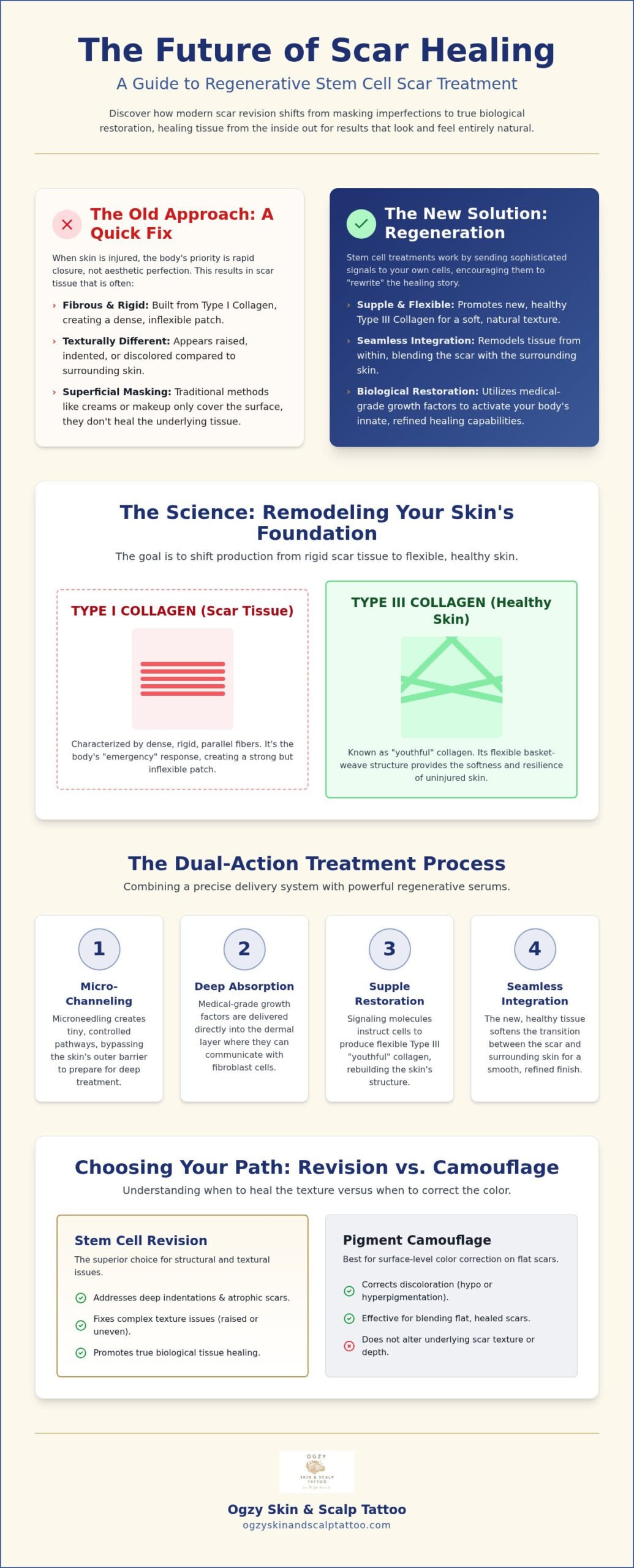
When the skin sustains a deep injury, the body’s primary goal is closure, not beauty. It prioritizes a “quick fix” by rapidly producing thick, fibrous tissue known as Type I collagen. While this saves the skin’s integrity, it creates a scar that lacks the elasticity and functionality of the surrounding area. This tissue is often raised, indented, or discolored, creating a texture that doesn’t blend with your natural complexion. Beyond the physical texture, there is the emotional weight of carrying a permanent reminder of a trauma or a difficult surgery. These marks can diminish self-assurance, making you feel as though a single moment in time is permanently etched onto your appearance.
How Stem Cells Change the Healing Narrative
When you choose a stem cell scar treatment, you’re opting for a solution that respects your body’s natural architecture. We introduce medical-grade growth factors that act as sophisticated “messengers,” instructing your cells to move away from the “emergency” scarring response and toward true regeneration. This process mimics the way skin heals during fetal development, where tissue is restored without the formation of rigid fibers. We often utilize microneedling as a precise delivery system for these serums. This synergy creates a dual-action benefit:
- Micro-channeling: Creating tiny, controlled pathways that bypass the skin’s protective barrier.
- Deep Absorption: Ensuring growth factors reach the dermal layer where fibroblasts reside.
- Supple Restoration: Encouraging the production of Type III collagen, the flexible “youthful” collagen found in healthy skin.
- Seamless Integration: Softening the transition between the scar and the healthy tissue for a refined finish.
The Science of Skin Healing: How Growth Factors Remodel Tissue
When we perform a stem cell scar treatment, we aren’t just applying a serum; we’re initiating a complex biological dialogue. Within the dermal layer of your skin, specialized cells called fibroblasts act as the primary architects of repair. In scarred tissue, these architects have often “retired” or are producing low-quality materials. By introducing cytokines and signaling molecules, we effectively re-activate these cells, providing them with the instructions needed to transition from survival mode back into a state of healthy renewal.
A crucial part of this process involves shifting the type of collagen your body produces. Most scars are comprised of Type I collagen, which is characterized by its dense, rigid, and parallel fibers. This is the body’s “emergency” scaffold. For smoother, more resilient skin, we want to encourage the production of Type III collagen. This “youthful” collagen has a basket-weave structure that provides the flexibility and softness found in healthy, uninjured tissue. This distinction is vital for anyone considering a stem cell scar treatment for texture or coloration issues. To better understand the regulatory landscape of these advancements, you can review FDA consumer information on stem cell therapies, which clarifies the difference between surgical cell injections and the non-invasive use of growth factors.
Healing also requires life-sustaining blood flow. Many old scars appear white or “dead” because they lack a robust circulatory network. Through neovascularization, these growth factors help stimulate the formation of new micro-vessels. This brings oxygen and essential nutrients back to the area, allowing the skin to regain its natural vitality and integrate more seamlessly with the surrounding tissue.
The Role of Microneedling in Stem Cell Delivery
The skin is a formidable barrier designed to keep the world out, which means topical serums often struggle to reach the layers where they’re needed most. We utilize microneedling Cedar Park TX to create thousands of microscopic channels. These pathways act as a direct delivery system, allowing medical-grade growth factors to bypass the surface and interact directly with the fibroblasts. Using high-quality, specialized serums ensures that the signals being sent to your skin are precise, safe, and effective for long-term restoration.
Breaking Down the Remodeling Phase
It’s helpful to remember that biological change takes time. While you might notice initial improvements quickly, the true remodeling of tissue happens over several weeks and months as the new collagen matures. Regeneration is a marathon of cellular signaling, not a sprint of surface masking. This patient approach is particularly beneficial for softening keloid or hypertrophic scars, as the signaling molecules gradually help break down the excess, rigid tissue and replace it with something more supple. If you’re ready to see how this science applies to your own journey, you can consult with a restoration specialist to discuss your specific goals.
Stem Cell Revision vs. Pigment Camouflage: Choosing Your Path
When you begin the journey of reclaiming your skin’s appearance, you’ll likely encounter the “Ink vs. No-Ink” debate. This isn’t just a technical choice; it’s a strategic decision about whether your skin needs a structural foundation or an aesthetic finish. A stem cell scar treatment focuses on the former, aiming to rebuild the skin’s architecture from within. While traditional paramedical tattooing uses specialized pigments to hide a scar, regenerative revision works to make the scar itself behave more like healthy, uninjured tissue. Understanding which path serves your goals is the first step toward a transformation that feels as good as it looks.
At Ogzy Skin & Scalp Tattoo, we often view these two methods not as rivals, but as partners. Many of our clients achieve the most natural results through a hybrid approach. We might first use growth factors to improve the texture and height of a surgical scar, creating a smoother canvas. Once the tissue is healthy and supple, we can then apply custom pigments to address any remaining color discrepancies. This ensures the final result is seamless, subtle, and integrated perfectly with your natural skin tone.
The Case for No-Ink Stem Cell Revision
If your primary concern is the way a scar feels or how it catches the light, a no-ink approach is often the superior starting point. This method is particularly effective for stretch marks and surgical scars that exhibit significant texture changes, such as indentations or raised ridges. By choosing a stem cell scar treatment, you’re investing in long-term biological repair. You can explore a more detailed comparison of these techniques by reading about ink vs no ink scar revision. One of the most significant benefits of the no-ink route is the absence of pigment, which means there’s zero risk of the color shifting or fading over the years as your skin ages or tans.
The Case for Camouflage Tattooing
There are instances where the skin has healed beautifully in terms of texture, but remains “hypopigmented”-meaning it’s significantly whiter or lighter than the surrounding area. In these cases, camouflage tattooing provides the artistic precision needed to restore visual harmony. This is a highly specialized craft that requires a deep understanding of color theory and skin undertones. For those weighing their options, it’s helpful to see how stretch mark camouflage tattoo compares to other common treatments like laser therapy. While lasers focus on resurfacing, camouflage tattooing provides an immediate, artistic correction for stable, flat scars that simply need a better color match to disappear into the background.
What to Expect: The Journey of Regenerative Skin Healing
The path to restoration begins with a personalized consultation where we carefully assess the age, type, and unique history of your scar. We don’t just look at the surface; we listen to your story and your specific goals for your appearance. This initial meeting allows us to design a tailored stem cell scar treatment plan that respects your skin’s biology and your emotional journey. It’s a collaborative process that ensures you feel fully informed and confident before we begin any work.
During the procedure itself, we prioritize your comfort and peace of mind. Many people fear that scar revision must be invasive or painful, but the reality is much gentler. Most clients describe the sensation as a light, rhythmic vibration or a minor prickly feeling. We maintain a calm, reassuring environment, acting as your dedicated guide through every step of the stem cell scar treatment. You’re never just a patient; you’re a partner in a restorative transformation.
Once the session is complete, you’ll notice some immediate changes in the treated area. It’s normal to experience mild redness and slight swelling, similar to the feeling of a light sunburn. These are healthy indicators that your skin’s “intelligence” has been activated and the remodeling phase has begun. Most of this initial reaction subsides within 24 to 48 hours, leaving you free to return to your daily life with minimal disruption. True biological improvement is a gradual evolution. While some initial softening may be visible early on, the most significant refinements in texture and color typically manifest between 4 and 8 weeks as the new tissue matures and integrates.
Preparing for Your Appointment
To ensure your skin is in the best possible state for revision, we recommend a few simple preparation steps. Focus on staying well-hydrated in the week leading up to your appointment, as hydrated skin responds more effectively to regenerative signals. It’s also vital to avoid sun exposure on the treatment area; we cannot work on skin that is tanned or sun-damaged. On the day of your procedure, please arrive with “clear skin,” meaning the area should be free of any topical creams, oils, or perfumes.
The Aftercare Protocol
Your commitment to aftercare is what allows the growth factors to perform their best work. We’ll provide you with a detailed guide on keeping the area clean and properly moisturized with medical-grade products. Patience is the primary ingredient in this phase. For those seeking specialized results, such as C-section scar revision, following these gentle protocols ensures the tissue remains supple and smooth. If you’re ready to start your own transformation, you can book your private consultation with our team to begin the process.
Advanced Scar Revision in Cedar Park: The Ogzy Difference
Choosing a provider for a stem cell scar treatment is a deeply personal decision that requires both trust and technical assurance. At Ogzy Skin & Scalp Tattoo, we’ve established ourselves as the local leader in Cedar Park by blending advanced paramedical aesthetics with a heart for healing. Opal, the specialist behind our practice, brings a unique duality to every session: the meticulous precision of a master artist and the warm, reassuring bedside manner of a dedicated mentor. We don’t see ourselves as just service providers, but as your restorative partners on a journey toward renewal.
Our “Refined Restorer” philosophy is built on the belief that we’re treating a person, not just a mark on the skin. We recognize that every scar carries a history, and our goal is to help you move past that history with grace and confidence. By focusing on subtle, natural-looking results, we ensure that your revision feels like a seamless part of your identity rather than an obvious correction. It’s about more than just collagen; it’s about reclaiming the self-assurance that may have been dimmed by visible reminders of the past.
Why Local Expertise Matters
Living in Central Texas presents unique challenges for skin healing, especially with our intense sun exposure and high heat indices. Having a specialist in Cedar Park who understands the local climate allows for more personalized advice on protecting your results during the critical remodeling phase. For residents in Austin, Round Rock, and Georgetown, the convenience of local follow-up sessions means you can maintain a consistent, long-term relationship with a provider who truly knows your skin’s unique journey and progress.
Your Path to Restored Confidence
The transformative power of a stem cell scar treatment lies in its ability to work with your body’s innate intelligence to achieve a more refined texture and tone. As we’ve explored, this isn’t a “quick fix” but a sophisticated biological evolution that honors your natural beauty. Reclaiming your self-image is a profound experience, and we’re honored to guide you through every step of that personal transformation. If you’re ready to explore the possibilities of stretch mark revision treatment or surgical scar refinement, we invite you to reach out and begin your story of restoration today.
Embrace the Future of Your Skin’s Story
The journey toward smoother, more resilient skin is no longer a matter of simply hiding what you wish to change. By understanding the sophisticated science of growth factors and the restorative power of biological remodeling, you’ve taken the first step toward a true transformation. We’ve seen how a stem cell scar treatment moves beyond surface-level repair to encourage deep, meaningful healing that honors your body’s natural architecture. Whether you’re addressing surgical marks, trauma scars, or stretch marks, the goal is always a refined and seamless result that restores your peace of mind.
At Ogzy Skin & Scalp Tattoo, we’re dedicated to being your partner in this evolution. As a specialist in paramedical tattooing serving Austin, Cedar Park, and Round Rock, Opal combines medical-grade growth factor technology with a compassionate, personalized approach. You deserve to look in the mirror and see your vibrant spirit reflected back, free from the weight of past reminders. If you’re ready to begin your own chapter of renewal, we invite you to Book Your Confidential Scar Revision Consultation in Cedar Park. Your path to reclaimed confidence and beautifully restored skin starts with a single, supportive conversation.
Frequently Asked Questions
Is stem cell scar treatment painful?
Most clients find the sensation of the procedure quite manageable and far less intimidating than they initially imagined. It’s often described as a light, rhythmic vibration or a mild prickly feeling on the skin’s surface. We prioritize your comfort throughout the session, maintaining a gentle pace and a reassuring environment to ensure you feel supported and at ease.
How many sessions will I need to see results?
You’ll typically achieve the most refined and lasting results through a series of 3 to 6 sessions. We space these appointments approximately 4 to 8 weeks apart to respect the skin’s natural remodeling cycle and allow new collagen to mature. Your specific plan depends on the depth, age, and size of the scar tissue we are working to restore.
Can stem cells treat old scars from childhood?
Yes, mature scars from childhood respond remarkably well to regenerative signaling. Even if a scar has been present for decades, the underlying skin intelligence remains; it simply needs the right messengers to re-trigger a healing response. This stem cell scar treatment effectively re-boots the biological process to soften and smooth tissue that has been static for years.
What is the difference between stem cell treatment and microneedling?
Microneedling is the specialized delivery tool, while the stem cell serums are the active ingredients that perform the repair. Think of microneedling as creating the microscopic pathways necessary to bypass the skin’s outer barrier. The growth factors then travel through these channels to reach the fibroblasts in the dermal layer, providing the biological instructions needed for tissue remodeling.
Are there any risks or side effects to regenerative scar revision?
The risks associated with this non-surgical approach are minimal and generally limited to temporary surface changes. You can expect some mild redness and slight swelling for about 24 to 48 hours, which are healthy signs that your body’s healing response is active. Because we use medical-grade serums and non-invasive techniques, the complications often seen with surgery are avoided.
Can this treatment be used on all skin types and tones?
This approach is safe and effective for every skin tone across the Fitzpatrick scale. Many laser treatments carry a risk of post-inflammatory hyperpigmentation for deeper skin tones because they rely on heat. Regenerative signaling is a “cold” process that uses biological messengers rather than thermal energy, making it a gentle and inclusive option for everyone.
How much does stem cell scar treatment cost in Cedar Park?
The cost for a stem cell scar treatment varies based on the unique characteristics of the scar and the total surface area we are treating. A small, singular surgical mark requires a different level of care than a larger area of stretch marks. We provide a clear and personalized estimate during your private consultation once we’ve had a chance to assess your skin’s specific needs.
What is the difference between growth factors and stem cell therapy?
Stem cell therapy usually refers to the medical injection of live, harvested cells into the body. In the context of our restorative work, we use stem-cell derived growth factors, which are the purified signaling proteins that cells use to communicate. This allows us to deliver the regenerative benefits of cellular signaling through a non-invasive, topical application that is both safe and highly effective.